Glamping in the Blue mountains sounds simple enough until you start planning it. Should you stay near Katoomba so you can walk to the lookouts, or book a private bushland site in one of the valleys where the night sky actually gets dark? And which season gives you the best mix of clear views, cozy evenings and reasonable rates?
This guide breaks down both decisions. We compare the main areas to base your stay, from the tourist heart of Katoomba to the quieter valleys, and walk through each season so you know what to expect from the weather, the crowds and the prices. We also cover how to stay warm in a canvas tent, what glamping sites typically cost per night, and how far ahead you should book for the dates you want. By the end, you should be able to pick an area and a season with confidence instead of guessing.
Why the Blue Mountains Works for Glamping
The Blue Mountains is one of the few places where you can sleep in a safari tent surrounded by World Heritage wilderness and still be under two hours from a major city. Katoomba sits about 100 kilometers from Sydney, roughly 90 minutes by car or train, which makes a two-night glamping trip realistic even without taking extra days off work.
The landscape does the heavy lifting. Cliff lookouts line the sandstone escarpment, waterfalls drop into forested valleys, and once you get away from the towns the skies are dark enough for proper stargazing. Most glamping sites sit within 15-30 minutes’ drive of Katoomba or Blackheath, so you can spend the day at the cliffs and still be back at your tent before dark.
More than a tent in the bush
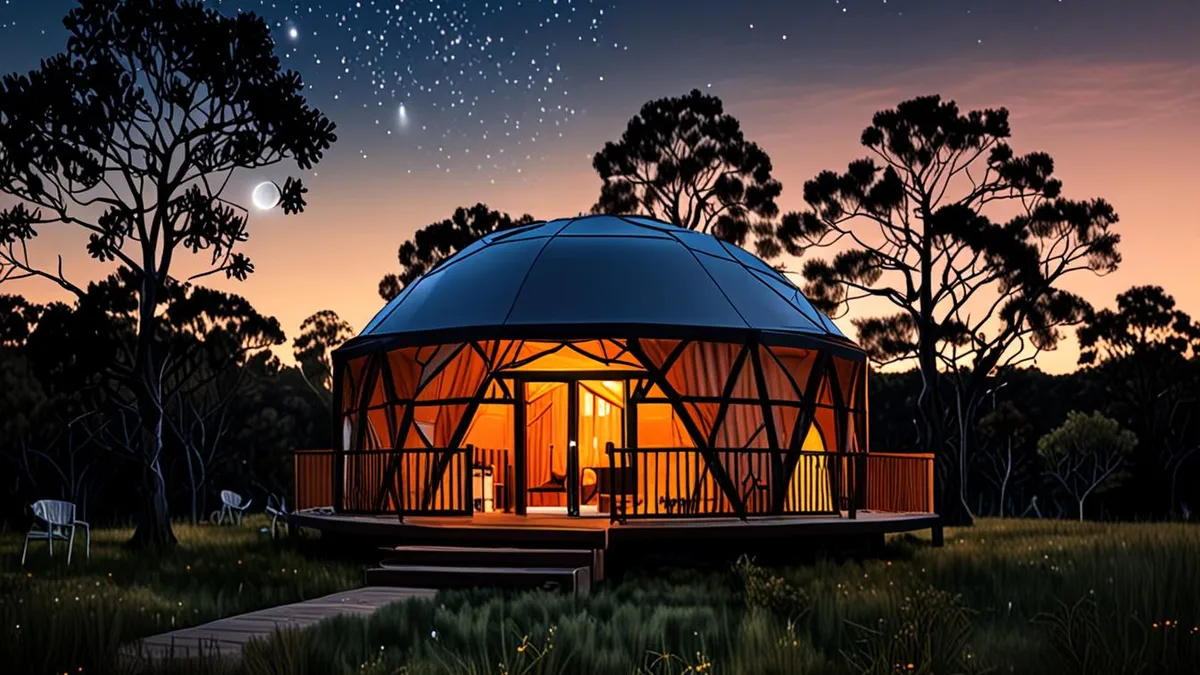
The range of stay types here is broader than most people expect. You can book canvas safari tents, geodesic domes, eco-pods and off-grid cabins, many of them set on private bushland properties where you may not see another guest all weekend. Some are a short drive from cafes and galleries; others require you to bring your own supplies and embrace the quiet.
The cool-climate seasons are what set the Blue Mountains apart from coastal glamping spots. Because nights get genuinely cold for much of the year, features like wood heaters, outdoor hot tubs and fire pits are a real draw rather than a gimmick. Sitting by a fire under a dark sky is not a bonus here; it is half the reason to come.
Best Areas to Base Your Glamping Stay
The Blue Mountains stretches a long way, and where you base yourself changes the whole feel of your trip. Stay near the main ridge and you will be minutes from the famous lookouts. Head into the valleys or the lower mountains and you trade convenience for seclusion. The good news is that even the most secluded sites are still a short drive from the main towns, so no choice leaves you completely cut off.
If you are weighing up a site near a national park boundary versus one closer to town, it helps to think through what you actually want from each day. Are you here for sunrise lookouts and cafes, or for silence and a sky full of stars? We have written a fuller guide to choosing the right base when glamping near national parks, but here is how the main Blue Mountains areas compare.
A few practical notes before you pick. The higher villages sit at over 1,000 meters elevation, which is why nights feel so much colder up there than back in Sydney, and why a wood heater matters more than you might expect. Valley properties can also involve unsealed roads, so check access with your host if you are renting a small car or arriving after dark.
Choosing the Right Season for Glamping in the Blue Mountains
The Blue Mountains has four genuinely distinct seasons, and each one changes what your glamping trip looks like. The best all-round windows are autumn (March-May) and spring (September-November), when daytime temperatures sit around 15-25°C. If you are flexible on dates, aim for one of these two. If you are comparing regions more widely, the same season-by-season thinking applies elsewhere too, as we explain in our guide to glamping in the Pyrenees and its best regions and seasons.
Autumn and spring: the sweet spots
Autumn brings stable weather, clear lookouts and evenings made for fire pits. Visibility tends to be at its best, so this is the season for photographers who want sharp views across the valleys. Spring adds wildflowers and waterfalls running at full flow after the cooler months, but demand spikes around school holidays, so book early if your dates fall in that period.
Winter and summer: trade-offs to weigh
Winter (June-August) is cold, with nights dropping to around 0-5°C, but it has its own rewards: mist drifting over the cliffs makes for atmospheric photos, and midweek rates are often the best value of the year. Summer (December-February) gives you long daylight for hiking, but days can exceed 30°C and bushfire risk is higher, so check conditions before you travel and have a flexible plan.
Staying Warm: Tents, Domes and Winter Comfort
The Blue Mountains sits at altitude, and that changes everything about how a glamping stay feels after dark. Even in autumn, temperatures can fall sharply once the sun drops behind the cliffs, and in winter nights regularly sit around 0-5°C. The structure you sleep in matters far more here than it would on a coastal trip.
Geodesic domes and insulated eco-pods generally hold heat much better than classic canvas safari tents. Their solid or double-layered walls trap warmth, cut down on condensation and stay comfortable even when frost forms outside. Canvas tents have romance on their side, but in a Blue Mountains winter you will feel the cold through the fabric unless the site has invested seriously in insulation. If you want a deeper look at how domes cope with cold nights, this guide to how warm and comfortable dome glamping really is in winter breaks it down in detail.
What to Look for in a Cold-Weather Site
prioritize warmth-earning features over gadgets. A wood heater is the single biggest comfort upgrade in the mountains, because it dries the air as well as heating it. Proper flooring matters too: a solid or insulated floor stops the chill that seeps up from the ground beneath a tent. A private hot tub under the stars is the obvious luxury, and in this climate it earns its place. Electric blankets and portable heaters are fine as backups, but they struggle against a genuinely cold mountain night if the structure itself is thin.
Packing is the other half of the equation. Bring thermals and warm sleepwear even for an autumn stay, since the temperature swing between a mild afternoon and midnight can be dramatic. Wool socks, a beanie for evenings outside and an extra layer for reading in bed will do more for your comfort than anything the site provides. Check with your host whether firewood is supplied, because feeding a heater all evening burns through more logs than you might expect.
What Blue Mountains Glamping Sites Typically Cost
Glamping in the Blue mountains covers a wide spread of styles and prices, so it pays to know what a realistic budget looks before you start comparing sites. For a couple, most safari tents, domes and cabins fall between AUD 200-450 per night. At the top end, premium domes and sites with private hot tubs typically start from around AUD 500 per night. What you pay usually tracks closely with the level of insulation, the view and whether the site is genuinely private bushland or a shared property near town.
Timing moves the price more than anything else. Midweek stays in winter often come in 20-30% below peak autumn and spring weekend rates, which can turn a hot tub dome from a splurge into a reasonable treat. Peak weekends in the best seasons are when hosts hold firm, and the most popular sites book out first.
Before you compare two sites on headline price alone, work out what is actually included. Extras vary enormously between operators, and they can add a meaningful amount to a two-night stay. Common items to ask about include:
- Firewood: some hosts supply a generous stack with the nightly rate, while others charge per bundle, which adds up quickly if you plan to run a wood heater or fire pit all evening.
- Hot tub use: a few premium sites include private hot tubs in the rate, but some prepare and fill them for a separate fee, so confirm this before booking if the tub is your main reason for choosing the site.
- Breakfast hampers: many Blue Mountains properties offer optional hamper delivery with local bread, eggs and preserves, charged on top of the nightly rate and often needing a day or two of notice.
- Cleaning and booking fees: service fees, cleaning charges and platform fees can add a noticeable percentage to the final total, so compare final checkout prices rather than the advertised nightly rate.
Once you know exactly what each rate covers, comparing sites becomes much simpler. A slightly dearer dome with firewood, a hot tub and breakfast included can easily work out cheaper than a budget tent that charges for everything separately.
How and When to Book
Blue Mountains glamping is popular with a relatively small pool of quality sites, so availability tightens fast around the seasons everyone wants. Autumn weekends, school holidays and any stretch of good weather see the best domes and cabins snapped up weeks in advance, sometimes by guests who booked before you even picked your dates. Unlike standard hotel rooms, most glamping properties here are one-off sites with only a handful of accommodations each, so there is no second room to fall back on if yours is taken. Getting the timing of your booking right matters almost as much as choosing the site itself.
- Book autumn weekends 2-3 months ahead. Autumn is the sweet spot for stable weather and clear lookouts, so the best domes and cabins on weekends in March, April and May go early. Two to three months of lead time gives you real choice rather than leftovers.
- Reserve 4-6 months out for Easter and NSW school holidays. These dates are the absolute peak, and families plus escaping Sydneysiders compete for the same handful of sites. If your dates fall in a school holiday window, treat booking like securing concert tickets and get in early.
- Use midweek and winter dates as flexible options. Outside peak periods, most sites have openings you can grab a few weeks out, sometimes even less. This is ideal for spontaneous trips and pairs nicely with lower winter rates.
- Read the cancellation terms before you pay. Mountain weather can be genuinely disruptive, with fog, storms and occasional road closures making the drive up from Sydney slower or riskier than planned. Know whether you can reschedule, how close to arrival you can cancel, and whether extreme weather triggers any special flexibility.
It is also worth messaging hosts directly with any specific questions before booking, especially about heating, firewood supplies and access roads, since a good host will tell you honestly what a winter or storm-season stay involves. Ask exactly what happens if a storm knocks out power or a gravel road turns to mud, because policies vary widely between independent properties. Confirm check-in arrangements too, as some off-grid sites use lockboxes or self-guided arrival instructions rather than staffed receptions. A little due diligence upfront protects both your money and your weekend.
Planning Your Blue Mountains Glamping Trip
So, where should you base yourself? If your trip is all about the big-name lookouts and easy access to town, Katoomba or Blackheath will serve you well. If your idea of glamping is silence, stars and a fire pit with nobody else in sight, point yourself toward the Megalong Valley instead.
Timing matters just as much. Autumn and spring offer the best mix of comfortable weather, clear lookouts and reasonable availability, with daytime temperatures around 15-25°C. Budget roughly AUD 200-450 per night for a couple, more for premium domes, and book 2-3 months ahead for autumn weekends or 4-6 months out for Easter and school holidays. Get those two decisions right and the rest of the trip tends to fall into place. If this helped you plan your stay, leave a comment or share the article with a fellow traveler.