Many resorts proudly call themselves accessible, but resort bathrooms for mobility needs are where that claim most often falls apart. A room can have a wide entrance, a lowered bed and a friendly front desk, and still have a shower with a six-inch step, a toilet crammed against the wall and a pedestal sink you cannot roll under. By the time you discover this, you have already paid, arrived and unpacked.
The fix is verification before booking, not after. This article walks through why the bathroom defines an accessible resort stay, then covers what to confirm about roll-in showers versus bathtubs, grab bars, toilets and sink heights, doorways and turning space, and how to get written confirmation from the resort. We also look at backup plans when features fall short on arrival, and finish with a quick checklist you can use before paying for any room. Bring it with you when you book.
Why the Bathroom Defines an Accessible Resort Stay
A resort room can pass every obvious test on paper — a wide entry door, a bed at the right height, even a parking spot near the elevator — and still be effectively unusable, because the bathroom is where mobility needs concentrate. Transfers, balance, sitting and standing all happen in the smallest, wettest, hardest-surfaced room in the building. If the bathroom fails, the whole room fails, no matter how well the rest of it works.
The problem is that the label does not tell you much. Many resort websites mark a room “accessible” based on a single feature, such as one grab bar near the toilet, while the shower has a high step-over lip or the sink is a pedestal you cannot get a wheelchair under. The word “accessible” is not a standard; it is marketing. The list of specific bathroom features matters far more than the label attached to the booking page.
Why early verification matters
Accessible rooms are scarce, often making up under 5% of a resort’s total room inventory. That means you are not choosing between several suitable bathrooms — you may be choosing between one and none. Once the single accessible room in your preferred category is gone, there is no upgrade path and no workaround. Verification before booking is what actually secures the room, which is why the rest of this article focuses on the exact questions to ask and the answers that should trigger a follow-up.
Roll-In Showers vs Bathtubs: What to Confirm
The shower question is the single most important one you will ask, because shower design decides whether bathing is independent or requires help. “Step-free” is not the same as “roll-in.” Some resorts use that phrase for a shower with a small lip or raised edge that a walker can manage but a wheelchair cannot. What you want confirmed is a true roll-in shower with a threshold of 0.5 inch (1.3 cm) or less — flat enough to roll over without a bump that catches casters or destabilizes a transfer. While you have the reservations team on the line, also ask where the drain sits. A center drain can create a crown in the floor that tilts a shower chair, while a corner or linear drain usually keeps the floor flatter and water moving away from the chair wheels.
Then work through the details that make a roll-in shower actually usable rather than just enterable:
- Fold-down seat: Ask whether the seat exists at all — some accessible showers have only a floor-mounted stool or nothing. If it folds down from the wall, ask for its weight rating and confirm it is mounted on the wall where you transfer, not at the far end of the shower.
- Handheld showerhead: Fixed overhead heads are common even in rooms labeled accessible, and they are useless if you cannot stand to reach them. Confirm a handheld head on an adjustable slide bar so the spray height can be set for seated use.
- Tub transfer bench: If the room only offers a bathtub and a tub is unavoidable for your stay, ask whether the resort can provide a tub transfer bench, and whether housekeeping stocks one or it must be ordered in advance.
- Curtain versus glass door: A sliding glass panel often blocks the opening you need to roll in, while a full-width curtain gives you flexible access. Also ask whether the shower controls sit low enough to reach from a seated position, and whether the temperature handles are lever-style rather than twist knobs.
- Flooring and drying space: Small textured tiles grip better than large slick ones, and a towel hook within reach of the seat saves an awkward post-shower shuffle. Ask, too, whether there is dry floor space beside the shower for a bench or chair during transfers.
Get answers to each of these in writing, because a shower description over the phone can mean very different things to different staff members. A photo of the actual shower, not a brochure shot, settles most disagreements before they start.
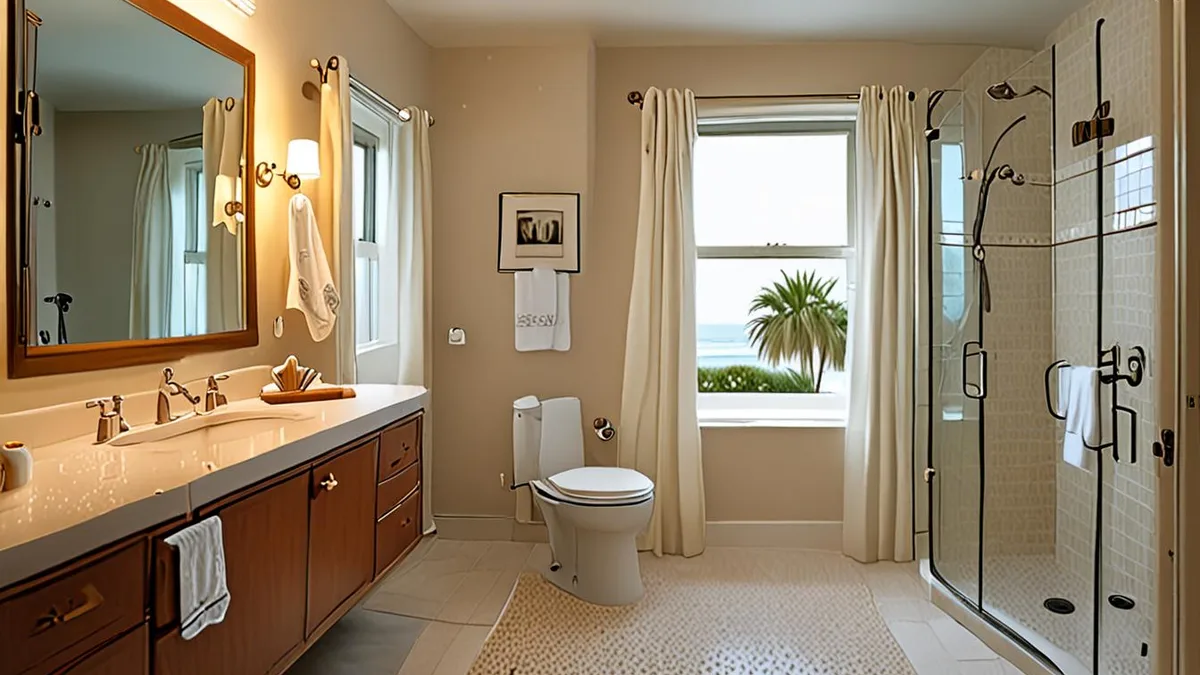
Grab Bars, Toilets and Sink Heights
Toilet and grab bar details are where many “accessible” rooms quietly stop working. Grab bars should sit 33-36 inches (84-91 cm) above the floor, both beside the toilet and inside the shower. Height is only half the story, though: a bar behind the toilet but not beside it does nothing for a lateral transfer, and a bar at the back of the shower does not help someone steadying themselves at the entrance. Ask for photos of the actual placement in the room type you are booking, not a brochure image.
The toilet itself should have a seat height of 17-19 inches (43-48 cm), roughly the height of a wheelchair seat, and there should be clear space beside it so a lateral transfer from chair to toilet is possible. A toilet tucked into a narrow alcove between walls fails this even at the correct height.
Things worth asking about beyond the basics include:
- Sink design: A counter at 30-34 inches (76-86 cm) with open knee clearance underneath works for a seated user; pedestal sinks usually do not, because the base blocks the wheelchair from rolling under. Confirm there are no drawers or cabinet fronts in the knee space.
- Faucet type: Twist knobs are difficult or impossible with limited grip or arthritis. Ask whether the room has lever handles or push-type faucets, and request a room with them if the default is knobs.
Small details like faucet handles matter more than they sound — they decide whether you can wash your hands without assistance.
Doorways, Turning Space and Floor Space
The doorway is your first gatekeeper. If a wheelchair cannot fit through the entrance, nothing else inside matters. Usable bathroom doorways generally measure at least 32-34 inches (81-86 cm) wide, and that figure refers to the clear opening, not the door itself. A 34-inch door with a thick frame or a doorstop can leave noticeably less passing space, so ask for the actual clear width in writing.
Door swing matters just as much as width. An inward-swinging door can block the very floor space a wheelchair user needs to enter and close the door behind them. Outward-swinging doors or sliding doors solve this problem, so make the swing direction one of your direct questions rather than an assumption.
Once inside, you need room to move. A turning circle of roughly 60 inches (152 cm) lets most manual wheelchairs and many scooters rotate fully, so ask whether the bathroom offers that space or whether the resort can confirm a wheelchair can turn around inside. A long, narrow bathroom that passes every fixture check can still fail if the wheelchair has to reverse out in a series of tight maneuvers.
Do not stop at the bathroom door. Charging a wheelchair or scooter overnight requires clear floor space in the main room near an outlet, and that space competes with beds, luggage and furniture. If a carer or family member travels with you, ask whether the room connects to a companion room, since two separate bookings across the hall rarely work as a substitute.
- Ask whether the doorway threshold has a raised lip or ramped edge, since even a compliant-width door becomes difficult if a bump sits at the bottom of it.
- Request a photo of the bathroom with the door open, which shows the real turning space and reveals whether fixtures intrude into the maneuvering area.
- Confirm where the nearest power outlet sits relative to the bed, because a charging cable stretched across a walkway creates a tripping hazard for everyone in the room.
- If a connecting room is essential, ask whether the connecting door is lockable from your side and whether it counts as one reservation or two.
- Ask whether luggage can be stored outside the main circulation path, since housekeeping trolleys and suitcases often shrink usable floor space in accessible rooms.
How to Verify Features Before You Book
Phone calls and website photos rarely tell the whole story. The bathroom in the brochure may look perfect, but it could belong to a different room type from the one you’re booked into. The steps below help you lock in the right room and protect your reservation.
- Email the resort directly and ask for a written feature list. A generic response won’t help you much. Request a specific list of bathroom features for the room type you want, and ask for photos of that exact room category, not a sample or show room. Resorts often photograph their best accessible room, which may differ from the one you’ll actually receive.
- Book early, especially for high-season travel. Accessible rooms often make up under 5% of a resort’s total room inventory, so they go fast when the resort is full. Requesting an accessible room 2-3 months ahead improves availability considerably. If you’re traveling during a busy period, treat this as a first step rather than a last-minute add-on.
- Get the confirmation in writing with your reservation number. A verbal promise from a reservations agent rarely survives a front-desk change or a shift change. Ask for an email that lists the specific bathroom features alongside your reservation number. If something goes wrong later, that document is your leverage.
- Reconfirm the room allocation 48-72 hours before check-in. Room assignments can shift at the last minute for maintenance reasons or late changes. A short call or email a couple of days before arrival catches any move before you’re standing at the front desk with luggage and no accessible bathroom.
None of these steps takes more than a few minutes, and together they turn a vague “accessible room on request” into a documented reservation. Keep every email and confirmation on your phone so you can show them at check-in. If the resort hesitates to put features in writing, that hesitation itself tells you something useful about how the stay will go.
Backup Plans When Features Fall Short
Even the most careful pre-booking verification can fall apart at check-in. The moment you arrive, ask to see the actual room before your luggage goes up, and inspect the bathroom within the first few minutes. If the shower has a lip, the grab bars are missing, or the doorway is too narrow, go straight back to the front desk and request a reassignment. Acting immediately matters because alternative accessible rooms may still exist at that point, while the pool of available rooms shrinks fast once other guests check in later in the day.
If no suitable room exists, portable aids can often close part of the gap. Housekeeping departments at larger resorts frequently keep a small stock of equipment, but it is first-come, first-served. Requesting a shower chair, raised toilet seat, or transfer bench at check-in rather than mid-stay gives you a real chance of getting one. Mention your needs again in the same 48-72 hour window before check-in that you use to reconfirm the room, and ask housekeeping directly, not just the front desk.
Beach and island resorts add one more wrinkle: their rooms are rarely uniform. Older buildings on the same property can differ sharply from newer blocks, so a resort can truthfully say it has accessible bathrooms while the ones in the original wing fall short of what you need. Ask specifically which wing, floor, or room type was renovated most recently, and request placement there. This matters even more at coastal properties where layouts vary between beachfront and garden blocks, something covered in more depth in our guide to choosing a beach resort when you don’t swim and need to plan around tides.
- Ask whether housekeeping delivers portable aids free or charges a daily fee, and whether a deposit is required, since policies vary widely between resorts.
- If you use a folding shower chair you travel with, confirm the shower drain position, because a drain in the center of the floor can make a portable chair sit unevenly or rock.
- Request a room close to the elevator and a step-free path from it, since a perfect bathroom loses value if reaching it means a long detour through corridors or ramps.
- Ask if maintenance staff can lower a handheld showerhead bracket or adjust an existing fixture on site, a small fix many resorts can do the same day.
Quick Checklist for Resort Bathrooms for Mobility Needs
So, which features decide whether an accessible resort bathroom actually works for you? Verify the roll-in shower with a threshold under 0.5 inch, the grab bar heights and a doorway width of 32-34 inches before you pay for anything. Those four details separate a genuinely usable bathroom from one that simply carries the accessible label.
The rest comes down to timing and follow-through. Book 2-3 months ahead for high-season travel, get every promised feature in writing with your reservation number, and reconfirm the room allocation 48-72 hours before arrival. Then inspect the bathroom the moment you check in and request adjustments immediately, while other accessible rooms may still be free. If this checklist helped you plan a trip, share it with a fellow traveler or leave a comment about what worked for you.