You’ve decided on glamping in the Pyrenees, but a quick search leaves you more confused than excited. Some sites promise snowy peaks and wood-fired hot tubs, others lush green valleys an hour from the beach, and the reviews all seem to describe completely different seasons. The truth is that the Pyrenees is a long, varied range, and the right region in the wrong month can be a soggy disappointment.
This guide breaks the range into its distinct glamping zones, from the French foothills to the high Catalan valleys, and explains what each one does best. You’ll find a season-by-season rundown of weather, crowds and prices, plus advice on matching a region and month to your trip, whether that’s hiking, family time, stargazing or a winter escape. We’ll also cover how to choose and book a site, what to pack for mountain conditions, and a short planning summary to pull it all together.
Why the Pyrenees Works So Well for Glamping
The Pyrenees works so well for glamping because it isn’t one uniform mountain wall. The range splits into three distinct zones, and each gives you a different experience. The French side is made up of green, rolling foothills with wide meadows and soft contours. The central spine holds the high granite peaks, where nights are cold and the scenery turns properly alpine. The Spanish southern slopes are drier and sunnier, with a more Mediterranean light and a longer feel of summer.
That variety also translates into practical advantages. You get alpine scenery at lower altitudes than in the Alps, which means shorter, easier drives to your tent. Many sites sit within 1-2 hours of major airports like Toulouse, Barcelona and Girona, so a five-day trip doesn’t get eaten up by transfers. Toulouse puts you within roughly 1.5-2.5 hours of the French Pyrenees, while Barcelona reaches the Catalan valleys in about 2-3 hours.
A wide choice of stay types
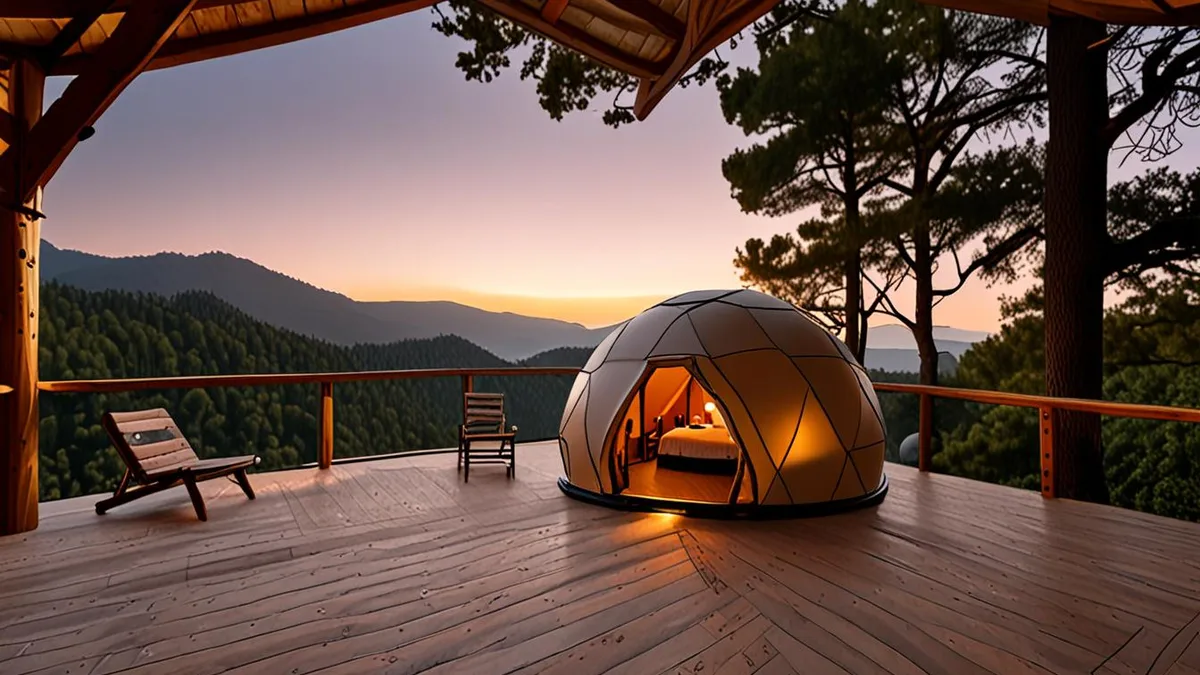
The accommodation range is just as varied as the landscape. Valley meadows on both sides of the border fill up in summer with safari tents and yurts, often on small family-run sites with pools and farm animals. Higher up, heated geodesic domes and insulated cabins let you sleep at altitude without shivering through the night. Whether you want a soft grass pitch for toddlers or a glass-fronted dome facing a 3,000-meter summit, some version of it exists here.
Best Regions for Glamping in the Pyrenees
The Catalan Pyrenees, around Aigüestortes and the Cerdanya plateau, offers the best mix of mountain drama and site choice on the Spanish side. High meadows sit beneath serious peaks, Romanesque villages with stone bell towers dot the valleys, and the Cerdanya’s broad, sunny floor supports a good number of sites within easy reach of each other. Barcelona sits roughly 2-3 hours away by car, so you can land at lunchtime and be unpacked in a safari tent by mid-afternoon. The area also works well for mixed groups, since valley sites near La Seu d’Urgell and Puigcerdà give you restaurants, markets and pharmacies within a short drive, while more remote domes higher up suit travelers who want silence and stargazing instead of amenities.
On the French side, Ariège and the Pyrénées-Orientales are gentler and more forgiving. The foothills roll softly, Cathar castles crown the ridgelines, and thermal towns give you something to do on a rainy afternoon. This is the easiest entry point for first-time mountain glampers, especially families who want scenery without long, winding drives. Toulouse puts you within roughly 1.5-2.5 hours of most French-side sites, which makes weekend trips realistic even for travelers coming from further afield. The Pyrénées-Orientales add a Mediterranean twist, with warmer, drier summers and sites that pair mountain views with access to the coast for a two-center holiday.
The western end of the range feels like a different country altogether, and the central high valleys sit at the other extreme. A few things set each apart:
- Basque Country and Navarre: lush, rainy and ocean-influenced, with fog drifting over green ridgelines. The season here is shorter than further east, but the landscape stays greener and the sites feel more intimate. Pack a waterproof layer even in high summer, and check each site’s opening dates carefully, since many close earlier than their Catalan counterparts.
- Central high valleys like Benasque and Font-Romeu: the coldest nights in the range and the most alpine settings, with sites that are mostly small and seasonal. In Font-Romeu, you can see how one of these high-altitude sites works in practice in our Huttopia Font-Romeu review.
- Ariège’s thermal towns: places like Ax-les-Thermes give foothill stays a built-in bad-weather plan, with warm indoor pools a short drive from valley campsites.
Season by Season: When to Go
Timing shapes a Pyrenees glamping trip more than almost any other decision. The main season runs roughly from late May to late September, but the character of each stretch differs a lot.
Late May to June
This is the sweet spot for quiet and color. Meadows are in bloom, sites have freshly opened after the winter, and daytime highs sit around 18-24°C. Crowds are far thinner than in summer, though some higher sites only open their full facilities later in June.
July, August and September
July and August bring the warmest and most reliable weather, which is exactly why they’re also the busiest. Expect peak prices, booked-out sites and afternoon thunderstorms building over the high peaks. September is when stable weather returns, hiking conditions peak, and rates typically drop 20-40% from summer highs while the days stay long and clear.
Winter is a different proposition entirely. From December to March, only lower-valley heated domes and cabins operate, so you should expect snow scenery and sub-zero nights rather than open-air camping. If you’re weighing mountain seasons against a milder Atlantic alternative, it helps to understand when to go glamping in Portugal and which regions suit each season, since a warmer, longer season changes the whole equation.
Matching Your Trip to the Right Region and Month
The right region for your glamping trip depends heavily on what you actually plan to do each day, and the Pyrenees reward a bit of forward thinking here. A dome that feels romantic in September can feel cramped and cold for a family of four in August, and a foothills site that suits toddlers won’t satisfy a hiker chasing high passes.
Hikers should target the central high valleys, such as Benasque on the Spanish side or Font-Romeu in France, in June or September. Trails are quiet, accommodation is easier to find, and the high passes are typically snow-free, which matters if you want to link up ridge routes or cross between valleys.
- Hiking trips: base yourself near a trailhead rather than a town, since many high-valley sites sit within walking distance of marked routes, saving you daily driving on narrow mountain roads.
- Family trips: the French foothills or the Cerdanya plateau in July and August give you warm pools, flat ground for tents and short drives to activities like tree-top parks and river swimming.
- Stargazing and romance: book a high-altitude geodesic dome in September, when nights are longer but temperatures usually stay comfortable enough to sit outside after dark.
- Winter escapes: choose the Basque and Navarrese valleys or low French sites with heated cabins, and plan around cozy evenings indoors rather than deck chairs and hot tubs under the stars.
If you’re torn between mountain styles, it can help to read how another great range handles the same question — this guide to where to stay and what to know about glamping in Patagonia shows how dramatically altitude and season change the experience.
How to Choose and Book Your Site
Glamping sites in the Pyrenees vary more than their photos suggest, and a little checking before you book saves real disappointment later. Mountain sites often run short seasons, access roads can be narrow and steep, and what’s included in the price differs from one operator to the next. A site that looks like a bargain on a listing page may charge extra for bedding, firewood or breakfast, so it pays to dig into the details before you commit your deposit.
- Check the operating season first. Anything above roughly 1,200 m typically closes outside June to September, so a dreamy winter photo on a website may not match what’s actually available in your travel window. If you’re traveling outside the main season, ask directly whether the site is even open.
- Book early for peak summer. Popular sites in the Catalan valleys and the French departments often need booking 3-6 months ahead for July and August, when demand is highest. In the shoulder months, 4-6 weeks’ notice is often enough, and you’ll usually find better availability midweek too.
- Confirm heating and insulation. Before mid-June and after mid-September, mountain nights can drop below 10°C. Ask directly whether the unit has heating, proper insulation or a wood stove — canvas tents without it can be uncomfortable, especially with kids along.
- Compare what’s actually included. Nightly rates typically run from about €80 for basic tents to €250 or more for luxury lodges in peak season, but bedding, wood-fired hot tubs and breakfast vary between sites charging similar headline prices. Check cancellation terms as well, since mountain weather can occasionally disrupt travel plans.
Once you’ve shortlisted two or three sites, email them with your dates and questions before paying. Small operators usually respond quickly, and their answers about heating, access roads and included extras tell you more than any listing page ever will.
What to Pack for Mountain Glamping
Mountain weather in the Pyrenees swings harder than most first-time visitors expect. Summer days in the valleys can reach 28°C, while nights at altitude fall to a chilly 5-10°C — a swing you’ll feel the moment you step out of your tent for an early breakfast. The trick is planning for two climates in one day: a warm one at noon and a cold one the moment the sun drops behind the peaks. Sites in the high valleys feel this most, so if you’re booked above 1,200 m, treat your packing list as if you were going in autumn, even in July.
Layering solves most of it. Bring a light shirt for the day, a warm mid-layer for evenings and something windproof for sitting outside after sunset. Even in high summer, afternoon storms build fast over the peaks, so a waterproof shell belongs in your daypack rather than your suitcase. Quick-drying clothes beat jeans here, since a wet morning walk to the washroom is common on grassy sites, and cotton stays damp for hours in mountain air.
- Headlamp: many glamping sites rely on low-level or solar lighting, and paths between units and washrooms are often unlit after dark.
- Sturdy shoes: even sites with flat, grassy pitches usually involve gravel tracks, dew-soaked grass in the morning and uneven ground around fire pits.
- Sun protection: UV is noticeably stronger at 1,000 m and above, so pack sunscreen, sunglasses and a hat even on cloudy-looking days.
- Refillable water bottle: dry mountain air and altitude speed up dehydration, and many sites sit well away from the nearest shop.
- Warm socks and a beanie: the fastest fix for a cold night in a canvas tent, and the two items travelers most often leave behind.
Pack light but pack smart — a small, well-chosen bag beats a huge one full of the wrong things. Most sites provide bedding and basic kitchen equipment, so check before hauling extra gear up a mountain road. A small dry bag or stuff sack for electronics and spare socks is worth its weight, and leave a little room for local cheese or honey on the way home.
Planning Your Pyrenees Glamping Trip
So, which part of the range should you pick, and when? It comes down to the experience you’re picturing. The Pyrenees offer distinct regions, each suiting a different style of stay: gentle meadows and easy access work well for first-timers, while the high valleys deliver the most dramatic alpine settings and the coldest nights.
Timing matters just as much. The core season runs roughly late May to late September, with the shoulder months of May, June and September offering the best balance of weather, prices and quiet. If you’re set on July or August, book popular mountain sites 3-6 months ahead, and always confirm heating for shoulder-month stays, when nights can turn cold. Match the region and month to your trip, and the Pyrenees will deliver exactly the glamping trip you imagined. If you’ve glamped in the range before, share your experience in the comments.