Glamping in Patagonia looks effortless on Instagram: a geodesic dome, a wood stove crackling, and the granite towers of Torres del Paine glowing through the window. In reality, most travelers open a booking site, find scattered options across two countries, and have no idea where to actually stay, when to go or how far ahead to plan. Remote sites sell out long before the season starts, and the difference between a magical trip and a frustrating one often comes down to details nobody mentions.
This guide breaks it all down. We’ll cover when to go glamping in Patagonia and how the seasons affect price and crowds, the best areas to base yourself in Chile and Argentina, the types of glamping stays you can expect, how far ahead to book and what you’ll likely pay, plus the wind, packing and transfer logistics that catch people off guard. By the end, you’ll be able to plan a dome stay that matches your budget and your appetite for remoteness.
When to Go Glamping in Patagonia
The main season for glamping in Patagonia runs from October to March, when days are warmest and longest and dome camps operate at full capacity. This is when you’ll get the most daylight for hiking, the best chance of clear views of the granite towers, and the full range of services at remote sites. Within that window, December and February are the busiest months, when trails, camps and transfer services all feel the squeeze of peak demand.
Shoulder seasons: fewer people, colder nights
If you’d rather trade a bit of warmth for quiet trails and lower rates, aim for October or April. These shoulder months bring fewer crowds and temperatures that typically sit between 5 and 15°C, so expect colder nights and pack accordingly. The upside is real: easier reservations, more availability at smaller sites and a calmer atmosphere in the parks.
Why to skip winter for dome stays
From May through September, winter sets in, and many remote dome camps either close entirely or scale back their services. Short days, harsh conditions and reduced staffing make dome stays unreliable during these months. If a dome experience is the heart of your trip, plan around the October to March season and treat winter as a time for city-based travel instead.
Best Areas to Base Yourself
Patagonia is huge, and where you base yourself shapes the whole experience. The two headline destinations are Torres del Paine in Chile and El Chaltén in Argentina, but they offer noticeably different styles of glamping and access. Torres del Paine sits roughly 110 km north of Puerto Natales, about 2.5 hours by road, which makes it a manageable transfer even after a long flight into Patagonia. Further north and further south, two more regions suit travelers with different priorities, so it pays to match the region to your travel style before you commit to a booking.
Torres del Paine is the classic: granite towers, glacier-fed lakes and the highest concentration of upscale dome camps on either side of the Andes. If you want the signature Patagonian dome experience with polished service, this is where most of those properties cluster. Demand here is intense, and the best domes are typically reserved well in advance, sometimes close to a year out for the summer season. El Chaltén, Argentina’s self-declared trekking capital, puts you within reach of Mount Fitz Roy, with smaller-scale eco-domes and cabins that suit hikers who want to set their own pace. It pairs naturally with El Calafate, about 220 km away and roughly 3 hours by bus, so many travelers combine the two in one Argentine loop rather than choosing between them.
- Bariloche and the Lake District: the northern Patagonian option, with forested lake scenery, a milder climate and more cabin-style glamping than dome camps, a good pick if you prefer alpine lakes over open steppe and want easier access from major airports.
- Tierra del Fuego near Ushuaia: the end-of-the-world option, where raw, windswept landscapes and genuine remoteness matter more than refined facilities, ideal for travelers who want solitude over polish and are comfortable with longer transfers and fewer services nearby.
Types of Glamping Stays to Expect
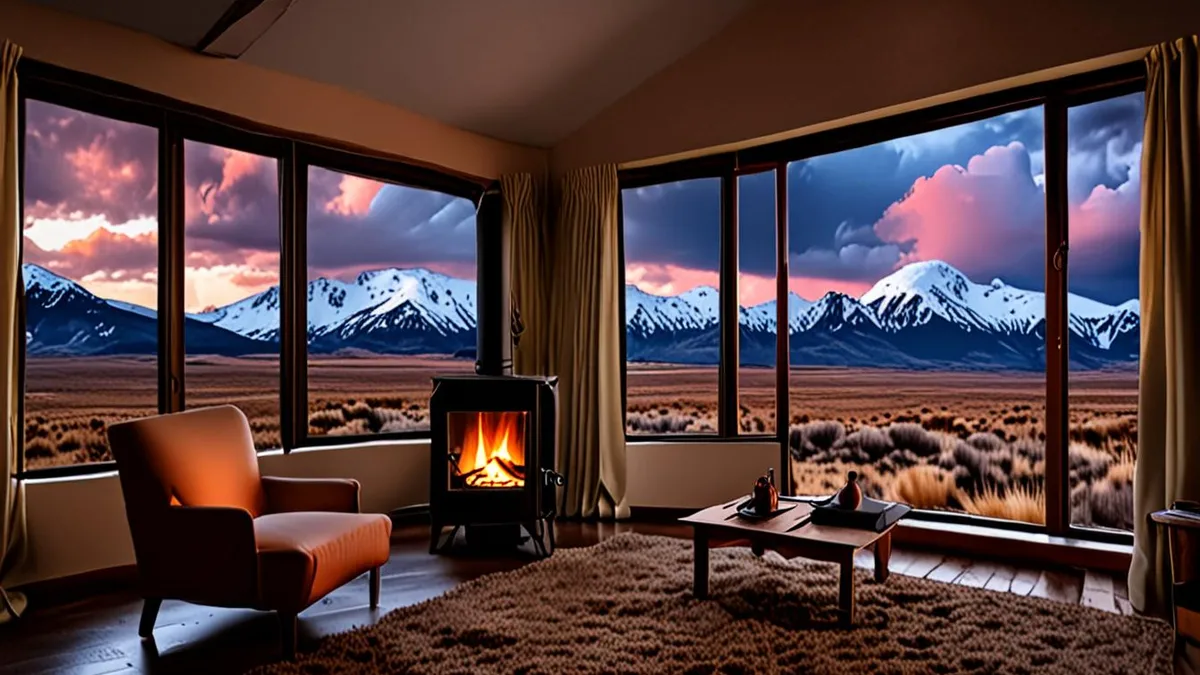
Glamping in Patagonia isn’t one style of accommodation, and the differences matter for both comfort and cost. The signature Patagonian stay is the geodesic dome: a rounded structure with panoramic windows facing the mountains and a wood stove to take the edge off cold nights. Many of the best-known dome camps sit in or near Torres del Paine, where the views do most of the selling. Domes come in different levels of finish, from basic insulated models with shared facilities to larger units with private bathrooms, so look closely at what each site actually includes before you commit.
At the top of the price range sit all-inclusive lodges, where you get a proper en-suite bathroom, guided excursions built into your stay and set menus each evening. These are less “camping” and more remote luxury hotel, and they suit travelers who want everything arranged for them. At the other end, simpler eco-domes and safari tents near towns offer a lighter, more affordable version of the experience. Because rates vary widely between these styles, it pays to compare what’s included rather than just the nightly figure.
- Eco-domes and safari tents near towns: because they’re close to El Chaltén or other service towns, you can eat out, rent gear and adjust plans daily, making them better for flexible, self-guided itineraries than remote all-inclusives.
- All-inclusive lodges: guided excursions and set meals mean you don’t need to organize transfers, guides or food yourself, which matters when shops and restaurants are hours away.
- Wood-stove domes: the stove isn’t decorative, it’s how you dry wet gear overnight and stay comfortable when temperatures drop after dark, so check that your dome includes one before booking.
How Far Ahead to Book and What to Pay
Patagonia’s most sought-after glamping sites sell out far earlier than most travelers expect. For peak-season domes and lodges in Torres del Paine, the general rule is to reserve 6 to 12 months ahead. The famous dome camps with wood stoves and views of the granite towers have limited capacity, and December and February departures are typically the first to go.
Smaller sites around El Chaltén work on a slightly gentler timeline, but they can still fill 4 to 6 months out during the main season. If you have your heart set on a specific dome with a Fitz Roy view, treat your booking like a flight reservation rather than a last-minute hotel decision.
What you can expect to pay
Rates vary widely depending on the style of stay. Basic tents and domes pitched close to town usually start at the lower end of the scale, while the signature geodesic domes with heating and panoramic windows sit in the middle. As a broad guide, glamping in Patagonia typically ranges from about USD 150 to 600 per night. All-inclusive lodges, where meals, guided excursions and transfers are bundled in, can exceed 600 per night.
If the top-end numbers sting, look at the shoulder months. Stays in October or April often drop 20-30% below peak prices, and you trade only a little warmth for quieter trails and more negotiating room on availability. Booking directly with the site can also help, as some operators offer better rates than booking platforms. Always confirm current prices before you commit, since they shift from season to season.
Weather, Wind and Packing Essentials
The single most important thing to understand about glamping in Patagonia is that a warm, sunny morning can turn into sleet by lunchtime, even in the middle of summer. Pack for four seasons in one day and you will never feel caught out. That means a layering system: a moisture-wicking base layer, a warm mid-layer such as fleece or down, and a waterproof shell jacket as your outer defense.
Then there is the wind. Patagonian wind regularly exceeds 60 km/h, especially across the open steppe, and it can turn a flimsy hat into a lost cause within seconds. When choosing a dome, ask about wind exposure; some sites are more sheltered than others. In the evening, most quality domes come with a wood stove, and keeping it fed is both practical and a big part of the charm while you stargaze.
Packing list essentials
- Trekking poles: invaluable on rocky, root-strewn trails and when gusts push you sideways on exposed ridgelines.
- Headlamp: remote sites often have minimal exterior lighting, and you will need it for walks to shared bathrooms after dark.
- Reusable water bottle: refill points exist at many camps and trailheads, but shops are scarce near remote sites, so carry capacity for a full day.
A final tip: pack spare socks and a dry set of camp clothes in a waterproof bag. Drying anything outdoors is unreliable in Patagonian conditions, and dry socks at the end of a wet hike feel like a luxury.
Getting There and Getting Around
Getting to Patagonia’s glamping sites takes planning, because there is no single gateway. Most travelers fly into Punta Arenas or Puerto Natales in Chile, or El Calafate in Argentina, and then continue by rental car, shuttle or pre-arranged transfer. Long-distance buses also link the main towns and are comfortable and reliable, though schedules thin out in the shoulder months.
Reaching Torres del Paine
If your dome camp is in Torres del Paine, Puerto Natales is your natural base for logistics. The park sits roughly 110 km north of the town, about 2.5 hours by road. The final stretch is on gravel with wildlife and wind to contend with, so allow extra time and check road conditions if you are driving yourself. Many camps offer transfers from Puerto Natales, which removes the rental car from your to-do list entirely.
The Argentine side
On the Argentine side, El Chaltén and El Calafate are about 220 km apart, roughly 3 hours by bus. This makes them easy to pair in one loop: fly into El Calafate, spend a night or two near the glacier country, then continue to El Chaltén for dome stays under Mount Fitz Roy before returning for your flight out. Whichever route you choose, build buffer time into your itinerary, since distances are long and weather can slow even the best-planned transfer.
Planning Your Patagonian Glamping Trip
Patagonia may look effortless on Instagram, but the reality takes planning. The sweet spot is a dome stay in Torres del Paine or El Chaltén between October and March, booked well ahead, since peak-season domes in Torres del Paine often need 6 to 12 months of lead time. Decide early whether you want a simple eco-dome, a safari tent near town or a full all-inclusive lodge, because that choice shapes both your budget and how remote your nights will be.
Then prepare for the landscape itself. Wind that regularly tops 60 km/h, weather that swings through four seasons in a day and long transfer distances between airports, towns and parks are all part of the deal. Pack layers, allow extra time on the road and the reward is huge: sleeping under a dome with the granite towers or steppe skies right outside. Have a question or a Patagonia glamping story of your own? Leave a comment or share this article.