A glass-domed hideaway glowing under a blanket of snow sounds like the perfect winter escape. But there is always that nagging doubt: can a dome made of fabric and panels really stay warm when temperatures drop well below freezing? It is the most common question travelers ask before booking dome glamping in winter, and a fair one.
The short answer is that a properly winterized dome is far warmer than most people expect. In this article, we break down exactly how these structures handle the cold, what heating and insulation features separate true four-season domes from fair-weather ones, what a winter stay typically costs, and when and where to book. We also cover what to pack, what activities to plan around short winter days, and give you a clear bottom line on whether a dome night in the snow is genuinely comfortable or just a pretty photo op.
How Warm Is Dome Glamping in Winter, Really?
The honest answer: a well-built winter dome is surprisingly warm. Winterized geodesic domes use a double-layer cover with a thermal inner liner, and the air gap between the two layers acts as insulation, much like a double-glazed window. This trapped layer slows heat loss dramatically compared to a single sheet of fabric.
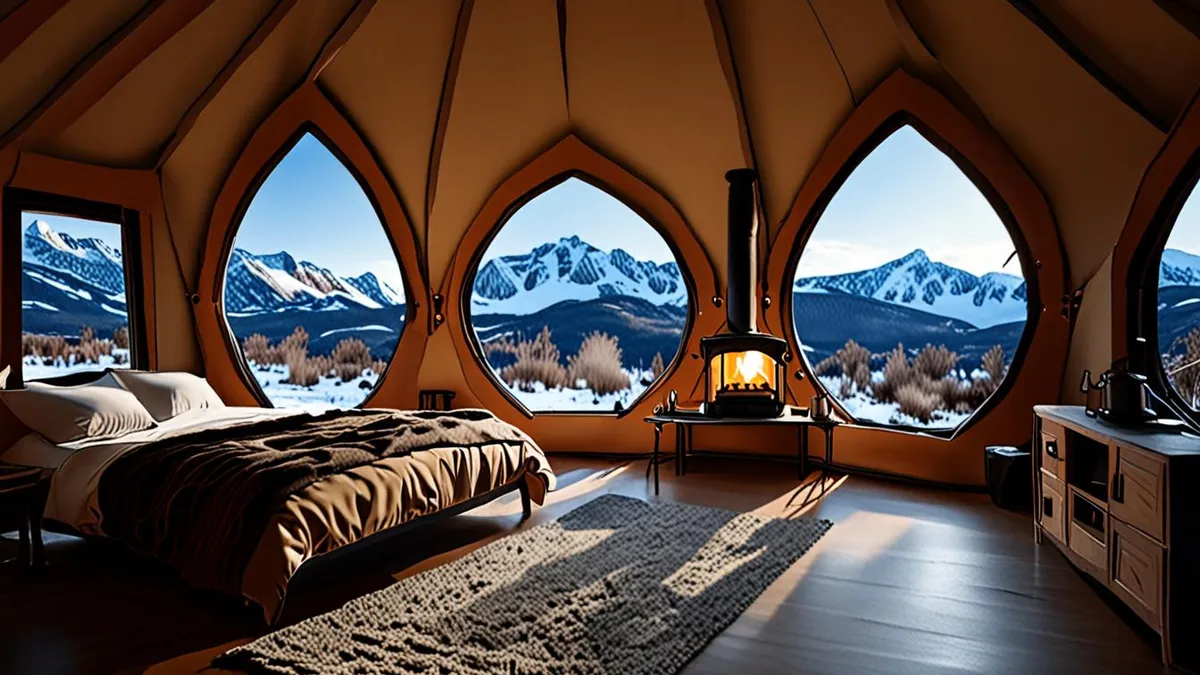
Once you add a heat source, the numbers get convincing. With a wood stove or electric heater running, interiors typically hold a steady 18-22°C (64-72°F) even when it is -20°C outside. Guests routinely describe sleeping in t-shirts and stepping out to a steaming cup of coffee in shorts, with a wall of snow just meters away.
Why the dome shape helps
Geometry works in your favor. A geodesic dome sheds snow instead of letting it pile up, and its rounded surface presents less resistance to wind than the flat walls of a standard tent. Less wind stripping heat off the cover means less heat loss overall, and no dangerous snow load building up overnight.
The real weak point is under your feet. Cold radiates up from frozen ground through thin flooring faster than cold air leaks through walls. Good winter sites solve this by mounting domes on raised wooden platforms and using insulated flooring, so the warmth stays where you are, not in the ground beneath.
Heating, Insulation and Comfort Features to Look For
Not all domes are built for deep winter, and the difference shows in the specs. Start with the rating: a quality four-season dome should be rated for temperatures down to about -20°C to -30°C (-4°F to -22°F), and it should have a double-layer or insulated PVC cover rather than a single canvas shell. If a listing does not mention temperature tolerance, ask before booking.
Heating is the next big question. The classic setup is a wood stove fitted through a heat-proof flange, which gives steady, dry heat and a bit of atmosphere. Some operators go further with underfloor heating or electric radiators, which means no middle-of-the-night fire tending. For help weighing operators against each other, this first-timer’s checklist for choosing a glamping site covers the essentials.
Beyond the shell and the stove, look for these markers of a true winter dome:
- A vestibule or airlock entrance: a small second door chamber stops a blast of freezing air from entering the main space every time someone steps outside.
- Hot water and a heated washroom: an en-suite bathroom or a heated washroom building a short walk away makes sub-zero mornings far more bearable.
- Blackout window covers: clear panels are great for views, but covers let you sleep past dawn in a season when the sun rises early and low.
- Real beds with winter bedding: a proper mattress with a duvet rated for cold nights, not a thin summer sleeping bag.
If a site ticks most of these boxes, you can book with confidence that winter is its season, not its exception.
What a Winter Dome Stay Costs
Winter is high season for dome stays, and pricing reflects it. For the same dome, expect to pay roughly 20-40% more than shoulder-season rates once deep winter sets in. Operators justify the premium with extra heating costs, snow clearing, and limited availability, so budget accordingly rather than expecting a low-season discount.
Size drives the base price. Domes for two guests usually span 20-35 m² (215-375 sq ft), which is comfortable for a couple with luggage and gear. Larger family domes cost proportionally more, so a party of four or five should expect a meaningful step up rather than a small surcharge.
How to keep the total down
Timing matters more than most travelers realize. Midweek stays are noticeably cheaper than weekends, especially near ski resorts, where Friday and Saturday nights book at a premium. If your schedule allows a Sunday-to-Wednesday trip, the savings can be substantial.
Also compare what is actually included, because extras swing the total significantly. Firewood, heating, breakfast, and hot tub access are sometimes bundled and sometimes billed separately. A rate that looks expensive with everything included may beat a cheaper one where you pay for each bundle of wood. If you are weighing a dome against a plain campsite or a hotel, this breakdown of glamping versus camping costs and comfort puts the price gap in perspective.
When and Where to Book a Winter Dome
Most winter-ready dome sites in the Northern Hemisphere open their cold-season bookings from November through March, though exact opening and closing dates vary by location and snow conditions. Some hosts in milder regions stretch the season at both ends, so it pays to ask before you commit.
Timing matters more than you might think. The best approach is to book 3-6 months ahead, especially if you have your heart set on a specific weekend. Weekend slots near ski areas are the first to fill, and popular sites can be fully booked for peak dates well before the first snowflake falls.
Choosing the right setting
Location within the site matters as much as the location itself. Domes set in sheltered forest or valley settings are noticeably more comfortable than those on exposed ridgelines. Trees and slopes block the worst of the wind, which means less heat loss, less noise at night and easier walking around the site. Sheltered positions also tend to have more reliable access roads.
Before you pay, confirm winter road access directly with the host. Ask whether the site is reachable after heavy snowfall, whether you need winter tires or chains, and where you would park if the final stretch is on foot. If you want inspiration for remote dome-style stays in dramatic settings, this guide to glamping in Patagonia covers what to expect far from paved roads.
What to Pack for a Winter Dome Night
Packing for a winter dome night is a different exercise than packing for a summer one, even though you will sleep in a heated space. The key is to think in layers and to plan for the moments when you are not tucked under the duvet: walking to the washroom, stepping outside at night, or padding across the floor first thing in the morning.
Start with what goes on your body. Thermal base layers are the foundation, and wool socks make a bigger difference than you would expect. Insulated slippers are worth their luggage space because even well-built domes can have cool floors, and bare feet on a winter morning are memorable for the wrong reasons.
The extras that make the night
Even though the dome itself is heated, you will want to spend time outside after dark. Stargazing from a snowy clearing is often the highlight of the trip, and standing still in freezing air gets cold fast.
- Warm hat and midlayer: a fleece or wool sweater plus a beanie keeps you comfortable for long stretches outside, when your body is not generating heat through movement.
- Headlamp: remote dome sites often have dim path lighting, and a headlamp keeps both hands free for gates, icy patches and carrying mugs of tea.
- Moisturizer and lip balm: heated air inside a dome is surprisingly dry overnight, and cracked lips and tight skin are the most common minor complaints guests report.
None of this takes much room in a bag, but each item earns its place. Pack them and the only thing you will have to think about is which constellation to look at first.
Winter Dome Activities: Snow, Stars and Slow Mornings
One of the quiet joys of a winter dome stay is that you do not need an itinerary. Most sites sit within easy reach of trails, and snowshoeing and winter hiking are the most common on-site or nearby activities at dome locations. Many hosts keep snowshoes for guests to borrow, and gentle forest loops are often right outside the door.
Nights made for stargazing
The dome’s clear panels are not just for daytime views. On cold, dark nights, lying in a warm bed while looking up at the stars is the kind of experience that sells out winter weekends. In northern latitudes, the same panels make the domes well suited to watching for the northern lights, and the best displays tend to come on the coldest, clearest nights of all.
Hot tubs and short days
Many hosts add wood-fired hot tubs or saunas to their sites, and the pairing with freezing outdoor temperatures is close to perfect. The classic routine is simple: a few hours on the trails, then a long soak while the snow falls around you.
One practical note: in December and January, daylight is short. Plan activities around a 9:00-16:00 light window, saving indoor pleasures like the sauna, a slow dinner and stargazing for the hours after dark. If you want a sunrise view or a longer hike, do it first, not last.
The Bottom Line on Winter Dome Glamping
So, can a fabric dome really keep you warm in deep winter? The answer is yes, provided it is properly winterized. A quality dome with a double-layer cover, thermal lining and a wood stove or electric heater typically holds a comfortable 18-22°C (64-72°F) inside, even when temperatures outside drop to -20°C to -30°C. The doubt most travelers have about canvas walls in freezing weather simply does not apply to domes built for the cold season.
The practical side matters just as much. Expect to pay 20-40% over shoulder-season rates, and book 3-6 months ahead if you want a winter weekend. When comparing sites, focus on insulation specs, heating type and reliable winter road access rather than photos alone. Pack smart, plan around short winter daylight, and dome glamping in winter turns out to be genuinely warm and comfortable. If you have stayed in a winter dome, share your experience in the comments or pass this article along to a fellow traveler.