Glamping in the Northern Territory sounds dreamy: a canvas tent under a huge sky, a cold drink at dusk, stars you can actually see. But choosing the wrong season or region can turn that luxury stay into a sweltering, mosquito-ridden mistake. The NT does not behave like temperate destinations, and a tent that feels perfect in June can be an oven in October.
This guide walks you through everything that matters before you book. We explain why the season decides everything here, which months suit the Top End and the Red Centre, and how to choose between a tropical base near Kakadu and a desert base near Uluru. You will also find practical advice on tent comfort, booking timing and budgets, and what to pack for heat, insects and surprisingly cold desert nights. By the end, you will know exactly when to go, where to base yourself and how to plan a trip that lives up to the brochure.
Why the Season Decides Everything for Glamping in the Northern Territory
The Northern Territory does not have the four seasons you might expect. It has only two: the dry season, running roughly May to October, and the wet season, running roughly November to April. Nearly every glamping operation in the NT is built around this split, and it shapes far more than just the weather forecast.
In the Top End, the dry season delivers warm days, low humidity and genuinely cool nights. This is when the waterfalls are flowing, the walking tracks are open and sleeping in a canvas tent feels like a treat rather than a test. The wet season is a different story: afternoon storms roll in, humidity soars, mosquitos multiply and some sites close entirely or scale back their services.
Dry vs wet, not cold vs warm
Most travelers plan glamping trips around a simple question: will it be cold or warm? In the NT, that question is almost useless. The real question is dry versus wet, and the answer changes everything — how you pack, how comfortable your tent will be, and even which sites are open at all. A wet-season bargain is no bargain if the site is shut or the mosquitos win every evening.
Understanding this two-season rhythm before you book is the single most useful thing you can do. The sections below break down the best months for each region, so you can match your dates to the conditions instead of hoping for the best.
Best Months for Glamping in the Northern Territory
The Top End sweet spot runs from May to August. Daytime temperatures sit around 30°C, humidity is low, and evenings are cool enough that you will actually want to sit outside your tent with a drink rather than retreat indoors. June to August are the most in-demand months, so expect competition for the best sites.
September and October are still technically dry, but the heat builds steadily. October to December can exceed 38°C in the Top End, and comfort in a tent drops sharply once temperatures climb that high. If you are sensitive to heat, treat the late dry season as a shoulder month rather than a peak one.
Central Australia plays by slightly different rules. The Red Centre is pleasant year-round but best from April to September, when days are warm and desert nights can drop near 5°C. That contrast — hot midday, cold evening — is part of the desert charm, but it does change what you pack.
Wet-season stays have real appeal if you are flexible: they are cheaper, quieter and often easier to book. The trade-offs are significant, though. A good comparison for thinking about seasonal trade-offs is glamping in the Pyrenees, where the best regions and seasons work on a similar logic of picking your window carefully.
- Afternoon storms are routine in the wet season. Expect dramatic electrical storms most afternoons from November to April, which can interrupt planned activities and make some walking tracks muddy or impassable.
- Site availability shrinks, not just prices drop. Some NT glamping operations close entirely during the wet season or reduce services like meals and guided tours, so confirm what is actually running before you book a discounted rate.
- Humidity is the hidden discomfort. Even when rain holds off, high humidity from November to April makes canvas tents feel clammy and dries laundry slowly, which matters more than the temperature reading suggests.
- Waterfall country rewards timing. The Top End’s waterfalls and swimming holes are at their most impressive early in the dry season after the wet, another reason May and June are prized by returning travelers.
Where to Base Yourself: Top End vs Red Centre
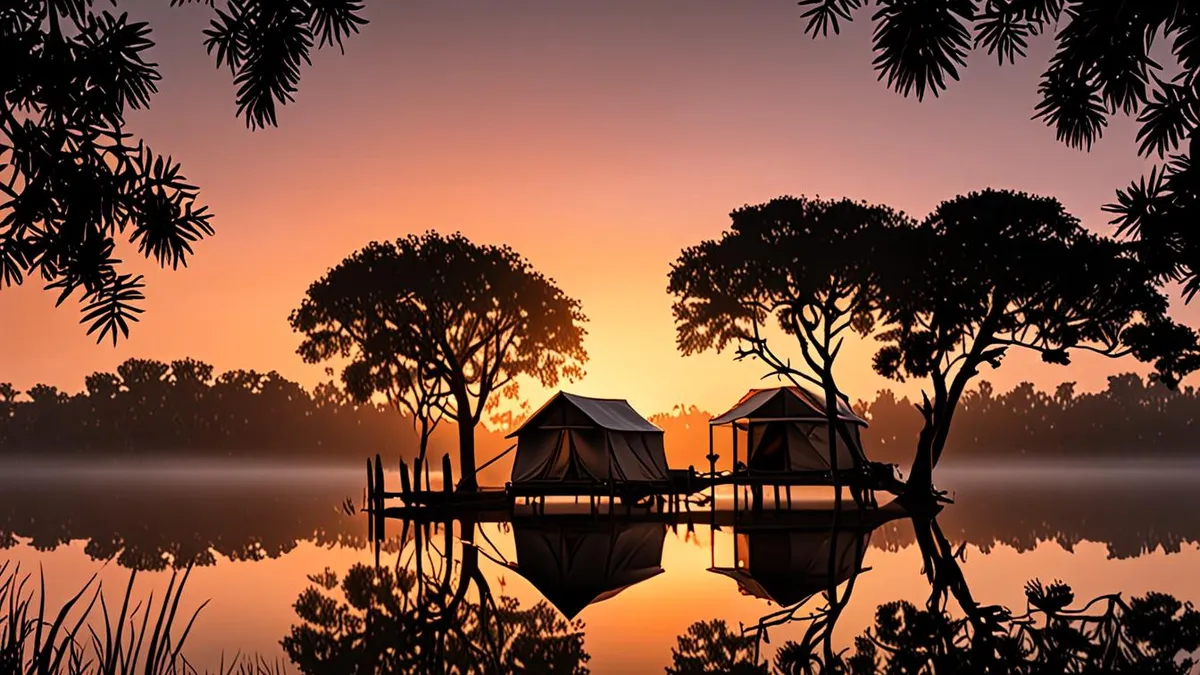
The Northern Territory is effectively two destinations in one, and glamping feels completely different in each. The Top End, covering Darwin and the Kakadu and Litchfield areas, offers tropical glamping near waterfalls, billabongs and crocodile country. Expect lush scenery, swimming spots (always check signage for crocodile risk) and warm, humid nights under canvas.
The Red Centre, built around Uluru, Kings Canyon and Alice Springs, is desert glamping at its best. The draws here are dark night skies thick with stars, dramatic rock formations glowing red at sunset, and the crisp cold of winter nights after hot desert days. The atmosphere is quieter and more starkly beautiful than the tropical north.
Why one region per trip is the smart move
Here is the detail that catches many first-time visitors: Darwin to Uluru is roughly 1,500 km by road. Trying to combine both regions in a single trip means days of driving, either by car or through internal flights, and it eats into the relaxed time glamping is supposed to provide. Most trips work far better when you pick one region and explore it properly.
Timing matters as much as geography. The tropical north shines in June to August, when humidity is low and nights are comfortable. The desert interior is best in the shoulder months of April to May and September, when days are warm without the summer extremes and nights are cool but not freezing.
If you are weighing up sites near big natural attractions, it helps to think like the guide to glamping near national parks and how to pick the right base: proximity, access and season all matter more than a fancy tent. Match the region to the month, and whichever corner of the NT you choose will reward you handsomely.
What NT Conditions Mean for Your Tent and Comfort
Glamping comfort in the Northern Territory depends far more on region and season than on the tent itself. In the Top End during the dry season, nights stay mild, so a standard canvas tent remains comfortable with light bedding and no heating. You will rarely need more than a sheet, and many travelers sleep with the canvas flaps open to catch the breeze.
The Red Centre is a different story. Desert nights in June to August can drop close to 5°C, a real contrast to the warm midday temperatures. Before booking, ask the operator whether they provide extra blankets, heaters or insulated tent styles. If cold-weather comfort matters to you, it helps to read up on how warm dome tents actually stay on cold nights, since insulated designs handle desert winter conditions far better than basic canvas.
Mosquitos and site layout
Mosquito numbers peak during and just after the wet season, so from October to April, screened tents and sites set away from standing water make a genuine difference to your comfort. Billabong-side sites sound romantic but can be the buggiest spots in the wet months.
Finally, verify the power and cooling setup before you pay. Fans or air conditioning are not standard at every NT site, and in a sealed canvas tent on a warm September night, that detail can decide whether you sleep well or not at all.
Booking Timing and Budget for an NT Glamping Trip
Timing your booking matters more in the Northern Territory than in most Australian destinations, simply because the comfortable season is short and demand concentrates into a narrow window. For a dry-season Top End trip, book 3-6 months ahead to avoid disappointment. June to August sites sell out first, and the best-positioned tents at popular operators, such as those closest to the water or with the best shade and airflow, often go before everything else. If you have your heart set on a specific tent or operator, treat your dates as fixed and reserve as early as your travel plans allow. Last-minute dry-season availability does exist, but it is usually limited to less desirable tents or midweek gaps.
Wet-season dates are much easier to book, sometimes at short notice, but do not assume availability means the site is running normally. Some NT glamping operations close entirely in the wet months or reduce services such as daily housekeeping, on-site dining or guided activities. Always confirm with the operator that your dates are fully operational before paying a deposit.
As for cost, expect roughly AUD 250 to 600+ per night for a couple. Red Centre tent stays near Uluru sit at the upper end of that range, thanks to their location and the facilities that come with them.
- Internal travel eats the budget: flights between Darwin and Alice Springs, or long fuel stops on road trips, are often the biggest expense after accommodation, so price them before choosing a tent.
- Shoulder months can soften the price: dates in May or September sometimes cost less than peak July while still offering dry weather, so compare a few weeks before locking in.
- Ask what the rate includes: some NT sites bundle meals, transfers or tours into the nightly price, which changes the real value considerably between operators.
Packing and On-Site Practicalities for the NT
Packing for the NT dry season is about sun and insects, not warmth. Bring light long-sleeved shirts with collars, a wide-brimmed hat, reef-safe insect repellent and a refillable water bottle. The Top End sun is intense even on overcast days, and dehydration sneaks up quickly when you are walking between a tent and a swimming hole all afternoon.
The Red Centre asks for a two-season wardrobe in one bag. Midday desert temperatures feel like summer, but winter nights drop sharply, so add a warm layer, a beanie and sleep socks for evenings around the camp. You will wear the warm gear for a few hours at night and barely think about it during the day, but those few hours matter.
Remote sites need a little planning
Many NT glamping sites are remote or partly off-grid, which is part of their charm and part of their challenge. Download offline maps before you leave phone coverage, and confirm meals, drinking water and power arrangements with the operator in advance. Some sites provide full board, others expect you to self-cater, and arriving hungry at an off-grid site 100 km from the nearest shop is a mistake you only make once.
Structure your days around early mornings and late afternoons. That is when wildlife is active, light is best for photos, and trails are pleasant. Midday heat makes midday hiking genuinely unpleasant even in the dry season, so treat the middle of the day as rest time in the shade and save the gorges and lookouts for the edges of the day.
Wrapping Up Your Northern Territory Glamping Plan
Glamping in the Northern Territory can absolutely live up to the dream, as long as the season and region do the work for you rather than against you. Aim for the dry season, with May to August as the sweet spot in the Top End and April to September suiting the Red Centre best. Pick one region per trip, since Darwin and Uluru sit roughly 1,500 km apart, and remember that Top End dry-season stays often need booking 3-6 months ahead, with rates typically running from about AUD 250 to 600+ per night for a couple.
The rest comes down to matching your tent and packing to NT-specific conditions: heat, insects and surprisingly cool desert nights. Get those three decisions right and a luxury tent stay stays luxurious instead of turning sweltering. If this helped you plan your trip, leave a comment or share the article with a fellow traveler.