Glamping in Western Australia sounds simple until you start planning it. The state is enormous, and its two headline settings — the temperate south-west coastline and the remote red-dirt outback — barely share a calendar. The south-west is at its best in autumn and spring, while the north, from Ningaloo to the Kimberley, only works in the dry season. Pick the wrong window and you could be packing for sunshine in the middle of a rainy week.
This guide breaks the decision down for you. We compare the coastal glamping areas from Margaret River to Ningaloo, look at outback stays near Karijini and in the Kimberley, and match each region to its best season. You’ll also find typical stay types and prices, plus practical booking tips so you know how far ahead to reserve. By the end, you should be able to choose one region, travel in the right months, and book with confidence.
Why Western Australia Suits Glamping
Western Australia offers something few states can: two genuinely different glamping experiences in one trip-worthy destination. Head south-west from Perth and you’ll find safari tents pitched at the edge of forests and vineyards, with a mild maritime climate and a coastline of surf beaches and tall timber. Fly or drive north and the scenery flips completely — red dirt, ancient gorges, and dome camps under some of the darkest night skies you’ll ever see.
That variety is the appeal, but it’s also the catch. Distances are huge. Perth to Margaret River is about 270 km, while Karijini National Park sits roughly 1,400 km north of the city. Trying to combine the south-west coast and the outback in a single week means spending most of it in transit, so most travelers pick one region and explore it properly.
Remote by default
The state’s low population density works in glampers’ favor. Outside the Perth corridor, sites can feel genuinely remote — no neighbors, minimal light pollution, and nights filled with birdsong or silence rather than traffic. That remoteness is especially noticeable north of Perth, where towns are hours apart and a camp’s nearest shop might be a long drive away. If you want a glamping stay that actually feels like an escape rather than a hotel with a canvas roof, Western Australia delivers it more reliably than most places in the country.
Coastal Glamping Areas: Margaret River to Ningaloo
The coastal stretch from Margaret River to Ningaloo covers a remarkable range of scenery, and each area has its own rhythm. Margaret River, about 270 km south of Perth, is the easiest to reach — within roughly 3 hours’ drive you can be sleeping in a safari tent on the edge of a vineyard or a forest, with wineries and beaches a short drive away. It’s the natural first choice for a first coastal glamping trip.
Further south, Albany and the surrounding coastline suit travelers who don’t mind cooler weather. This is whale watching territory from June to October, so a winter stay here pairs crisp coastal walks with humpback and southern right whale sightings offshore. The trade-off is rain — the south-west’s wettest months fall in winter, so pack accordingly and book sites with solid, weatherproof structures.
Head far north and you reach Ningaloo Reef near Exmouth, where beachfront tents and domes sit minutes from one of the world’s most accessible fringing reefs. Snorkelling here is the whole point of the trip, and conditions are best from April to October, outside cyclone season. If you’re choosing a base near a protected area, it helps to read up on how to pick the right base near national parks before committing.
- Shaded sites matter in the north. At Ningaloo, summer-adjacent months still bring strong sun, so prioritize tents and domes with shade structures or positioned near dunes rather than open beachfront.
- Vineyard stays come with extras. Margaret River safari tents on winery properties often include tastings or cellar-door access, so check what’s bundled into the nightly rate before comparing prices.
- Whale season shapes availability. Albany’s June to October whale watching draws visitors in winter, so cooler-season coastal stays there can book up despite the rain.
- Snorkel gear is usually on you. Many Ningaloo glamping sites don’t supply equipment, so plan to bring or hire snorkels and reef shoes in Exmouth.
Outback Glamping: Karijini and the Kimberley
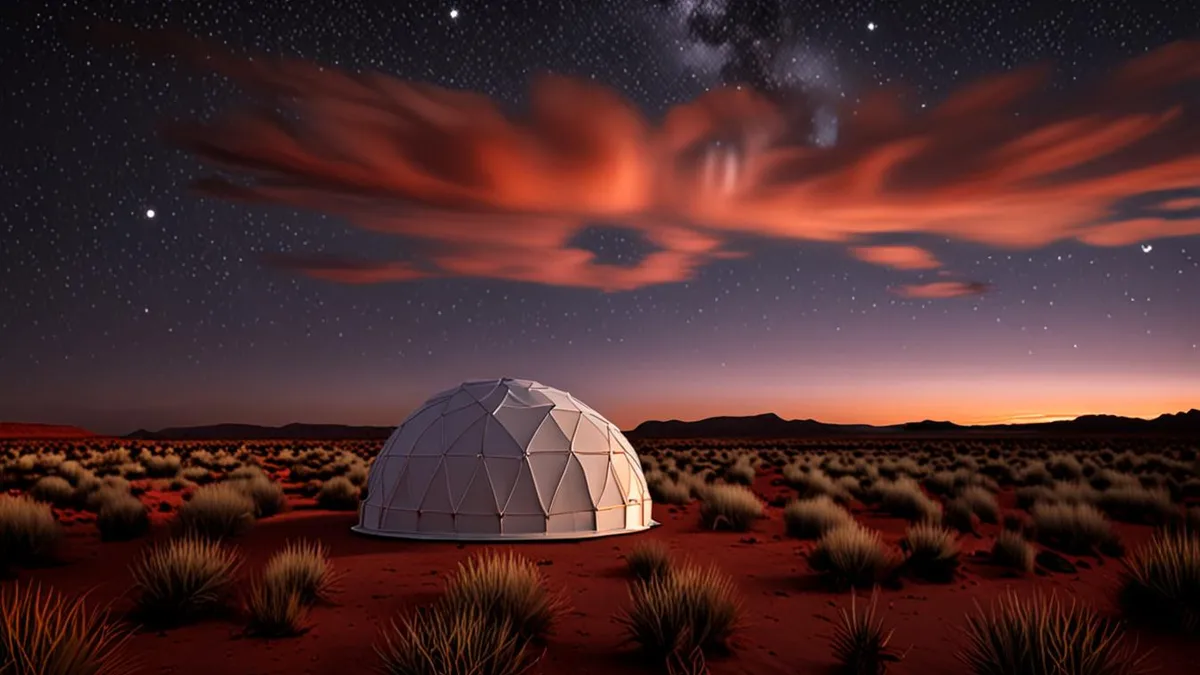
Outback glamping in Western Australia is a different beast from the coastal south-west, and the two headline destinations are Karijini National Park and the Kimberley. Karijini lies deep in the state’s interior, roughly 1,400 km from Perth, and most visitors fly into Paraburdoo or Newman before driving to the park. The dome and tent camps near the gorges put you within easy reach of slot canyons, swimming holes and some of the oldest exposed rock on the planet.
Timing is everything
In the Kimberley, the dry season from May to September is the only realistic window for gorge and ranges stays. Roads can be impassable in the wet, and many camps simply close outside the dry months. If a Kimberley trip is on your list, plan it around this window rather than trying to squeeze it into another season.
What off-grid really means
Off-grid setups are common in the outback, and that changes what you should expect from a booking. Solar power is the norm, Wi-Fi is limited or nonexistent, and some sites use shared bathroom facilities rather than en-suite tents. If you’ve never stayed somewhere with no power sockets and a composting toilet, it’s worth reading about what to expect from off-grid glamping without power or Wi-Fi before you book. Most travelers find the trade-off — silence, stars and total disconnection — is more than worth it, but it’s better to arrive knowing than to be surprised at check-in.
When to Go: Matching Season to Region
Timing is the single biggest factor in whether your Western Australia glamping trip feels like a dream or a washout. The state is so large that its regions run on opposite seasons, so the first question is not “when is the best time to glamp in WA?” but “when is the best time for the region I’ve chosen?”
The south-west coast, including Margaret River and Albany, is at its most pleasant from March to May and again from September to November. You get mild days, cooler nights for sleeping in a canvas tent, and fewer crowds than during the summer school holidays. If you like the idea of vineyards and coastal walks without peak-season traffic, these shoulder windows are the sweet spot.
The north-west coast and Ningaloo Reef follow a different calendar. April to October is the reliable window, with calm seas and clear water for snorkelling, while November to April is cyclone season and best avoided for coastal camping of any kind.
Here’s where it gets convenient: winter rain hits the south-west from June to August, which is exactly when the north is at its best. If your dates are fixed to June to August, aim north. If you’re flexible, you can chase the good weather in either direction. The same logic applies elsewhere in Australia, as covered in our guide to matching glamping regions to their best seasons.
- June to August is peak season for outback and Kimberley stays, so those dates sell out first and should be booked earliest in your planning.
- Cyclone season can affect more than just the coast; heavy wet-season weather can close access roads and campgrounds well inland, so factor that into any November to April trip north.
- Whale watching along the southern coastline runs from June to October, which overlaps with the south-west’s rainy winter months but can still suit travelers who don’t mind a wet day or two.
- Shoulder-month stays in the south-west often mean cooler nights, so pack layers even if daytime temperatures look mild on the forecast.
Stay Types and What They Cost
The two halves of Western Australia have developed slightly different glamping styles. Along the coastal south-west, around Margaret River and Albany, the safari tent is the signature stay. These are usually large canvas structures on timber decks, set among trees or on the edge of vineyards, and they often come with real beds, a small kitchenette and, at many sites, an en-suite bathroom.
Domes and off-grid setups
Head north to the outback around Karijini and the Kimberley, and geodesic domes take over. The dome shape handles remote sites well, standing up to wind and offering clear panels for stargazing on clear outback nights. These camps are frequently off-grid, running on solar power with limited or no Wi-Fi, which is part of the charm if you go in knowing what to expect.
On price, budget AUD 200-450 per night for a double across most WA glamping sites. Remote outback domes sit at the top of the range and can reach around AUD 600 per night, reflecting how much it costs to operate far from town power and water.
The detail that catches travelers out is amenities. Remote sites often trade en-suite bathrooms for composting toilets and outdoor showers, and some domes share bathroom blocks rather than having private facilities. Before you book, read the site description carefully and check whether power is continuous or generator-based, whether drinking water is supplied, and whether meals are available or you need to self-cater. A AUD 600 dome with no ensuite can still be a wonderful night’s stay, as long as it’s the night you were expecting.
Booking and Planning Tips
Glamping in Western Australia rewards forward planning more than most trips. The remote, low-density nature of the state means there are relatively few quality sites per region, and the good ones fill quickly in their respective season windows. A little lead time makes the difference between your first-choice dome and a last-minute compromise.
As a general rule, book outback dry-season stays three to six months ahead, because the May to September window is short and June to August is peak. South-west coast weekends need two to four months’ notice, especially around Margaret River where demand from Perth locals is strong on Friday and Saturday nights.
Cancellation terms deserve a close read, particularly for northern sites. Weather closures are more likely in the north, whether from wet-season conditions or road access issues, and remote operators sometimes have stricter or less flexible policies than you’d find on a standard hotel booking. Know what happens if the site closes or you can’t reach it.
Finally, think hard about food. Many outback sites sit hours from the nearest town with a supermarket, so self-catering is the default. Plan meals before you leave, bring a cooler, and confirm what cooking equipment your tent or dome provides.
- Ask whether your site supplies drinking water; at some remote locations you need to carry your own or filter on site.
- Check road access requirements, as some outback camps sit at the end of unsealed roads where a high-clearance vehicle is recommended, and conditions change with weather.
- Confirm check-in arrangements before arrival; remote sites sometimes run on self check-in with keysafes or meeting points rather than a staffed reception desk.
- If you’re flying into Paraburdoo or Newman for Karijini, arrange your car hire early, as vehicle availability at these small airports is limited in the dry season.
Wrapping Up Your WA Glamping Trip
The answer to the “where and when” puzzle is simpler than it first appears: pick one region and travel inside its window. The south-west coast shines from March to May and September to November, Ningaloo and the north-west coast run from April to October, and outback domes in Karijini or the Kimberley are strictly a May to September dry-season experience. Choose the region first, then the dates, and the rest of the planning falls into place.
Budget around AUD 200-450 per night for a double, with remote outback domes at the top of that range, and book ahead: 3-6 months for dry-season outback stays and 2-4 months for south-west coast weekends. With that approach, glamping in Western Australia stops feeling like an impossible logistics problem and becomes a trip you can actually plan. If this helped you sort out your own dates, leave a comment or share the article.