Planning a glamping trip in South Australia sounds simple until you start comparing regions. The Flinders Ranges offer outback nights under vast skies, while the Adelaide Hills, Barossa and Fleurieu Peninsula deliver wine country comfort closer to the city. Different climates, different price points and different booking windows make it genuinely hard to know where to start, and that’s exactly what this guide sorts out for you.
We’ll walk through the main regions, the best seasons for each, and what a typical stay costs — most sites for a couple run between AUD 180 and 450 per night. You’ll also find advice on choosing between stay types, how far ahead to book for peak periods, and what to pack, especially if you’re heading off-grid where Wi-Fi and phone coverage can’t be relied on. By the end, you’ll have a clear plan for glamping in South Australia that fits your budget, your season and your travel style.
Where to Go Glamping in South Australia: The Main Regions
South Australia offers four distinct glamping zones, and each delivers a very different experience. The Flinders Ranges is the outback showstopper: red-earth gorges, rugged ridgelines and star-filled skies, usually reached by a drive of around five hours north of Adelaide. Safari tents and eco-domes here sit on working stations and national-park edges, and the season runs from April to October, when the desert is comfortable rather than scorching.
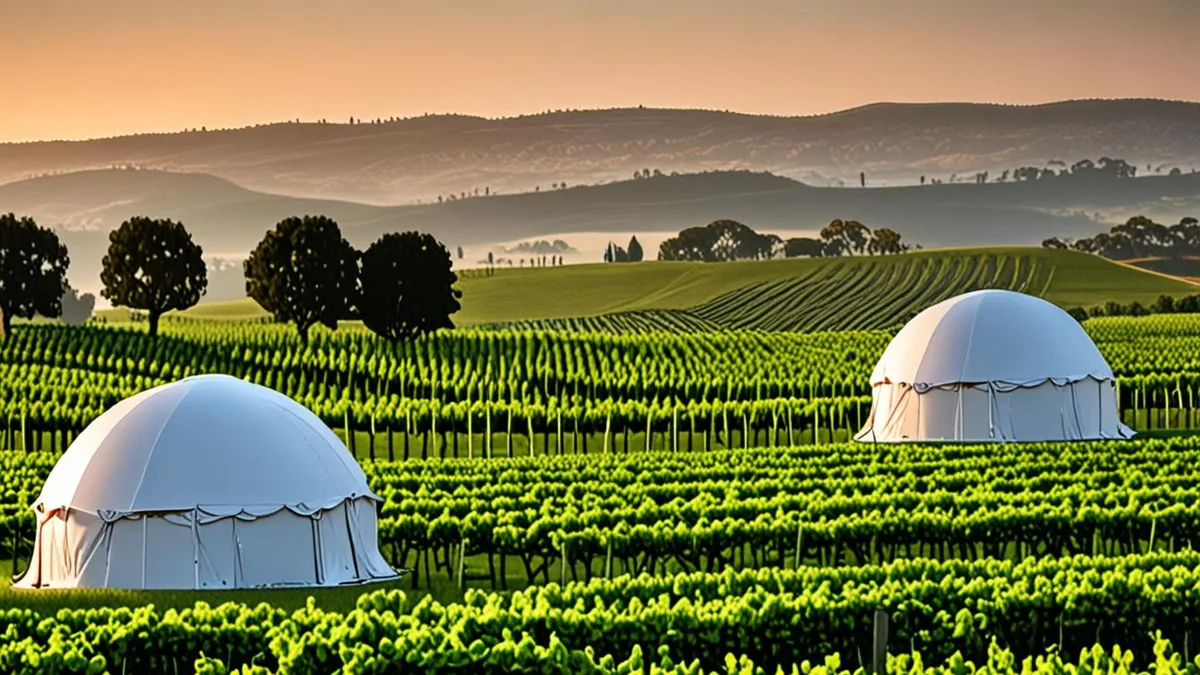
If you want an easier logistically, the Barossa Valley and Adelaide Hills bring glamping to wine country. Vineyard and forest stays sit within 60-90 minutes of Adelaide, which makes them perfect for a weekend with minimal planning. They are open year-round, though winter nights get genuinely cold, so check the heating situation before you book.
Coast and quieter corners
The Fleurieu Peninsula and Kangaroo Island pair coastal views with bushland sites, and they shine in spring and autumn when the weather is mild and the crowds are thinner. Expect sites tucked behind dunes or among native scrub, often a short drive from beaches and walking trails.
For travelers who want solitude, the Yorke Peninsula and the Limestone Coast are the quiet picks. Beachside sites and stays near national parks see far fewer bookings than the famous regions, which means more space, lower prices and a slower pace. These areas suit repeat visitors who have already seen the highlights and want the state’s less-traveled side.
The Best Seasons for Glamping in South Australia
Timing makes or breaks a South Australian glamping trip, because the state spans both temperate wine country and arid outback. The Flinders Ranges has a clear window: April to October brings mild days around 18-25°C, ideal for hiking and sitting outside a safari tent. Nights in the desert drop sharply, so even in the shoulder months you will want a warm sleeping setup. The same seasonal thinking applies elsewhere in the country, as our guide to glamping regions and seasons in the Pyrenees explains.
When to avoid the outback
December to February is the season to skip in the Flinders Ranges, when outback heat regularly exceeds 35°C and canvas accommodation becomes uncomfortable by mid-morning. If your dates fall in high summer, shift your trip to the cooler southern regions instead.
The Adelaide Hills, Barossa and Fleurieu Peninsula work year-round, which is part of their appeal for spontaneous travelers. The catch is winter: from May to August, nights can fall near 5°C, so pack warm layers, socks and a jacket for evenings on the deck. Frosty mornings are common in the Hills, and a dome with good heating is worth paying extra for.
Spring, from September to November, is arguably the sweet spot for the whole state. Wildflowers color the countryside, temperatures are comfortable almost everywhere, and availability is generally better than in the autumn school-holiday rush. If your dates are flexible, aim for spring first and work backward from there.
What Glamping in South Australia Costs
Glamping in South Australia is not budget travel, but it is more affordable than many travelers expect. Most stays cost AUD 180-450 per night for a couple in a safari tent, dome or eco-lodge. Where you land in that range depends on location, season and how much comfort the site offers. For a broader comparison across the country, see our breakdown of how much glamping costs by stay type.
Vineyard and coastal domes sit at the upper end of the range, and weekend rates push them higher still. A Saturday night in a Barossa dome with a spa bath can cost notably more than the same dome midweek. Off-grid and national-park-edge sites are often cheaper, but you trade away power, Wi-Fi and sometimes running comforts, so weigh the savings against what you actually need.
- Midweek discounts: many operators drop rates noticeably from Sunday to Thursday nights, so shifting your stay by two days can save a meaningful amount over a long trip.
- Minimum-night stays: popular sites often require two or three nights on weekends and holidays, which effectively raises the total cost of a short getaway.
- Cleaning and service fees: some properties add flat fees per booking rather than per person, so these hurt less for couples and more for small groups.
- Seasonal inclusions: firewood, canoes or guided walks are sometimes bundled into winter rates as an incentive, adding value without raising the headline price.
Group travelers have a real advantage here. Larger tents and multi-bedroom setups can be split between several people, cutting the per-person cost well below what a couple pays. If you are traveling with friends or extended family, ask operators directly about their biggest configurations before defaulting to booking multiple small units.
Choosing the Right Stay Type for Your Trip
Picking the right style of accommodation matters as much as picking the region, because South Australian glamping covers everything from rugged outback canvas to polished vineyard domes.
Safari tents are the natural fit for the Flinders Ranges. Their heavy, sturdy canvas handles outback wind and the big temperature swings between day and night far better than lighter structures, and most outback operators build them on solid platforms with proper beds and en suite facilities. If you are torn between the two main styles, it helps to read up on how safari tents and domes compare on warmth and comfort before you commit.
Domes in the Hills and Barossa
Geodesic domes suit the Adelaide Hills and Barossa well: they sit neatly among vines and forest, and many come with large windows framed for the view. The catch is insulation. If you are traveling between May and August, when nights drop close to 5°C, ask the host directly about heating, double glazing and how the dome performs in cold weather before booking.
Match the setup to your group
Couples should prioritize privacy features: a private deck, an outdoor bath or a wood-fired hot tub can turn a good stay into a memorable one. Families have different needs, so look for sites with separate sleeping areas or a second bedroom rather than one open space, and check whether kids are welcome before you book.
Finally, always confirm whether the site is off-grid. Many remote South Australian locations have no mains power, no Wi-Fi and no phone coverage, which some travelers love and others find a shock. Ask about solar power, lighting and charging options in advance so there are no surprises when you arrive.
How and When to Book
Glamping in South Australia rewards early planning, especially in the popular regions. The best sites are usually small operations with only a handful of tents or domes on the property, so inventory is thin and demand is concentrated around a few key dates on the calendar. Unlike a large hotel that can absorb last-minute bookings, a six-tent outback site can be fully committed months in advance, and there is rarely a comparable alternative nearby if you miss out.
- Lock in peak dates early. For Easter, school holidays and the October long weekend, book 3-6 months ahead. These windows fill fastest because families and couples all compete for the same limited spots, and weekend rates climb as availability shrinks.
- Move even earlier for the Flinders Ranges. Sites there sit roughly 450-500 km north of Adelaide and have very limited inventory, so peak-season dates can sell out around 6 months out. If you want an April or October outback stay, set a reminder and book as soon as dates open.
- Consider winter for a bargain. Winter (June-August) is low season in the Flinders Ranges: fewer sites open, but the ones that do typically charge cheaper rates. It suits travelers who prefer quiet nights and crisp days over guaranteed warmth, and who are happy to pack extra layers for cold evenings.
- Read the cancellation terms carefully. Remote outback sites often have stricter policies than city-adjacent ones, with shorter grace periods or partial refunds only. Check what happens if weather closes access roads before you pay, and whether the operator offers a date change instead of a refund.
Once you have booked, save the host’s contact details and confirmation offline, since a few remote operators are hard to reach by phone or email in the days before arrival. Many outback and off-grid locations have no phone coverage at all, so a printed confirmation with directions and check-in instructions is worth carrying alongside the digital copy. Confirm the arrival window with the host as well, because some small sites have no on-site staff and rely on lockboxes or self-check-in instructions sent ahead of time.
What to Pack and What to Expect On Site
Glamping gives you a real bed and usually solid shelter, but many South Australian sites sit in genuinely remote country, so what you bring matters. The biggest adjustment for most travelers is temperature: outback nights drop sharply even in April and October, when days feel mild and pleasant. Pack layers you can add and remove easily, including a warm jacket, beanie and socks for the evening, even if the forecast looks gentle.
Beyond clothing, a few items earn their space in the bag on almost every trip:
- A torch or headlamp. Off-grid sites often use low-level solar lighting, and walking to a communal bathroom or your tent after dark is genuinely dark, with no ambient light from nearby towns.
- A power bank. With no power at the site, a charged power bank keeps phones, cameras and medical devices running for the length of your stay, especially if you are staying several nights.
- Offline maps. Since many remote sites have no phone coverage, download maps of the region before you leave Adelaide, plus any driving directions the host has sent you.
- Your own food plan and basics. Some sites supply firewood, linen or meals, others supply none of these, so confirm exactly what is included before you leave.
Self-catering is the norm at most South Australian glamping sites, and cooking facilities range from a full kitchen to a single camp stove or communal fire ring. If your site has limited facilities, plan simple one-pan meals: think stir-fries, pasta, sausages and vegetables, or foil-packet dinners over the coals. Shop in the last regional town before you arrive, because there will not be a corner store down the road.
Wrapping Up Your South Australia Glamping Plan
Choosing between South Australia’s glamping regions comes down to one simple move: pick your region first. The Flinders Ranges delivers red-earth outback scenery, the Barossa and Adelaide Hills suit vineyard lovers, and the Fleurieu Peninsula is the pick for coastal stays. Each has a different climate, so match the season to the region, with April to October the best window for the north.
Then lock in the practical details. Most stays for a couple run AUD 180-450 per night. High-demand periods, particularly the Easter break, school holiday weeks and the long weekend in October, often fill up well in advance, so booking 3-6 months ahead makes sense. Before paying, confirm the stay type suits your group, whether the site is off-grid with no Wi-Fi or phone coverage, and how strict the cancellation terms are. If you’ve glamped in South Australia, share your experience or questions in the comments below.