If you love the idea of sleeping under the stars but can’t face a night on a thin mat with a torch between your teeth, glamping in New south Wales might be exactly your speed. The tricky part is knowing where to go and when: some regions shine in spring and autumn, while winter nights in the Blue Mountains and Southern Highlands can drop to 0-5°C, and summer on the coast is glorious but busy. It also helps to know what you’re actually paying for, since sites range from simple safari tents to lodges with real beds, linen and private bathrooms.
This guide walks you through the whole process. We’ll cover why glamping in New south Wales works year-round, the best regions to base yourself in, and what a typical stay costs, from tents and domes around AUD 150-300 per night to luxury lodges at AUD 350-600+. You’ll also find advice on when to book, what to pack, how to handle food and transport, and what to realistically expect when you arrive at your site.
Why Glamping in New South Wales Works Year-Round
New South Wales is large and varied enough that glamping here is genuinely a year-round option. The state stretches from subtropical beaches in the north to alpine-influenced ranges and cool countryside in the south, so instead of asking whether it is the right season, you can simply choose a region that matches the month. If the coast is hot and crowded, head for the highlands. If winter has settled in, chase the sun up north or embrace it with a heated dome.
The sweet spots: spring and autumn
September to November and March to May are the most comfortable months across most of the state. Days typically sit in the mild 15-25°C range, nights are cool enough for a firepit but not cold enough to need serious heating, and schools are back in session, so sites are quieter than in summer. These seasons suit nearly every stay type, from beachfront safari tents to vineyard-side cabins, and you avoid the peak-season price bumps that come with December to February.
Summer is beautiful but hot and busy, especially on the coast. Jervis Bay averages 22-26°C and inland sites can push past 30°C, so if you do travel in summer, prioritize shaded tents with good airflow and book well ahead.
Winter is for cozy stays
Winter, from June to August, is when the Blue Mountains and Southern Highlands come into their own. Nights often drop to 0-5°C, which sounds chilly until you picture a geodesic dome with proper heating, a glass of wine and mist rolling through the valleys in the morning. Operators in these regions build their stays around the cold season, with wood heaters, hot showers and blankets as standard rather than an afterthought. If you want a fireplace-and-fog experience without flying to Tasmania, this is it.
Best Regions for Glamping in New South Wales
New South Wales packs a remarkable amount of variety into one state, and each glamping region has its own personality. Picking the right one first makes everything else easier, from what you pack to how far ahead you book. Here’s how the main regions compare.
The North Coast, with Byron Bay as its star attraction, is where beach lovers head. You’ll find glamping sites set behind dunes and along hinterland ridges, all within easy reach of swimming beaches and surf breaks. The trade-off is popularity: this is the most in-demand glamping corner of the state, so prices run highest and sites sell out fastest in summer.
The Blue Mountains sit about two hours from Sydney, which makes them the easiest escape for a weekend. Expect eucalypt forests, misty valleys and cliff-top lookouts, plus a genuinely cool change. Even on summer days, nights up here feel noticeably crisper than on the coast, so bring an extra layer regardless of the season.
The South Coast and Jervis Bay offer some of the most scenic beachfront tent sites in Australia, with white sand and calm water for kayaking or swimming. Jervis Bay sits roughly three hours from Sydney, close enough for a long weekend but far enough to feel like a proper getaway. Summer demand here is strong, especially for sites with direct beach access.
Inland, the Hunter Valley and Southern Highlands trade surf for vineyards, rolling farmland and cellar doors. These regions suit couples looking for a slower pace, and many properties pair a night under canvas with wine tastings nearby. If you enjoy this countryside style of glamping, the same appeal carries over to European destinations — this guide to glamping in the Pyrenees, with its best regions and seasons, covers similar mountain-and-vineyard terrain.
- North Coast in summer: coastal areas here are hot and humid, and inland pockets can exceed 30°C, so prioritize safari tents with good airflow.
- Blue Mountains as a quick trip: the short drive from Sydney means you can leave Saturday morning and still have a full afternoon of walks before check-in activities wind down.
- Jervis Bay water temperatures: summer averages of 22-26°C make swimming and snorkeling genuinely comfortable, not just a brave dip.
- Hunter Valley logistics: many vineyard stays are within a short drive of multiple cellar doors, so you can book tastings rather than relying on walk-ins.
- Shoulder-season sweet spot: the South Coast in the September to November or March to May windows offers warm days with thinner crowds than peak summer.
When to Book and What NSW Glamping Costs
Glamping in New South Wales is popular enough that the best sites sell out well in advance, especially on weekends. For stays in spring (September to November) and autumn (March to May), aim to book 3-6 months ahead. Coastal summer sites are even tighter: if you want a beachfront tent or dome between December and February, plan on 6 months or more of lead time. Midweek dates are much easier to secure and often cost 20-30% less than the same site on a weekend, so if your schedule allows, a Tuesday or Wednesday night is the easiest way to save.
What you can expect to pay
Most tent and dome stays across NSW fall in the range of AUD 150-300 per night. If you want a luxury lodge or eco-cabin with en-suite bathroom and extras like a spa, budget AUD 350-600+ per night. Prices climb during school holidays and long weekends, and premium regions such as the North Coast tend to sit at the top of each range.
Before you pay, read the cancellation terms carefully. Many NSW glamping sites are small, family-run operations, and their policies vary widely: some offer flexible rescheduling, while others keep a large share of your payment if you cancel close to your arrival date. A refundable option or travel insurance can be worth the extra cost for a peak-season booking. For a step-by-step walkthrough, see this guide on how to time your booking and handle cancellations.
Choosing Your Stay Type: Tents, Domes and Lodges
Not all glamping structures behave the same way once you leave the photos behind, and the difference matters most when the weather turns. A structure that feels dreamy in a summer Instagram post can be chilly and damp in July, so it pays to match the build style to your travel dates.
Safari tents for coastal warmth
Safari tents are the classic choice for beachside stays along the New South Wales coast. Their canvas walls and large openings breathe well, which is exactly what you want when coastal summer days average 22-26°C and you’d rather catch any sea breeze than block it. Wide verandas and shade cloth keep the interior usable through the hottest part of the day. In exchange for that airflow, you accept less insulation — canvas warms up fast and cools down fast, so these tents shine in the warmer months rather than the middle of winter. If you’re weighing canvas against a harder shell, our comparison of safari tent and dome warmth breaks down how each performs overnight.
Domes, lodges and when to choose them
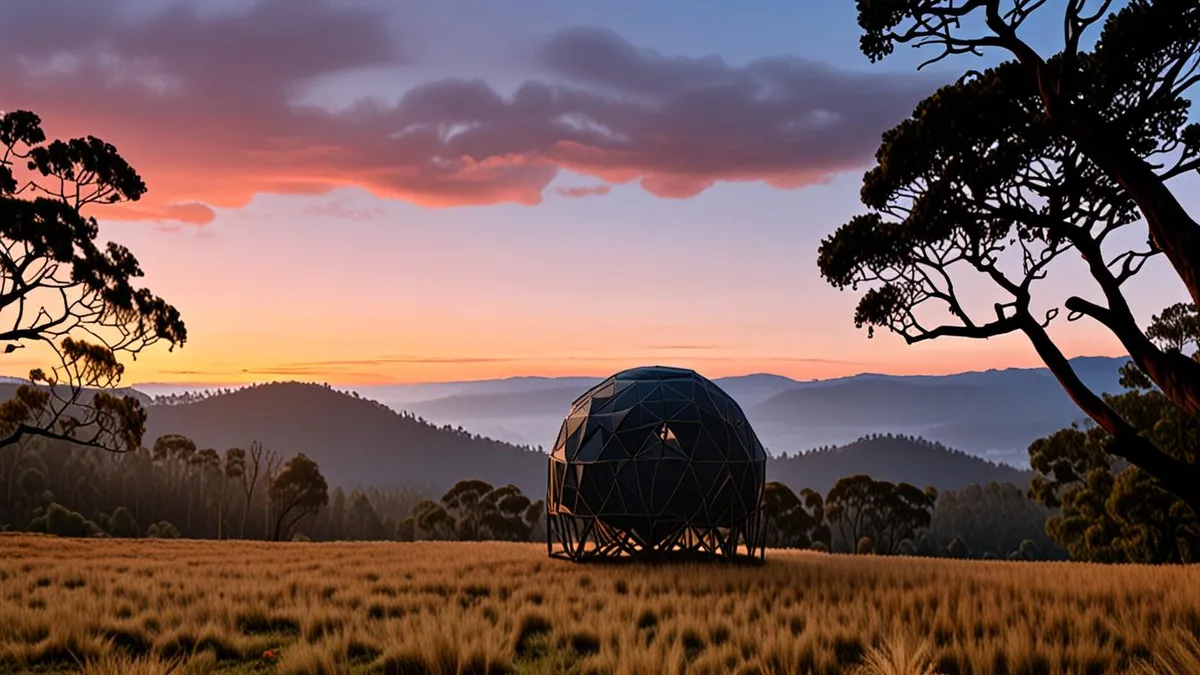
Geodesic domes are the opposite story. Their rigid shell and insulated lining hold heat far better than canvas, which makes them the sensible pick for a Blue Mountains winter, when nights often drop to 0-5°C. Look for domes with a wood heater or reverse-cycle air conditioning and you’ll get that stargazing-through-the-window experience without shivering.
Luxury lodges and eco-cabins sit at the top of the range, typically costing AUD 350-600+ per night, and they suit couples best. You get a solid roof, a private en-suite bathroom, proper heating and often access to a spa or plunge pool — a very different proposition to a tent with shared facilities a short walk away.
The short version: choose the structure for the season first, and let the styling come second. A gorgeous dome in a humid coastal summer or a breezy canvas tent on a frosty mountain night will both disappoint, no matter how good the listing photos look.
What to Expect at a NSW Glamping Site
Most NSW glamping sites have moved well beyond the “tent on a patch of grass” model, and the standard inclusions reflect that. You can typically expect a real bed with proper linen, lighting powered by solar panels or mains electricity, and an outdoor area with seating or a firepit for evenings. Many operators add small touches like a kettle, basic kitchenware or a welcome pack, but the core setup is consistent across most established sites.
Bathrooms are the biggest variable between properties. Some tents and domes come with a private en-suite attached, while others rely on shared amenity blocks a short walk away. Neither option is inherently better, but the difference matters if you are traveling with someone who values privacy or you are staying several nights. Always check the bathroom situation before you book rather than assuming, because photos often show only the interior of the tent itself.
Off-grid sites are common in remote parts of NSW, especially in bushland and hinterland locations away from town centers. These runs on solar power and battery storage, which usually means enough electricity for lights and charging a phone, but not much more. Wi-Fi is often unavailable entirely, which some travelers consider a feature rather than a flaw. If you need reliable power for medical devices or work, confirm what the site provides before committing.
Food arrangements also vary widely. Many sites allow self-catering with a BBQ or basic cooking setup, while others offer on-site dining or breakfast hampers delivered to your tent. A few high-end lodges include meals in the rate.
- Cooking equipment: Off-grid sites often provide only a BBQ plate or a two-burner camp stove, so check whether pots, utensils and a fridge or esky are included before planning elaborate meals.
- Drinking water: Remote properties may rely on tank water or delivered supplies, so ask whether you should bring your own bottled water, especially in summer.
- Breakfast hampers: Some operators deliver a hamper of local produce to your tent each morning, which works well if you want a slow start without driving to the nearest town.
- Fires and firepits: Firepit use can depend on local conditions and seasonal restrictions, so confirm whether fires are permitted during your stay rather than packing firewood on the assumption you will need it.
Planning Your Trip: Packing, Food and Getting There
Packing for the Conditions
Layering is the single most useful packing strategy for NSW glamping. Days can be warm and pleasant while nights turn sharply cold, particularly in the Blue Mountains and inland areas, where winter temperatures often drop to 0-5°C. Bring a warm jacket, thermals if you feel the cold, and socks you can sleep in, even if the forecast looks mild. A headlamp or small torch also earns its place, since some sites have limited lighting between your tent and the amenities.
For off-grid sites with limited cooking facilities, keep meals simple. Think one-pot dinners, pre-marinated meats, wraps, and breakfast items that need little more than a pan and a stove. Pack a small cooler with your essentials rather than planning to buy groceries nearby, because the nearest town may be a long drive away. Bringing your own coffee setup is another small comfort many glampers swear by.
Getting There and Road Access
Drive times from Sydney vary a lot by region, so plan your travel day realistically. The Blue Mountains are about 2 hours from the city, making them the easiest weekend option. Jervis Bay sits roughly 3 hours away, while the North Coast is a much bigger commitment at 8-9 hours of driving, which usually means an overnight stop or an early start.
A car is essential for most regional NSW sites. Public transport rarely reaches glamping properties directly, and even when a train gets you close, the final stretch usually requires a taxi or rideshare that may be hard to arrange in rural areas. If you are renting a car, check whether the site sits down an unsealed track, because some access roads are gravel or dirt and rental agreements can restrict where you take the vehicle. A quick message to the operator before booking will tell you whether a standard car is fine or you need something with higher clearance. Arriving before dark is also worth aiming for, since finding your tent on an unfamiliar property is much easier in daylight.
Wrapping Up Your NSW Glamping Plan
Glamping in New South Wales works best in spring and autumn, when days are mild and crowds are thinner, while winter calls for a heated dome in the Blue Mountains or Southern Highlands. Summer suits the coast, though that is also when demand and prices peak. Matching the region to the month is the single biggest decision you will make.
From there, pick your stay type and budget, whether that is a tent or dome from AUD 150-300 per night or a luxury lodge from AUD 350-600+. Book 3-6 months ahead for the best spring and autumn weekends, confirm what your site actually includes before you pay, and check cancellation terms carefully. If this guide helped you plan your trip, leave a comment or share it with a fellow traveler.