Many travelers love the idea of a lodge but feel a quiet pang of uncertainty the first time they step into a shared lounge or sit down at a long communal dinner table. Unlike a hotel, where you can pass days without more than a nod to another guest, a lodge puts you shoulder to shoulder with strangers around the fireplace, on the viewing deck and over breakfast. How do you claim a seat without seeming greedy? How late is too late for conversation? That uncertainty is exactly what lodge etiquette is designed to solve.
This guide walks through the situations that trip up even experienced travelers. We’ll look at why shared spaces work differently in lodges, how to share lounges, decks and fireplace areas gracefully, and what good manners look like at a communal dinner table. We’ll also cover quiet hours and early starts, tipping and house rules, and specific customs at mountain, fjord and lakeside lodges, before wrapping up with the habits that make you the guest everyone enjoys.
Why Lodge Etiquette Matters in Shared Spaces
Walk into a hotel lobby and you’re essentially in a transit zone: people pass through, grab a key and disappear. A lodge is different. The lounge, the deck and the fireplace area are genuine living rooms, meant to be used for hours at a time. That’s the whole point of the place, and it’s also why lodge etiquette matters more here than it ever did at a city hotel.
The scale amplifies this. Most lodges have somewhere between 8 and 20 rooms, which means you’ll see the same faces at breakfast, again on the veranda and again at dinner. There’s no anonymity to hide behind. A small courtesy on the first evening, or a small thoughtlessness, will follow you for the rest of your stay.
A temporary community
Remote settings turn staff and guests into something like a temporary village. Everyone eats from the same kitchen, relies on the same generator or water supply and shares the same views. In that kind of close quarters, consideration isn’t a formality, it’s the mechanism that keeps the stay pleasant for all. The good news is that the rules are simple, mostly common sense, and easy to follow once you know them. The sections below cover the practical details, from fireplace chairs to fixed dinner seatings.
Sharing Lounges, Decks and Fireplace Areas
Lodge lounges, decks and fireplace areas are the heart of the property, and most guests will drift through them at some point in the day. The main principle is simple: treat these spaces as if you’re hosting, not occupying. Most lodges treat their common areas as quiet zones after roughly 21:00 to 22:00, so lower your voice, skip the speaker on the table and let the room settle toward the evening’s end. If you want to chat past that point, head to the bar or an outdoor area well away from the guest rooms.
Prime real estate is exactly that. The chair closest to the fire and the window seat facing the view are limited, and everyone wants them. Taking turns, rather than camping in one spot from breakfast to bedtime, keeps the atmosphere friendly and means nobody spends their whole stay staring at the back of your headrest. The same applies to the good reading corners and puzzle tables: enjoy them, then move on.
Small habits that keep shared spaces pleasant
- Clear as you go. Carry your mug, glass and any books or papers back to the kitchen counter or side table when you leave, rather than leaving them for staff to collect around the room.
- Keep personal items contained. A shared coffee table isn’t a storage shelf, so keep chargers, cameras and daypacks gathered on one corner of your seat instead of spread across the table.
- Respect the footwear custom. Many lodges ask guests to keep shoes off in common lounge areas or provide indoor slippers at the entrance, so watch what the house does and follow it from day one.
- Rotate the best seats. If you’ve had the fireplace chair through the evening, offer it to someone returning from dinner or an afternoon walk before settling in for a second round.
Dining Etiquette at Communal Tables
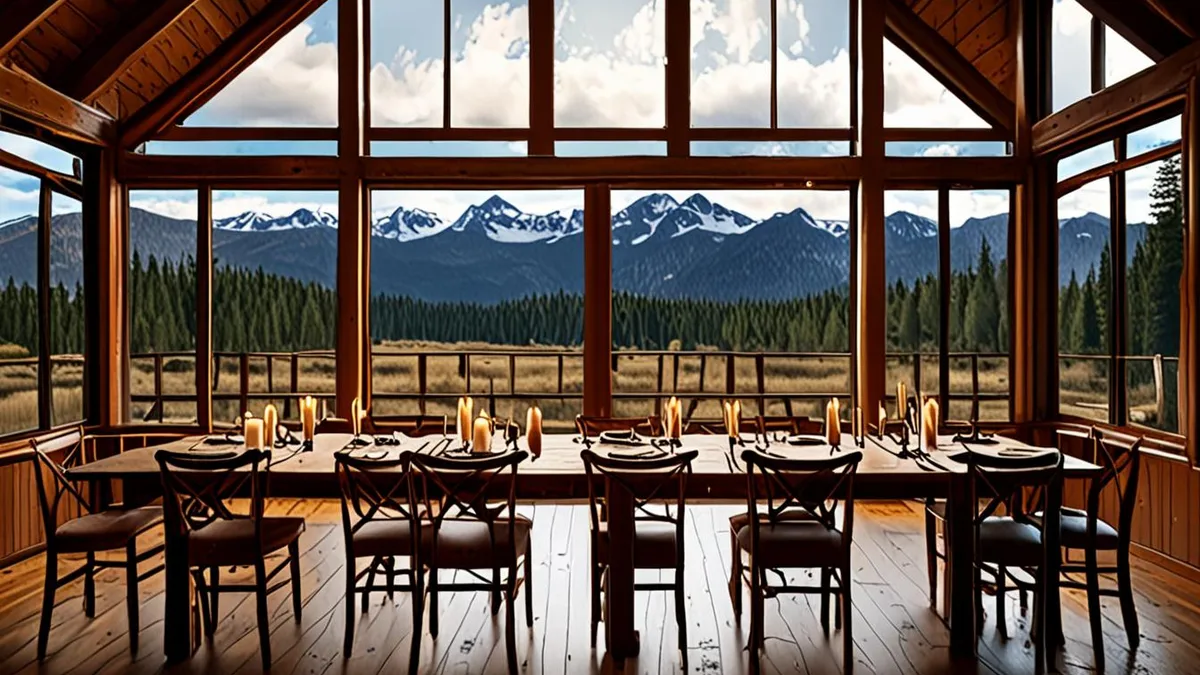
Dinner at a remote lodge is often the social centerpiece of the day, and it usually runs on a fixed schedule. Seatings are commonly around 19:00 to 19:30, and arriving on time matters more than it would at a restaurant you booked for yourself. Remote kitchens typically cook one or two set courses for everyone at the same time, so a guest who strolls in twenty minutes late can hold up service for the entire room and leave the kitchen scrambling. If you know you will be delayed by a long drive or a delayed transfer, let the staff know as early as you can so they can plan around it.
Communal tables, often seating 8 to 12 guests together, are standard at mountain and fjord lodges. Introduce yourself to the people beside you and keep the conversation open to the whole table rather than forming a closed circle with your travel partner. The mix of nationalities, ages and travel stories is part of the fun, and the traveler who includes others is usually the one everyone remembers fondly. If you would rather not share a table, check whether the lodge offers smaller seating when you book, rather than claiming a corner spot on a shared table and ignoring your neighbors all evening.
Practical dining manners that make a difference
- Send dietary requests early. Remote kitchens order supplies days in advance, so give your allergies, intolerances or preferences 48 to 72 hours before arrival rather than mentioning them at check-in.
- Keep phones off the table. If you must take a photo of the view between courses, do it quickly and keep the device in your pocket afterward.
- Match the room’s volume. Timber and stone buildings carry sound remarkably well, so a loud laugh or an animated story at one end of the table can be heard by every guest in the room.
- Wait for the table. In many lodges, the host or kitchen signals when the meal starts, so let the group settle before you begin eating or asking for refills.
Quiet Hours, Early Starts and Considerate Roommates
Many lodges run on an early rhythm, and nowhere is that more obvious than at safari properties. If you are planning a trip, it helps to know what you are signing up for before you arrive — our guide on how to choose a safari lodge in Kruger National Park covers what a typical day looks like. Morning game drives typically start between 05:30 and 06:00, which means wake-up knocks, coffee calls and footsteps in hallways long before sunrise.
As a guest, you can make those early starts easier for everyone. If you are the one getting up at dawn, keep your door from slamming, pack your bag the night before and speak softly on your way out. If you are sleeping in, a pair of earplugs goes a long way, and a little patience with the 05:45 coffee machine goes even further.
Sound carries surprisingly well in lodges. Timber walls, thin doors and open verandas mean your conversation can become your neighbor’s alarm clock. A few habits make a real difference:
- Use headphones for music, podcasts and videos whenever you are in shared corridors or on verandas next to guest rooms.
- Take phone calls inside your room or away from sleeping quarters rather than pacing the deck at 23:00 on speakerphone.
- If your room shares bathroom facilities, agree on morning slots with your roommates the night before so nobody is showering at the same time someone needs the mirror.
- Close doors with your hand rather than letting them swing shut, since latches on older lodge doors can be loud enough to wake a wing of guests.
None of this requires much effort — it is simply about remembering that walls in the bush are thinner than the ones at a city hotel.
Tipping, Staff Relations and House Rules
Tipping at lodges works differently from hotels, and the biggest mistake travelers make is assuming there is one universal system. Many safari lodges prefer a communal tip box, where contributions are shared among all staff including the cooks, cleaners and guides you never see. Others encourage individual tipping for standout service. Before your stay, ask your operator or the lodge directly which system they use. As a rough guide, safari lodges commonly see tips in the range of 10-20 USD per day per guest, though you should confirm current expectations with your specific lodge. For a fuller breakdown of where your money goes, see our article on what a stay at an African safari lodge really costs.
Your relationship with staff matters just as much as the money. In small lodges you will see the same guides, waiters and housekeepers several times a day, and learning a few names transforms the experience. Staff who feel recognized are more likely to share local knowledge, wake you gently for that early drive or remember how you take your coffee.
Problems are best raised early and calmly. A dripping tap mentioned at breakfast is usually fixed by dinner; the same issue raised angrily at checkout helps nobody. A few practical points to keep in mind:
- Carry small denominations of cash if you plan to tip individuals, since not all remote lodges can add tips to a card or bill.
- Ask before photographing staff, and respect it gracefully if someone declines.
- Check the house rules on alcohol before bringing drinks to your veranda, as some lodges restrict alcohol outside dining areas for safety around wildlife.
- Confirm laundry arrangements on arrival — many remote lodges wash by hand with long turnaround times, so plan around that rather than expecting same-day service.
- Take wildlife boundaries seriously: fences, marked paths and night-time escort rules exist for your safety, not as suggestions.
Etiquette at Destination Lodges: Mountain, Fjord and Lake Stays
Lodge etiquette changes with the landscape, and what works at a safari camp may look odd in the Alps. Mountain lodges have their own rhythm, shaped by mud, snow and wet weather gear. The first rule is simple: deal with your boots at the door. Most alpine-style lodges provide boot scrapers, brushes or mats at entrances, and using them keeps communal floors walkable. Wet jackets, gloves and hiking pants belong in the designated drying room, not draped over radiator covers or fireplace chairs in the shared lounge.
Fjord and lakeside lodges revolve around water and views, which makes fairness the key virtue. Kayaks, paddleboards and the best deck chairs are shared resources, and the guests who book equipment slots in advance and rotate fairly are the ones everyone enjoys sharing a veranda with. If you are researching a Norwegian trip, our guide to Norway fjord lodges with the best views shows which properties put you closest to the water.
Dining customs also vary by region, and adapting to them is part of being a considerate guest. A few specifics worth knowing:
- Alpine and wine-country lodges often serve longer multi-course dinners, so plan your evening around the meal rather than trying to squeeze it in before another activity.
- Communal tables at mountain and fjord lodges often seat 8-12 guests together, so expect shared meals even if you booked a private room.
- In regions with set menus, mention allergies or strong preferences when you book rather than at the table, since remote kitchens plan courses days ahead.
- On clear evenings, step out to the viewing deck between courses rather than skipping the meal entirely — local cuisine is often part of why you came.
The Wrap-Up: Being the Guest Everyone Enjoys
If you arrived wondering how to act around strangers in a lodge’s shared lounges, decks and dining rooms, the answer is simpler than it feels. Good lodge etiquette comes down to timing, tidiness and quiet awareness of shared rhythms. Show up on time, leave spaces as you found them, and keep your voice and phone use in step with the room around you.
Fixed mealtimes, early starts and communal tables reward punctual, friendly guests, and the house rules are there to make life easier for everyone, so read them rather than assuming hotel norms. Treat staff and fellow guests as temporary neighbors and your stay, and theirs, will be smoother for it. If these tips helped you feel more confident about your next lodge stay, leave a comment or share this article with a fellow traveler.