You booked a villa with a pool, and the photos look perfect: blue water, sun loungers, kids cannonballing off the steps. But scroll through the listing and you’ll find nothing about whether that pool is heated, how often it gets cleaned, or whether it’s even open during your travel dates. It’s one of the most common gaps in villa descriptions, and it can turn a dream stay into a pool you only look at.
This guide walks you through everything the listing leaves out. We’ll cover why pool heating matters more than you think, how private pool villas are actually heated, what maintenance happens while you’re there, and the exact questions to ask before you book. We’ll also help you budget for the pool separately from the villa and match pool season to your destination, so the water is warm, clean and ready when you arrive.
Why Pool Heating Matters More Than You Think
Here’s the detail most listings skip: outside July and August, unheated pools in Mediterranean villas often sit at 18-22°C. That may sound swimmable if you’re used to hotel pools, but at those temperatures most people manage a quick dip and then retreat to a lounger. Children and anyone who feels the cold will usually skip the water entirely.
What heating actually changes
Heating typically lifts the water temperature by 5-10°C over an unheated pool, which is the difference between bracing and genuinely comfortable. That’s what makes shoulder-season stays in October or April work: the villa costs less, the crowds are gone, and the pool becomes something you use every day rather than a photo opportunity.
There’s also a marketing trap worth knowing about. Many listings show pool photos taken in midsummer, when the water is naturally warm and the terrace is full of sun. Book the same villa in spring or autumn without asking about heating, and you can end up with a pool you never use. The villa is still lovely, but a large part of what you paid for goes untouched. A single question before booking usually prevents it.
How Private Pool Villas Are Heated
Most private villa pools are heated by one of three systems, and knowing which one your villa uses tells you a lot about cost and reliability. Heat pumps are by far the most common in rental villas: they draw warmth from the surrounding air and are reasonably efficient, but they still consume real electricity, which is why owners usually bill heating as an optional extra rather than including it in the rate. Running costs typically land between $30 and $100 per day depending on the pool size, the system and how cold the nights are.
Solar covers work differently. These are the bubble-wrap style blankets you’ll see rolled at one end of the pool, and they trap the sun’s heat for free, adding roughly 2-4°C on sunny days. The catch is that they only help when the sun is out, and they must be rolled off before anyone swims.
- Run the cover overnight, not just during the day. Most heat loss happens after sunset, so a cover left on overnight preserves far more of the day’s warmth than one used only at midday.
- Electric resistance heating is the option to watch for. It heats the water directly like a kettle and is the least efficient method, which is why it’s increasingly rare in newer villas; if your villa uses it, expect higher running costs than a heat pump.
- Heating takes time to work. Raising a pool to swimming temperature often requires 24-48 hours, so owners typically ask you to request heating 2-4 weeks before arrival rather than on the day you land.
If you’re heading somewhere tropical, heating usually isn’t part of the conversation at all. In destinations like Bali, warm water comes free year-round, and choosing between villas comes down to location and pool design instead, as we cover in our guide to where to stay in Bali for a private villa.
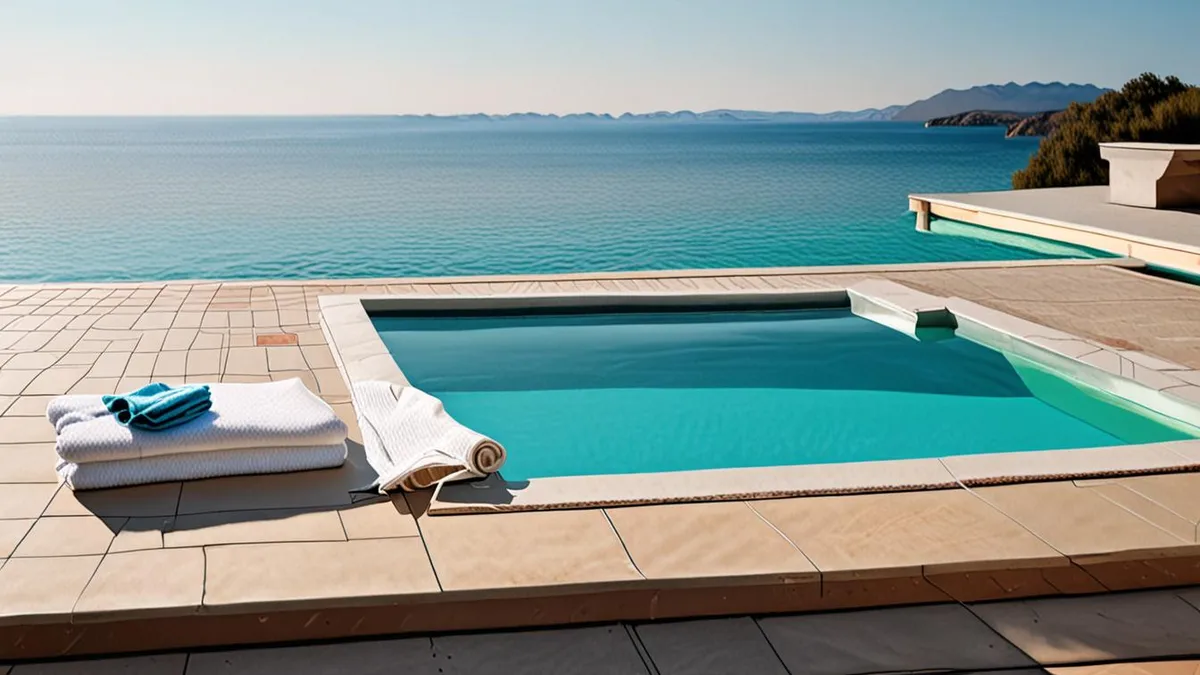
Maintenance: What Happens While You’re There
A private pool isn’t a self-cleaning feature of the villa; it needs regular attention, and in most rentals that attention comes from a pool cleaner who visits 2-3 times per week. The visit usually happens early in the morning, before you’re likely to be poolside, and covers the basics: skimming leaves off the surface, vacuuming the floor and checking chemical levels so the water stays safe and clear.
Privacy and access
This is where it’s worth asking a question many guests don’t think of until someone appears at the gate. Does the cleaner enter while you’re there, or does the villa arrange an agreed time slot with you first? If privacy is a priority for your stay, a cleaner who wanders in unannounced at 8 a.m. can be an unwelcome surprise. Most owners are happy to schedule visits around you, but only if you ask before arrival.
What a clean pool should look like
You can judge the maintenance yourself within a day of arriving. A well-maintained pool should be visibly clear, with no debris sitting on the floor and no film on the surface. If you walk out on your first morning and the water is cloudy or the floor is littered with leaves, that’s a sign the cleaner skipped a visit before your check-in, and it’s reasonable to ask the owner to arrange an extra one. Good owners will fix it quickly; silence is a signal too.
Questions to Ask Before You Book
The fastest way to avoid a pool disappointment is to ask a few blunt questions before you pay a deposit. Vague answers like “pool heating available on request” tell you nothing about whether the water will actually be warm, what it will cost, or whether it can even be switched on for your dates. A good villa owner or manager will answer these questions without hesitation, and hesitation itself is a useful signal.
Start with the heating itself, then move on to the pool’s size and whether it will be open at all during your stay. The difference between a proper lap pool and a compact plunge pool is enormous when you’re planning morning swims with kids or actual exercise. Seasonal closures catch many travelers off guard too, since some pools are drained or covered entirely outside high summer, even at villas that rent year-round. Get answers in writing so there’s no confusion at check-in.
- Exact heating cost in your currency: Ask for a specific figure per day, not a range or a “depends on usage” answer, so you can budget honestly.
- Included or optional: Confirm whether heating is part of the quoted rate or an add-on, and how much advance notice is needed to switch it on before you arrive.
- Dimensions and depth: Ask for length, width and depth in meters; a typical private villa pool runs 8-12 meters, but some are much smaller and shallower than photos suggest.
- Opening dates and closures: Check whether the pool has set seasonal opening dates or maintenance closures outside high summer, especially for spring and autumn bookings.
Budgeting for the Pool, Not Just the Villa
Once you know a villa’s pool can be heated, the next question is what it does to your budget. A daily heating charge adds up quickly over a week-long stay, so it’s a real line item, not a rounding error, and it deserves the same attention as the nightly price itself.
Run the comparison honestly. A villa with a heated pool often costs less overall than upgrading to a hotel suite with comparable space, privacy and a pool of your own. Even with heating on for the whole trip, you’re usually still ahead, especially for families or groups splitting the cost. If you’re building a full trip budget, it helps to look at the total picture of what a villa vacation really costs, not just the headline nightly rate.
Per Day or Flat Fee?
How heating is charged matters as much as how much it costs. Some owners bill per day of use, which suits shorter stays or travelers who only want the pool warm for a few days. Others charge a flat weekly fee, which can work out cheaper if you’re staying a full week and heating the pool throughout. Ask which model applies before you book, and get the answer in writing so there’s no surprise on the final invoice.
Matching Pool Season to Your Destination
Where you’re traveling changes which pool questions matter most. In Mediterranean destinations, unheated pools are generally comfortable for swimming from roughly June to September, when the weather does the heating for free. Book the same villa in April or October without heating, though, and you’re likely looking at water that’s too cool to enjoy.
A heated pool extends that usable window to around October and April, which is exactly when many travelers want to go: fewer crowds, lower rates and mild weather for exploring. If a spring or autumn trip to Santorini is on your list, it makes sense to choose a villa with both caldera views and a heated private pool, since the two pair beautifully in shoulder season. Just confirm the heating details before booking rather than assuming the pool will be usable.
Tropical Destinations Are Different
In tropical locations, heating is rarely needed because water temperatures stay swimmable year-round without any help. Spending extra on heating there is usually money wasted. Instead, direct your questions toward cleaning schedules and water quality, since warm water and heavy use mean pools in these destinations need consistent maintenance to stay inviting throughout your stay.
One last practical note for Mediterranean bookings: heating a pool isn’t instant. If you’re arriving in shoulder season and want to swim on day one, ask how far in advance the heating needs to be switched on, and build that into your booking communication with the owner or manager.
The Takeaway
A villa with a pool only delivers on the promise if the pool is heated, maintained and open for your dates. The listing photos rarely tell you any of that, which is why the details matter more than the pictures. Heating typically costs $30-$100 per day, cleaning usually happens 2-3 times per week, and heating needs 24-48 hours’ notice to bring the water up to temperature.
That is why asking four direct questions before booking turns an uncertain extra into a planned part of the trip. You’ll know the daily cost, whether heating is included, how big the pool really is and whether it’s open in your season. If you’ve booked a villa where the pool turned out to be an icy surprise, or you have a question we didn’t cover, leave a comment below or share this article with someone planning a trip.