You’ve booked a glamping tent, pictured a real bed and a hot shower after a day of hiking, and then you arrive to find no wall socket, no Wi-Fi and no endless hot water. If the listing mentioned the word “off-grid” and you skimmed past it, that surprise is common, and it catches even seasoned campers off guard.
Off-grid glamping can be wonderful, but it works differently from a hotel or a grid-connected lodge. This guide walks you through what off-grid glamping actually means, what power and lighting you can realistically expect, how bathrooms and showers work without mains hookups, and how to handle little or no phone signal. We’ll also cover how to choose and book the right site, what to pack, and the daily routines that make the whole experience comfortable. By the end, you’ll know whether trading outlets for dark skies is the right kind of trip for you.
What Off-Grid Glamping Actually Means
Off-grid glamping simply means the tent, cabin or yurt is not connected to the mains. There is no cable bringing in electricity, no pipe delivering town water and no sewer line carrying waste away. Instead, the site generates its own power and handles water and waste on site, which is why the experience feels closer to a well-equipped camp than a hotel.
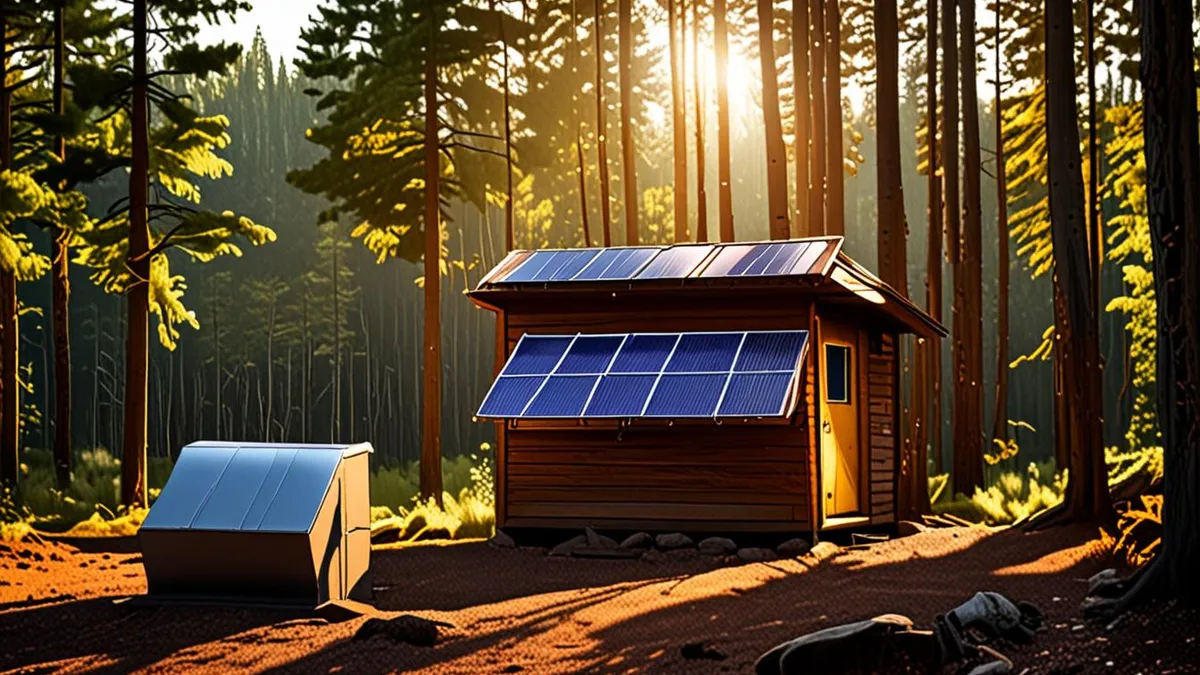
Power is the biggest adjustment. Most off-grid sites run on solar panels paired with batteries, and that setup is typically sized for the essentials only: LED lighting after dark and USB charging for phones. It is not designed for high-draw appliances, so don’t expect to plug in a kettle, hair dryer or heater. The system simply isn’t built for that load.
Where the water comes from
Water usually arrives by tank, delivered and refilled by the host, or is drawn from a well on the property. That means water is a resource to be mindful of rather than something that flows endlessly from the tap. Showers are often heated by a gas boiler or a wood-fired system rather than an electric tank, so hot water may take time to arrive and can be rationed or scheduled. None of this is a flaw, it’s just how a self-sufficient site works, and knowing it in advance changes how you plan your days.
Power, Charging and Lighting: What You Get and What You Don’t
Let’s set expectations clearly: you will not find wall sockets in your tent. What most off-grid sites offer instead are 12V or USB charging points, sometimes powered by a small solar setup, and occasionally a shared power bank station in a common area that several guests use at once. That’s enough to keep a phone alive for the trip, but it requires a little planning rather than the plug-in-and-forget habits you might have at home. Treat charging as a daytime task while the solar setup is doing its work, not something you do last thing at night.
The standard move is to bring your own buffer. Pack a 20,000 mAh power bank per person, charged fully before you leave home, and you can top up phones, headphones or a camera without queueing for the shared outlet. A good power bank holds several full phone charges, which covers a weekend comfortably even if the site’s solar supply has a cloudy day. Charge the power bank itself during daylight hours so it’s ready when you need it.
Before you pack, check the site’s power list carefully. Hosts usually spell out exactly what you can and cannot run, and ignoring it can trip the whole system for everyone staying there.
- Hair dryers and straighteners: almost never possible, as they draw far more power than a solar-battery setup can supply, so plan hairstyles around it or embrace the natural look.
- Kettles and coffee machines: usually off the menu; most sites provide a gas stove or campfire kettle instead, so bring your own coffee if you’re particular about it.
- Laptops and tablets: generally a poor match for the available charging points, so leave work at home and bring a book or e-reader instead.
- Lighting: expect solar lanterns, candles or fairy lights rather than bright overhead lights, so pack a head torch per person for navigating to the toilet at night.
Bathrooms, Water and Staying Clean Without Mains Hookups
Without mains sewage, off-grid sites rely on composting or dry toilets, and they are standard for good reason: they use little or no water and process waste on site. They need no flushing, which takes a day or two to get used to but quickly feels normal. The main adjustment is location. Expect a short walk from your tent, often along a path that feels very different after dark, which is exactly why a head torch belongs on your packing list.
Hot showers on a schedule
Hot water usually comes from a wood-fired boiler or a gas shower, and heating takes 15-30 minutes. That changes the rhythm of your day: you may need to light the boiler or ask the host to, then wait before washing. Some sites schedule shower times so everyone gets hot water while the boiler is up to temperature. It’s less spontaneous than a hotel, but a shower timed for sunset with a view makes up for it.
Water discipline extends to what you wash with. Greywater from sinks and showers typically goes straight into the ground, so bring biodegradable soap and shampoo, and choose quick-dry towels since there’s no tumble dryer waiting. Sites in remote regions, such as those covered in this guide to glamping in Patagonia, often take these rules seriously to protect the surrounding land, and it’s good practice everywhere.
Living Without Wi-Fi and Phone Signal
Most off-grid glamping sites sit in exactly the kind of places phones struggle to reach: remote valleys, forests and coastlines where signal is often one bar or none at all. That is part of the appeal, but it also means you need to prepare before you leave home. Download offline maps for the final stretch of the drive, save your playlists and podcasts, and load up e-books if you like reading at night. Once you arrive, there is usually no way to stream or download anything.
It is also worth managing expectations on the home front. Tell family, friends and work that you will be unreachable for a few days, so nobody panics when your messages go unanswered. Before you set off, note where the nearest village with signal is, or a cafe with Wi-Fi you could visit if something urgent comes up. Knowing there is a backup option an easy drive away makes total disconnection feel far less stressful.
Finally, plan your evenings around what the site actually offers. Most off-grid hosts lean into the lack of screens with campfires, stargazing and a shelf of board games. Bring a deck of cards or a favorite game from home, and you will quickly find the evenings fill themselves.
- Offline maps: Download both the driving route and the walking trails around the site, since trail apps will not load data in a dead zone.
- Emergency planning: Save the site owner’s phone number offline and write down the location of the nearest hospital or urgent care facility, just in case.
- A paper backup: Screenshot or print your booking confirmation and directions, because a dead battery at the gate is a real possibility.
- Camera discipline: If you want photos, take them early in the day and then switch your phone to airplane mode so the battery lasts the whole stay.
How to Choose and Book an Off-Grid Glamping Site
Not all “off-grid” listings mean the same thing, so a little homework before booking pays off. Some sites offer hot showers and reliable solar charging, while others are genuinely rustic with a long walk to a dry toilet. The difference is usually visible in how precisely the listing describes its facilities. A host who has invested in a good wood-fired boiler and well-maintained composting toilets will generally say so in plain terms, while vague wording often hides the basics you care about most. Spending an hour on research now is far easier than discovering the reality after dark, halfway through a week-long stay.
- Read the facilities section line by line. Look for exact details on power, water and toilets. If a listing only says “eco-friendly” or “back to nature” without spelling out how showers and toilets work, it usually means the facilities are very basic.
- Message the host with specific questions. Ask whether phones can be charged on site, how hot water is produced and how far the toilet is from the tent. A host who answers clearly is a good sign for the whole stay.
- Check the site size and book early. Off-grid sites often have only 3-8 units, so summer weekends fill quickly. Reserve 2-4 months ahead if you have your heart set on a specific date.
- Compare prices with nearby lodges. Off-grid tents typically cost 10-30% less than grid-connected luxury lodges in the same region, which softens the loss of a few comforts.
- Confirm the cancellation terms. Small sites have fewer units to rebook, so their cancellation policies can be stricter than a large resort’s. Read them before you pay the deposit.
If you want a fuller walkthrough of comparing locations and reading listings, our first-timer’s checklist on how to choose a glamping site covers the booking process step by step. It walks through everything from weighing up locations to asking hosts the right questions before you commit. Take an evening to do it properly, and the site you book will match the stay you imagined. The travelers who enjoy off-grid glamping most are usually the ones who knew exactly what they were signing up for, and booked accordingly.
Packing and Daily Routines That Make Off-Grid Stays Comfortable
The difference between a magical off-grid stay and a miserable one usually comes down to packing. Without wall sockets, electric heating or a fridge, a few well-chosen items do a lot of heavy lifting. Pack a head torch per person, a 20,000 mAh power bank, warm layers for nights without electric heating, and biodegradable toiletries. If you want a complete checklist, our guide on what to pack for a luxury safari tent stay goes item by item.
A low-energy daily rhythm
Once you arrive, shift into a low-energy routine. Charge phones and cameras during daylight hours when the solar setup is producing, and switch devices to airplane mode overnight. Boil water on the stove for tea, washing up and filling hot water bottles instead of expecting an instant supply. If showers run on a wood-fired or gas boiler, time them for when the water is hottest rather than drifting in whenever it suits you.
Food without a fridge
There is no fridge at an off-grid site, so plan meals around the storage provided. Most sites supply cool boxes where you can keep essentials for a day or two, and some rural locations require bear-safe storage lockers for anything scented. Bring shelf-stable staples like pasta, oats and canned goods, buy fresh items in small quantities, and skip anything that spoils quickly. A little menu planning before you leave means no one is staring at a warm salad at dinner.
Is Off-Grid Glamping Right for You?
So, is off-grid glamping right for you? If you booked expecting hotel logistics, the surprise is real: no wall sockets, no Wi-Fi and no instant hot water on tap. What you get instead is quiet, dark skies and a price that typically runs 10-30% lower than grid-connected lodges in the same region. It suits travelers who pack a power bank and a head torch, plan around a wood-fired boiler, and genuinely enjoy a screen-free evening by the fire.
It frustrates those who want to charge a laptop, blow-dry hair and stream a show after dinner — and there is no shame in that. If you are curious but unsure, start with a one- or two-night stay before committing to a full week unplugged. Have you tried an off-grid stay yet? Share your experience or questions in the comments, and pass this article along to a friend who needs a digital detox.