Booking your first glamping trip should be exciting, but there’s a problem most first-timers run into: the phrase “luxury tent” is doing a lot of heavy lifting. On one site it means a heated safari tent with a king bed, an en-suite bathroom and a private deck. On another, it means a canvas shelter with a mattress on the floor and a toilet block a few hundred meters away. Without knowing how to read a listing, you can’t tell which one you’re paying for.
This guide breaks down glamping site amenities so you know exactly what to expect before you hand over your card. We’ll walk through sleeping arrangements, bathroom setups, cooking and dining options, and the comfort extras like decks and hot tubs. Then we’ll look at how amenities differ by tent type, how to check the details before booking, and what a sensible glamping site amenities checklist comes down to in the end.
Sleeping Arrangements: Beds, Linens and Heating
The good news is that a real bed is the baseline at virtually every glamping site. You won’t be inflating an air mattress or wrestling with a sleeping bag. In premium units, that usually means a queen or king bed with a proper mattress and a headboard. Standard tents more often have doubles, or bunk setups if the tent sleeps four or more. Either way, the bed arrives made up: linens, duvets and pillows are provided as standard, so you can leave the sleeping bag at home.
Staying Warm at Night
Heating matters more than most first-timers expect, because canvas and fabric walls insulate far less than a hotel room. Many safari tents and geodesic domes include a wood-burning stove or an electric heater as standard equipment, which makes stays outside the summer months genuinely comfortable rather than an endurance test. Wood-burning stoves add a bit of work — you’ll light the fire in the evening and maybe once more before bed — but they also give tents a warmth that electric heaters struggle to match.
Extra blankets are commonly provided for exactly this reason, and bedside lighting is near-universal, ranging from solar lamps to small reading lights. On the power front, temper your expectations: many tents have only one or two outlets, often supplemented by USB charging points. That’s enough for phones and a camera battery, but it’s not hotel-level power access, so leave the hair dryer and travel kettle at home unless the listing says otherwise.
Bathrooms: Shared Blocks vs En-Suite
Bathroom arrangements vary more than any other amenity, and they’re often the clearest dividing line between budget and premium pricing. At budget and mid-range glamping sites, you should expect a shared bathroom block a short walk from your tent. These are usually clean, well-maintained facilities with flush toilets and hot showers, and because guest numbers per block are kept low, you rarely wait long in the morning. It’s a small step up from camping, but a real one — you’re not queuing at a campsite washhouse shared with hundreds of tent campers.
When Your Tent Has Its Own Bathroom
Premium units change the equation entirely. Many upscale safari tents, cabins and domes include an en-suite bathroom with a flush toilet, a hot shower and, in some cases, a small tub. This is where glamping starts to feel genuinely hotel-like: you step out of bed onto a floor rather than into your boots, and a midnight trip to the toilet doesn’t involve a flashlight and a gravel path.
Eco-focused sites work differently again. Some use composting toilets and solar-heated showers to keep their footprint low, and while these systems work well, they’re not for everyone — solar showers can run cool after a string of cloudy days, and composting toilets take a little getting used to. Check the listing carefully before booking so the setup matches your expectations. Sites in remote regions, such as those covered in our guide to glamping in Patagonia, often lean toward these eco setups because of their off-grid locations.
Cooking and Dining Options
Food is where glamping sites split into two clear camps. Self-catering sites give you the tools to cook for yourself, either in a shared camp kitchen or in a private kitchenette attached to your unit. A typical kitchenette includes a two-burner stove, a fridge and a set of basic cookware — a pot or two, a pan, plates and utensils. That’s enough for simple dinners and a proper breakfast, though not enough for ambitious cooking. Shared camp kitchens work on the same principle but serve several tents at once, so they’re usually better equipped and give you a natural place to meet other travelers.
At the other end of the spectrum, some glamping resorts operate more like small hotels, with an on-site restaurant serving dinner and drinks, or breakfast hampers delivered to your tent door in the morning. Many sites sit somewhere in between, and that’s where the fire pit comes in.
- Grill grates: Most fire pits include a removable or fixed grate over the coals, so you can cook sausages, vegetables or a full grill dinner over an open flame rather than just sitting around the fire.
- Firewood supply: Some sites provide firewood free with your booking, while others sell bundles on site — check which applies so you’re not driving to a gas station on your first evening.
- Cookware check: “Basic cookware” can mean anything from a full set to a single battered pan, so if you’re planning specific meals, confirm what’s provided or pack a favorite knife and cutting board.
- Cool box or fridge: In units without a fridge, some sites offer cool boxes with ice, which changes how you shop and what you can keep fresh over a multi-night stay.
Comfort Extras: Decks, Hot Tubs and Wi-Fi
One of the first things you notice stepping out of a safari tent or lodge in the morning is the deck. Most safari tents and lodges come with a private veranda or deck with outdoor seating, whether that is a pair of Adirondack chairs, a small table, or a hammock strung between posts. It effectively doubles your living space and gives you a spot for morning coffee without sharing it with neighbors.
Luxury extras: what is actually on offer
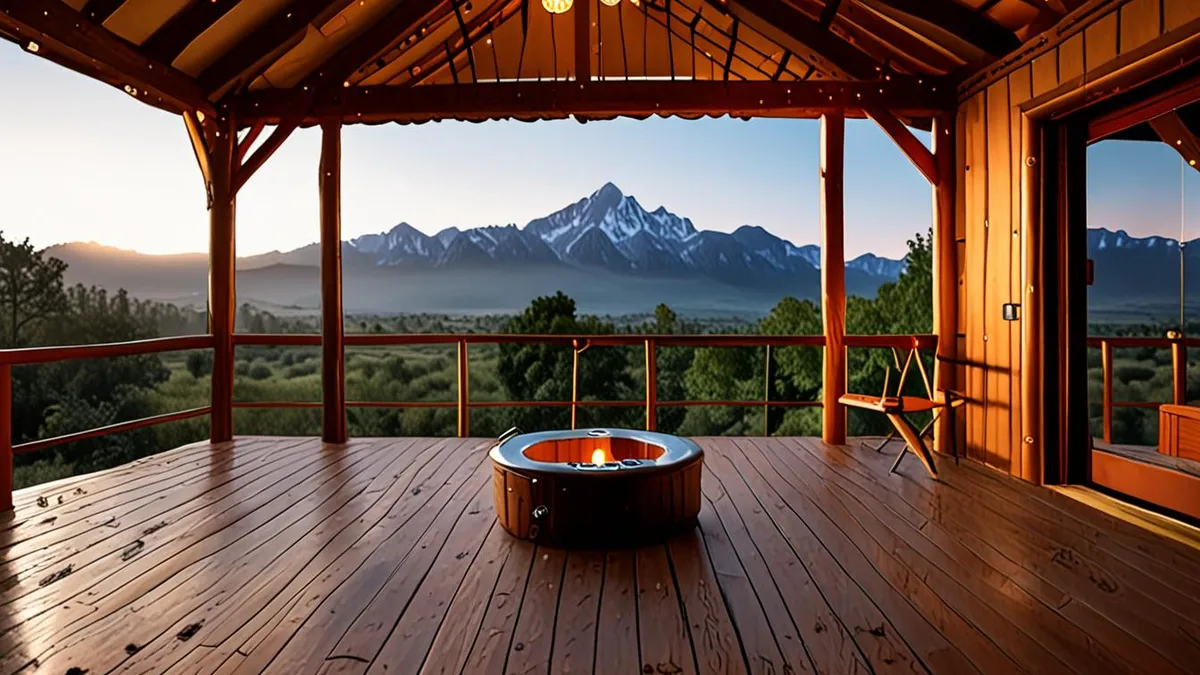
Hot tubs, saunas and fire pits are the extras sites love to advertise, and they fall into two categories. Some are included in the nightly rate, especially private wood-fired hot tubs attached to premium units. Others are shared facilities you pay a small fee to use, or bookable slots you reserve at check-in. Fire pits are the most common of the three and are often free to use, with firewood sold on site or provided as a starter bundle. If a hot tub is the reason you are booking, confirm whether it is private to your unit, shared, and whether it needs advance booking to heat up.
Wi-Fi deserves realistic expectations. Many glamping sites offer it, but it is often slow, unreliable in the tents themselves, or limited to a common area like the reception lodge or camp kitchen. Plenty of sites lean into this and market a digital-detox experience, so weak signal is sometimes a feature rather than a flaw. If you need to work during your stay, message the site before booking and ask about signal strength in the units, not just on the property. Some rural locations, like the ones described in our review of a glamping hide in York, trade connectivity for genuine quiet, and it helps to know that trade-off in advance.
Outdoor living space and these extras also shape how much time you actually spend inside your tent. A covered deck with comfortable seating means rainy afternoons feel less cramped, and a private hot tub under the stars can easily become the highlight of the stay. When comparing listings, weigh the deck, hot tub and fire pit setup alongside the basics — for many travelers, these shared and outdoor spaces are what turn a simple tented stay into something closer to a resort experience.
How Amenities Vary by Accommodation Type
The same word, glamping, can describe very different levels of comfort, and the accommodation type is usually the best clue. Safari tents and yurts sit at the traditional end: they typically rely on shared bathroom blocks a short walk away, which keeps their prices lower. Cabins, pods and treehouses are built as solid structures, so they more often include flush toilets and hot showers inside the unit itself. Domes and bell tents tend to prioritize panoramic views and striking design over practical space, which usually means the smallest amenity sets of all, sometimes just a bed, lighting and heating with no kitchen at all.
Prices track these differences fairly predictably. A tent with shared bathroom access may run around $100–$150 per night, while a premium unit with its own bathroom plus a hot tub on the deck can exceed $300–$500. If you want a fuller breakdown of how these costs and comfort levels compare to traditional camping, see our guide to glamping versus camping costs and comfort.
- Safari tents: canvas walls mean you will hear weather and neighbors more than in a solid cabin, so light sleepers may prefer hard-walled options even at a higher price.
- Yurts: the circular layout and central support pole affect furniture placement, so storage is often limited to a trunk or shelves rather than a wardrobe.
- Treehouses: access is usually via stairs or a spiral staircase, which matters if you are traveling with heavy bags, small children or anyone with limited mobility.
- Domes: transparent panels deliver the views but can make the unit warm on sunny days, so check whether shading or good ventilation is provided.
- Pods: compact by design, they often squeeze in a private bathroom but may have only a counter and kettle rather than a real cooking setup.
Checking Amenities Before You Book
Amenity listings are written to sound as generous as possible in as few words as possible, so a little verification goes a long way before you commit to a booking. Three checks will prevent most disappointments: reading the details rather than the headline, timing your booking well, and confirming the practical logistics of arrival and comfort. None of this takes more than a few minutes, and it can easily be the difference between a tent that matches your expectations and one that leaves you shivering or walking halfway across a dark field at midnight. Here is how to work through them.
- Read the full amenity list and every photo. The word “kitchen” on a listing can mean anything from a shared camp kitchen in a separate building to a private kitchenette with a two-burner stove and fridge. Scroll through all the photos and look for captions, since images of the bathroom block, cooking area and heating source tell you more than the headline summary ever will.
- Book well ahead for summer. For peak season between June and August at popular sites, aim to book 3–6 months in advance. The best-equipped units, the ones with en-suite bathrooms, private decks or hot tubs, sell out first, leaving late bookers with the most basic tents.
- Confirm check-in and check-out times. Check-in is usually 3–4 pm and check-out 10–11 am at most glamping sites, but these vary, especially at smaller sites run by a couple or family. Knowing the window matters if you have a long drive or an early departure.
- Ask about heating if you are traveling outside summer. Many tents include wood-burning stoves or electric heaters for cooler stays, but you want to know which type your unit has, whether firewood is provided, and whether the heating is included or costs extra.
It also never hurts to send one short message to the site before booking with any deal-breaker questions, whether that is Wi-Fi strength, hot tub access or how far the bathroom block is from your tent. Be specific rather than polite: instead of asking “is it warm in October?”, ask what kind of heating the unit has and whether extra blankets are provided. A site that answers clearly and specifically is usually a site that keeps its facilities in good shape, and a vague or evasive reply is worth taking seriously. That one exchange tells you more about the stay than any listing page can, and it takes less time than reading a dozen reviews.
What a Glamping Site Amenities Checklist Comes Down To
So what does “luxury tent” actually mean? At almost any glamping site, the baseline is a real bed made up with linens, duvets and pillows, plus heating for cooler nights. From there, the price tiers separate quickly: shared bathroom blocks versus en-suite facilities, a shared camp kitchen versus a private kitchenette, and extras like hot tubs, saunas and private decks reserved for the top end.
That’s why the real work happens before you book. Match the amenity list to your own comfort needs — if a flush toilet and a proper shower are non-negotiable, a budget safari tent will disappoint, while a hot-tub unit at the higher end of the typical $100–$500 per night range can feel genuinely hotel-like. Read the listing carefully, know your must-haves, and glamping delivers the best of both worlds. If this helped you plan your first trip, leave a comment or share the article.