You booked that glamping trip months ago, and now the forecast shows a wall of gray. A storm rolling in can feel like the end of the plan, but it doesn’t have to be. With rainy day glamping, bad weather becomes something you prepare for rather than something you panic about. The difference between a soggy disappointment and a cozy, memorable weekend usually comes down to a handful of decisions made before you pack the car.
This guide walks you through the whole process. You’ll learn why wet-season dates can actually work in your favor, how to pick accommodation that shrugs off wind and rain, and how to book with cancellation policies that protect you. We’ll also cover what to pack for wet conditions, which destinations make the most of the rain, and how to enjoy a day when the showers won’t let up. By the end, a forecast of showers will read as atmosphere, not a setback.
Why Rainy Day Glamping Can Be a Hidden Advantage
Most travelers treat rain as a reason to cancel, which is exactly why it can work in your favor. When demand drops, so do prices. Shoulder-season and rainy-season dates often run 20-40% below peak-season rates, which can mean the difference between a standard tent and the premium dome you’d been eyeing all year. If your dates are flexible, you can often book a better site for the same budget simply by accepting a chance of showers.
Quieter sites, easier bookings
Fewer crowds also mean better availability at the sites that usually sell out months in advance. That riverside platform or clifftop cabin you missed last summer? It’s far more likely to be open on a drizzly October weekend. Hosts tend to be more attentive too, since they’re juggling fewer guests at once.
Then there’s the atmosphere itself. Rain transforms landscapes in ways dry weather never does. Forests turn deep green and smell of wet earth, mist settles into valleys, and coastal sites get dramatic skies and crashing surf. Photographers chase these conditions on purpose. If you’re dressed for it and your accommodation can handle it, rain becomes part of the mood rather than a flaw in the plan.
Choosing Weather-Proof Accommodation Types
Not all glamping structures cope with bad weather equally well. Geodesic domes and solid cabins handle wind and rain far better than basic canvas tents, thanks to their rigid frames, sealed panels and often elevated bases. A canvas bell tent can be romantic in light drizzle, but in a proper storm you’ll hear every gust and feel every drip. If your travel dates fall in a wet season, the structure should be your first filter when browsing listings.
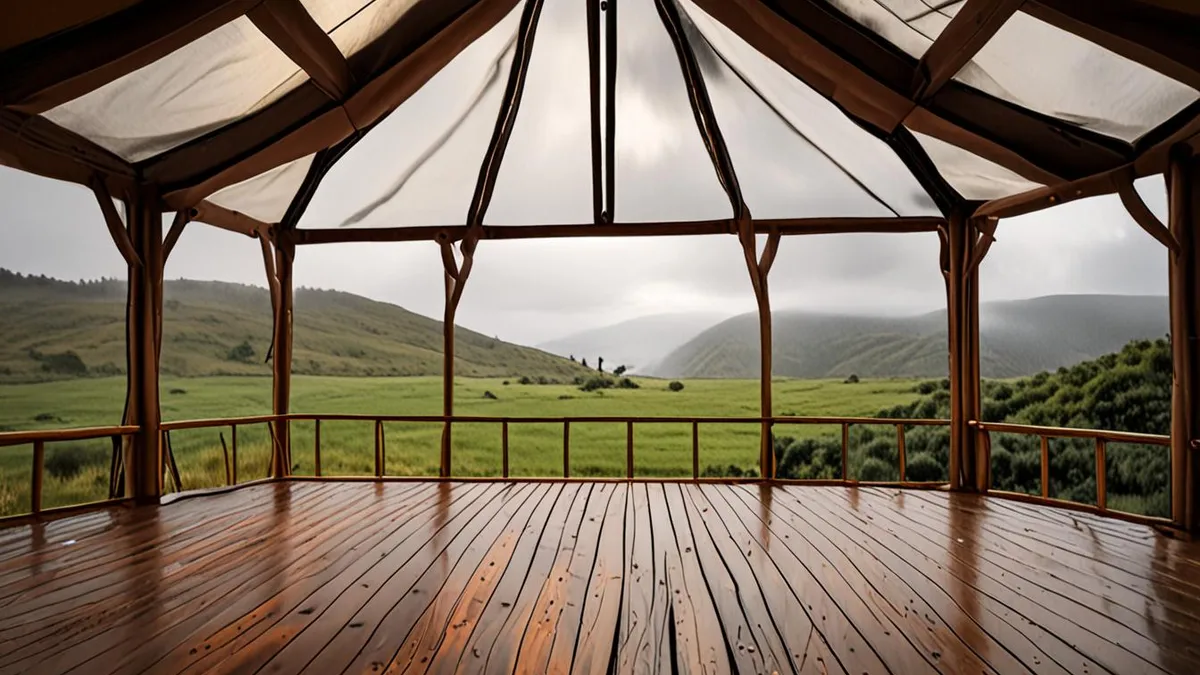
The second thing to look for is what you can do without leaving cover. Covered-porch or indoor-common-area setups are among the best weather-proof stay types, because they give you somewhere to sit with a coffee and watch the rain instead of being stuck inside a small tent all day. A site with a shared lounge, a covered deck or an indoor dining area turns a washed-out afternoon into a comfortable one.
Before you book, ask the host direct questions. A good listing will answer most of them, but don’t hesitate to message if it doesn’t. For inspiration on sturdy, weather-ready stays in one of the world’s wetter wild places, see this glamping guide to Patagonia.
- Heating: Ask whether the unit has a wood stove, electric heater or underfloor heating, and whether it’s included in the rate or costs extra per night.
- Insulation: Domes and cabins vary widely; ask how the structure is insulated and whether it stays warm in damp, cold conditions, not just on dry nights.
- Raised flooring: A floor lifted off the ground keeps damp out and stops water pooling at the entrance during heavy rain, so check whether the tent or dome sits on a deck.
Booking Smart: Cancellation Policies and Timing
Good booking habits are what separate a weather-disrupted trip from a weather-ruined one. The goal is simple: give yourself room to change plans without losing money, and time your decisions so you’re acting on reliable information rather than guesswork. Rain adds a layer of uncertainty that ordinary trips don’t have, so the sequence you follow matters more than usual. Book too early and you’re locked into a forecast nobody can predict; book too late and the best weather-proof sites are gone. Here’s a practical order of steps that works well for wet-weather glamping.
- Book refundable or free-cancellation rates 4-8 weeks ahead. This window gives you a good choice of sites in shoulder season while keeping your options open. Flexible rates sometimes cost a little more, but that small premium is cheap insurance against a washed-out weekend.
- Read the cancellation terms carefully. Check how far in advance you’d need to cancel for a full refund, and whether the refund comes back to your card or as credit. Some flexible rates only refund up to a set number of days before arrival.
- Check the forecast 7-10 days before departure. That’s roughly when predictions become reliable enough to plan around, so it’s the right moment to decide whether to keep, shift or cancel your stay.
- Confirm the site’s bad-weather policy. Ask the host directly: some offer rebooking credit if severe conditions make the stay impossible or unsafe. Get the answer in writing before you need it.
If you’re booking a glamping trip for the first time, it helps to have a framework for vetting sites before you commit. This first-timer’s checklist for choosing a glamping site covers the basics worth checking before any reservation, from shelter quality to what the site offers when the weather turns. Once your booking is flexible and your host’s policy is clear, weather stops being a threat and becomes just another variable you can manage. A little paperwork up front means that when the forecast shifts, your only decision is which rainy-day plan to enjoy, not how much money you’re about to lose.
Packing for Wet Conditions
A little rain doesn’t have to ruin a glamping trip, but the wrong gear can. The single most important item is a waterproof jacket with a decent rating: for heavy rain, look for a layer rated 5,000-10,000 mm. Anything lower tends to soak through in a proper downpour, and a wet jacket at a remote site is miserable in a way no campfire can fix.
Think in layers rather than single pieces. Quick-dry fabrics beat cotton every time, because cotton stays damp for hours and chills you fast. Bring one more set of spare shoes than you think you need, since wet socks and muddy boots are almost guaranteed at some point. For phones, cameras and power banks, dry bags are cheap insurance against a soaked backpack.
Finally, pack for the hours you’ll actually spend indoors. A deck of cards, a paperback and a headlamp turn a stormy evening into something cozy instead of something to endure. For a fuller checklist tailored to upscale tent stays, this complete packing guide for a luxury safari tent stay covers the details worth double-checking before you zip up your bag.
- Waterproof pants or a rain skirt: jackets protect your top half, but wet trousers are what make a short walk to the bathroom block genuinely unpleasant.
- Microfiber towels: they dry in a fraction of the time a cotton towel takes, which matters when everything in the tent feels slightly damp.
- Extra headlamp batteries: storms can knock out power at smaller sites, and a headlamp with a dead battery is just extra weight.
- A stuff sack for muddy boots: keeping wet footwear separate protects the rest of your gear and your host’s floors.
- Thermos or insulated mug: a hot drink on a covered porch is half the fun of rainy glamping, and it stays warm far longer in good insulation.
Picking Destinations That Shine in the Rain
Timing matters more than destination when it comes to rain. Temperate Europe is at its wettest roughly October through February, so if you want the best odds of dry weather, aim for May through September instead. That said, the shoulder months on either side of that window often combine decent conditions with lower prices and quieter sites, so check long-term climate patterns for your specific region rather than guessing.
Where rain is the point
Some destinations don’t just tolerate rain, they depend on it. Rainforest regions, whether in Southeast Asia, Central America or Queensland’s tropical north, are lush precisely because it rains often, and many operators design the experience around it. Guided walks under the canopy, the sound of rain on leaves and wildlife that’s most active in wet weather all make rain part of the trip rather than a disruption. Just book accommodation built for the climate, with good cover and ventilation.
Coasts and mountains after a storm
If you’d rather chase drama than avoid it, coastal and mountain sites deliver. The hours after a storm often bring the clearest light of the day, waterfalls running at full volume, and dramatic cloud formations rolling over ridgelines. Photographers plan trips around exactly these conditions. Pack waterproof footwear, keep your plans flexible, and treat the wet walk as the price of scenery you simply don’t get on a blue-sky afternoon.
Making the Most of a Washed-Out Day
A washed-out day at a glamping site can be the most relaxing part of the trip if you plan for it. The trick is to have covered activities ready before you arrive, not improvised at 2 pm in a drizzle. Ask hosts when booking whether the site has a hot tub, a fire pit under a canopy, or spa treatments on offer. Many upscale sites do, and these are exactly the amenities that make rain feel like a feature.
Rather than writing off the whole day, watch for rain windows. Showers in most climates come and go, and a short hike between them is often more memorable than an all-day trek anyway. Keep one or two flexible outing ideas in your pocket, and be willing to swap them around based on the sky.
There’s also real value in slowing down. A rainy day justifies a long breakfast, an afternoon of journaling or reading, and an early night. And when the rain clears, the reward is often yours: washed air, dramatic light and, in many rural sites, outstanding stargazing.
- A “cozy kit” for the tent: a soft throw, a small speaker and your favorite tea or coffee make indoor hours feel intentional rather than stuck.
- Local indoor backups: check before you travel for nearby cafes, small museums or covered markets you can drive to if the site itself feels too small.
- A flexible meal plan: pack one easy one-pot meal you can cook under cover, so a wet evening doesn’t turn into a cold sandwich.
- A photography walk list: raindrops on leaves, mist over water and post-storm light are some of the easiest striking shots you’ll ever take, so note a few spots near your site.
- A loose daily rhythm: decide the night before which activity is your “if it’s dry” plan and which is your “if it’s wet” plan, so nobody spends the morning debating.
Wrapping Up Your Rainy Day Glamping Plan
So, a storm forecast threatens to ruin the glamping trip you booked months ago. The answer is to make weather part of the plan rather than a threat to it. Rainy day glamping rewards travelers who pick sturdy stays, keep bookings flexible and pack the right gear, so a wet forecast becomes a detail to manage, not a disaster.
There is a genuine upside, too. Lower prices and quieter sites make wet-weather trips worthwhile in their own right, and rain can turn a forest or coastline into something far more atmospheric than a blue-sky afternoon. With the right plan, a forecast of showers becomes atmosphere, not a setback. If you have turned a washed-out trip into a favorite memory, share your story in the comments.