You’ve found three gorgeous glamping listings, and they all look dreamy in the photos. But when it comes down to the yurt vs safari tent vs dome question, the photos don’t tell you much. Each structure behaves very differently once you factor in the weather at your destination, how many people you’re traveling with, and what you’re actually willing to pay per night. A choice that’s perfect for a couple on a summer trip can be a poor fit for a family booking in the colder months.
This guide breaks the decision into the questions that matter: how the three structures differ in design, which one sleeps best for groups of two to six, how each handles heat, wind and cold, what each stay type really costs, and when to book before availability tightens. We’ll also match each structure to common trip styles, from romantic weekends to family base camps, so you can book the one that fits your trip rather than the one that photographed best.
Yurt vs Safari Tent vs Dome: How the Three Structures Differ
At first glance all three sound like “fancy camping,” but the structures behave very differently on the ground. A yurt is a circular tent built around a wooden lattice wall, topped by a central dome skylight that lets in daylight and sometimes shows you the stars from bed. Thick felt or canvas insulation wraps the frame, and inside you get one open living-and-sleeping space with no internal walls.
A safari tent looks more like a small canvas house. It’s rectangular, stretched over a fixed frame, and usually sits on a wooden deck with a covered veranda out front. Real beds, furniture and often a private bathroom block make it feel closer to a hotel room than a tent, which is why it tends to be the most expensive of the three.
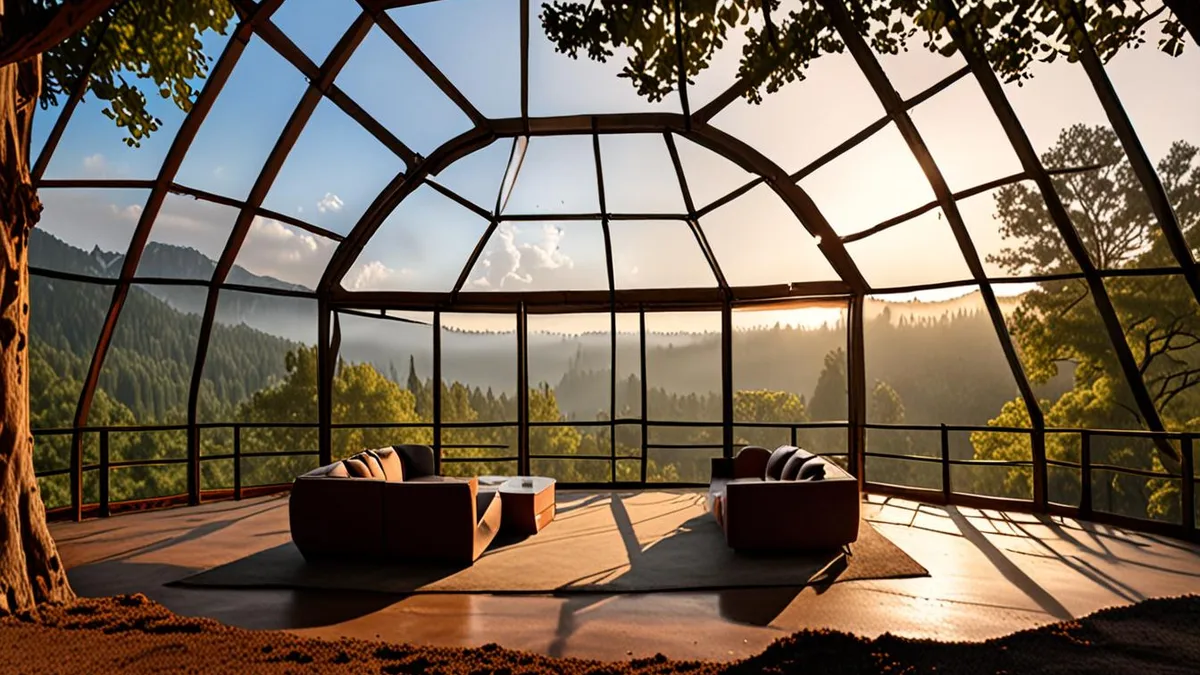
Domes are the newcomers: geodesic spheres made of PVC panels over a frame. Their main draw is the window situation — many have panoramic or fully transparent panels that turn the landscape into the room’s main decoration. The footprint is compact and the shape looks futuristic, though the curved walls mean storage and privacy are limited compared to the other two.
- Yurts: the central skylight can often be opened for ventilation, and the round shape gives the most enclosed, cocoon-like feel of the three.
- Safari tents: the veranda usually doubles as an outdoor living room with chairs or a dining table, so much of your day can happen outside.
- Domes: the geodesic frame sheds wind and rain efficiently, letting them sit on exposed ridgelines and clifftops where views are best.
- Setup differences: yurts and safari tents sit on flat platforms, while domes need less level ground, so you’ll often find them in more dramatic locations.
Comfort and Space: Which Structure Sleeps Best
If sleeping comfort is your top priority, safari tents are hard to beat. Their rectangular layout feels closest to a small cabin or hotel room: separate sleeping areas, a covered veranda for morning coffee, and often an en-suite bathroom. Most safari tents comfortably host 2–5 guests, which makes them the natural pick for families who want real beds, room dividers and somewhere to stash luggage out of the way.
Yurts: one room, everyone together
Yurts take a different approach. There are no interior walls, just one open circular floor where everyone sleeps a few steps apart. That layout suits 2–6 guests, and it works beautifully for families with young kids who like being in the same space at night. The trade-off is privacy: if your teenagers want their own corner, a yurt will feel snug fast. Storage is also limited to a bench or a small shelf, so pack light. On the plus side, the enclosed felt-and-canvas walls give yurts the coziest, most sheltered feel of the three.
Domes sit at the other end of the spectrum. They mostly fit 2–3 guests, and with curved walls and transparent panels, storage and privacy are minimal — you’ll see (and be seen) from most corners of the sphere. What you get in return is the biggest visual payoff of any glamping stay: lying in bed with a panoramic view right overhead is genuinely memorable. If that view is the whole point of your trip, a dome is worth the compromise. For inspiration on where dome stays really shine, see this guide to glamping in Patagonia.
Climate and Season: Matching the Structure to the Weather
Weather is the single biggest factor in whether your glamping trip feels magical or miserable. The three structures handle temperature very differently, and picking the wrong one for the season is the most common mistake first-timers make.
Yurts are the cold-weather champions of the three. Their felt or canvas insulation and enclosed round design hold heat well, and insulated models stay comfortable down to around -10°C. That makes them the natural choice for Alaska-style wilderness trips or shoulder-season escapes when safari tent sites have already closed for the year. If you want a sense of what that feels like, this account of sleeping deep in Alaska’s wilderness gives a good picture of a cold-climate yurt night.
Safari tents, by contrast, are warm-weather structures. In Europe the season runs roughly April to October, after which most sites pack the canvas away entirely. Keep in mind that canvas absorbs sun: in midsummer, the interior can heat up noticeably by the afternoon, so a shaded pitch matters more than a fancy one.
Domes sit somewhere in between. Their rigid frame and PVC panels shrug off wind and rain better than either fabric structure, which makes them a solid pick for unpredictable coastal or mountain weather. The trade-off comes in high summer, when transparent panels can turn the interior into a greenhouse during long July and August days of direct sun.
- Ask operators whether a dome has external shading, blinds or opaque panels on the sun-facing side; some sites add retractable covers for summer, others don’t.
- In a safari tent, a pitch under trees or near water stays noticeably cooler than one in open grassland, so it’s worth requesting when you book.
- Yurts in cold regions often include a wood stove; check whether firewood is supplied or whether you need to bring or buy it on site.
- Shoulder-season dates (May, June, September) give you milder temperatures in any structure and rates well below the July–August peak.
- If rain is likely, remember domes and yurts keep weather out at the door; safari tent verandas let you sit outside even in a shower.
Price: What Each Stay Type Really Costs
Price is often the deciding factor, and the three structures sit at clearly different levels. Safari tents are typically the priciest option, running $150–$400 per night, and the reason is simple: you are paying for real furniture, a covered veranda and often an en-suite bathroom, which puts them closer to a small cabin than a tent.
Yurts are usually the budget choice, at $100–$250 per night. Part of the saving comes from the setup: many yurt sites use shared bathroom blocks rather than private facilities, and the single open room means less furniture to maintain. If you are comparing glamping with traditional camping costs, our guide on glamping vs camping: costs, comfort and what to expect breaks down where the extra money actually goes.
Domes fall between the two at $150–$350 per night. The base rate covers the structure itself, but expect premium pricing for panoramic-view units positioned on ridgelines, clifftops or lakeshores, where the window panels are the whole point of the stay.
- Timing matters more than structure: July–August peak rates run 30–50% above shoulder season across all three types, so a mid-June yurt can cost less than an off-peak safari tent.
- Facilities drive the gap: a yurt with a shared bathroom block often sits at the bottom of its range, while a safari tent with a private bathroom sits at the top of its own.
- View surcharges are real: dome operators frequently tier pricing by orientation, with window-facing units commanding the highest rates within the same site.
Booking and Availability: When to Reserve Each Type
Availability varies more between these three structures than most travelers expect, and it often decides which one you end up booking. Domes are the scarcest of the three: there are simply fewer of them in operation, and the best ones tend to sit on small, view-focused sites with only a handful of units. Plan on booking 3–6 months ahead, especially if you want a window-facing dome rather than one facing a hillside, a parking area or another tent. Because domes mostly sleep 2–3 guests, they also suit couples rather than larger groups, which narrows the pool of sites even further for families.
Safari tents in popular European regions follow a predictable pattern: July and August dates sell out by spring. The season runs roughly April–October, demand is concentrated in the middle of it, and families lock in their summer slots early. Shoulder months like May, June and September are noticeably easier to book, often with lower prices as a bonus. If your dates are flexible, shifting a trip by even a week or two can open up far more options.
Yurts are the most widely available year-round, thanks to their insulation and their presence in cold-weather destinations. If you are planning a trip on short notice, a yurt is usually the safest bet when everything else is fully booked. That said, don’t assume last-minute means cheap: some yurt sites near ski areas charge a premium once the snow arrives, so it pays to compare a few operators before committing.
- Weekend vs midweek: Friday and Saturday nights fill first at dome and safari tent sites, so a midweek stay can be bookable weeks later than the same weekend.
- Small sites sell out fast: many dome operations run fewer than ten units, so a single family reunion can wipe out a month of availability.
- Winter works in your favor: yurt sites in cold destinations often have open capacity outside holidays, making spontaneous winter trips realistic.
Matching the Stay to Your Trip Style
The right structure depends less on the tent itself and more on what kind of trip you are taking. A romantic couples’ escape points clearly toward a dome: panoramic windows, a compact space built for two, and that first-morning moment when you open your eyes to the landscape. It is the view-first experience, and nothing else comes close.
A family holiday works best in a safari tent. Separate sleeping areas mean parents get their own room, kids get theirs, and the covered veranda becomes a second living space for board games, breakfast and drying wet swimsuits. With room for 2–5 guests, it handles most family configurations without anyone sleeping on a floor mattress.
A cold-season escape is yurt territory. Insulated models stay comfortable down to around -10°C, so a winter yurt stay can be genuinely cozy rather than an endurance test. Yurts also tend to be the most affordable of the three, which makes them a smart pick when the budget matters as much as the destination.
- Anniversaries and proposals: domes suit milestone trips where the accommodation is part of the gift, not just a place to sleep.
- Traveling with grandparents: safari tents with real beds and en-suite bathrooms remove the physical complaints that can derail a multigenerational trip.
- Solo or friend-group budget trips: a yurt sleeping up to 6 guests on one floor splits the nightly cost several ways.
- Glamping first-timers: if you are unsure about roughing it, lean toward a safari tent for the most hotel-like comfort before working up to simpler structures.
The Bottom Line: Choosing Your Glamping Structure
So which one wins? Each structure has a clear strength: yurts take the crown on price and cold-weather comfort, safari tents on space and hotel-like amenities, and domes on views. There is no single best option, only the best fit for your trip.
Three factors decide the winner: your climate, your group size, and how far ahead you can book. If you can travel in shoulder season, you will soften the price no matter which structure you choose. Found this helpful, or already have a favorite glamping style? Tell us in the comments or share this article with a fellow traveler.