Glamping in New Zealand sounds dreamy until you start planning it. Which regions actually shine in summer? Is winter even worth it? And how far ahead do you need to book before the best domes and safari tents are gone? Many travelers pick a gorgeous site first and the season second, then wonder why the weather or the crowds let them down.
This guide flips that order. We’ll walk through the country season by season: the lakes and coasts that make summer special, the golden valleys of Central Otago and Hawke’s Bay in autumn, the geothermal comfort of Rotorua and Taupo in winter, and the green, quiet landscapes of spring. You’ll also find practical advice on choosing the right site for the conditions and packing for weather that can change several times in a day. By the end, you should know exactly where to go, when to go, and when to lock in your booking.
Summer (December-February): Lakes, Coast and Peak-Season Planning
Summer is when New Zealand glamping looks exactly like the photos: turquoise lakes, golden hills and long, warm evenings. The strongest regions are Central Otago around Lake Wanaka and Lake Tekapo, the Coromandel Peninsula with its beaches and coastal walks, and the Bay of Islands in the far north. Each offers a different flavor of the season, from alpine lake settings to seaside tent sites.
The catch is simple: everyone wants the same weeks. Summer brings the highest rates of the year, typically around NZD 300-600+ per night, and the most popular sites fill up fast. If your dates include Christmas or New Year, book 3-6 months ahead rather than hoping for a late deal. Weekday stays in early December are usually easier to find than anything in January.
Make the most of the long days
One of summer’s biggest perks is daylight. In the South Island, sunset often comes after 9pm, which means you can swim, kayak or simply sit by the lake well into the evening. It’s also ideal for stargazing, especially around Lake Tekapo’s famously dark skies. Pack a warm layer anyway: even in summer, nights by the water can cool off quickly once the sun drops.
Autumn (March-May): Central Otago and Hawke’s Bay
Autumn might be the smartest time for glamping in new Zealand if you value calm over heat. Central Otago turns gold and copper from March onward, the weather stays dry and stable, and the summer crowds thin out noticeably after February. Sites around Wanaka and the wider region feel relaxed again, and the light at this time of year is a photographer’s dream.
If you’d rather trade mountains for wine country, Hawke’s Bay is the pick. Glamping sites near vineyards pair well with cellar door visits and cycling between wineries, and temperatures stay mild at around 18-22°C through March and April. If you enjoy this kind of vineyard-and-tent combination, you might like glamping in Patagonia, which offers a similar mix of dramatic scenery and cozy stays further afield.
Rates and what to pack
Shoulder-season pricing is the other big draw: rates typically drop toward NZD 150-250 per night, which can mean a longer stay for the same budget. The one thing to respect is the temperature swing. Days can feel warm, but nights can fall below 10°C by late April, so pack layers including a warm mid-layer for evenings around the fire. A site with a wood burner or good insulation makes late-autumn trips far more comfortable.
Winter (June-August): Geothermal Stays in Rotorua and Taupo
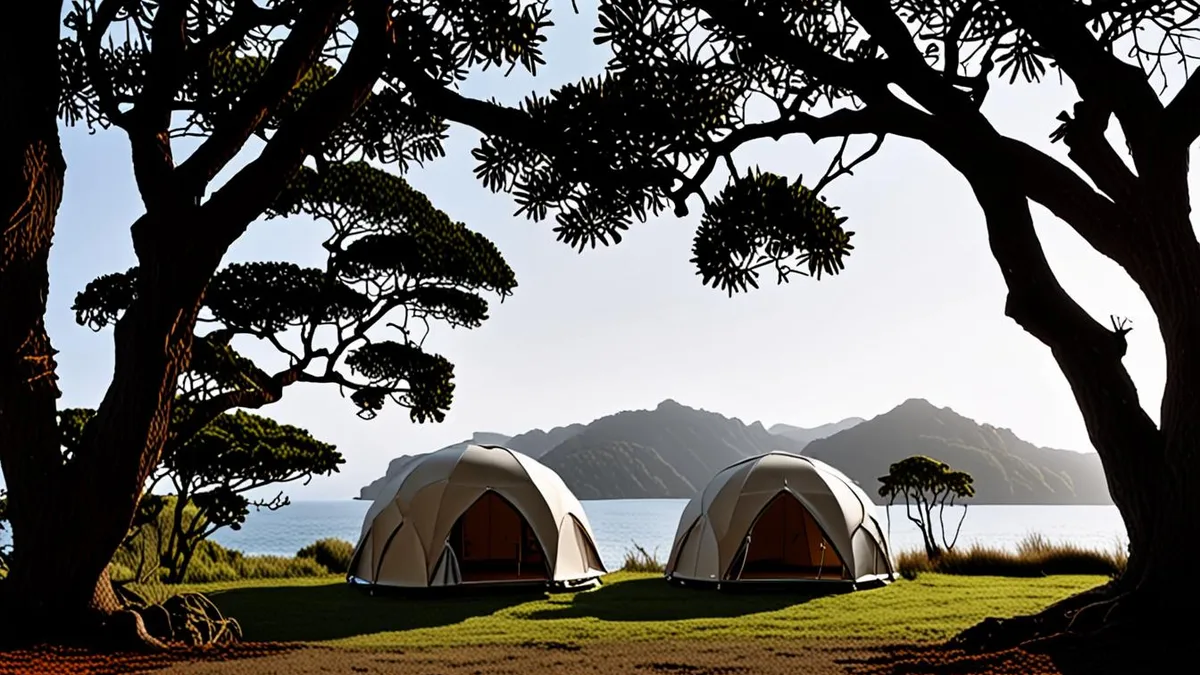
Winter is the season many travelers overlook, and that’s exactly why it works. Rotorua and Taupo are the sweet spots: geothermal activity means you can book heated geodesic domes with private hot pools, so you’re soaking under the stars instead of shivering in a tent. Steam rising off your own pool on a cold night is hard to beat, and both regions have plenty of thermal attractions and short walks to fill the days.
If you want milder air rather than hot pools, head north. Northland and the Bay of Islands have the warmest year-round climate in the country, with winter daytime temperatures around 14-16°C. It’s not beach weather every day, but it’s comfortable for coastal walks and quiet sightseeing without the summer crowds.
Booking winter stays wisely
Winter is low season, which works in your favor twice: rates are typically lower and availability is easier, so you can often book closer to your travel dates. Before you commit, though, check how the site handles cold. Look for solid insulation, a wood burner or heated floors, and ask what the dome or tent is like on a frosty night. A well-built winter stay feels luxurious; a thin summer tent in July does not. Bring thermal base layers and warm socks regardless, and you’ll be set for evenings outside by the fire.
Spring (September-November): Green Landscapes and Lower Rates
Spring is when New Zealand’s countryside looks its best. Canterbury and the Waikato turn a vivid green, orchards burst into blossom, and lambing season puts fluffy new lambs in almost every paddock you pass. If you want those classic rolling-hills photos without summer crowds, this is the window.
The trade-off is unpredictable weather. A single week in spring can deliver bright sunshine, strong wind and a couple of rain showers, sometimes all in one day. Build flexibility into your plans, and choose a site with a covered deck or communal space so a wet afternoon doesn’t derail your stay.
Where to go in spring
Spring is a smart time to look south. The fringes of Fiordland are dramatic before the summer rush arrives, and sites in Canterbury and other South Island regions tend to be quieter and easier to book. You’ll get more choice of domes and tents than you would in January.
Rates sit near shoulder-season levels, typically around NZD 150-250 per night, which leaves room in the budget for a longer trip or a second stay. Pack layers and a reliable waterproof jacket, and treat any sunny forecast as a bonus rather than a promise.
How to Choose the Right Glamping Site for the Season
The best site in summer can be a miserable choice in winter, and vice versa. An open safari tent with mesh windows is wonderful on a warm February night near the coast but a poor match for a cold, wet week. For winter stays, prioritize insulated geodesic domes, wood burners or heated floors; in summer, prioritize airflow, shade and outdoor living space.
Remote sites vary widely in what they actually include. Some offer a full kitchen, private bathroom and heating; others are closer to upscale camping with a shared ablution block. Read the listing carefully rather than assuming.
If this is your first glamping trip, it helps to work through a structured approach like the first-timer’s checklist for choosing a glamping site before you commit to a booking.
Shoulder-season dates in autumn and spring come with changeable weather, so cancellation terms matter more than they do at the peak. Before booking, check:
- Access roads: some sites sit down unsealed gravel roads that can turn slippery after rain, which matters if you’re renting a small car or campervan.
- Mobile coverage: many remote locations have patchy or no signal, so download offline maps and confirm how you’ll contact the host if plans change.
- Host reviews: look for recent comments mentioning heating, cleanliness and how responsive the host was when weather or arrival times shifted.
What to Pack for New Zealand Conditions
New Zealand’s “four seasons in one day” reputation is earned, especially in spring and autumn. Whatever the forecast says, a waterproof outer layer and a warm mid-layer belong in your bag year-round. A light down or fleece jacket takes almost no space and earns its keep on cool evenings, even in summer.
Summer and winter specifics
Summer in New Zealand is fierce on fair skin. Pack high-SPF sunscreen, a hat and sunglasses, plus insect repellent for sandflies, which are a real nuisance on the West Coast and around Fiordland. For winter stays, add thermal base layers, warm socks and slip-on footwear that’s comfortable indoors, since many glamping sites ask you to leave muddy shoes at the door.
If your trip covers several regions and seasons, a structured list keeps you honest. The complete packing guide for a luxury safari tent stay covers the essentials in detail. As a rule, choose items that work in multiple conditions rather than packing for every possible scenario, and favor quick-drying fabrics over cotton.
Wrapping Up: Matching Region to Season
So, which region should you pick? Summer is made for lakes and coasts — Lake Tekapo, the Coromandel Peninsula and the Bay of Islands — but those peak-season sites need booking 3-6 months ahead, especially around Christmas and New Year. Autumn favours Central Otago and Hawke’s Bay, winter calls for the geothermal stays of Rotorua and Taupo, and spring brings green hills and lambing season to Canterbury.
The money side is just as predictable: shoulder-season rates typically sit around NZD 150-250 per night, while summer peak prices climb to NZD 300-600 or more. Match the region to the season, book early for summer, and you’ll get the best of New Zealand glamping without the guesswork. If this helped you plan your trip, leave a comment or share the article with a fellow traveler.