You know you want a glamping trip, but you can’t decide whether the desert’s open skies or the forest’s shaded calm will actually suit you. It’s a common dilemma, and the desert vs forest glamping question matters more than most travelers expect. These two environments deliver genuinely different experiences, from the weather you’ll face to the way the tent is built, what you pack, and how far you’ll drive to reach it.
This guide breaks the comparison into seven parts: climate and the best seasons for each, the sensory contrast of light and sound, what the accommodation itself looks like, packing for each environment, costs and booking lead times, location and logistics, and finally which escape should win your booking. By the end, you’ll know exactly which one fits your travel style — and when to book it.
Desert vs Forest Glamping: Climate and Best Seasons
Timing is everything in glamping, and the desert and the forest have almost opposite calendars. Desert glamping in the US Southwest works best from October to April, when daytime highs sit around 20-28°C — warm enough for lounging outside, cool enough for hiking without suffering. Summer is a different story: extreme heat makes desert stays risky, and many operators reduce or pause bookings during the hottest months.
Forest glamping in temperate regions runs roughly May to September, when the leafy canopy does the hard work of shading your tent and keeping days comfortable even in peak summer. That said, peak rates in July and August reflect the demand, so shoulder-season trips can be easier on the wallet.
The temperature swing you need to plan for
The desert’s biggest surprise is the nighttime drop. Even in spring, temperatures can fall below 10°C once the sun goes down, so layered clothing is essential no matter how warm the afternoon felt. Forest weather is milder overall but wetter — expect humidity, damp ground in the morning and the possibility of rain showers at any point during your stay. Neither environment is difficult if you pack for it; you just need to know which one you’re booking.
The Sensory Experience: Light, Sound and Silence
The sensory difference between these two environments is the real reason to choose carefully. Deserts deliver wide horizons, dramatic sunsets that paint the entire sky in orange and pink, and near-total silence broken only by the wind. There’s nothing between you and the landscape — no walls of trees, no ambient hum. For many travelers, that raw openness is the entire appeal.
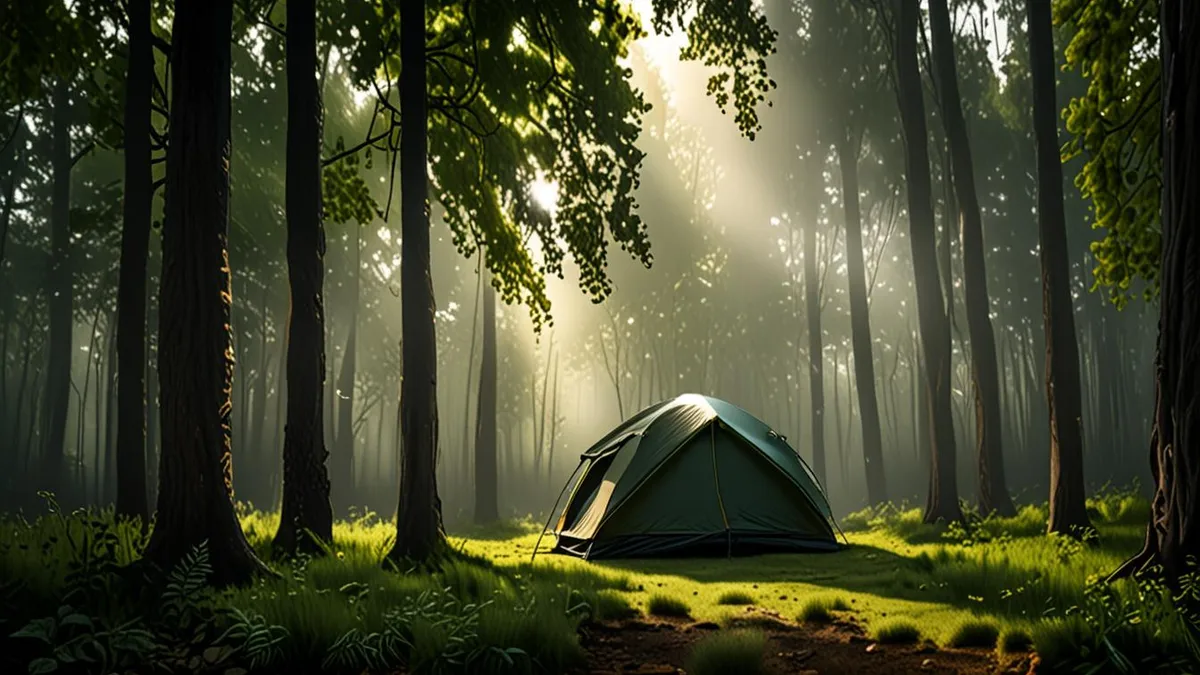
Forests wrap you in green shade and a completely different soundtrack: birdsong through the canopy, leaves rustling overhead, and the smell of damp earth and pine after a shower. It’s immersive in a way the desert isn’t — you’re inside the environment rather than facing it.
Stargazing: the desert’s trump card
If seeing the Milky Way with the naked eye is on your bucket list, the desert wins. With zero light pollution and clear, dry air, desert stargazing is unmatched — on a moonless night you can often see satellites, shooting stars and the full band of the galaxy without any equipment. Forest canopies block much of the sky, so forest stargazing tends to be limited to clearings and lakeshores.
The feeling of the stay differs too. Forest sites feel cocooned and private, with your tent tucked out of sight of the neighbors. Desert stays feel exposed and expansive — beautiful, but you’ll see other tents across the landscape. If privacy matters to you, weigh that carefully.
What the Accommodation Itself Looks Like
The tents and cabins themselves reflect the environment they’re built for. Desert sites favor safari tents and A-frame cabins designed around airflow and shade — wide verandas, roll-up canvas sides and elevated roofs that keep the interior from turning into an oven. Forest sites lean toward geodesic domes and treehouse-style builds, shapes that shed rain well and handle constant moisture without sagging or rotting.
The good news is that comfort is rarely the deciding factor. Both types typically include real beds, en-suite or nearby bathrooms, and heating or cooling for the season. If you’ve never stayed in a safari tent before, it helps to know what to expect — this complete guide to packing for a luxury safari tent stay covers the essentials.
Where the two differ is in structural priorities. Desert structures are engineered to keep sun out and air moving; forest structures are engineered to keep water out and warmth in. A few specific differences worth knowing before you book:
- Canvas coverage: desert safari tents usually have extended awnings and shaded decks so you can sit outside even at midday, something forest builds rarely need.
- Flooring: forest domes and treehouses often sit on raised wooden platforms that keep damp ground away from your bedding, while desert floors may be simple decking or even hard-packed ground underfoot.
- Window design: desert units maximize mesh ventilation panels for cross-breezes, while forest units favor sealed windows and covered entrances to keep rain out.
How to Pack for Each Environment
Packing for a desert glamping trip is all about sun protection and managing temperature swings. Days in the US Southwest can sit around 20-28°C while nights drop below 10°C even in spring, so you’ll want layers you can add and shed throughout the day. Think of it as packing for two seasons in one trip. High UV exposure is a year-round desert reality, so a wide-brimmed hat, sunglasses and reef-safe sunscreen deserve dedicated space in your bag. A lightweight buff or scarf also earns its place — it shields your neck from the sun during the day and doubles as an extra warmth layer once temperatures fall after sunset.
Forest packing flips those priorities. The canopy blocks direct sun, but it also traps humidity, so dampness and insects become your main concerns. Quick-dry fabrics earn their keep here, and a waterproof jacket is non-negotiable if you’re heading into temperate regions between May and September. Moisture-wicking base layers, a warm mid-layer for cool mornings, and insect repellent will serve you better than extra sun gear. If you want a real-world example of forest-layer packing done right, this guide to glamping in Patagonia breaks down how to dress for damp, changeable conditions.
Whichever environment you choose, a few items belong on every list:
- Headlamp with fresh batteries: desert sites sit far from town lights, and forest sites have no street lamps under the canopy, so hands-free light matters after dark.
- Refillable water bottle: desert air is dry enough that you lose water faster than you notice, and forest hikes between your tent and the bathroom benefit from a bottle too.
- Closed-toe shoes: rocky desert ground and root-covered forest trails both punish sandals, so pack one pair you can genuinely walk in.
- Small dry bag or zip pouches: useful for keeping electronics and spare clothes dry in humid forests and for keeping desert dust out of your gear.
Costs and Booking Lead Times
Desert tent stays typically run $150-400 per night, while forest domes and cabins range from $120-350. The desert often carries a small premium because sites are more remote to build and operate, but both categories overlap enough that your dates matter more than your destination. If you’re weighing whether the extra cost of glamping over traditional camping makes sense for you, this comparison of glamping and camping costs and comfort walks through what you actually get for the money.
When to book
Timing is where the two environments really diverge. For desert trips in the October-April window, book 2-3 months ahead, and know that spring weekends sell out fastest — those pleasant 20-28°C days draw the biggest crowds. Forest sites demand more patience: summer weekends, especially in July and August, often need 4-6 months of lead time to secure.
If your schedule is flexible, aim for the shoulder months. Late September or May works beautifully for forest stays, while April and late October offer the best value in the desert. You’ll typically pay less, find better availability, and still enjoy good conditions — just confirm what’s open at your chosen site during those quieter weeks.
Location and Logistics: How Remote Do You Want to Be?
Remote desert sites sit 30-90 minutes from the nearest small town, which is part of their appeal and part of their challenge. Stock up on supplies before you arrive — groceries, water, fuel — because there’s no quick run to the corner store once you’re settled in. Forest sites are usually just 15-45 minutes from town, so resupplying or squeezing in a day trip is far easier. That distance also shapes the rhythm of your stay: desert travelers tend to plan a full itinerary around camp, while forest guests can pop out for a bakery run, a town lunch or a rainy-day fallback activity without losing half a day to driving.
The drive itself is another difference worth planning for. Desert access often involves unpaved roads, and some sites require higher-clearance vehicles, so check the requirements with your operator before booking rather than discovering them at the end of a dirt track. After heavy rain, some desert tracks can become temporarily difficult, so it’s smart to ask about recent conditions when you confirm your arrival details. Forest access is typically paved but narrow, and small sites can have limited parking, so carpooling or arriving early helps — especially on summer weekends when neighboring sites fill up too.
A few practical habits make both drives smoother:
- Fuel up in town: gas stations can be scarce along desert routes, so arrive with a full tank rather than assuming you’ll find one nearby.
- Download offline maps: cell coverage is unreliable around remote desert sites and patchy under forest canopy, so don’t rely on streaming directions.
- Ask about arrival windows: some sites, especially those down unpaved desert roads, prefer check-ins before dark so staff can guide you in.
- Confirm parking arrangements: at small forest properties, ask whether you park at your tent or in a shared lot and walk your bags in.
- Share your route: leave your itinerary with someone at home, particularly for desert stays where you may pass few other vehicles on the way in.
Which Glamping Escape Should You Choose?
So which one wins? If you picture yourself watching the sun drop over open horizons, standing outside your tent in near-total silence, and staying up late for star-filled skies, the desert is your match — and the October to April window is when it delivers. If you’d rather wake to birdsong, sit in green shade and breathe in that damp, earthy forest air, then a forest stay from May to September is the better fit.
The deciding factors come down to three things: your budget, how you like to pack, and how much remoteness you can handle. Desert trips often cost a bit more and demand sun protection and layers for big temperature swings, plus a longer drive to resupply. Forest stays are easier on logistics but need rain gear and bug spray. Pick the environment that matches your season, your packing style and your tolerance for solitude — then book it. Which would you choose? Tell us in the comments or share this article with a friend who’s also torn.