Glamping in the Sahara sounds like a dream: sleeping under a sky full of stars, dunes glowing at sunset and dinner served around a campfire. But between the photos and the booking page, a lot of questions come up. When is the desert actually comfortable? What will a night in the dunes really cost you? And how do you tell a genuinely comfortable camp from one that photographs well but delivers little?
This guide walks through the whole planning process. You’ll find a clear breakdown of the seasons and when to go, realistic price ranges for both standard and luxury camps, and advice on choosing between Morocco and Tunisia as your base. There’s also practical guidance on booking, packing for big temperature swings and what a typical stay actually feels like from arrival to sunrise. By the end, you’ll know exactly what to expect and how to put together a desert trip that delivers the comfort you’re paying for.
When to Go Glamping in the Sahara: Seasons Explained
The Sahara is only comfortable for part of the year, and picking the right months matters more here than in almost any other destination. The reliable window runs from October to April, when daytime highs sit between 20 and 30°C. That’s warm enough for shorts and a t-shirt on the dunes without turning your camp into an oven.
Winter nights catch people off guard
From November to February, the desert is at its coolest. Days are still pleasant, but nights can drop to 5-10°C, which surprises many first-time visitors. Pack warm layers: a fleece, a proper jacket and something to sleep in, because tent heating varies from camp to camp.
When to avoid the desert
May to September is best avoided entirely. Daytime temperatures regularly exceed 40°C, and many camps close during these months because running a desert camp in that heat is neither safe nor pleasant for guests or staff. If your travel dates fall in summer, choose a different destination.
For the best all-round experience, the shoulder months of October and April are hard to beat. You get warm days, mild nights and noticeably fewer crowds than the peak winter season, plus easier availability at the most popular camps.
What Glamping in the Sahara Really Costs
Desert glamping is more affordable than many people assume, but prices vary a lot depending on the level of comfort you want. Standard desert camps run roughly $80-150 per person per night, and that usually includes full board, so your meals are covered. These camps typically have traditional canvas tents with real beds and shared or basic bathroom facilities.
At the top end, luxury camps with private bathrooms and suites range from $200-500+ per night. These properties add extras like en-suite showers, larger tents, better furnishings and sometimes pools or lounges positioned on the dunes. If you’re weighing up whether the upgrade is worth it, it helps to understand how glamping compares to regular camping on cost and comfort before you commit to a price tier.
The good news is that most rates are packaged. A typical booking includes dinner, breakfast and one dune excursion, often a sunset camel ride. That makes comparing camps easier, since meals and an activity are usually built into the headline price rather than added on top.
Before you budget, though, plan for the extras that rarely appear in the advertised rate:
- Private 4×4 transfers: getting from the nearest town to the dunes often costs extra, especially if you want a private vehicle rather than a shared shuttle.
- Sandboarding: some camps lend boards for free, but at others it’s a paid add-on, so ask when booking.
- Star-gazing sessions: guided astronomy evenings are increasingly offered at luxury camps and usually sit outside the standard package.
- Driver and guide tips: not mandatory, but customary for multi-day desert trips, so keep some cash aside for the people who get you there and back.
Where to Base Yourself: Morocco, Tunisia and Beyond
Most Sahara glamping trips happen in Morocco or Tunisia, and the two offer noticeably different experiences. Choosing the right base shapes everything from how remote your camp feels to how much the trip costs.
Morocco: the most developed option
Merzouga and the Erg Chebbi dunes in Morocco are the most developed glamping hubs in the Sahara. The big advantage is access: the dunes sit right at camp, so you can walk out of your tent and be on the sand within minutes. The trade-off is that this area draws the most visitors, so camps here range from intimate to genuinely busy.
If you want more solitude, Erg Chegaga in Morocco suits travelers looking for remoter camps further from the road. It takes more effort to reach, but the payoff is a quieter stretch of dunes with fewer neighboring camps.
Tunisia: quieter and gentler on the wallet
Douz in Tunisia offers a quieter, budget-friendlier gateway to the Grand Erg Oriental. It’s a good fit if you want a classic desert experience without the crowds of the Moroccan hubs, and it pairs well with a broader Tunisia itinerary.
Whichever region you pick, evaluate camps on three things: dune access (how close is the sand?), group size (small camps feel more authentic than sprawling ones) and bathroom setup (shared facilities versus en-suite). If it’s your first desert trip, working through a first-timer’s checklist for choosing a glamping site will help you compare camps systematically instead of going by photos alone.
How to Book: Timing, Packages and Getting There
Sahara glamping is not the kind of trip you book on a whim a week before departure. The best camps are small, often with just a handful of tents, and the most desirable dates fill up quickly. A little planning goes a long way, especially if you want a private tent rather than a shared one.
- Book early for the dates you want. For regular winter dates, aim to reserve 2-3 months ahead. If you are targeting Christmas or New Year weeks, plan 6+ months in advance, as these are the busiest and most sought-after nights of the season.
- Get the package details in writing. Before paying a deposit, confirm exactly what is included: meals, drinks, excursions, and whether your tent is private or shared. Some camps include sandboarding or star-gazing sessions, while others charge them as extras, so ask for a full breakdown.
- Plan your route to camp. Merzouga, the main glamping hub, sits roughly 2 days’ drive from Marrakech by road, or you can take a short domestic flight plus a transfer to cut the journey down. Many travelers combine the drive with stops along the way, but check timings with your operator before committing.
- Ask about camp logistics. Some camps move seasonally or sit deep in the dunes, so ask where your camp will be located during your dates. Also find out how luggage is handled on the final dune approach, since you may need to pack a small bag for the last stretch while larger cases stay behind.
Once the booking is confirmed, most of the hard work is done. If you enjoy this style of travel, the same careful approach applies elsewhere too, as explained in our guide to glamping in Patagonia. Desert and mountain trips share one thing in common: the operators who answer your questions clearly before booking are usually the ones who run the smoothest stays.
What to Pack for Desert Nights and Days
The desert is a land of extremes, and packing for it means preparing for two climates in one day. A pleasant afternoon can turn into a night near 5-10°C in winter, so your bag needs to work for both. The trick is layers you can add and shed as the temperature swings: think t-shirts for the day, a fleece for the evening and a warm jacket for after dinner, when everyone gathers around the fire and the cold sets in fast.
Wind and sand are the other constants. A gusty evening on the dunes can whip sand into everything, so protect your eyes, skin and camera. A simple ziplock bag or dry sack for your phone and lenses saves a lot of frustration. Sun protection matters just as much as warmth, because there is almost no shade once you leave camp, and the midday sun reflects off the sand from every angle.
- A scarf or shemagh: wrap it around your face and neck when the wind picks up, and use it as an extra layer at night.
- High-SPF sunscreen and sunglasses: reapply sunscreen through the day, as reflected light off the sand burns quickly.
- Closed shoes: sandals let sand scorch your feet on hot afternoons; lightweight sneakers or trail shoes handle the sand far better.
- A headlamp: camps are deliberately dim after dark, and paths between tents and the dining area are sandy and unlit.
- A small daypack: handy for dune walks, carrying water, your camera and an extra layer as the sun drops.
- A power bank: tent electricity is limited, so a charged power bank keeps phones and cameras running through your stay.
Finally, pack soft bags rather than hard suitcases if you can. Gear gets loaded onto camels or squeezed into 4x4s for the last stretch to camp, and duffel bags make that much easier. Leave anything you do not need at your hotel or with your driver, and keep one small bag with essentials for the night.
What a Stay Is Actually Like
Your arrival and evening in camp
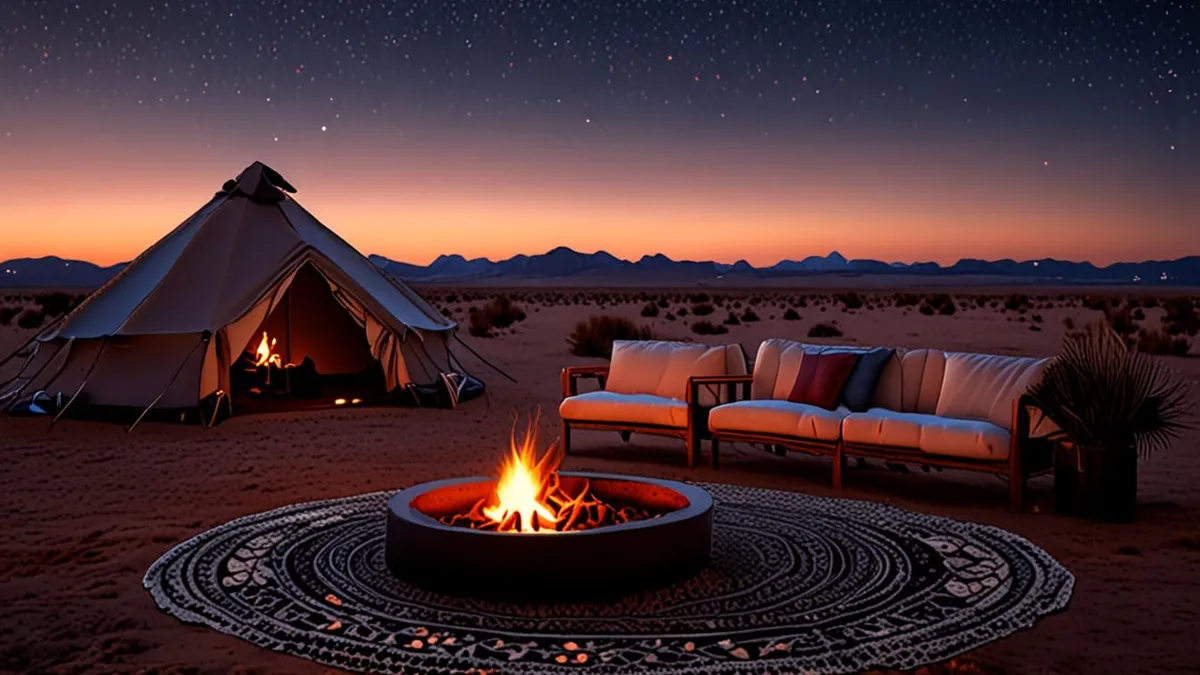
Most stays follow a similar rhythm. You typically arrive by late afternoon, in time for the highlight of the day: a camel or 4×4 ride out onto the dunes for sunset. As the light fades, everyone drifts back to camp for a tagine dinner, often followed by drumming around the fire under an extraordinary sky.
Your tent shapes how comfortable that night feels. At the simple end, Berber-style canvas tents offer mattresses and rugs on the sand. At the luxury end, you will find real beds, proper rugs and en-suite bathrooms, sometimes with hot water.
Mornings, sand and the bigger trip
Set your alarm: early mornings are for climbing a dune before sunrise, and they are usually the moment travelers remember most. Expect sand everywhere, including in your bed, and treat limited Wi-Fi as part of the experience rather than a flaw. Most guests stay 1-3 nights, often woven into a longer road itinerary through Morocco or Tunisia, which is exactly how a desert camp works best: a short, vivid chapter in a bigger journey.
Wrapping Up Your Sahara Glamping Plan
Glamping in the Sahara is far more doable than it first sounds once you know the basics. Aim for the October to April window, and choose November to February if you want the coolest nights. Expect roughly $80-150 per night at standard desert camps, or $200-500+ for luxury options with private bathrooms. Book 2-3 months ahead for winter dates, and 6+ months if you’re traveling over Christmas or New Year. Merzouga and Douz are the easiest bases to plan around.
The rest comes down to preparation. Pack for big day-night temperature swings, because a warm afternoon can turn into a chilly evening, and confirm exactly what your package includes before paying a deposit. Get those details right and a night under the desert stars becomes one of the most memorable stays you’ll ever book. If you’ve camped in the Sahara, share your experience in the comments or pass this guide along to a fellow traveler.