Glamping in the Dolomites looks effortless on Instagram: a canvas tent framed by jagged limestone peaks, coffee in hand, no crowds in sight. The reality takes a bit more planning. Pick the wrong valley and you might spend your mornings stuck in traffic; pick the wrong month and you could get rain, peak-season prices, or a site that has not even opened for the season yet. And not every “panoramic” pitch delivers the view the photos promised.
This guide walks you through what makes glamping in the Dolomites different from ordinary alpine camping, when the season actually works, and which valleys and plateaus suit hikers, photographers and road-trippers respectively. You’ll also find realistic price ranges, booking timelines, a packing list built for cold high-altitude nights, and a quick summary plan at the end. By the last section, you should be able to book a stay that matches the picture in your head.
Why Glamping in the Dolomites Is Different from Alpine Camping
The Dolomites are not gentle rolling hills. These pale, jagged limestone towers are part of a UNESCO World Heritage site, and that scenery is exactly what glamping sites here sell. A tent or dome with a terrace facing the right peak can charge a premium, which means location matters more than amenities. Two sites with identical safari tents can feel like completely different holidays depending on whether you wake up to a meadow-and-peaks panorama or a view of the access road.
Altitude changes the experience too. Many sites sit between 1,000 and 2,000 meters above sea level, so nights stay genuinely cold even in July. If you have glamped in lowland Europe, where a light sleeping bag is usually enough in summer, reset your expectations. Warm bedding and heating are not luxuries here; they are part of the deal.
What you’ll actually sleep in
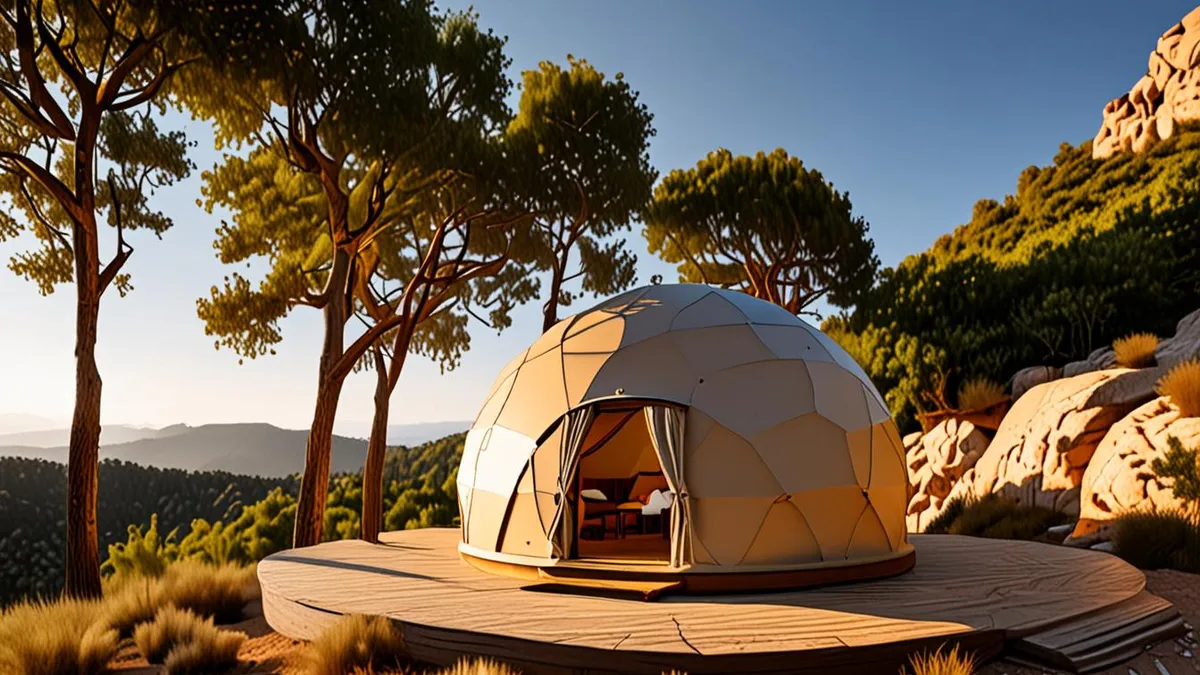
Forget the image of a basic campsite with a tent on grass. The Dolomites glamping scene leans toward proper structures: safari tents with wood floors, geodesic domes with panoramic windows, and small mountain lodges that blur the line between camping and a boutique hotel. Many are positioned specifically for sunrise and sunset views of the surrounding peaks, so it pays to ask which direction your accommodation faces before you book.
When to Go: Reading the Dolomites Season
The Dolomites glamping season is short. Most sites open in June and close by the end of September, because snow and freezing nights make anything longer impractical at altitude. That gives you a narrow window, and choosing the right month inside it matters more than it would in milder destinations like the best seasons for glamping in Portugal, where you can plan a trip almost year-round.
The sweet spots: June and September
June and September are when the Dolomites work best for glamping. Sites are open, the summer crowds have not arrived or have already gone home, and daytime temperatures at mid altitudes typically sit between 10 and 20°C. You get clear trails, easier restaurant bookings and often lower rates. The trade-off is changeable weather: a warm afternoon can turn cool quickly, so pack accordingly.
July and August: warm but busy
July and August bring the warmest, most stable weather and the busiest trails. Every cable car, village and viewpoint fills up, and glamping sites charge peak-season prices. If your dates are fixed to school holidays, it can still be a wonderful trip, but book early and expect company on the trails. Outside June to September, assume most glamping sites are closed and plan a hotel-based trip instead.
Where to Base Yourself: Valleys and Plateaus Compared
Choosing your base is the single biggest decision for a Dolomites glamping trip, because the valleys feel very different. Some are built around hikers who want to ride a cable car up in the morning and be on a trail within minutes. Others trade convenience for scenery, with quieter roads and the kind of meadow-and-peaks views that dominate the region’s photo galleries. And if you would rather not commit to one valley, staying near Bolzano keeps your options open, with drives of roughly 30 to 60 minutes to most major valleys plus train connections from the north.
The landscape here rewards travelers who plan around it, much as it does further south, where a good guide to glamping in Patagonia starts with matching your base to the terrain. Here is how the main options compare:
- Val Gardena: cable cars leave from the main villages, so you can reach high trails without a long morning hike, and shops, rentals and restaurants are close at hand.
- Alta Badia: a favorite with hikers and food lovers alike, combining lift access to high routes with villages known for their mountain restaurants.
- Val di Funes: quieter roads and the classic church-in-a-meadow foreground shot, best if you value scenery and calm over lift-served hiking.
- Alpe di Siusi plateau: Europe’s largest high-altitude meadow, with wide-open panoramas and gentle walking paths straight from your tent or dome.
If you are torn, ask yourself one question: do you want to hike far, or do you want to look at something beautiful? The first points you toward Val Gardena or Alta Badia; the second toward Val di Funes or the plateau.
What Your Money Gets: Stay Types and Price Ranges
Glamping in the Dolomites covers a surprisingly wide range of setups, and knowing what each tier includes helps you match your budget to your comfort level. Safari tents and geodesic domes typically run €90-€250 per night, with the price driven mainly by the season and the view from your tent or dome. A unit facing the Seceda ridgeline or the Odle group will sit at the top of that range; a tent tucked into a meadow with a partial view will cost noticeably less.
What the higher prices usually buy you
At the lower end, expect a furnished canvas tent with real beds, warm blankets and access to shared bathroom facilities. As prices climb, the differences become practical rather than decorative. Higher-priced stays usually add private bathrooms, wood stoves and panoramic terraces, and on cold mountain nights those three things matter far more than a stylish interior. A wood stove can turn a chilly September evening into the highlight of your trip, and a private bathroom saves you a midnight walk across a wet campsite.
Some properties blur the line between glamping and small mountain lodges, offering half-board meals or on-site restaurants. These sit at the premium end, but they remove the need to drive down to a village for dinner after a long day on the trails.
Timing affects the price as much as the view. Shoulder-season bookings in June and September often land at the lower end of the range, sometimes for the very same units that command top rates in July and August. If your dates are flexible, a mid-June or late-September stay is the easiest way to get a premium tent at a mid-range price.
How to Book: Timing and Choosing the Right Site
Booking a Dolomites glamping trip rewards a bit of planning, because the best-viewed units are limited and the season is short. Most sites only operate from June to September, so the window for peak-season dates fills quickly. The steps below cover timing, site selection and the details worth verifying before you pay.
- Book early for July and August. Reserve 3-6 months ahead for these peak months. The most scenic safari tents and domes in popular valleys are often the first to go, and latecomers are left with less desirable units or no availability at all. If you have your heart set on a specific view or a particular valley, treat this deadline as firm.
- Relax the timeline for shoulder season. One to two months is usually enough for June or September. Availability is better and rates are lower, which makes these months forgiving if you prefer to plan on shorter notice. You also get milder crowds and daytime temperatures around 10-20°C at mid altitudes.
- Check the altitude before you commit. Many sites sit between 1,000 and 2,000 m above sea level, so nights stay cool even in midsummer. Look at the elevation and the site’s exposure, since a shaded slope will feel noticeably colder than a sunnier position.
- Verify the practical details. Confirm bathroom access, heating and whether meals are offered on site. A dome with no stove and no nearby restaurant is a very different proposition in the mountains than the photos suggest.
If this is your first glamping trip, it helps to work through a structured list of questions before booking. The guide on how to choose a glamping site as a first-timer walks through exactly what to check, from facilities to location, so nothing catches you out on arrival. A few minutes of checking now is the difference between a cozy mountain stay and a cold, improvised one.
Packing and Planning for High-Altitude Comfort
Glamping in the Dolomites puts you at 1,000-2,000 m above sea level, and that altitude shapes everything about how comfortable your stay feels. Even when daytime temperatures reach a pleasant 20°C in midsummer, nights stay cold enough that a thin sleeping bag or summer pajamas will leave you shivering. Pack proper layers and warm sleepwear as a matter of course, not as a contingency.
Weather is the other factor to plan around. Afternoon thunderstorms are common in July and August, and they tend to arrive quickly after a clear morning. Bring rain gear you can carry on every hike, and structure your days so you are back near shelter by mid-afternoon rather than caught on an exposed ridge when the sky turns.
- A fleece or down mid-layer: temperatures can swing by more than 15°C between midday and bedtime at altitude, so you will wear this layer every single evening.
- A hat and gloves even in summer: early-morning cable-car rides and sunrise starts at 2,000 m feel wintry, whatever the forecast promised for the afternoon.
- Sturdy, waterproof hiking shoes: meadow trails and tent paths stay muddy for hours after a storm, and thin sneakers turn a short walk to dinner into a soggy ordeal.
- A headlamp: many glamping sites sit well away from village lighting, and walks to shared bathrooms after dark are part of the experience.
Finally, plan your hikes and cable-car trips around early starts. Cable cars and popular trails get busy by mid-morning in July and August, so arriving at the lift station at opening time gives you quieter paths and better light for photos. An early start also keeps you ahead of the afternoon storms, which is exactly where you want to be when the weather turns.
The Dolomites Glamping Plan in Brief
The Dolomites may look effortless on Instagram, but the difference between a dream trip and a soggy disappointment comes down to two choices: where and when. Pick the wrong month and you’ll share every viewpoint with peak-season crowds; pick the wrong valley and your “mountain vista” might be a stretch of parking lot. Get both right, and glamping here rivals any alpine experience in Europe.
The short version: aim for June or September, when temperatures sit around 10-20°C at mid altitudes and the crowds thin out. Base yourself in Val Gardena, Alta Badia or Val di Funes for the best mix of views and access. Budget €90-€250 per night, and if summer dates are non-negotiable, book 3-6 months ahead. Finally, pack for cold nights and afternoon storms at altitude — the mountains don’t care how good the weather forecast looked. Have you glamped in the Dolomites, or are you planning a trip? Share your questions and tips in the comments.