Tasmania looks small on the map, but the scenery changes dramatically from one region to the next. That’s exactly what makes lodge stays in Tasmania so rewarding, and so easy to get wrong. Pick the wrong base and you’ll spend your days driving instead of exploring; pick the wrong month and a highland lodge can feel more like a test of endurance than a wilderness retreat.
This guide breaks down the choices by region and season. We’ll look at why your lodge base shapes the whole trip, then work through Cradle Mountain and the highlands, the East Coast around Freycinet and Bicheno, and southern options in the Huon Valley and Bruny Island. From there, we’ll cover how to choose your season, build an itinerary, and time your booking, since peak-season wilderness lodges often need to be secured 6-12 months ahead. Whether you’re working with a mid-range budget or dreaming of a high-end wilderness lodge, you’ll finish with a clear plan for where to base yourself and when to go.
Why Your Lodge Base Shapes a Tasmania Trip
Tasmania looks compact on a map, but its lodge regions are spread out in a way that surprises many first-time visitors. Cradle Mountain sits in the northwest highlands, Freycinet hugs the east coast, and the Huon Valley lies south of Hobart. These are three genuinely different corners of the island, each with its own landscape, climate and pace.
That geography has a practical consequence: picking a single lodge base means accepting drives of roughly two to three hours to reach most other highlights. A traveler based at Cradle Mountain will spend a good part of a day getting to the Freycinet Peninsula, and the reverse is just as true. This is why multi-base trips are so common here. Rather than commuting back and forth, most visitors settle into one lodge region, enjoy it properly, then move on to the next.
Matching the lodge style to the region
Lodge character varies as much as the scenery. The highlands around Cradle Mountain favor wilderness retreats — remote, fire-lit places built around the landscape itself. The east coast at Freycinet leans toward coastal lodges, where the draw is ocean access and views toward Wineglass Bay. In the Huon Valley, south of Hobart, the style shifts again toward boutique farm-style stays, often run by small operators with orchards, vineyards or artisan food producers nearby.
So the first decision isn’t just where to sleep, but what kind of stay you want. A traveler dreaming of alpine trails and a crackling fire after dark is describing a highlands lodge. Someone chasing swims, coastal walks and seafood is describing Freycinet. And a food-focused, slow-paced trip through apple country and river towns points squarely at the Huon Valley. Knowing which of these appeals most — and accepting that you probably can’t have all three from one base — is the foundation of a well-planned Tasmania lodge trip.
Cradle Mountain and the Highlands: When to Go
Cradle Mountain rewards travelers who time their visit well. The best window for most lodge guests runs from December to March, when trail conditions around Dove Lake and the mountain’s lower slopes are at their mildest. Boardwalks are dry, daylight stretches into the evening, and the iconic Cradle Mountain reflection on Dove Lake is most likely to appear on a clear morning.
That said, winter has its own appeal. Stays from June to August suit travelers who want snow-dusted peaks, quiet trails and lodges running well below capacity. You will often get clear, crisp days and a fireplace with your name on it. The trade-off: expect cold nights around 3-8°C in the highlands, short days for hiking, and the possibility that some higher tracks are icy or closed. Pack layers and plan shorter walks close to your lodge.
How long to stay at this base
Cradle Mountain sits roughly 1.5-2 hours by car from Launceston, usually along winding highland roads where you will want daylight on your side. Arriving late in the day wastes your first evening, so aim to check in by mid-afternoon.
Because of that drive time and the sheer amount of walking on offer, plan at least two nights here. A two-night stay gives you one full day for the Dove Lake circuit and surrounding tracks, plus a buffer in case weather closes in. Many lodge guests find three nights even better, since highland weather can change quickly and a spare day lets you catch the views you missed.
East Coast Lodge Stays: Freycinet and Bicheno
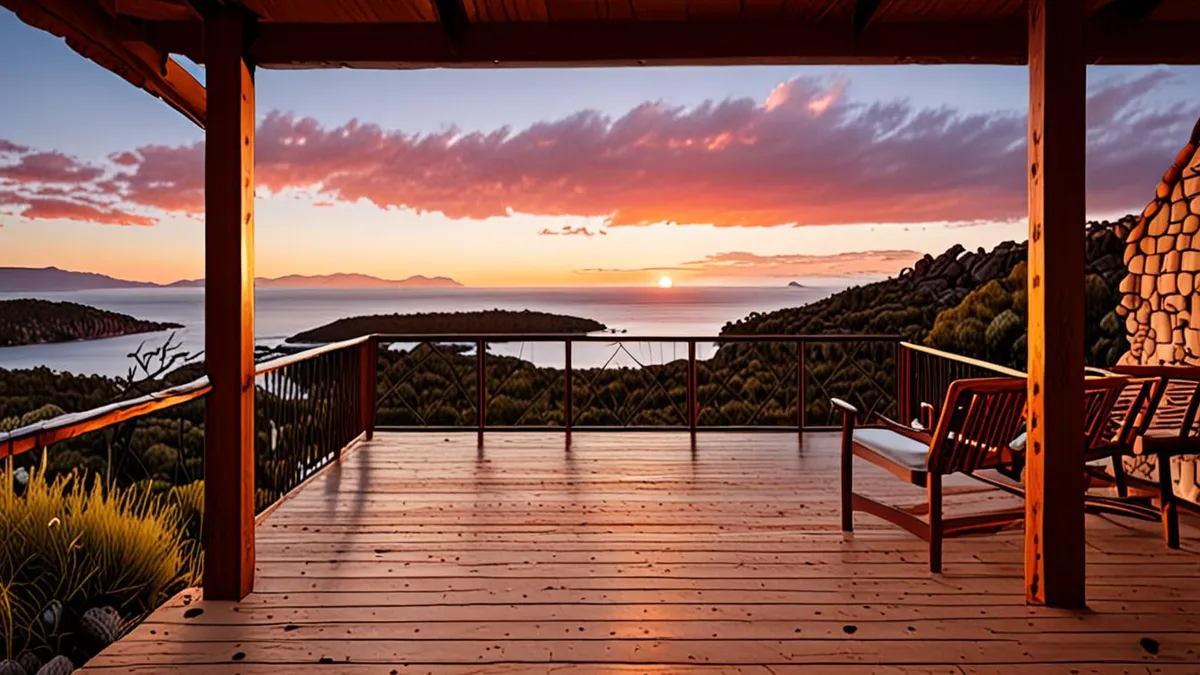
The Freycinet Peninsula is Tasmania’s classic coastal lodge base, and it earns that reputation. Wineglass Bay, the pink granite peaks of the Hazards, and a string of sheltered beaches sit right on the doorstep of most lodges here. The drive from Hobart takes about 2.5-3 hours by car, so most travelers arrive by early afternoon and still have time for a sunset walk or a swim before dinner.
Lodges around Freycinet and nearby Bicheno tend to be smaller and more relaxed than the big wilderness retreats elsewhere on the island. You’ll find ocean-view rooms, easy access to boat tours and seafood, and the kind of stay where you can walk to dinner. If you’re torn between a coastal setting and a highland one, it may help to compare riverside and mountain lodges before deciding which suits your trip.
When to Book the East Coast
Summer, from December to February, is when the east coast shines. The water is warm enough for proper swimming, and Wineglass Bay beach is at its best. The trade-off is demand: this is peak season, so rates are at their highest and lodges fill up early. If a summer stay is your goal, book well ahead rather than hoping for a last-minute cancellation.
For better value, aim for April or May. The seas are often calmer, the bush turns to autumn colors, and mid-range lodges typically run around AUD 250-450 per night instead of peak prices. The walking weather is still pleasant, and you’ll share the trails with far fewer people. Check current rates and availability directly with lodges, as prices shift from year to year.
Southern Tasmania: Huon Valley and Bruny Island Bases
Southern Tasmania works beautifully for travelers who want lodge comfort without long drives. The Huon Valley sits just 30-60 minutes south of Hobart, which makes it one of the easiest lodge bases to reach in the state. Instead of wilderness retreats, you’ll find boutique properties and farm-style stays here, often set among orchards, vineyards and rolling pasture with the Huon River running through the valley.
This region rewards slow travel. Many lodge hosts run small working farms or grow their own produce, and the valley is known for apples, berries, cider and cool-climate wines. A base here lets you spend mornings at the lodge and afternoons exploring the waterways and small towns south of Hobart, all without repacking your bags.
Bruny Island for food-focused stays
Bruny Island lodges suit travelers whose trip revolves around food: oysters, cheese, berries and local seafood are the draw here. The practical catch is access. The island requires a vehicle ferry from the mainland south of Hobart, so you need to build ferry timing into your plans, both arriving and leaving. Check the current timetable before you book, and allow buffer time in summer when sailings fill up.
These southern bases pair especially well with city time. A common approach is to spend 2-3 nights in Hobart before or after a wilderness stay elsewhere in Tasmania, then add a few nights in the Huon Valley or on Bruny Island in between. That way you get restaurants and markets, plus a quiet lodge finish, without ever facing a long driving day.
Choosing Your Season and Building the Itinerary
Tasmania rewards travelers who match their lodge base to the right season. Summer, from December to February, is peak season and the best bet for beaches and long hiking days, with the mildest weather of the year. Autumn, from March to May, brings changing foliage, quieter trails and calmer seas along the east coast. Winter, from June to August, is the season for cozy fireside lodge stays, especially in the highlands where cold nights around 3-8°C often come with clear days.
There’s also a spring shoulder season from September to November, when crowds stay thin and rates sit below peak while the landscape greens up. If your dates are flexible, shoulder months are usually the smartest value play: nightly rates drop noticeably below summer prices, yet most attractions, trails and roads remain accessible.
As for length, most visitors spend 7-10 days to cover two lodge regions comfortably. That’s enough time to pair, say, Cradle Mountain in the highlands with Freycinet on the coast without rushed driving days.
- December to February: ideal for swimming at east coast beaches and tackling longer hikes, but book lodges far ahead because this is peak season.
- March to May: the best window for photographers, with autumn color in the Huon Valley and vineyards plus calm conditions for Wineglass Bay cruises.
- June to August: plan shorter daylight hours into your itinerary and prioritize lodges with fires, spas or good dining to balance the cold nights.
- September to November: a strong pick for wildflowers and wildlife activity, with shoulder-season rates before the summer surge begins.
Booking Lodge Stays in Tasmania: Timing and Budget
Tasmania’s most popular lodges are small properties with limited rooms, so availability can vanish months in advance. For high-end wilderness lodges in peak season, plan on reserving 6-12 months ahead. If you’re targeting shoulder months, a lead time of 3-6 months is usually enough, though boutique properties can still fill early around long weekends and local holiday periods. If a specific lodge is the reason for your trip, book it first and build the rest of the itinerary around it.
What you should expect to pay
Mid-range lodge stays typically run AUD 250-450 per night, which covers comfortable boutique and farm-style properties in areas like the Huon Valley. High-end wilderness lodges sit in a different bracket entirely: expect AUD 800-1,500+ per night, and at that level guided activities are often included in the rate. Prices shift year to year, so treat these as planning ranges and confirm current rates directly with each property before committing.
Read the fine print on meals
One detail catches many travelers out: whether a rate is full board or room-only. Remote lodges frequently have no dining alternatives nearby, so a room-only rate can effectively require a meal package, which changes your nightly budget significantly. Before booking, check exactly what each rate includes and compare the options in our guide to full board versus self-catering lodge stays so you know what you’re paying for. For city-adjacent bases like the Huon Valley, self-catering or nearby restaurants are realistic options, but at a highland wilderness lodge, factor meals into your total budget from the start.
Pulling Your Tasmania Lodge Plan Together
Tasmania looks small on the map, but its scenery varies wildly from one corner to the next, and that is exactly why your lodge base matters so much. The wrong base or the wrong month can flatten an otherwise great trip, turning scenic drives into long hauls and hiking days into wet-weather compromises. The fix is simple: match each lodge base to one region — Cradle Mountain for the highlands, Freycinet for the coast, and the Huon Valley for the south — rather than hoping one property can serve the whole island.
Timing matters just as much. Pick December to March if hiking weather is your priority, or lean on the shoulder months for better value and quieter trails. Book peak-season wilderness lodges 6-12 months out, since the best rooms go early. With 7-10 days and two well-chosen bases, a Tasmania lodge trip comes together naturally, without rushed driving days or missed highlights. If this helped you plan, leave a comment or share the article with a fellow traveler.