Glamping cost is one of the trickiest travel budgets to pin down. The same word covers a canvas tent with a shared shower block for under $100 a night and a glass-domed suite with a private chef for over $1,000. If you have ever browsed listings and wondered whether a rate is fair or inflated, you are not alone.
This guide breaks down what you can expect to pay by stay type, from simple tents and yurts to cabins, treehouses and luxury lodges. We will look at the five factors that set the price, the hidden fees that quietly add up, and practical ways to pay less without giving up comfort. Sample budgets for three trip styles show how the numbers come together in real life, and a short summary at the end pulls the whole picture into one place.
What Drives Glamping Cost: The Five Factors That Set the Price
Two glamping sites can look almost identical online and still differ by $100 a night. The difference almost always comes down to five factors, and knowing them helps you judge whether a rate is fair or padded. Before you book, it pays to work through each one, because the same tent model can sit at very different price points depending on where it stands, when you arrive and what comes with it.
Location is the biggest driver. A site a short drive from a national park gate or a well-known coastline charges a premium because demand is high and land near those spots is expensive. An inland rural site with the same tent and the same views of farmland can cost a third less. Remoteness works both ways: getting away from it all usually means a lower nightly rate, but a longer drive and fewer services nearby.
Season matters just as much. In Europe, the peak months of June through August typically push rates up 30–50% compared with shoulder season, when the same unit sits empty midweek. Amenities come next: every comfort you add moves the price up, since private bathrooms, hot tubs and full kitchens all need plumbing, power and ongoing maintenance. Capacity and exclusivity round out the list, and the breakdown below shows how each factor plays out in practice.
- Location and remoteness: sites near national parks or coastlines charge a premium over inland rural sites, sometimes for the exact same tent model.
- Season: peak months, June–August in Europe, push rates up 30–50% versus shoulder season, so dates matter as much as destination.
- Amenities: private bathrooms, hot tubs, heating and full kitchens can double the nightly rate, since each requires plumbing, power and maintenance.
- Capacity: rates are usually quoted for two guests, with $25–$50 charged per extra person, which adds up fast for families.
- Exclusivity: one-unit sites on private land cost more than multi-tent campgrounds because you are paying for solitude as much as for the tent itself.
Glamping Cost by Stay Type: Tents, Yurts and Domes
Most first-time glampers end up in this middle category, and it is where the widest price spread lives. The good news: entry-level glamping is genuinely affordable, and you only pay the big numbers once you start adding private bathrooms and panoramic views.
Canvas tents and yurts: the entry level
Canvas tents and yurts with shared facilities run $80–$150 per night for two people. You get a real bed, proper bedding and usually wood-burning heat, but bathrooms and showers are shared with other guests. For a warm-weather trip, this is the sweet spot between camping and a hotel.
Safari tents and geodesic domes
Safari tents with a private bathroom and deck typically cost $150–$250 per night at most European and US sites. These are the large, sturdy tents on wooden platforms that most people picture when they hear the word glamping.
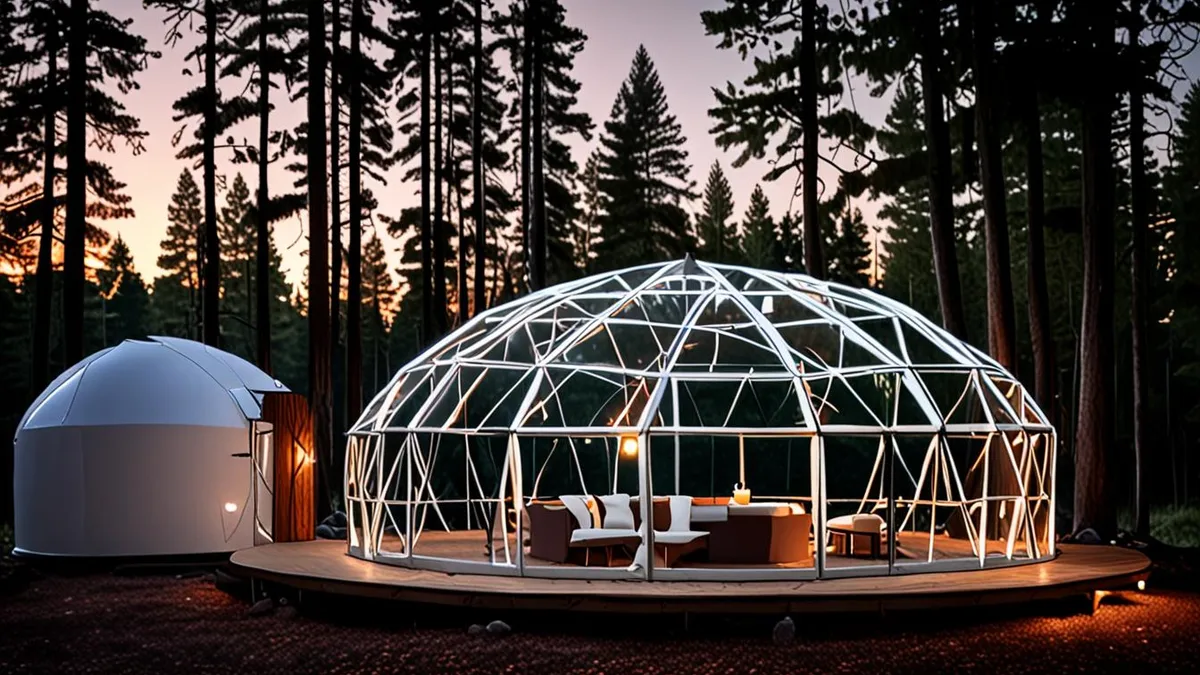
Geodesic domes with panoramic windows and hot tubs sit at $180–$350 per night, and remote locations push rates higher still because of transport and setup costs. For dramatic settings, it is hard to beat a dome; remote destinations like glamping in Patagonia show how far the premium can climb once you add true wilderness.
Whatever type you choose, expect the lower end of each range midweek and off-season, and the upper end in July and August.
Premium Stays: Cabins, Treehouses and Luxury Lodges
Once you move past tents and domes, glamping starts competing with boutique hotels on price and, in some cases, on comfort too. These stays are purpose-built, insulated and often designed by architects, which explains the jump in nightly rates.
Cabins and treehouses
Purpose-built glamping cabins with kitchenettes sit at the top of the mid-range price bracket, typically approaching $300 per night. They are the practical choice for families and longer stays, since a kitchenette lets you cook some meals and skip restaurant bills. Think of them as small, stylish cottages in a natural setting rather than tents.
Treehouses start around $250–$500 per night, and architect-designed builds can exceed $600. You are paying for the experience as much as the room: elevated decks, forest views and a sense of childhood novelty that no standard hotel room can copy. Availability is usually limited to one or two units per site, so these book out early.
Luxury lodges and remote wilderness stays
Luxury lodges and remote wilderness domes with catering cost $300–$800+ per night. Meals, guided activities and staff are part of the package, which is why the base rate looks high until you compare it to the total cost of a hotel stay plus dining out.
All-inclusive luxury safari-style stays can pass $1,000 per night once meals and activities are included. At that level you are booking a full experience, not just a place to sleep, and it is worth comparing what each package actually covers before you commit.
Hidden Costs That Change Your Glamping Budget
The nightly rate you see when browsing is rarely the full price. Once you add up the extras, a stay that looked like a bargain can grow by a third or more before you check out. The good news is that most of these costs are predictable, so you can budget for them in advance rather than discover them at checkout.
The biggest surprise for first-timers is usually the cleaning fee. Many hosts on bookable platforms charge a flat cleaning fee of $25–$100 per stay, regardless of whether you stay one night or five. On a short trip, that fee can rival the cost of a second night, so it pays to check the final price rather than the headline rate. Longer stays dilute the impact, which is one more reason a three-night trip often works out better per night than a one-nighter.
Guest counts matter too. Rates are typically quoted for two people, and hosts commonly add a per-person, per-night charge beyond that. A family of four can therefore pay noticeably more than the advertised price for the same tent. Children are sometimes charged at a lower rate, or stay free under a certain age, so ask before booking.
Then there is the small stuff that adds up: firewood, pets, activities and, above all, getting there. Remote sites rarely sit on public transport routes, so a rental car is often unavoidable and adds a significant daily cost to your total.
- Cleaning fees: $25–$100 per stay on bookable platforms; on one- or two-night bookings this can effectively double your per-night cost, so longer stays dilute it.
- Extra-guest charges: a per-person, per-night fee beyond the base two; the amount varies by site, so check the price breakdown before booking.
- Pet fees: many sites allow dogs but charge a per-stay or per-night pet fee, and some restrict pets to certain unit types.
- Firewood bundles: usually $10–$20 each if bought on site; a cool evening can burn through two, so bring your own where permitted.
- Activity add-ons: kayak or bike rental, guided walks and similar extras are priced separately and can easily add a two-figure sum per day.
- Transport: remote sites often require a rental car; factor in daily hire, fuel and any park access roads that need a higher-clearance vehicle.
How to Cut Glamping Cost Without Losing Comfort
Glamping prices vary more between travelers than between tents. Two people can stay in the same unit a few weeks apart and pay very different totals, simply because of when and how they booked. A little planning goes a long way here.
The single most effective move is booking early. For popular peak-season sites, aim to book 3–6 months ahead; that window secures the best rates and the widest choice of units. Last-minute deals do exist, but they are rare at the locations everyone wants, so gambling on a late discount often means paying full price or missing out.
Timing your trip matters just as much. Off-season and midweek stays can cut nightly prices by 20–40% for the very same tent or dome. If your dates are flexible, a Sunday-to-Wednesday stay in May or September delivers the same experience for a noticeably smaller bill.
You can also trim costs through your choices on site and at checkout. If the forecast is warm, shared facilities are a perfectly comfortable trade-off over a private bathroom. And before you confirm any booking, compare the platform price against the host’s own website, since direct rates often skip service fees entirely. If you are weighing up whether glamping is even the right style for you, it helps to compare it with a regular camping trip first — our guide to glamping versus camping, costs and comfort breaks down what each option actually delivers.
- Set a booking reminder: for summer trips, put a calendar note 3–6 months out; the best-value units at sought-after sites are often gone within days of opening.
- Shift your dates first, then your unit: moving a stay by even one or two nights into the midweek window can unlock the 20–40% saving without downgrading.
- Match facilities to the weather: in warm months, a shared washblock costs less and you will barely notice; in cold months, heating and a private bathroom are worth the premium.
- Do the direct-booking math: add up platform service fees on the total, then check the host’s own site — the difference can cover a firewood bundle or an activity.
Sample Glamping Budgets for Three Trip Styles
Abstract price ranges only get you so far. It is easier to plan when you can see what real trips actually cost, so here are three worked examples covering the most common ways people book a glamping getaway. Treat them as realistic planning figures rather than quotes — prices shift with location and demand, so always check current rates before committing.
First, the classic weekend escape for two. A safari tent in shoulder season, booked for two nights, typically lands in the low-to-mid hundreds all in once cleaning fees and small extras are added. That is the sweet spot for couples who want the glamping experience without the peak-season markup, and it is the kind of trip you can read about in our review of a glamping stay in York, United Kingdom. Adding a third night often works out cheaper per night than the first two, which makes a long weekend surprisingly good value.
Second, the family trip. A family of four taking a cabin for a full week in peak season should budget roughly $1,500–$2,500 including car rental. The weekly format changes the math: cleaning fees and transport are spread across seven nights, but the peak-season nightly rate and the two extra-guest charges push the total well above a weekend couple’s stay. Cooking your own meals in the cabin kitchenette keeps food costs near self-catering levels.
Third, the special-occasion splurge. A luxury dome honeymoon with a hot tub and catering runs about $1,000–$2,000 for three nights. Here the extras are the point — private dining, champagne on arrival, curated activities — so it makes sense to compare what each package actually includes before choosing. Add-ons billed separately can shift the total noticeably.
Whichever format you pick, remember that fees and season explain much of the spread between otherwise similar stays, and booking well ahead is usually the simplest way to lock in a better rate.
The Bottom Line on Glamping Prices
So, what does a fair glamping rate look like? Most stays land between $80 and $300 per night once you match the unit type to the price: simple tents and yurts at the low end, safari tents, domes and cabins in the middle, and treehouses and luxury lodges at the top. If a listing sits outside its typical range, season and location usually explain why.
Remember that the nightly rate is rarely the full cost. Cleaning fees and extra-guest charges typically add $25–$100 per stay, so compare totals, not headline prices. If the budget feels tight, booking 3–6 months ahead and traveling off-season are the two biggest levers, with off-peak dates cutting nightly prices by 20–40%. Glamping can be a $90 weeknight yurt or a $900 wilderness lodge — both are fair if you know what you’re paying for. If this breakdown helped you plan your trip, leave a comment or share the article.