Picture this: the flowers arrive, the caterer unloads, and then a neighbor calls the authorities because the permit was never filed. A dream villa wedding can collapse on the day itself if permits, noise rules and vendor logistics were never checked before you booked. Villas are homes first and venues second, and that changes everything about how you plan.
This guide walks you through the practical side of a villa celebration: why planning differs from a hotel venue, which permits and legal checks to run before signing the contract, how to match your guest list to the property’s real capacity, and how to handle noise curfews and house rules. We’ll also break down event fees and hidden costs, timing and booking windows, and finish with a checklist you can use from day one. Read it before you fall in love with a terrace.
Why a Villa Wedding Needs Different Planning Than a Hotel Venue
A hotel wedding comes with an events department, a ballroom and a manager who has done it a hundred times. A villa wedding has none of that. The villa is a residential property, which means every event depends on the owner’s approval and on local municipal rules. There is no front desk to call when something goes wrong; there is you, the owner and the paperwork you did or didn’t do.
Infrastructure you can’t assume
Villas rarely have built-in event infrastructure. That gorgeous terrace may have no outdoor power points, the kitchen may be sized for a family of six, and there may be no restrooms beyond the ones inside the house. Power, lighting, catering equipment and extra restrooms often have to be brought in or upgraded, and each of those adds cost and setup time.
Neighbors are part of the plan
Because villas sit in residential zones, noise, parking and guest behavior are planning essentials, not afterthoughts. The people next door live there year-round, and local zoning rules protect them. Before you book, walk the neighborhood mentally: where will cars park, where will the DJ set up, and how will 80 guests move through a space designed for 12? Answer those questions early and the villa becomes a stunning private venue; skip them and you risk a shut-down party.
Permits and Legal Checks Before You Sign the Villa Contract
The legal side of a villa wedding is where most celebrations quietly fail. Many rentals allow overnight stays but not events, and owners don’t always volunteer that distinction until you ask the right question. A villa that welcomes a week-long family reunion may still be barred from hosting a ceremony with 80 guests, amplified music and a catering crew. The gap between those two scenarios is paperwork, and it is your paperwork, not the owner’s, to close. Before you sign anything, work through three checks in order.
- Confirm event licensing in writing. Ask the owner directly whether the villa is licensed to host weddings or events, and get the answer in the contract or a signed addendum. A verbal “of course” protects no one if the municipality objects later.
- Check with the local municipality. Rules vary widely, so ask whether a wedding on private land needs an event permit at all, and if so, how long approval takes. Permits commonly take 4-12 weeks to process depending on the municipality, so build that window into your timeline rather than hoping for a fast yes. Ask who files the application, too, since some owners expect the couple to handle it.
- Sort insurance and vendor requirements. Many villa owners require event insurance, typically $1-2 million in liability coverage, and some restrict catering, music or rentals to vendors who are locally licensed. Ask for the list of requirements before you shortlist your suppliers.
Do these checks before the deposit changes hands, not after. If you’re considering a destination like Bali, where private villa rentals are popular for exactly this kind of celebration, it helps to first understand the landscape of where to stay in Bali for a private villa experience, then layer the event-specific questions on top. A villa that is perfect for a family holiday is not automatically perfect for a wedding, and the difference is almost always legal, not aesthetic.
Guest Count, Capacity and Villa Layout
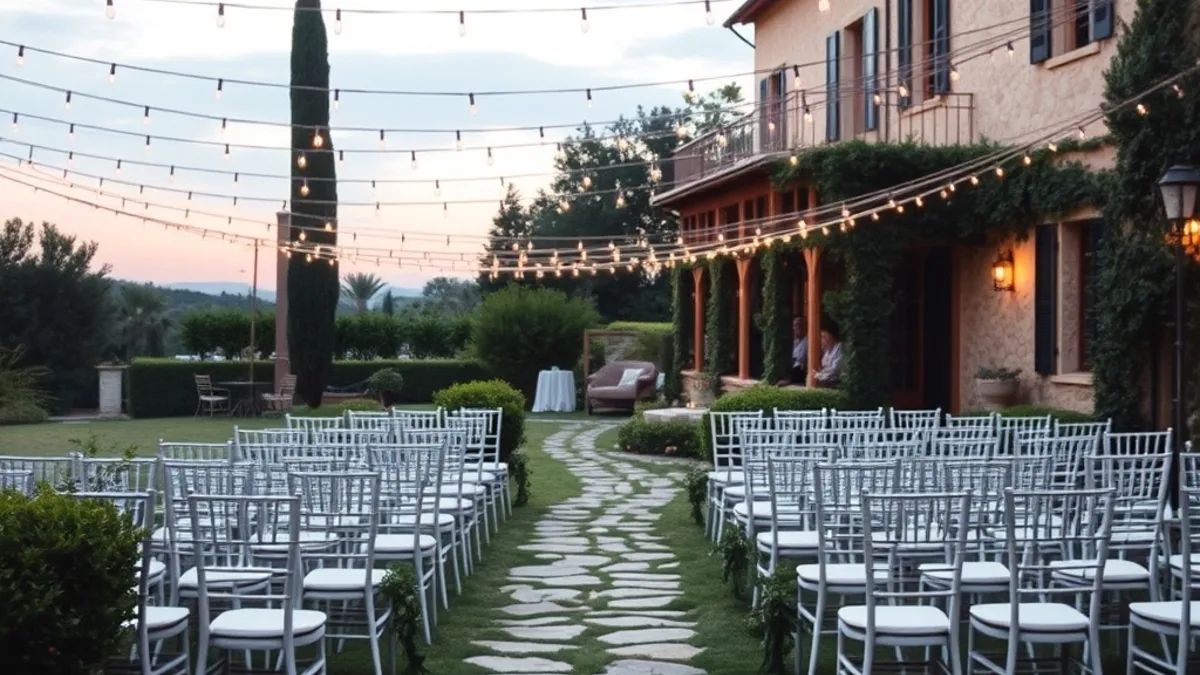
Villas are intimate by nature. Most properties cap events at somewhere between 50 and 120 guests depending on the size of the terrace, garden and indoor spaces, so match your guest list to the property before you book, not after. Ask the owner for photos of past events at similar guest counts, and if possible, walk the space with a tape measure or a floor plan app.
Three spaces, not one
A villa that sleeps 20 rarely hosts 80 seated guests comfortably, because sleeping capacity and event capacity are completely different things. Plan your seating, dance floor and catering space as separate zones. A long dinner table that fills the whole terrace leaves nowhere for the band, the bar or the buffet, and a dance floor squeezed between tables means guests watch rather than dance.
Map the guest flow
Sketch the evening hour by hour: ceremony spot, cocktail area, dinner space and quiet zones. These should not share the same square meters. If guests have nowhere to move between the ceremony and dinner, the space feels crowded at 60 guests that would feel relaxed at 40. Identify a corner for older relatives who want to escape the music, and check that restrooms and the kitchen aren’t on the same path as the bar. A villa wedding works best when the property’s quirks shape the layout instead of fighting it.
Noise Curfews, Neighbors and House Rules
Most villas sit in residential neighborhoods, and that changes how a wedding night works. Expect noise curfews between 10 pm and midnight in residential areas, and plan the party around them, not against them. A curfew is not a suggestion from a grumpy neighbor; it is usually an enforceable local rule, and a complaint on the night can shut down your reception early. That is a scenario no couple wants to relive, so treat the curfew as a fixed design constraint from day one. Build your run-of-show backward from the cutoff time, and share that schedule with your DJ, band and planner so everyone knows when the volume has to come down.
The good news is that a curfew does not have to end the celebration. Structure the evening so the loudest moments, like the first dance and the band’s big set, happen before the cutoff, then shift to quieter formats afterward. Acoustic sets, a lounge playlist indoors or a late-night snack station can carry the mood without a single decibel complaint. Talk through the details with the owner before you sign anything, and get the answers in writing. A short email summarizing what was agreed gives you something to point to if expectations drift later.
- Ask exactly what “amplified music” means at the property: some owners allow DJs but not live drum kits, or cap speaker wattage and require them facing away from neighboring homes.
- Discuss DJ or band placement on the map of the grounds; positioning sound equipment on the side of the garden farthest from the closest neighbor buys you decibels and goodwill.
- Confirm whether an indoor after-party is allowed once outdoor sound must stop, since a living room with a portable speaker and a bar can keep the night going legally.
- Put house rules in writing: designated smoking zones, pool use after dark, whether security staff are required for larger groups, and quiet hours for overnight guests who want to sleep in.
- Consider a short courtesy visit or note to immediate neighbors before the wedding; a heads-up about the date and an apology-in-advance for any noise often prevents the complaint call entirely.
Budgeting: Event Fees, Vendors and Hidden Costs
Villa event fees are the line item that surprises couples most often. On top of the rental rate, owners commonly charge an event fee of $2,000-10,000, covering deep cleaning after the party, security staff, and extra personnel during the event itself. Ask early whether the fee is flat or scales with your guest count, and whether it includes setup and teardown days or only the event day itself.
Vendors are the next big budget driver. For peak-season dates, book caterers, florists and entertainment 6-9 months ahead, because the best teams in popular villa regions fill their calendars first. Before you sign with anyone, confirm vendor access hours with the owner: a caterer who can only enter at 10 am for a 4 pm reception will charge you for the rush.
Finally, remember that a villa is a home, not a purpose-built venue. Whatever it lacks, you rent and truck in, and those line items add up quickly. For a broader picture of where villa money goes, it helps to first understand what a villa vacation really costs before layering a wedding on top.
- Tents and clear-top marquees are often the single largest rental line, especially if you need a rain backup covering the dining area, and they require flat ground plus delivery access for large trucks.
- Portable restrooms may be essential if your guest count exceeds the villa’s bathrooms; upscale trailer units exist, but they cost more and need a level, discreet placement spot.
- Generators or power upgrades may be needed if catering, lighting and a sound system exceed what the villa’s residential electrical supply can handle.
- Full kitchen equipment, from warming ovens to extra refrigeration, is often rented by caterers when the villa kitchen is designed for a family of ten, not a banquet team.
- Ask whether the event fee includes a post-event cleaning crew or whether you are responsible for returning the villa to its rental condition before checkout.
Timing Your Villa Wedding: Seasons and Booking Windows
Villa weddings reward early planners. Start planning 12-18 months out, because the best event-ready villas in popular regions are booked far in advance, and the ones that handle weddings well often have a loyal following of planners who rebook them year after year. If you fall in love with a specific property, ask for its earliest available window before you fix on a date.
Season matters as much as lead time. Aim for May-September in Europe or November-April in the Caribbean, when weather is most reliable and the light is best for outdoor ceremonies. The trade-off is predictable: expect higher rates and stricter minimum stays during those windows, and book earlier within them than you would for shoulder season. For a deeper breakdown of how booking windows shift by region, see when to book a villa and how seasons affect your window.
Build Your Plan B Before You Need It
Villas rarely offer a built-in plan B for rain. A hotel has a ballroom down the hall; a villa has a beautiful terrace and, if you are lucky, a covered loggia. That means the weather backup is your responsibility, and it should be designed at the same time as the main plan, not improvised two days before.
Two options work well. A tented option keeps the ceremony or dinner outdoors in feel, even when the sky disagrees, and can be ordered with clear panels and sidewalls. An indoor salon, when the villa has one large enough, gives you a warmer fallback for dinner and dancing. Whichever you choose, confirm with the owner that both spaces can be used on the same day, and make sure your rental contract covers the extra setup time a backup plan requires.
Your Villa Wedding Planning Checklist
A villa wedding works when permits, capacity, noise rules and budget are confirmed before the contract is signed. Skip those checks, and a dream celebration can collapse on the day itself: the municipality denies the event permit, the neighbors call the police at 11 pm, or the caterer arrives to find no kitchen and no power. Every one of those problems was preventable months earlier with a few written confirmations.
The key numbers to hold onto: 12-18 months lead time, 50-120 guest caps, 4-12 weeks for permits and $2,000-10,000 in event fees. Keep them in front of you during every call with an owner or planner. With those locked in, the villa becomes the venue, the accommodation and the backdrop in one. Have you planned or attended a villa wedding? Share your experience in the comments or pass this article along to a couple who needs it.