Many travelers skip lodges entirely because they assume every night means paying for a private room. That assumption costs them money. Shared rooms at lodges, whether dorm beds or twin configurations, can cut your nightly rate dramatically, yet plenty of people never even ask about them at reception or when booking online.
This guide walks you through what dorm and twin rooms actually look like in practice, how much you can realistically save, and who these options suit best. We’ll also cover booking tactics for securing the lower rates, weigh shared rooms against private cabins so you know the real trade-offs, and share practical tips for making a shared stay comfortable. If you’ve been pricing out lodges and wincing at the totals, the cheaper option may already be sitting there on the booking page, just one tab away from the private doubles you were looking at.
What Dorm and Twin Rooms at Lodges Actually Look Like
If you have never stayed in a shared lodge room, the reality is usually more comfortable than the word “dorm” suggests. Dorm rooms at lodges typically hold 4-8 beds, sometimes up to 10, arranged as bunks or singles. Bathrooms are shared and located down the hall, which is standard for this room type. The atmosphere tends to be simple and social: plain walls, reading lights by each bed, and a mix of travelers coming and going at different hours.
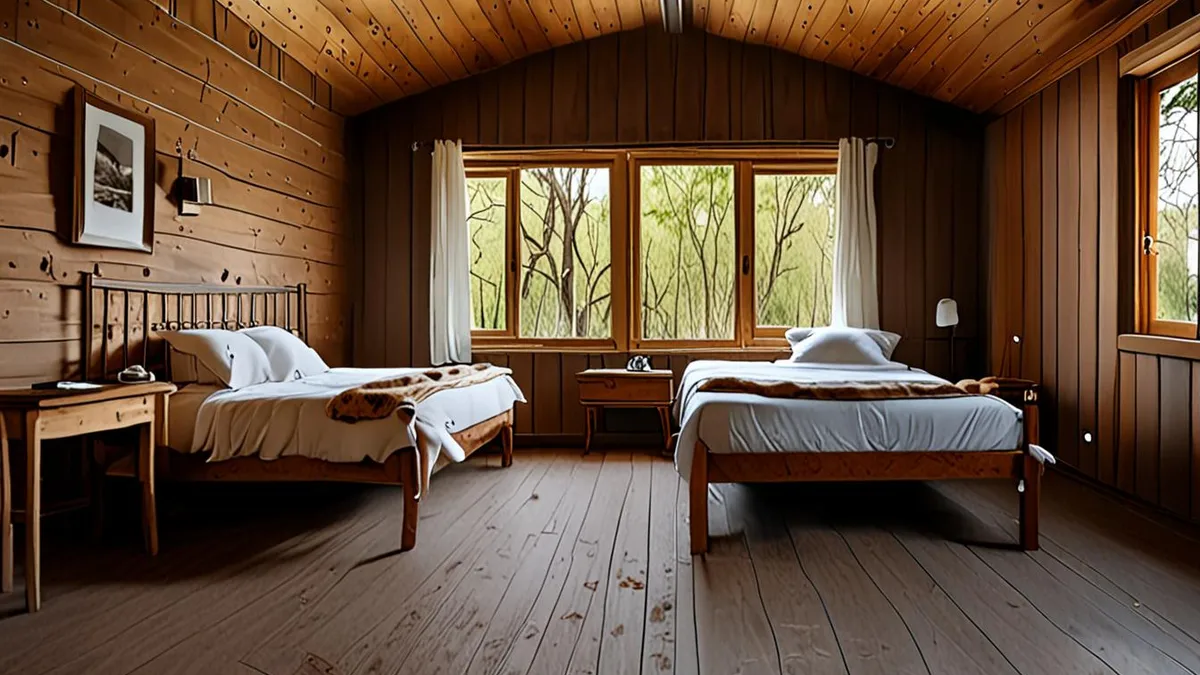
Twin rooms look quite different. As the name suggests, they offer two single beds in a lockable private room, and they often include en-suite facilities. You get a door that closes, control over the lights and temperature, and enough space for two people to move around without tripping over backpacks. For many travelers, a twin hits the sweet spot between a dorm bed and a full private double.
Storage, bedding and the small details
Most lodges provide lockers or under-bed storage for dorm guests, so your main bag can be secured while you sleep. Bring your own padlock, since lodges rarely supply one. Bedding and towels vary by lodge: some include both in the rate, others charge a small fee or ask you to bring a sleeping bag liner. Check before you pack rather than discovering the policy at midnight.
The two room types suit different travelers. Dorms are built for solo travelers and budget groups who want the lowest cost and don’t mind company. Twin rooms suit friends traveling together who want privacy without paying for two separate rooms or a full private double. If you are unsure which fits your trip, think about how you plan to spend your evenings: socializing in common areas points toward a dorm, while quiet dinners and early nights point toward a twin.
How Much You Save With Shared Rooms at Lodges
If you’re weighing a shared room against a private one, the numbers make a strong case. Dorm beds typically cost 30-60% less than a private double room in the same lodge, which is the single biggest saving available to most travelers. Twin rooms sit in the middle: they usually run 15-25% cheaper than an equivalent double, so you keep a meaningful chunk of your budget without giving up your own door.
What that means in real dollars
Put into cash terms, a solo traveler who picks a dorm bed over a private room can save roughly $40-80 per night, depending on the lodge and the region. Over a week-long trip, that adds up to a couple of hundred dollars or more — often enough to cover several extra nights, a rental car day, or a nicer meal out each evening. For long-term travelers hopping between lodges, those nightly savings compound fast.
Twin rooms deliver a smaller but still worthwhile discount. If two friends split a twin instead of booking separate private doubles, the combined saving is modest, but the room itself is often more comfortable per person than two singles elsewhere.
Timing sweetens the deal
Seasonality matters too, especially for twins. In shoulder season, twin rooms often drop a further 20-30% below peak-season rates, making the middle option even better value. If your dates are flexible, traveling just outside the busiest weeks can stretch your budget noticeably further without sacrificing room quality. Rates shift by lodge and destination, so compare a few options for your specific travel window before you commit.
Who Shared Rooms Suit Best
Solo travelers are the clearest winners when it comes to shared rooms. If you’re on the road alone, a dorm bed lets you stretch your budget significantly further, and the social side is a genuine bonus: shared kitchens and lounges make it easy to find a hiking partner or someone to split a taxi with. For many solo travelers, the people they meet in a dorm end up being a highlight of the trip.
Two friends traveling together should do a quick comparison before booking. A twin room with a lockable door often wins on comfort per dollar, since you get privacy and a quieter night for a price that can still undercut two private rooms. Run the numbers for your specific lodge, though, because pricing structures vary and sometimes two dorm beds still come out ahead.
Families with kids rarely do well in separate dorm beds. Splitting the family across a mixed dorm is awkward at best, and most lodges won’t allow children in adult dorms anyway. A dorm-style family room or a twin (booked as a triple or quad where offered) keeps everyone together and usually costs less than two private rooms. For more on planning that kind of trip, see this guide to family lodge vacations with kids.
Light sleepers, be honest with yourselves before booking a dorm. With several roommates coming and going, someone will inevitably rustle plastic bags at 5 a.m. or snap a headlamp on for a late bathroom trip. If noise regularly wrecks your sleep, a twin is the safer bet.
- Long-term budget travelers: if you’re staying weeks rather than nights, the cumulative savings from dorm beds can fund extra days of your trip outright.
- First-time visitors to a region: dorms are where you’ll hear about trail conditions, local tours and which nearby lodge is worth skipping, straight from travelers who just did it.
- Travelers on group tours: if your tour uses twin-share accommodation, being comfortable sharing with a stranger of the same gender matters, so consider whether you’d rather pay a solo supplement for your own room.
- Digital workers on short stays: if you need to take calls, a dorm is risky; a twin gives you a door you can close, which matters more than the extra savings.
Booking Shared Rooms: Timing and Tactics
Shared rooms reward planners. Because lodges only have a handful of dorm beds and twins, the good ones disappear early, and the cheapest rates go to whoever books first. A little timing can make the difference between a bargain and a compromise, especially in popular hiking and national park regions where lodge inventory is small to begin with. Here is how to approach it.
- Lock in dorm beds early for peak season. Aim to book 2-3 months ahead when you are traveling in the busiest months. Small dorms fill faster than private rooms, since a single group or a few solo travelers can take every bed, so last-minute availability is unreliable. If you arrive without a reservation, expect limited choice rather than a full range of room types.
- Target shoulder season for twin rooms. If your dates are flexible, traveling between high and low season often gets you twin rates roughly 20-30% below peak. That makes the middle option even better value without giving up privacy, and you will usually share the lodge with fewer guests as well.
- Buy out a small dorm if you are a group. Reserving every bed in a 4-6 bed dorm effectively gives your group a private room at dorm pricing. Call or email the lodge directly to make sure they will block the whole room for you, and confirm whether they will keep the remaining beds unsold.
- Compare per-person and per-room pricing. Some lodges charge per bed, others per room. Run the math for your group size before booking, because the cheapest-looking option is not always the cheapest once you divide or multiply it out. Ask what is included in each rate, since bedding, towels and breakfast are not always part of the quoted price.
One final habit worth building: check the cancellation terms before you commit. Flexible rates on shared rooms let you rebook if prices drop, which happens more often than you might expect outside peak season. Just note that some lodges offer non-refundable discounts on dorm beds, so weigh the saving against the risk of plans changing.
Shared Rooms vs Private Cabins: The Real Trade-offs
Every lodge booking is really a trade between money, privacy and space. Dorm beds typically cost 30-60% less than a private double in the same lodge, but you give up a door that locks behind you and accept 4-8 roommates with their own schedules. In exchange, you get access to shared lounges and kitchens, which is where a lot of the social value of a lodge lives.
Where twin rooms fit in
Twin rooms are the middle path. They usually run 15-25% cheaper than an equivalent double, yet you keep a lockable door and, in many lodges, an en-suite bathroom. For two friends traveling together, a twin often delivers most of the savings of a shared room without the noise, early alarms or shared-bathroom queues.
Private cabins sit at the top of the price range, and for good reason. You get real space, genuine quiet, and sometimes a kitchenette that pays for itself on longer stays when you cook instead of eating out. If you want a deeper breakdown of how these options compare night by night, our guide to choosing between lodge rooms and private cabins covers the details.
Trip length is often the deciding factor. Dorms suit short stops of a night or two, when you barely spend time in the room anyway. For a multi-night base where you will relax, unpack and cook, a twin or a cabin usually justifies the extra cost.
Practical Tips for Staying in Shared Lodge Rooms
Shared lodge rooms reward travelers who come prepared. A few small items in your bag and a handful of good habits will make dorm life far more comfortable, and they cost almost nothing. Most of it comes down to simple consideration for the people sleeping a meter away from you: keep noise down after lights-out, use your headlamp instead of the room light, and pack the night before any early departure so you are not rustling through bags at dawn. For a fuller rundown of do’s and don’ts, our guide to lodge etiquette in shared spaces and dining areas goes into more depth.
Before you arrive, make sure these essentials are in your pack:
- Earplugs and a headlamp. Earplugs handle snoring roommates and early risers, while a headlamp with a red-light mode lets you read or find your things without flicking on the main lights.
- A padlock. Lodges usually provide lockers or under-bed storage for dorm guests, but many do not include the lock itself, so bring your own and secure valuables whenever you head out.
- A quick-dry towel and flip-flops. Provisions differ from lodge to lodge, and some charge extra or skip them entirely, so check ahead or pack your own to avoid surprises.
- A small day bag for checkout day. Keep your essentials separate so you can leave quietly, and ask at check-in about luggage storage if your bus or transfer leaves hours after checkout.
Finally, stretch your savings beyond the room itself. Cooking a couple of self-made meals a day in the lodge’s shared kitchen, and using the common areas for evening downtime instead of paid attractions, can easily save more than the dorm discount did in the first place.
Wrapping Up: Getting the Best Value From Shared Lodge Rooms
Shared rooms are the reason lodge stays stay affordable, and it helps to see the whole picture in one place. Dorm beds typically cost 30-60% less than a private double in the same lodge, twin rooms usually run 15-25% cheaper, and a solo traveler swapping a private room for a dorm can keep roughly $40-80 per night in their pocket. Over a multi-week trip, that difference can pay for extra nights, tours, or a nicer room somewhere else.
The key is being honest about how you travel. Dorms reward sociable solo travelers, twins give pairs a lockable door at a middle price, and private cabins earn their cost on longer stays where space and quiet matter. Timing helps too: booking dorm beds 2-3 months ahead makes lower peak-season prices much easier to secure. If you’ve slept in a lodge dorm or twin recently, tell us how it went in the comments, or send this article to someone planning their first lodge trip.