Choosing between lake Como villas often comes down to one hard trade: do you want to step out your door and touch the water, or do you want to look down on it from a terrace high above? Lakeside properties give you flat grounds, private docks and walkable lakefront towns, but they cost a clear premium. Hillside villas answer with sweeping views, more privacy and better value per square meter, at the price of winding drives and quieter surroundings.
This guide compares both locations side by side: what lakeside villas actually deliver, what hillside villas offer instead, how the main areas around the lake differ, and how you’ll get around by car and ferry. We’ll also cover the best booking windows for each season, how to match the location to your group, and a simple way to make the final call. By the end, you should know which shore fits your trip before you fall in love with any single villa.
What Lakeside Lake Como Villas Give You
Lakeside villas deliver the one thing most people picture when they imagine Como: water at the bottom of the garden. A direct or near-direct water access point, sometimes with a private dock, is genuinely rare here because the shoreline is built up and the terrain rises steeply behind it. When a villa does offer flat grounds that run to the lake, it’s usually the result of an old estate layout that can’t easily be replicated.
That flatness matters more than it sounds. Steps and terraces define most Como properties, so a lakeside plot where children can play on the lawn and you can carry luggage straight from the car is a practical luxury, not just a pretty one.
Walkability is the real perk
In towns like Menaggio and Varenna, a lakeside villa often puts lakefront restaurants, gelato stands and boat stops within a short stroll. You can have dinner in town, walk home along the water and never think about a designated driver or a taxi. Morning swims, coffee at a lakeside café and spontaneous boat trips all become easy.
The price of all this convenience is steep. Expect to pay roughly 20–40% more than a comparable hillside villa of the same size and standard in the same area. If your budget is fixed, that premium usually means trading square meters and pool size for location — a trade many travelers are happy to make, but one you should make consciously.
What Hillside Lake Como Villas Offer Instead
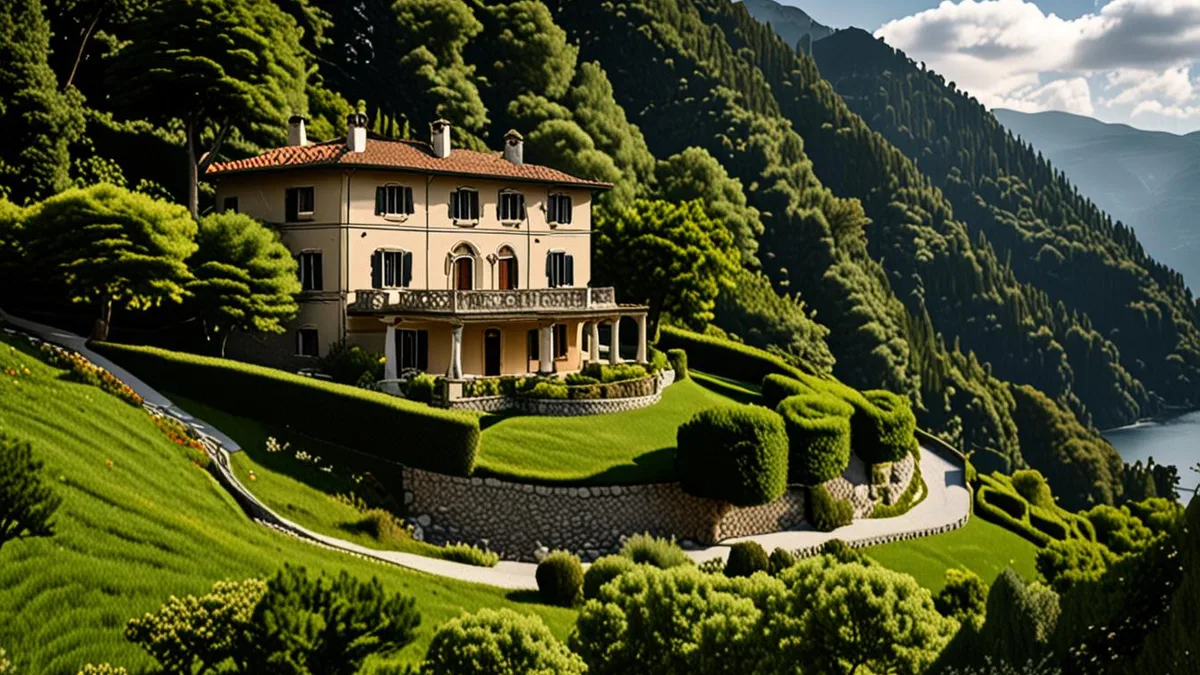
Hillside villas trade convenience for the view most photographs can’t capture. From an elevated position above the water, you get panoramic outlooks across the lake, with the mountains and opposite shore stacked behind it. Privacy also improves: properties sit behind gates, surrounded by terraced gardens and olive groves, with neighbors and passing foot traffic far less visible than at lakeside level.
More villa for the same money
Because land on the slopes costs less, your budget stretches further uphill. For the price of a modest lakeside villa, a hillside property typically offers better value per square meter — larger pools, bigger grounds and more bedrooms. For groups where the pool and outdoor space are the center of the trip, this math often wins.
The trade-off is real, though. Many hillside villages sit 20–45 minutes by car from lakeside towns, along winding roads with hairpin bends and narrow sections. That means every restaurant dinner, grocery run or ferry departure starts with a drive, and evening returns require a confident driver on unfamiliar roads.
Walkable amenities are scarce too. You may have one small village bar or restaurant nearby, or none at all, so a car becomes essential rather than optional. If you love the idea of stepping out for dinner or hopping on a boat without planning, hillside living will feel restrictive. If you’d rather have an aperitivo on your own terrace with the whole lake below you, it’s exactly what you’re after.
Choosing Between Bellagio, Menaggio, Varenna and the Southern Shore
Lake Como isn’t one market — it’s several, and the lakeside-versus-hillside balance shifts depending on where along the shore you look.
The mid-lake trio
Bellagio, Menaggio and Varenna are the most requested towns on the lake, and for good reason. They sit at the point where the lake’s three arms meet, offering the classic views, regular ferry connections between them, and a good mix of both lakeside and hillside villa stock. Expect the strongest competition and the highest prices here, especially for anything with water access.
The southern shore
Around Como city at the southern end, the picture changes. The area has more hillside inventory, generally lower prices, and the easiest access to Milan — which matters if you’re flying in or planning day trips to the city. The trade-off is that you’re farther from the dramatic mid-lake scenery and the ferry network, so a car tends to play a bigger role.
The quieter north
Northern areas around Gravedona and Domaso are greener, calmer and noticeably less touristy. Domaso in particular has a reputation among windsurfers and kitesurfers thanks to the reliable breezes on that stretch of water. Villa prices here are typically friendlier, and you’ll find more space around you — though you’ll be a longer drive from the famous towns.
If you’re weighing Como against other Mediterranean villa destinations, it can help to see how another island or coast breaks down by area — this guide to Mallorca villa areas and seasons uses a similar region-by-region approach.
Getting Around: Cars, Ferries and Hillside Access
One of the biggest advantages of staying mid-lake is the car ferry network. Boats carrying vehicles cross between Varenna, Bellagio and Menaggio in roughly 10–15 minutes, which turns the three most requested towns into an easy triangle. You can park the car once and hop across for dinner, or skip driving entirely on day trips. The ferries run frequently during the day, but schedules thin out in the evening, so plan late dinners with that in mind.
Hillside villas are a different story. They’re often reached along narrow, twisting roads that climb through terraced olive groves and tighten sharply near the older hamlets, where two cars barely pass. Most hillside properties simply don’t work without a rental car, so factor that cost — and the driver’s comfort with Italian mountain roads — into your decision before you book. An automatic car, which many drivers prefer, usually needs to be reserved well in advance in Italy.
- Ask the owner or agent for the driveway’s turning radius — several hillside lanes are barely wider than a compact car, and some villas can only be reached in second gear.
- Confirm the number of private parking spaces, not just “parking available”; a celebration group with three cars may end up parking in the village below.
- Check whether the last car ferry of the evening fits your dinner plans if you’re staying mid-lake, since late-night returns may mean a long drive around the shore instead.
- Lakeside stays let you rely on boats, buses and walking, so verify that your villa is genuinely walkable to the town center rather than a steep ten-minute descent above it.
- If you’re arriving by train, a lakeside villa near Varenna or Menaggio is usually the easier pick, since hillside pickups require a pre-arranged taxi or a rental collected at the station.
Season and Booking Timing for Lake Como Villas
Lake Como’s high season runs from late May to early September, with July and August the busiest and most expensive months. If your heart is set on a lakeside villa during those weeks, plan to book 6–9 months ahead — the best waterfront properties with private docks are often gone long before summer. Shoulder season bookings need less runway: aim for 3–4 months ahead for April–May or September–October stays.
Those shoulder months are the sweet spot for many travelers. Rates are milder, the towns are calmer, and the lake itself is often glassier — good news if you’re hoping for flat water for swimming or kayaking. You trade a bit of guaranteed warmth for a lot of breathing room.
Match the Season to the Location
Hillside villas can feel cool in early spring, especially in the evenings when terraced gardens sit above the lake’s temperature inversion. If you’re booking April, ask about heating and covered outdoor space before committing. On the flip side, a lakeside villa in the low season suits a short city-break style trip: Milan is close enough for a long weekend, and you’ll have the lakefront promenades mostly to yourself.
If you’re considering a month or more on the lake, it’s worth reading about long-stay villa rentals and what to negotiate on monthly rates before you sign anything.
Matching the Location to Your Group
The right location depends heavily on who’s traveling with you. A villa that’s perfect for a couple’s anniversary can be genuinely awkward for toddlers, and a hillside estate that thrills six friends might exhaust anyone who has to carry groceries up forty steps every morning. Think about your group’s daily rhythm before you fall in love with a listing photo: how often you’ll want to walk out for dinner, whether someone in the group has limited mobility, and how much driving everyone is honestly willing to do each day.
Families with small children usually do better lakeside, where flat access to the water, restaurants and boat stops beats steep hillside steps and long driveways. Couples celebrating something special often prioritize the same convenience, while larger groups with a bigger budget can weigh panoramic views against easy access. Remote workers and event planners have their own checklists, and each benefits from a different corner of the lake.
- If you’re booking with kids, run through age-based safety checks for villas — unguarded lakefront docks and hillside terrace edges need different supervision plans.
- Remote workers should test hillside Wi-Fi reliability during a video call before committing; some terraced villages have spotty signal, and satellite backup is not universal.
- Check the actual walk time from a hillside villa to the nearest café — a 20–45 minute drive each way for coffee gets old fast during a working month.
- Celebration groups should confirm guest access with the owner: how many cars the parking area holds, whether buses can reach the gate, and if local noise rules limit evening music outdoors.
- Ask whether the villa allows events at all — some hillside estates are marketed for gatherings but require a separate event agreement or local permit.
Finally, be honest about who in your group will do the driving. If only one person can handle winding hillside roads, a lakeside base with ferry access keeps everyone independent. Match the setting to the people, not the photo.
Lakeside or Hillside: Making the Final Call
So which one should you book? If your priority is stepping out the door and being at the water, a café or a boat stop within minutes, lakeside villas deliver that with ease — the trade-off is a noticeable premium on the nightly rate compared with an equivalent property higher up the slopes. If what you really want is the postcard panorama, privacy behind gates and terraced gardens, and more villa for your money, hillside wins on views, space and value, at the cost of winding drives of roughly 20–45 minutes down to the lake.
One final point: location matters more than villa size here. A modest villa in the right spot beats a grand one in the wrong one, so pick your shore first, then search for the house. And match your booking window to your choice — aim for 6–9 months ahead if you want a peak-season lakeside stay. If this helped you decide, leave a comment or share the article with your travel group.