Your summer hotel has no air conditioning, or the unit is broken, and by late afternoon the room feels like an oven — now what? The good news is that you can keep your room cool without AC, and it starts long before you flop onto the bed. A few smart choices at check-in, plus some simple habits with windows, fans and bedding, can turn a stifling room into a genuinely comfortable place to sleep, even during the hottest weeks of the year.
This guide walks you through the whole process: choosing a cooler room before you even check in, timing your windows to catch free cool air, getting the most out of a basic fan, cutting the hidden heat sources inside the room, dressing and bedding tricks for hot nights, and making use of the hotel’s cooler shared spaces. We finish with a short checklist you can follow on any no-AC trip.
Choose a Cooler Room Before You Even Check In
The single biggest factor in how hot your room gets is the room itself. Two guest rooms in the same hotel, on the same night, can feel like different seasons depending on floor, orientation and layout. Before you arrive — or the moment you check in — spend two minutes asking the front desk for the right one, and you may find the problem mostly solved before you even unpack.
Heat rises, so lower floors and ground-level rooms tend to be the warmest, while upper floors benefit from better airflow and stay noticeably cooler. Orientation matters just as much: a west-facing window catches hours of direct afternoon sun, turning the wall and glass into a radiator right when outdoor temperatures peak between about 2 pm and 5 pm. Think about what sits below the room, too, and about how many windows it has. A few specific requests make all the difference:
- Ask for a higher floor, away from the west side. Rooms on higher floors and away from west-facing windows typically stay several degrees cooler than ground-level, sun-facing ones.
- Skip rooms above kitchens, laundry rooms or rooftop bars. These spaces run hot equipment late into the evening and radiate heat up through your floor long after sunset.
- Request a corner room with windows on two sides. Two open windows on opposite walls let air flow straight through, which single-window rooms simply can’t manage.
- Message the hotel before arrival if the listing shows no AC. Many properties keep spare fans in storage but don’t advertise them — a quick email or call usually secures one for your room.
Time Your Windows Right: The Free Air-Conditioning Trick
Once you have your room, the cheapest air conditioner available is timing. Outdoor air is cooler than your room during the night and early morning, and hotter during the afternoon. If you open and close your windows at the right moments, you effectively bank cool air overnight and lock the heat out when it matters most. Get this wrong — windows open all day “for the breeze” — and you’ll pull hot air in for hours on end, warming the walls, the floor and everything else in the room along with the air itself.
The rhythm is simple: flush the room with cool air in the morning and evening, then seal it up during the afternoon peak. Keeping windows closed while outside air is hotter than inside can cut indoor heat gain noticeably, which means less work for any fan or portable unit you do have. Think of your room as a container you fill with cool air twice a day and then protect from the heat outside. The details below make the routine work in practice:
- Open windows wide before 8 am and after sunset. These are typically the coolest hours, so throw the windows fully open — not just cracked — to flush out warm air quickly. A few minutes of full ventilation does more than an hour of a half-open window.
- Shut windows and curtains fully when outdoor temperatures hit their daily peak. Even a small gap lets hot air pour in, and once the room heats up it takes hours to cool down again.
- Close curtains and blinds on sun-facing windows during the day. Blackout curtains block the most radiant heat; if your room has them, keep them drawn on the sunny side all afternoon.
- Open windows on opposite sides of the room for a cross-breeze. A single open window barely moves air; two on facing walls create a steady current that pushes warm air out and pulls cooler air through.
Make the Most of the Fan You Have
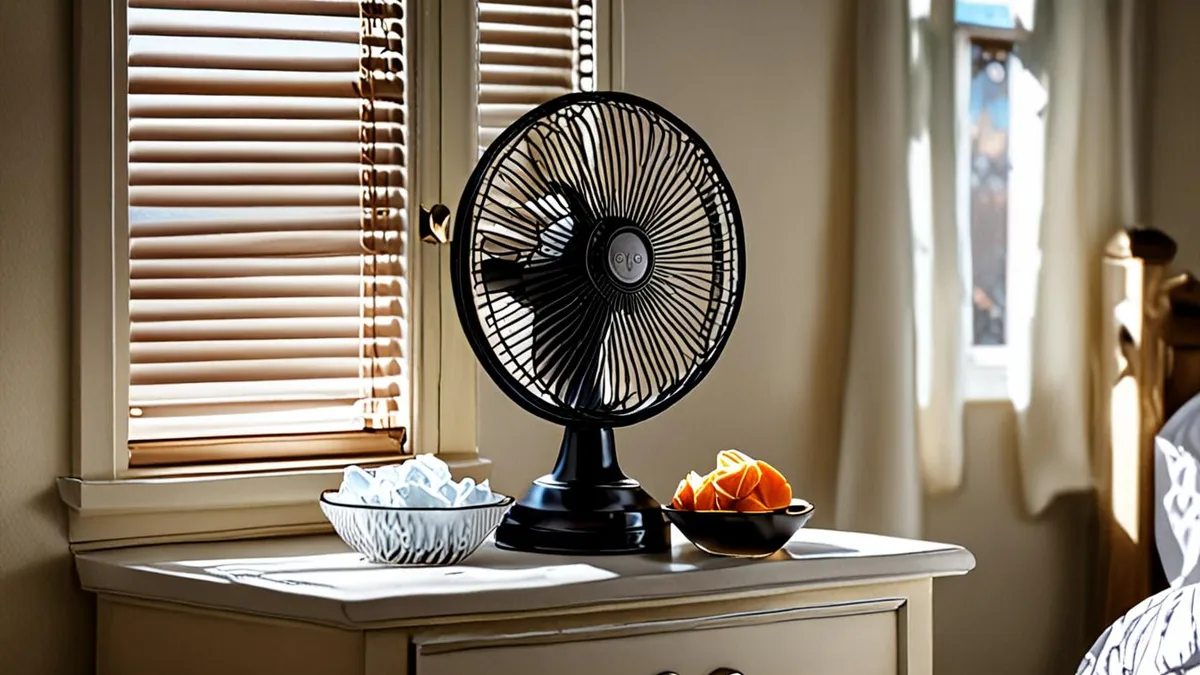
A fan is your main tool in a no-AC room, but most travelers use it wrong. A fan alone cannot lower the room temperature — it only speeds up evaporation from your skin, which is why it must point at you to do any good. A fan blowing across an empty corner of the room is doing almost nothing for your comfort, no matter how loud it runs. Set it up properly and add a couple of low-cost tricks, and the same fan feels far more powerful. Work through these steps when you get back to your room in the evening, before you settle in for the night:
- Aim the fan directly at your bed or body. Position it so the airflow reaches you where you sit or sleep; a fan pointed at a wall cools nothing but the wall.
- Set a shallow bowl of ice water in front of the fan. The air passes over the icy surface before hitting you, a DIY chill effect worth around 3-5°C in dry climates.
- Hang a damp towel near the open window. Air moving through the wet fabric evaporates and cools, an improvised evaporative cooler that works best in dry heat.
- Run the bathroom extractor fan with the door open. It pulls warm, stale air out of the room and draws cooler air in behind it.
One warning: evaporative tricks only help when the air is dry. In humid destinations, skip the ice bowl and wet towel and rely on direct airflow instead — added moisture in muggy air just makes the room feel clammy. Test the setup for a minute before you commit: stand where you plan to sleep and confirm you can actually feel the airflow on your skin. And if the fan is weak, noisy or missing entirely, ask reception for a replacement before bedtime rather than struggling through the night. A working fan aimed at your pillow is worth more than any other single item in the room, so it deserves five minutes of fussing with position and angle until the breeze lands exactly where you need it.
Cut Heat Sources Inside the Room
Even without air conditioning, your room is quietly producing its own heat all day. Lights, televisions, phone chargers and other small electronics give off a steady background warmth that builds up in a closed room, especially through the hottest stretch of the afternoon. Switching everything off when you leave the room or when you are not using it makes a surprising difference by bedtime.
One habit worth breaking immediately: propping the minibar fridge open and sitting in front of it. It feels clever for about a minute, then it backfires. A fridge with its door open runs its compressor nonstop, pumping far more heat into the room than the cold air escaping from it. You end up in a warmer room with a struggling fridge and, in some hotels, a charge on your bill.
Your own body is another heat source. A hot shower right before bed leaves your skin flushed and your core temperature elevated, and you carry that heat straight into the sheets. A lukewarm shower does the opposite: it cools you down gently, so you climb into bed already closer to a comfortable sleeping temperature. The same logic applies to your devices — a warm laptop or tablet switched off at the wall stops feeding warmth into the air around your bed.
- Unplug the kettle and coffee maker once you have used them — heating elements keep radiating warmth for a while after they are switched off, even if the appliance looks idle.
- Turn off decorative lamps and LED strips near the bed rather than leaving them on all evening; even low-wattage bulbs warm the air right where you sleep.
- Put your laptop or tablet to sleep instead of leaving it running with the screen on, since a working device can feel like a small space heater on the desk beside you.
Sleep Cool: Bedding and Body Tricks for Hot Nights
What you sleep under matters as much as what the room temperature is. A thick duvet in summer is an oven, so skip it entirely and sleep under just the flat sheet. Light cotton or linen bedding breathes far better than synthetic fabrics, letting heat escape from your body instead of trapping it against your skin.
You can also cool the bed itself before you get in. If the room has a hot water bottle, use it in reverse: fill it with cold water and a little ice, and slide it between the sheets a few minutes before bedtime. The spot where it sat will be pleasantly cool, and it works just as well in a hotel as at home.
Timing helps too. The coolest hours are before 8 am, so “chasing the night” — going to bed late and rising early — lets you sleep through the warmest part of the evening and wake in genuinely fresh air. Open the windows as soon as you get up to bank some coolness for the day.
- Dampen a thin towel or pillowcase with cool water and drape it over yourself at bedtime; as the water evaporates through the night, it keeps pulling heat away from your skin.
- If the hotel offers a choice of pillows, pick a smaller one — a bulky pillow cradles heat around your head and neck, which is where you feel warmth most.
- Wear loose, short cotton sleepwear or sleep in minimal clothing; tight synthetic pajamas hold sweat against your skin and make you feel hotter than the room actually is.
Escape the Hot Room: Use the Hotel’s Cool Spaces
One of the smartest no-AC strategies is simply not being in your room during the worst of the heat. The afternoon hours, when temperatures outside are at their highest, are exactly when your sealed, shaded room is doing its best work staying cool. Waste those hours somewhere else and return to a room that has not been heated by your presence all afternoon.
Most hotels have spaces that stay naturally or mechanically cooler than a standard guest room. The lobby, the bar, a shaded courtyard or a covered terrace all make good afternoon retreats — read, answer emails, or have a long drink instead of lying sticky in bed. If you are not sure what is available, ask reception directly about guest lounges or shaded terraces; staff usually know exactly which corners of the hotel stay comfortable in summer.
Book with the heat in mind
If you are still choosing where to stay, put a pool near the top of your wish list. A swim in the late afternoon lowers your body temperature for hours, so you start the evening already comfortable instead of overheated. Our guide to what to check before booking a hotel with a pool covers the details worth confirming before you commit.
A word of realism about air-conditioned lifts and corridors: they offer a few minutes of genuine relief as you pass through, but they do nothing for your room. Treat them as a pleasant break on your way somewhere, not as a fix for a hot night ahead.
Your No-AC Summer Checklist
So your summer hotel room turns out to have no cooling system at all, or the unit gave up on the hottest week of the year, and the space is turning into an oven by late afternoon. The good news is that a little planning beats most of the problem. A high-floor room away from west-facing windows, booked with a fan already requested, starts you several degrees cooler before you even unpack.
From there, the routine is simple: let fresh air in before 8 am and after sunset, then seal and shade the windows from 2 pm to 5 pm when the outdoor air is at its hottest. Point the fan at yourself, not the room, and lean on ice bowls, damp towels and a quick sweep of every switched-off heat source in the space. Sleep light under just a sheet, and spend the peak afternoon hours in the lobby, bar or shaded courtyard instead of sweating it out alone. Stay cooler, and if these tricks saved your next trip, leave a comment or share this article with a fellow traveler.