You finally book that hotel you’ve been dreaming about, and the listing proudly shows a sparkling pool. Then you arrive, keys in hand, and find it drained for the season, unheated and freezing, or reserved for spa guests only after 6pm. If you’ve ever been burned by a “pool included” listing that turned out to be anything but, you’re not alone. Many travelers assume hotels with pools all deliver the same experience, but the reality depends on season, size, access rules and a handful of small fees.
This guide walks you through what to check before you pay, so the pool you see in the photos is the pool you actually get to swim in. We’ll cover how to match indoor and outdoor options to your travel season, how to read pool size and depth details, what access hours and adults-only rules really mean, which towel and fee surprises to expect, how to pick the right room within the hotel, and how to verify a hotel’s pool claims before booking with confidence.
Indoor or Outdoor: Matching Hotels With Pools to Your Season
The season you travel in matters more than almost anything else when booking a hotel with a pool. Outdoor pools in most of Europe typically open May to September, so an April or October city break often means arriving to a closed, covered or even drained pool. That gorgeous rooftop pool in the listing photos may simply not exist as an option during your stay.
If you are traveling in winter, an indoor heated pool is the safer bet. These usually run year-round at around 27-30°C, which is warm enough for a proper swim rather than a quick, shivering dip. For cold-weather city trips, a heated indoor pool turns an ordinary hotel stay into something genuinely restorative after a day of sightseeing.
When a hotel offers both
Some properties give you the best of both worlds: an indoor pool for the cooler months and an outdoor one for summer. Expect the indoor option to be the smaller of the two, often in the 10-20 meter range, while a dedicated outdoor lap pool typically stretches to the standard 25 meters. If swimming laps is your priority, the outdoor pool is usually the more serious facility, so time your visit accordingly.
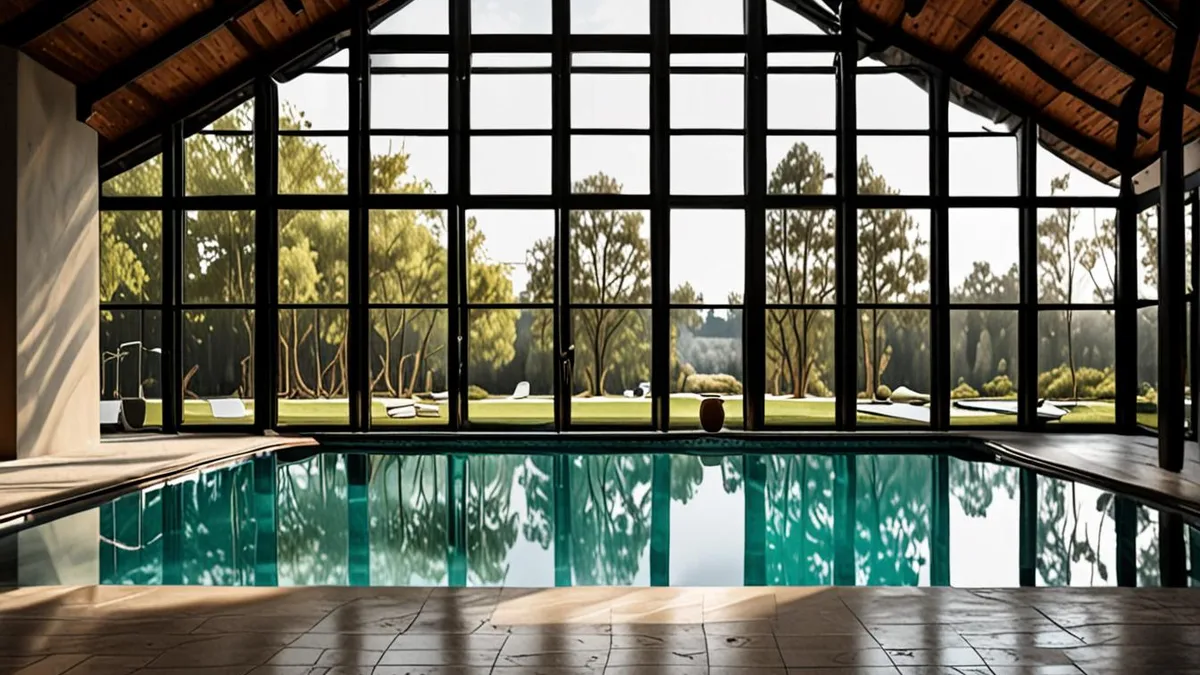
One final caution: read the photos carefully, not just the captions. A “year-round pool” can still mean an unheated covered basin in January, especially if you spot glass walls or a glass roof that let in light but little warmth. If the images show an enclosed pool with no visible heating setup, ask the hotel directly whether the water is heated before you commit to a winter booking.
Pool Size, Depth and Type: Reading the Fine Print
Very few hotel listings state the actual dimensions of their pool. If you swim laps for fitness, this matters more than almost anything else: many hotel pools are 10-20 meters long, while a standard lap pool is 25 meters. That difference means a “few lengths” at a hotel might be six strokes to a turn, which gets frustrating fast. Email the property or check its own website for the length before you book.
Depth is the other detail listings tend to skip. Many city hotels cap their pools at 1.2-1.5 meters deep, which is fine for cooling off and gentle paddling but rules out diving, jumping and any deep-water games with kids. If your children love underwater retrieval games or you swim with a diving group, ask about depth specifically.
Also be alert to what the word “pool” actually covers. Booking sites sometimes blur several very different water features into one label, so read the description carefully and look at photos with a critical eye.
- Plunge pool: often only a few meters across and deep enough to sit in, not swim; common at boutique hotels and villas.
- Children’s splash pool: a shallow paddling area for toddlers, sometimes photographed to look like the main pool.
- Hot tub or jacuzzi: heated and seated only; some listings count it in the “pool facilities” total even when there is no swimming water at all.
- Resort-style lagoon pools: islands, bridges and swim-up bars look stunning, but every feature steals swimming space, so a large-looking pool may offer surprisingly few uninterrupted meters.
Access Hours, Adults-Only Rules and Shared Facilities
Pool hours are one of the most commonly misunderstood details on hotel listings. A typical schedule runs from 7am to 10pm, but that window can shrink without warning: some properties close the pool one weekday a week for deep cleaning, and others block off evenings for private spa bookings or wellness treatments. If swimming is a big part of your stay, ask the hotel directly whether any days are affected during your dates.
Adults-only rules catch out many families. Pools attached to a spa often switch to adults-only after around 6pm, which can be lovely for a quiet evening swim but frustrating if you are traveling with children who want one last splash. In some cases the family-friendly hours are the reverse: kids are welcome in the morning, but the spa side of the pool is reserved for adult guests all day.
Watch out for pools that are not truly yours. At larger resorts and city wellness hotels, the pool may be shared with a neighboring spa or residential building, which brings a few practical consequences:
- Shared spa pools often operate on timed entry, with slots of around 60-90 minutes in high season, so you may need to book or queue for your turn.
- Day visitors buying spa passes can fill the pool and loungers, especially on weekends, leaving guests fewer free spots.
- Some properties limit outside access to quieter weekdays, so a call to the hotel can tell you which days are calmest.
- If the pool is shared, ask whether guests get priority booking or a free slot included in the room rate.
Before you pay, confirm two things in writing: whether the pool is exclusive to hotel guests, and what the exact daily hours are during your stay. Larger resorts frequently sell day passes to outside visitors, and a pool that looked peaceful in photos can feel like a public facility by mid-morning. A short email saves a lot of disappointment.
Costs, Towels and Small Fees That Surprise Guests
Pool towels are one of those details that vary more than you’d expect. At most 4-5 star hotels, they’re simply free, stacked by the pool and replenished as needed. Step down to many 3 star properties and the story changes: you may be asked for a small deposit, or a rental fee per towel, per stay. It’s rarely a large amount, but it’s worth knowing before you arrive without cash for the desk.
Access itself can also carry a price tag. Some city hotels charge guests for pool use, or bundle it into a spa package, so the “heated pool” listed as an amenity isn’t automatically included in your room rate. If the pool sits inside a spa complex, ask specifically whether your booking covers it or whether you’ll pay an entrance fee each visit.
Loungers, reservations and the real cost of a “free” pool
At busy resorts, sun loungers are a currency of their own. Some properties charge a reservation fee for front-row spots; others operate on a first-come system where towels appear on chairs before breakfast in peak season. Neither is a dealbreaker, but it changes how your mornings work.
The biggest trap is the spa entrance fee that sits behind pool access. If using the pool requires paying spa admission daily, that can effectively double what you thought you were paying for the room. Before booking, add up towels, access fees and spa charges, and check how the property’s facilities match its rating — understanding what hotel star ratings actually mean for travelers helps here, since stars reflect amenities and service levels rather than whether everything is free to use.
Choosing the Right Room and Location Within the Hotel
Where your room sits in relation to the pool shapes your whole stay, especially with children. A pool-facing room lets you watch kids swimming from your balcony or terrace, which many parents find worth more than any upgrade. The trade-off is noise: pools hum with activity from morning until closing, so light sleepers should think twice.
Ground floor versus higher up
Ground-floor rooms beside the pool offer obvious convenience — quick dashes back for sunscreen or a forgotten towel — but they also sit in the main foot traffic path. Expect people passing your window all day and early-morning noise as staff clean and early risers claim loungers. A room one or two floors up often gives you the view with far less disturbance.
Think about sun and shade
In hot regions, pool orientation matters as much as location. A pool shaded after 3pm stays pleasant for an afternoon swim, while a sun-baked basin can feel like bathwater by midday and offer no relief at all. Most hotels publish a property map on their website; use it to see which way the pool faces before you choose. If the map isn’t clear, ask the hotel directly which rooms get afternoon shade near the water.
Finally, remember that pool-facing rooms are limited in number at almost every property. For summer stays, request one 2-3 months ahead — and confirm the request in writing, since a verbal note at check-in rarely guarantees anything.
How to Verify Pool Claims Before You Pay
Listing photos are curated by people selling you a room, so treat them as marketing rather than evidence. A glossy shot of a turquoise pool tells you nothing about whether it will actually be open, warm and swimmable on your dates. Properties often reuse images taken years apart, and some even borrow photos from sister properties or the spa next door, so the water in the picture may not even be the one you would be swimming in.
The gap between photo and reality is one of the most common causes of holiday disappointment, and it is entirely avoidable. A few minutes of verification protects both your money and your holiday, and it costs you nothing except a little time. Do it before you pay the deposit, when you still have leverage and alternative options, rather than after arrival when your choices are limited to complaining at the front desk.
- Scan recent guest reviews. Search reviews from the last few months for words like “closed”, “cold” or “renovation”. A single mention could be a one-off; several recent mentions of a drained or freezing pool mean the listing photos are out of date.
- Check the hotel’s own website. Look for a dedicated pool page with opening dates, hours and depth details. If the hotel’s site is vague or silent about the pool, that silence is information too.
- Message the property directly. Ask two simple questions: is the pool open on my exact dates, and is it heated? Getting written answers gives you something to fall back on if you arrive to a locked gate or an unheated basin.
- Watch the booking window. Pool-heavy resorts sell out earlier than standard city hotels, so summer stays at these properties need earlier planning. Our guide to when to book hotels for better rates breaks down how timing affects both availability and price.
None of these steps takes more than a few minutes, and together they cover the three most common disappointments: a pool that’s shut, a pool that’s freezing, and a pool-side room that no longer exists. Ten minutes of checking can save you an entire holiday’s worth of frustration.
Booking a Pool Hotel With Confidence
That gap between the listing photo and the reality on arrival usually comes down to one thing: nobody checked the details. Start by matching indoor versus outdoor pools to your travel season, since an outdoor pool in most of Europe typically opens only May to September, while an indoor heated pool stays open year-round at 27-30°C. That single decision prevents most cold-water and closed-pool surprises.
From there, verify the specifics directly with the property: pool size and depth, access hours, and any extra fees for towels, spa entry or lounger reservations. Before you pay, run a quick scan of recent guest reviews and watch for complaints about pools being shut for maintenance or too chilly to use — those red flags matter more than glossy photos. And if you want a pool-facing room for a summer stay, reserve it 2-3 months ahead, because those rooms go first. Found this useful, or learned these lessons the hard way? Leave a comment or share the article.