Booking a hotel for your family sounds simple until you hit the room type menu. Connecting rooms vs family rooms is the choice that trips up most parents, and picking the wrong one can mean lost sleep, lost privacy or lost money. A room that looked perfect online might turn out to be two beds for four people, or two rooms with no door between them at all.
This guide walks you through the differences, from how each room type is actually built to how they compare on space, safety and price. You’ll find practical advice on booking connecting rooms before they sell out, plus a breakdown of which option suits babies, school-age kids and teenagers. By the end, you’ll know exactly which room to request for your next trip.
What Connecting Rooms and Family Rooms Actually Are
The two options sound similar but are built completely differently, and the difference shapes your whole stay. Knowing what you’re actually booking is the first step to avoiding an unpleasant surprise at check-in.
Connecting rooms
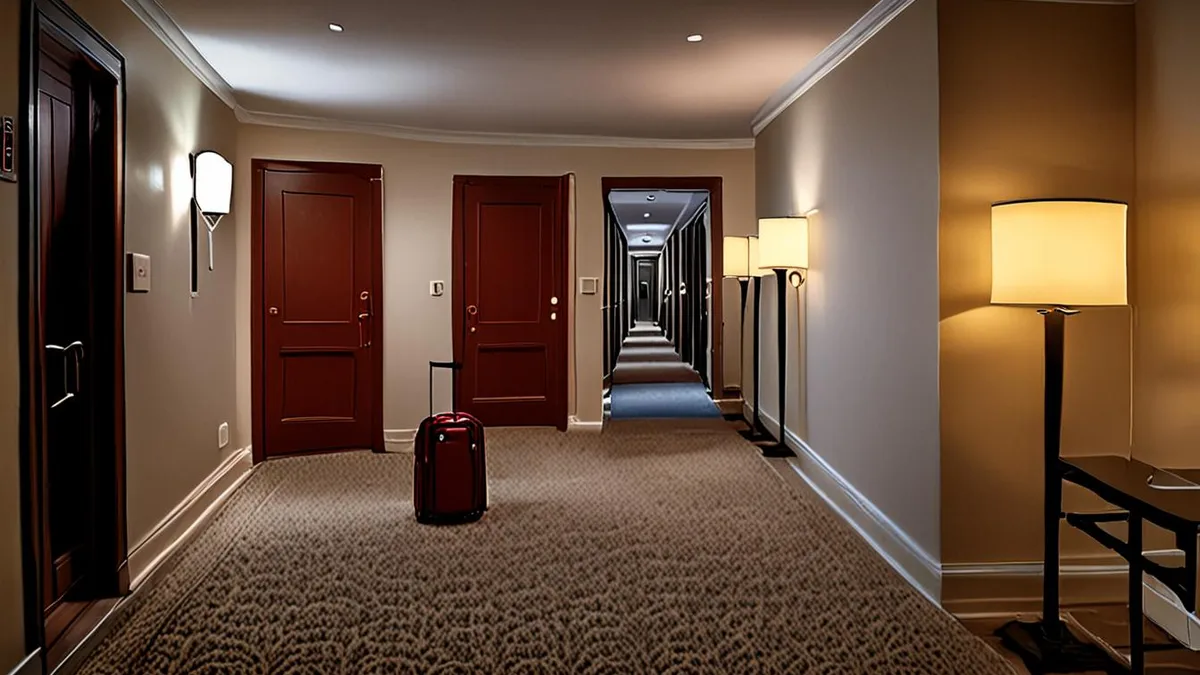
Connecting rooms are two separate rooms joined by an internal door. Each room has its own bathroom, its own TV and its own entrance from the corridor. One room usually holds the adults, the other the kids, and the door between them can often be locked from either side. You get the layout of a small apartment without apartment prices, though you do pay for two full rooms.
Family rooms
Family rooms are one open space with mixed bedding, usually one double plus two singles or a sofa bed. Everyone shares a single bathroom, and there’s no internal door anywhere. Family rooms typically sleep 4-5 guests in one open space, though layouts vary a lot between hotels, so always check the exact bed configuration before you book.
There’s a third term that causes endless confusion: adjacent rooms. These sit side by side with no door between them, which is a common mix-up when booking. You’re close to your kids, but you still have to walk out into the corridor to reach them. If a hotel or booking site lists “connecting” rooms, it’s worth confirming that an internal door actually exists, because some listings use the word loosely.
Space and Privacy: Where Each Option Wins
Space and privacy are where the two options really diverge, and the right answer depends on how old your kids are and how much you value a room of your own.
The connecting room advantage
Connecting rooms give parents a separate room after the kids’ bedtime. Once the children are asleep behind the internal door, you can watch a show, talk at a normal volume or read with the light on without tiptoeing. There’s also a practical bonus: two bathrooms. Morning routines with school-age kids go far more smoothly when nobody is queuing for the shower.
Connecting setups suit tweens and teens especially well. Older kids want their own beds and their own screens away from parents, and frankly, parents want the same. Everyone gets a door to close, which can save a family holiday from friction.
The family room advantage
Family rooms keep everyone in one space, which is easier for babies who need night-time attention. When a toddler stirs at 2 a.m., you’re within arm’s reach without getting out of bed and opening a door. There’s no corridor between you and the crib, and you can hear every sound directly.
The trade-off is privacy. With everyone in one open space, lights-out means lights-out for all, and one early riser can wake the whole room. For families with very young children, though, that trade is usually worth making.
Safety With Kids: Doors, Floors and Layout
Both options can be safe for kids, but they protect them in different ways. The key is understanding the layout before you accept the room, not after the kids are asleep.
The internal connecting door is the quiet hero of a connecting setup. It lets parents hear and reach children without leaving their own room, so a nightmare or a sick child is handled in seconds. Meanwhile, the room’s main door to the corridor stays on the parents’ side.
Family rooms take a different approach to safety: they remove corridor access entirely. With one door and everyone inside it, toddlers cannot wander out at night. For parents of escape-artist two-year-olds, that single locked door can be the deciding factor.
Before accepting a connecting room, check the door itself. A few specific things matter:
- Test whether the connecting door locks on both sides, so an older child can’t open it from their side and a toddler on your side can’t wander through unsupervised.
- Ask which side controls the lock, because in some hotels only the hotel staff or one specific room can unlock it, which changes how you use it at night.
- Check that the door actually exists and opens freely, since some “connecting” pairs have doors that are bolted or blocked by furniture on the other side.
- Look at the floor between the two rooms at night, especially in older hotels where a dark hallway or a step between rooms can trip a half-asleep child.
A two-minute inspection at check-in covers all of this. If something doesn’t work, ask for a different pair or a family room while the hotel still has options available.
Price Comparison: What You Really Pay
Money is where the two options really separate. A family room is one room, so you pay one room rate, and in practice these rooms usually run 20-40% cheaper than booking two separate standard rooms for the same family. That difference adds up fast over a week-long trip.
Connecting rooms, on the other hand, are priced as two full rooms, which is why they typically cost roughly 30-80% more than a single standard room. You are paying for the extra bathroom, the extra space and the internal door, and hotels know families will pay a premium for that flexibility during school holidays.
The math also depends on how many children you have and how old they are. Family rooms in Europe often max out at 2 adults plus 2 children under 12, so a family of five or a group with older kids may have no choice but to go for two rooms anyway.
- Occupancy limits matter: some hotels count a baby in a crib toward the maximum, so a “family room for four” may not legally fit two adults, two kids and an infant.
- Check the child age cutoff: a 12-year-old may be charged as an adult in some hotels, which can quietly erase the price advantage of a family room.
- Compare per-person breakfast rates: two connecting rooms sometimes include two breakfast allocations, while a family room rate may charge extra for each child.
- Watch resort fees: per-room charges apply twice with connecting rooms, doubling fees that a single family room would incur only once.
How to Book Connecting Rooms Before They Sell Out
Connecting rooms are the scarcest family configuration in most hotels, and the gap between demand and supply is widest during peak summer. Because you are asking for two specific rooms that share an internal door, the pool of suitable pairs is tiny compared to the number of standard rooms a property holds. A large resort might have hundreds of regular rooms but only a small cluster of connecting pairs, often on one or two floors. Timing your booking well is the single biggest factor in success, and it pays to understand how far in advance to book hotels for the best rates before you start.
- Book 3-6 months ahead. Most hotels hold only a handful of connecting pairs, so for peak summer travel this lead time is often the difference between getting the configuration and being told it is sold out.
- Write the request in the booking notes. When you make the reservation, state clearly that you need two rooms joined by an internal door, not just rooms next to each other.
- Email the hotel to confirm it on the reservation. A written reply from the reservations team gives you something to point to if the front desk has no record on arrival day.
- Call 48 hours before arrival. A quick call lets the front desk flag your reservation and check that the pair is still assigned to you.
Even with every step done correctly, remember that a connecting door is never guaranteed until you are actually handed the keys at check-in. Confirmation is never guaranteed until check-in, no matter how firmly the request sits in your booking notes. Staff changes, maintenance issues and overbooking can all break the pairing at the last minute, and smaller properties sometimes have no equivalent room to swap you into. If the configuration is essential to your trip, ask politely at check-in to see the rooms before luggage goes up, so a problem can still be fixed that day. A calm, specific request works far better than frustration at the desk.
Matching the Room Type to Your Kids’ Ages
The right room type depends far more on your children’s ages than on any general rule about space or price. A setup that works brilliantly for a baby can frustrate a teenager, and vice versa. Matching the room to your kids’ current stage, not the stage they were at on your last trip, saves a lot of money and lost sleep.
For babies and toddlers, a family room is almost always the better choice. Everything you need at 2 a.m., from the crib to the bottle warmer to a change of pajamas, is within a few steps, and you never have to cross a corridor or open two doors during a night feed.
Once children reach school age, the decision opens up. Kids aged roughly 4-10 can sleep happily in either setup, so this is the stage where bed configuration and budget should drive the choice rather than the room label.
With teenagers, connecting rooms usually win. Privacy becomes a real issue at this age, and two bathrooms mean nobody is queueing to shower before a morning tour or breakfast.
- For babies, check crib placement: some family rooms only fit a crib in an awkward corner, so ask where it goes before you commit.
- For the 4-10 range, verify the bedding: “family room” can mean a double plus two singles, a double plus a sofa bed, or even bunk beds, and the difference matters if your kids fight over beds.
- For teens, ask about the door lock: confirm which side controls the connecting door, since a door the kids can lock from their side restores everyone’s sense of privacy.
- For teens, count the bathrooms: two bathrooms also mean two toilets, which matters more than any other feature when four people share a morning routine.
The Quick Decision Summary
So which one should you book? If your priority is price and you have a baby or toddler, a family room is the clear winner. It typically runs 20-40% cheaper than two separate rooms, and with everyone in one space, there is no corridor for a wandering toddler to reach at night.
If privacy and bathroom access matter more, connecting rooms are worth the extra cost. You get your own room after the kids fall asleep, plus two bathrooms to speed up mornings. Whichever way you lean, book connecting pairs 3-6 months out and confirm the request in writing, since nothing is guaranteed until check-in. Match the room type to your children’s ages and your budget before you commit, and the choice becomes simple. Have you stayed in either setup recently? Share your experience in the comments or pass this along to a family planning their next trip.