You find a villa that looks perfect: bright photos, a “wheelchair accessible” label, a pool with a view. Then you arrive and there are three steps at the entrance, a gravel driveway, and a bathroom doorway your chair barely fits through. This happens constantly, because the word “accessible” is used loosely across almost every booking platform. Travelers with limited mobility are left guessing which listings they can actually trust.
This guide walks you through the whole process, from decoding what “accessible” really means in villa listings to choosing destinations with flat, manageable terrain. You’ll learn which questions to ask hosts before paying a deposit, how to search and filter effectively, when to book and what to budget, and how to handle equipment and on-site comfort checks. By the end, you’ll know how to find accessible villas that genuinely match your needs, not just the photos.
What ‘Accessible’ Really Means in Villa Listings
The biggest trap in accessible villas is the word itself. There is no universal standard for what “accessible” means in a vacation rental listing. For one host, it means there is a bedroom on the ground floor. For another, it means a genuinely wheelchair-friendly property with a ramp, adapted bathroom and open floor plan. Both get the same label, and both look identical in search results until you dig into the details.
Words that actually tell you something
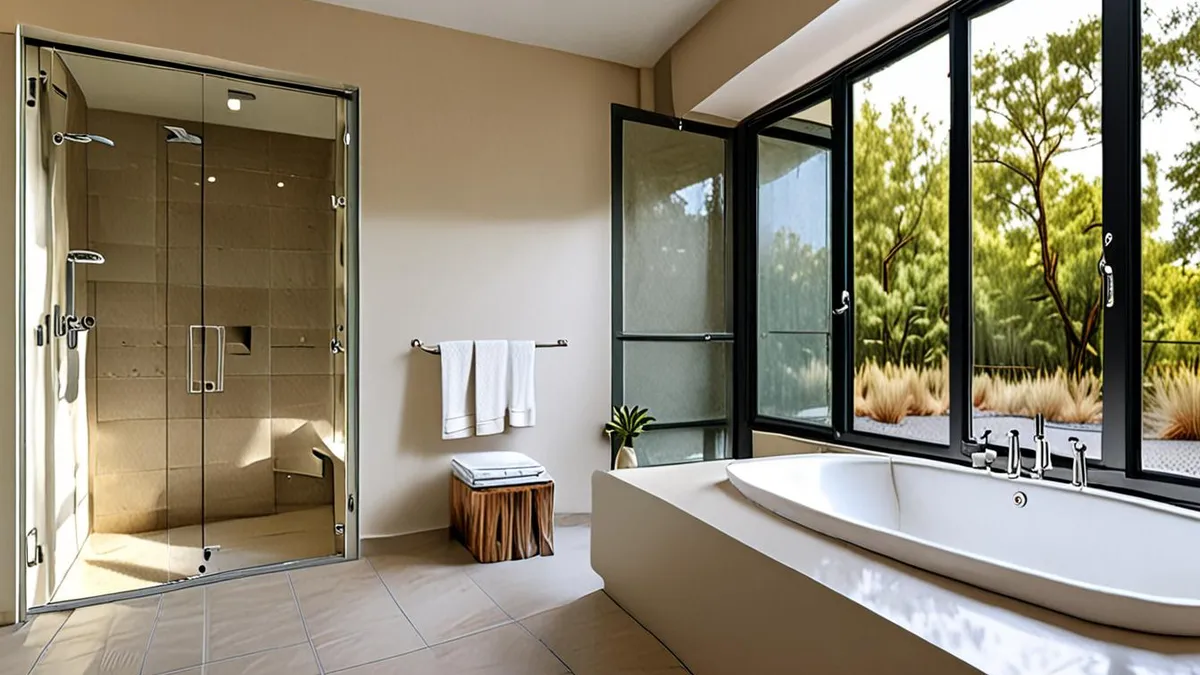
Trust specific, measurable language over general claims. Phrases worth looking for include a step-free entrance, a roll-in shower, grab bars in the bathroom, wide doorways and a ramp to the pool. These terms describe concrete features you can verify with photos and questions. A listing that uses them is usually written by someone who understands what wheelchair users need.
On the other hand, treat vague phrases as warnings. “Mobility friendly,” “mostly level” and “suitable for most guests” almost always mean there are steps or uneven terrain somewhere the host would rather not highlight. “A few steps” is another red flag, because a few steps at the entrance can make an otherwise perfect villa unusable. If the description stays fuzzy after you ask for specifics, move on to the next property.
Choosing Destinations and Areas That Suit Limited Mobility
Where you book matters almost as much as the villa itself. Flat, modern resort areas and newer builds are far easier to navigate than hillside villages or historic old towns, where stairs, cobbles and slopes are built into the streets themselves. A beautifully adapted villa can still be exhausting if every trip to a restaurant means a steep climb.
Geography plays a big role too. Lake shores and coastal flats generally beat cliffside villages, where dramatic views come at the cost of vertical terrain. Santorini-style caldera settings are the classic example: those postcard views often mean hundreds of steps carved into the hillside, sometimes with no road access at all. For areas where you’re weighing options, our guide to choosing the right area for a private villa in Bali shows how much the neighborhood shapes the experience.
Before you fall in love with any property, mentally walk the route from the parking spot to the front door. This is where many bookings quietly fail.
- Surface underfoot: Gravel paths and loose stone driveways are common dealbreakers for wheelchair users and shaky for walkers with canes; look for paved or compacted surfaces the whole way.
- Driveway gradient: Steep driveways can be impossible to push a manual chair up and risky to descend, so ask the host to describe the slope, not just confirm parking exists.
- Single-storey layouts: A ground-floor, single-storey villa removes internal stairs from the equation entirely, which no ramp or stair lift fully replaces.
- Distance to amenities: Check whether restaurants, shops and beaches sit on flat ground nearby, since you’ll use that route far more often than the villa’s interior.
Questions to Ask the Host Before You Book
Photos and descriptions can only take you so far. Before you pay any deposit, a short exchange with the host will tell you more than the entire listing page. Hosts of genuinely accessible villas answer these questions quickly and precisely; hesitation or vague replies are useful signals too. Treat the conversation as a two-way check: you are confirming the details, and the host is demonstrating that they actually understand what accessible means in practice. A host who knows the doorway widths off the top of their head has probably welcomed wheelchair users before. One who answers “I think it’s fine” probably has not.
- Request photos of the practical spaces, not just the pool. Ask specifically for the entrance, the bathroom, the bedroom doorway and the route from parking. Pool photos sell the listing; entrance and bathroom photos tell you whether you can actually live there.
- Confirm exact measurements in writing. Doorway widths of 80-90 cm (32-36 inches) are needed for wheelchair access, and a roll-in shower typically requires roughly a 150 cm (5 ft) turning radius in the bathroom. “Spacious” is not a measurement.
- Ask how the pool is accessed. Find out whether there is a hoist or steps, and whether the terrace is level with the interior or reached by a change in height. Pool hoists are rare, so a straight answer here saves you a nasty surprise.
- Get every promised feature confirmed in writing. A message listing the step-free entrance, grab bars and door widths gives you recourse if something is missing on arrival, and platforms take written confirmations far more seriously than verbal assurances.
Keep all of this correspondence in one place, ideally in the platform’s own messaging system rather than email or phone. If a feature turns out to be missing when you arrive, that written record is what turns a frustrating conversation into a refund or rebooking. Ten minutes of questions before booking is the cheapest insurance you will ever buy for an accessible trip. If a host resists putting basic details in writing, that resistance is itself an answer, and it is usually better to move on to the next villa than to gamble your holiday on good intentions.
How to Search and Filter for Accessible Villas
Most major booking platforms offer an accessibility filter, and it’s a useful place to start your search. Treat it as a shortlist, though, not a guarantee. Filters often flag villas based on whatever the owner self-reported, and “step-free entrance” in one listing can mean a single step with a portable ramp in another. Once you have a filtered list, verify every claim manually with photos and direct questions to the host.
Specialist agencies that focus on accessible travel are worth your time alongside the big platforms. Their inventory is much smaller, sometimes just a handful of villas in a given region, but the properties they list are usually pre-vetted by people who understand wheelchair access. That vetting can save you hours of back-and-forth with hosts who don’t actually know their doorway widths.
Reviews are your best defense against misleading listings. Look for recent comments from guests with similar mobility needs, and pay attention to what they mention that the listing left out, like a steep path to the pool or a bathroom door that only opens halfway.
- Check whether the agency or platform allows you to message the host directly before booking, since a host who dodges specific questions about measurements is telling you something important.
- Save screenshots of the accessibility claims and any written replies from the host, so you have evidence if the villa doesn’t match the listing on arrival.
- Broaden your radius slightly when searching: adapted villas are scarce, so a village ten minutes farther from the beach may offer far better access than the popular spot you first targeted.
- Compare the premium honestly: genuinely adapted properties typically cost 10-30% more than comparable standard villas, so budget for that difference rather than assuming it’s a pricing error.
Booking Timing and Budget for Accessible Villas
Timing matters more for accessible villas than for almost any other type of stay. Truly adapted properties make up a small share of total inventory, so for the June-August peak season they sell out first. Book 6-12 months ahead if summer is your only option, and don’t wait to “see if prices drop” — with this small a pool of supply, the good villas are simply gone.
Shoulder seasons give you breathing room. May, September and October typically offer more availability, lower rates and milder weather, which can matter just as much as price if heat or crowds complicate travel. If your dates are flexible, shifting even a couple of weeks can open up villas that were fully booked in July. For a fuller breakdown of how booking windows work across the year, see this guide on when to book a villa and how seasons affect your options.
It also helps to think about timing in stages rather than as a single booking moment. Once you have your dates, start verifying features right away: request photos and written confirmation early, because hosts of adapted villas often juggle multiple enquiries and the strongest properties get snapped up. The earlier you lock in your choice, the more time you have to arrange equipment delivery and any on-site support without rushing.
Build extra costs into your budget from the start. Genuinely adapted villas usually carry a price premium over comparable standard properties, and locally sourced hoists, shower chairs or adjustable beds are rarely included in the rate, so check what equipment rental will add before you commit.
Before paying any deposit, confirm in writing that the cancellation policy allows a full refund if the promised accessibility features are not delivered. A villa that turns out to have steps at the entrance is not the stay you booked, and you want the contractual right to walk away without losing your money.
Equipment, Layout and On-Site Comfort Checks
Once you’ve found a promising villa, the practical details decide whether it actually works for you. Renting mobility equipment locally is usually easier than hauling it through an airport: hoists, shower chairs, commodes and adjustable beds are typically available from medical supply companies in most resort regions, and delivery to the villa is often possible. Arrange this well before arrival and share the delivery window with your host so someone is there to receive it. Ask whether the company can set everything up on arrival, since a hoist still in its box is of no use to anyone.
Layout is the other make-or-break factor. Verify that the bedroom and bathroom sit on the same floor, and ideally that all living space is on one level. A villa with a step-free entrance but a bedroom up a spiral staircase helps no one. Ask the host to describe the full floor plan in plain terms, not just the highlights, and to confirm how the rooms connect to the terrace and pool area.
- Confirm pool access early: fewer than 5% of villa listings offer a pool hoist, so if a hoist is essential, make it a condition of booking rather than a hopeful question.
- Ask where the equipment delivery point is, whether there’s covered space for a wheelchair or scooter, and if staff can help carry items from the car.
- Request the host’s local emergency contacts and the nearest hospital or clinic, and ask whether villa staff are trained or willing to assist if a problem arises during your stay.
- Check whether the rental company offers a demonstration of any equipment, and whether spare batteries or chargers for powered wheelchairs and scooters can be supplied locally.
Wrapping Up Your Accessible Villa Search
If a villa’s photos show a sparkling pool but the listing says nothing about the entrance, treat that as a question mark, not an answer. The word “accessible” gets used loosely across villa listings, and travelers with limited mobility are too often left guessing whether a property means a ground-floor bedroom or genuine wheelchair access throughout. The fix is verification at every step: check the terminology, request photos of the entrance, bathroom and route from parking, confirm measurements like doorway widths and turning radii, and read reviews from guests with similar needs before you pay a deposit.
Three choices make the biggest difference to your odds. Pick a flat, modern destination rather than a hillside or old-town location, favor single-storey layouts that avoid internal stairs entirely, and book six to twelve months ahead for the June-August peak, when adapted villas are a small share of supply and sell out first. Expect a 10-30% price premium over comparable standard villas, and get written confirmation of every promised feature so you have recourse if something is missing. Have you found a villa that truly delivered on accessibility, or learned a lesson the hard way? Share your experience in the comments or pass this article along to someone planning their next trip.