Planning a resort trip with grandparents, kids and everyone in between is a juggling act, and the hardest part is knowing which features genuinely help older guests. A glossy family section on the hotel website tells you very little about whether Grandma can walk from her room to dinner without exhaustion, or whether the pool has a handrail she can actually use. That’s where grandparent-friendly facilities come in: the practical details that make a stay comfortable rather than just photogenic.
This guide walks you through what to look for before you book. We’ll define what grandparent-friendly facilities really mean, then check rooms and layout, getting around the grounds, pool and beach access, dining times and pacing the day, and finally when to book and which destinations tend to work well. A short wrap-up brings the whole checklist together so you can compare resorts confidently.
What Grandparent-Friendly Facilities Actually Mean
Many resorts slap a wheelchair symbol on their website and call themselves accessible. In practice, grandparent-friendly facilities go much further than that logo. What matters day to day is how far it is from the room to the pool, whether there’s shade along the way, how often there’s a bench or lounge chair to rest on, and whether the daily rhythm of the place allows for a slow morning and a mid-afternoon nap.
Here’s the trap: a resort can be genuinely family-friendly without being easy for older guests to navigate. Kids’ clubs, waterslides and swim-up bars say nothing about step-free paths or lifts in every building. A place that markets itself loudly to families may still have a restaurant reachable only by two flights of stairs.
Five areas worth checking
Rather than trying to assess everything, focus your questions on five areas: the rooms themselves, the overall layout of the grounds, the pools and beach access, the dining setup and meal times, and how close the nearest hospital or clinic is. A clinic within 30 minutes of the resort is a sensible benchmark for peace of mind.
Ask each resort specific questions about these areas rather than general ones. “Is your pool accessible?” gets a yes from almost everyone. “Does the pool have a zero-entry section with handrails?” gets you a real answer. The difference between those two questions is often the difference between a relaxing trip and a stressful one.
Rooms and Layout: The First Things to Check
The room is where grandparent-friendly facilities succeed or fail, because it’s the one place older guests spend time alone. Start with the basics: request a ground-floor room or one served by a lift. Then dig one level deeper and confirm that every building where you might be placed has a lift, not just the main block. Resorts frequently advertise lifts while keeping garden wings and beach bungalows stair-only, and those quieter wings are often where large groups get assigned.
Bathrooms matter just as much as location. Ask specifically for a walk-in shower with grab bars, not a step-over bathtub. A tub that looks elegant in photos can be genuinely risky for someone with limited mobility, and grab bars are usually only fitted in designated accessible rooms.
Questions to put in writing
- Exact room type confirmation: ask the resort to confirm the accessible or ground-floor room number category in writing, not just “noted on request”.
- Price difference: accessible rooms typically cost 0-15% more than standard rooms at the same resort, so budget for it rather than being surprised at check-in.
- Distance to key facilities: aim for rooms under 200 meters from the main pool, restaurant and lobby, and ask the resort to quote actual distances rather than “close by”.
- Flooring and thresholds: ask whether room entrances have raised thresholds or steps, which are common in older buildings and rarely shown in photos.
Put every one of these requests by name at the time of booking, not in a notes field afterwards. Accessible rooms are usually limited to a handful per resort, and they go first.
Getting Around the Resort Grounds
Once the room is sorted, look at everything between the room and the places your family will actually go. Two resorts can have identical room standards and completely different day-to-day experiences on the ground. Large, spread-out properties can mean walks of 10 minutes or more between the room, the pool and dinner, which is a real strain in heat or after a long day. Compact layouts suit older guests far better, and they also make it easier for grandparents to head back to the room independently.
Paths, ramps and transport
Check three specific things with the resort. First, do shuttle buggies run on demand or on a fixed schedule, and can they be called to pick someone up rather than only stopping at set points? Second, are level changes handled with ramps instead of steps, particularly at restaurant entrances and pool terraces? Third, are the main paths paved, or do they turn to soft sand or gravel halfway to the beach? Paved paths matter enormously for anyone using a walking stick or a wheeled walker.
Then ask the layout question that catches most families out: do the restaurants, beach and spa sit on different levels connected only by stairs? A hillside resort can look spectacular and still mean a staircase climb after every meal. Getting a straight answer here is one more reason it pays to compare resorts on practical details rather than brochure photos.
Pools and Beach Access for Older Guests
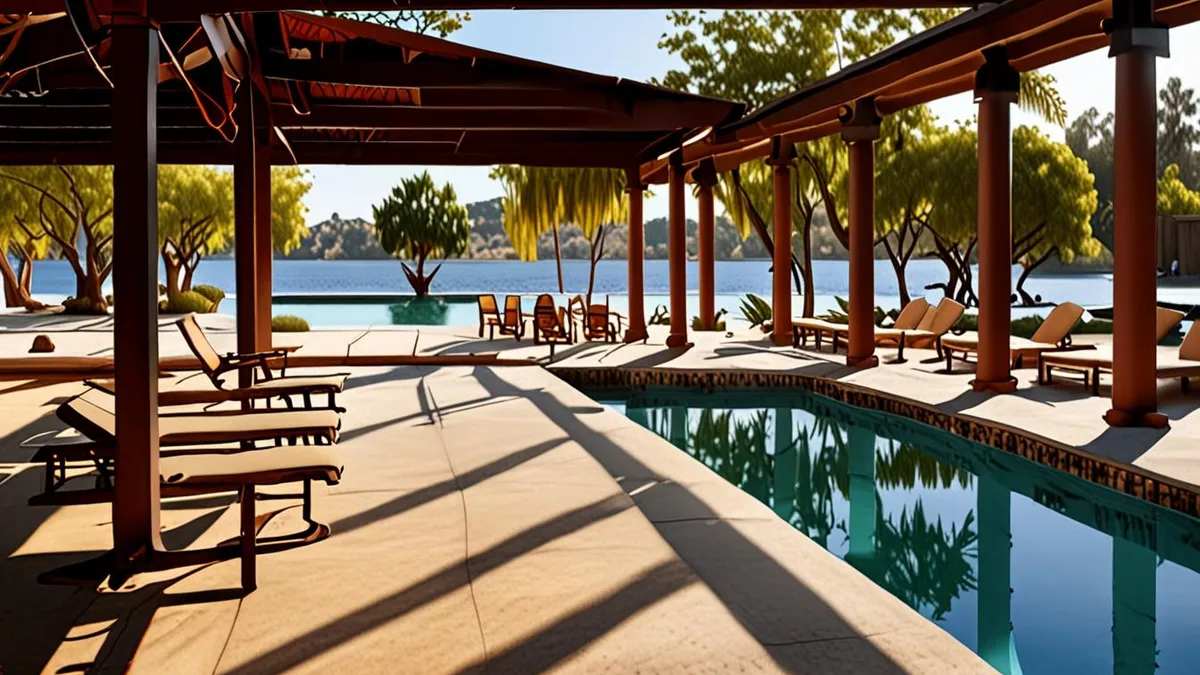
The pool is where most resort hours get spent, so it deserves the closest look when grandparents are traveling along. Deep lagoon-style pools look dramatic in photos, but they often require steps or a clumsy ladder entry and can have sudden depth changes that make wading uncomfortable. A zero-entry pool, where you walk gradually into the water like on a beach, or a pool with wide stepped entry and sturdy handrails is far easier and safer for older guests.
Shade matters just as much as water access. Older skin burns faster and heat exhaustion is a real risk, so shaded loungers close to the pool are not a luxury. They also fill up fast, often before mid-morning, so ask the resort directly whether cabanas or shaded daybeds can be reserved in advance or whether you need to claim seats at dawn. If you want a broader picture of how resort pools differ, this guide to resort pool types and rules breaks it down clearly.
The beach is the other common trap. A “beachfront” resort can still be impractical if the sand sits below a long staircase or the shoreline is soft, deep sand that is hard to walk on.
- Ask how many steps lead from the pool deck or promenade down to the sand, and whether there is a ramp or a beach lift as an alternative route.
- Check whether the resort provides beach matting or boardwalks over soft sand, which make walking to a lounger realistic for anyone with limited mobility.
- Confirm whether shaded loungers exist at the beach itself, not just at the pool, since grandparents may want to sit by the sea while the family swims.
- Find out if pool towels and a nearby restroom or beach bar are within a short walk, so no one has to trek back to the room for basics.
Dining, Meal Plans and Pacing the Day
Meals can make or break a multigenerational trip. Most older guests eat earlier than teenagers or young adults, and a buffet dinner service that starts at 7 pm or later can mean tired, hungry grandparents waiting around. Look for resorts that serve the main buffet before 7 pm, and confirm at booking that an early seating is genuinely possible rather than assuming it is. A quick email to the resort before you pay can settle this.
Choosing a meal plan
An all-inclusive plan can reduce decision fatigue for the whole family, since nobody is negotiating where to eat each night. Before you commit, though, check the à la carte venues: some sit on upper floors reached only by stairs, and some enforce dress codes that require long trousers or closed shoes, which is an annoying surprise after a beach day. If you are unsure how the different plans compare, this explanation of half board, full board and all-inclusive is a useful primer.
Pacing the day
The biggest mistake multigenerational groups make is scheduling back-to-back excursions. Build quiet afternoons into the itinerary so grandparents can rest, nap or simply enjoy the room balcony between a morning boat trip and an evening dinner. Spread big outings across separate days rather than stacking them, and let the whole family benefit from a slower rhythm. A resort with a comfortable room, decent shade and an easy walk to the restaurant makes those rest hours genuinely restorative rather than just dead time.
When to Book and Where Grandparent-Friendly Resorts Are Common
Timing and destination choice do more for grandparent comfort than most facility lists admit. A flat, compact resort in mild weather is easier on older legs than a hillside property in peak humidity, even if the facility list looks identical on paper.
When to book
If you are a group of six or more traveling during school holiday peaks, book 6-9 months ahead. That window gives you real choice in room locations, so you can actually secure the ground-floor or lift-served rooms you need instead of taking what is left. Leaving it late in peak season usually means split buildings and long walks between rooms and facilities.
Choosing the season and the destination
Shoulder months are kinder to older travelers for two reasons: milder heat and thinner crowds. Months like May, early June and September-November mean shorter waits at buffets, easier cabana availability and less strain from midday sun. Check the local climate for your specific destination, since “shoulder season” means different things in the Caribbean than in Southeast Asia.
As for where, flat and compact destinations work best. The Canary Islands have long catered to older European travelers, so resorts there tend to offer lifts, ramps and shaded terraces as standard. Established Thai island resorts also combine compact layouts with mature service cultures that handle special requests well. Wherever you look, favor resorts that have operated for years over brand-new builds on steep or unfinished terrain, and ask about the terrain itself before booking.
Wrapping Up Your Grandparent-Friendly Resort Check
The difference between a family-friendly resort and a genuinely grandparent-friendly one comes down to the details you check before booking, not the brochure photos. Judge each option on the five things that matter most: rooms with walk-in showers and short walks, a compact layout with lifts in every building, pool and beach access that doesn’t rely on stairs, dining times that suit an early evening, and a hospital or clinic within 30 minutes. A resort that scores well on all five will make the trip easier for everyone, not just older guests.
Once you’ve chosen, lock in the specifics at booking time rather than hoping for the best. Request an accessible room by name, confirm early dinner seating, and ask about shaded loungers near the pool. Booking 6-9 months ahead gives you the pick of these rooms and tables, and traveling in shoulder season makes every facility calmer and easier to use. If this helped you plan, leave a comment or share the article with someone planning a multigenerational trip.