Glamping in Queensland sounds simple until you start planning it. The state is enormous, stretching from tropical reef and rainforest in the far north to temperate hinterland and scorching outback in the south and west. A beachfront safari tent that sounds idyllic in one region can mean sweltering humidity and stingers in another, and the best months differ wildly depending on where you book.
This guide breaks Queensland into its main glamping regions and matches each one to the right time of year. You’ll find what to expect around the Daintree and Cairns, the Whitsundays and Hervey Bay, the Scenic Rim and Gold Coast hinterland, and the outback, along with realistic rate ranges and a booking timeline. By the end, you’ll know exactly which region suits your travel dates instead of guessing.
Why Queensland Works So Well for Glamping
Queensland is one of the few places on earth where a single state covers tropical reef coast, ancient rainforest, red-dirt outback and cool, green hinterland. That range shows up directly in the glamping options: you can sleep in a beachfront safari tent with the sound of surf outside, in an eco-dome surrounded by rainforest, or in a station-style camp under a sky full of outback stars. Few destinations offer that much variety without crossing a border.
Eco-lodge style is the local specialty
Glamping in Queensland has a strong eco-lodge tradition, and many properties take sustainability seriously rather than treating it as a marketing angle. It’s common to find solar power, composting toilets, rainwater tanks and guided nature activities like rainforest walks or reef talks built into the stay. If low-impact travel matters to you, ask operators about their setup before booking; most are happy to explain how the camp runs.
The seasons work in reverse
Here’s the detail that trips up most international travelers: winter, from May to October, is the peak comfort season in tropical Queensland. While northern-hemisphere visitors are escaping their own winter, they’re actually arriving at the driest, most pleasant time of year up north. Plan around that reversal and you’ll avoid the humidity and rain that make the wet season challenging.
Far North Queensland: Daintree and Cairns Region
Far North Queensland is the classic choice for rainforest glamping, and the strip of country between Cairns and the Daintree is where you’ll find the best of it. Properties here sit on the rainforest edge: safari tents and eco-domes tucked under the canopy, often with boardwalks, creek swimming holes and wildlife wandering past your deck. Cairns is the gateway for Daintree-area stays, with most sites roughly one to three hours away by car, so you can land in the morning and be listening to the rainforest by evening.
Timing your Daintree stay
Aim for May to October. The dry season brings lower humidity, far fewer mosquitoes, and conditions that suit reef trips from Cairns or Port Douglas. The November to April wet season is a different story: heavy rain, high humidity and stinger season at the northern beaches, with some tracks and tours disrupted. If you’re weighing tropical Australia against somewhere cooler and greener, glamping in the Pyrenees across its best regions and seasons covers a very different climate and makes a useful comparison.
What rainforest eco-retreats cost
As a guide, mid-range glamping across Queensland typically runs AUD 150-300 per night, while luxury eco-retreats in the Daintree area sit at AUD 400-700+ per night. Prices climb toward the top of that range for domes with private plunge pools or all-inclusive packages, and drop for simpler safari tents. Book 3-6 months ahead for June-August, when the dry season draws the biggest crowds; 1-3 months is usually enough in shoulder months like May or September.
The Whitsundays and Hervey Bay: Coastal and Island Stays
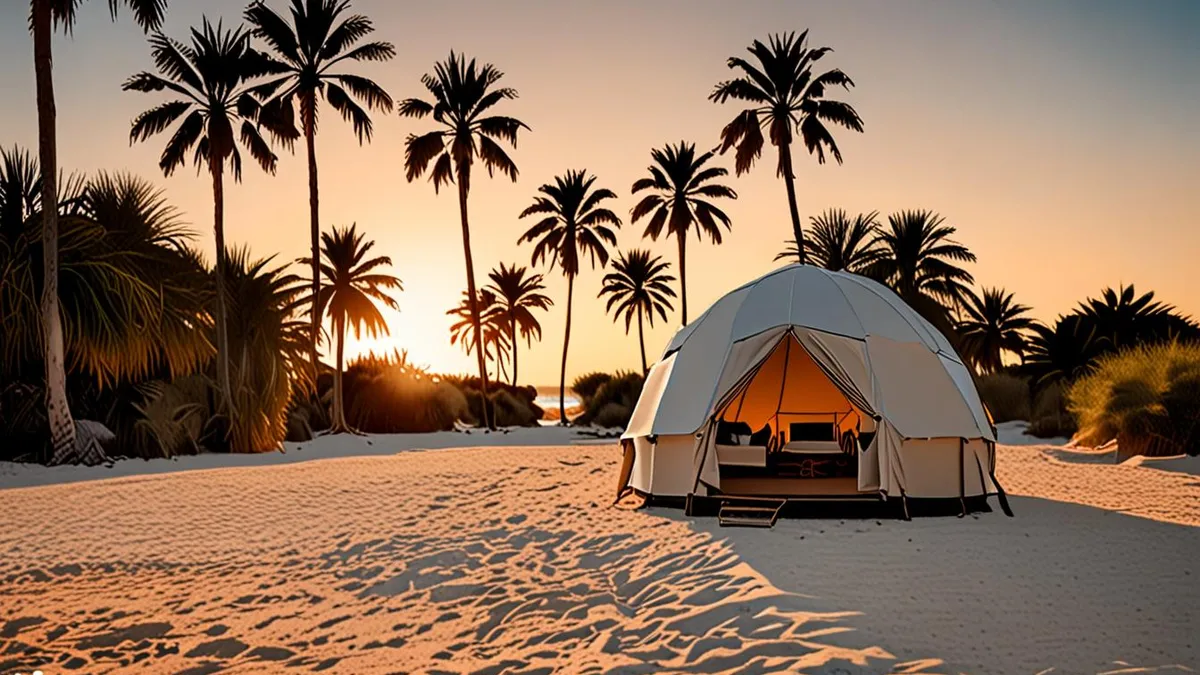
If your dream glamping trip involves waking up steps from the beach, the Whitsundays and the Fraser Coast deliver. Around the Whitsundays, you’ll find beachfront and island glamping options where your tent or cabin sits close to the sand, with easy access to boat trips toward Whitehaven Beach and the islands. The best window is May to October, outside stinger season, when the water is clearer and swimming conditions are safer at northern beaches.
Whale watching on the Fraser Coast
Hervey Bay, on the Fraser Coast, adds a second draw: whale watching. Humpback whales pass through the bay roughly from July to early November, and pairing a coastal glamping stay with a whale-watching cruise is one of the most memorable combinations Queensland offers. Sites here tend to be more affordable than island stays in the Whitsundays, and the town has plenty of tour operators to choose from.
Booking ahead matters on the coast
Coastal sites book out fastest in June-August, when Australian families and international visitors all compete for the same dry-season dates. Reserve three to six months ahead for that window, especially for beachfront spots with the best positions. If your dates are flexible, shoulder months like May or September give you nearly the same weather with far more availability and often softer rates.
Scenic Rim and Gold Coast Hinterland: Rainforest Near Brisbane
The Scenic Rim and the Gold Coast hinterland offer the easiest glamping introduction in Queensland. Lodge-style retreats and luxury tented stays dot the area around Lamington National Park and the Border Ranges, all about 1-1.5 hours from Brisbane. That short drive changes the whole character of a trip: you can leave home after breakfast and be settling into a rainforest-view deck before lunch, no airport transfers required.
The region is comfortable all year, which is a real advantage over the tropics. The crispest nights and clearest walking conditions run from April to October, when cooler evenings make a fire pit feel earned rather than endured. Summer stays are still pleasant thanks to the elevation, though you can expect warmer, more humid days and the occasional afternoon storm.
Why It Suits First-Timers and Families
The infrastructure here is among the most developed in the state. Properties typically offer proper bathrooms, on-site dining and guided walks on famous trails like those around O’Reilly’s and Springbrook, so you get the romance of a tent without roughing it. Cell coverage is generally reliable and towns with fuel and groceries are close by, which matters when you have kids in tow. If you are planning a trip with children, it helps to read up on planning a family-friendly glamping trip before choosing your site, since family layouts and kids’ activity programs vary a lot between properties.
Because the drive is short, this region also works well for one- or two-night test runs. Try a tent stay here first, then book that Daintree trip once you know the whole family enjoys glamping life.
Outback and Inland Queensland: When to Go
Inland Queensland rewards travelers who plan around the seasons. Working stations and outback camps near places like Carnarvon Gorge and the Channel Country offer a style of glamping you simply cannot find on the coast: vast night skies, red earth, gorges and genuine station hospitality. The right window is the cooler months, roughly April to September, when days are mild and nights can be genuinely cold, so pack layers.
Summer is a different story entirely. Outback temperatures regularly exceed 35-40°C during November to February, and a canvas tent offers little relief from that heat. Stays in those months are uncomfortable at best and can be unsafe if you plan any hiking or time outdoors. Most operators in remote areas reduce or pause operations over summer anyway, so check directly with the property before assuming a date is possible.
Planning Around the Distances
The biggest practical challenge is travel time, not the accommodation. Plan drives of 4-8 hours between outback sites and regional towns, and treat fuel stops as firm commitments rather than options. Carnarvon Gorge, for example, sits well off the highway network, so build buffer time into your itinerary in case of roadworks or weather-related closures on unsealed sections.
A two- or three-night minimum stay makes the driving worthwhile. Book with an operator who provides meals or has a licensed dining option, since food services are thin on the ground once you leave regional centers. Bring plenty of water, a spare tire and a paper map or offline navigation, because mobile coverage disappears quickly outside town. With the cooler-month timing sorted and the distances respected, an outback glamping stay becomes one of the most memorable trips Queensland can offer.
Choosing Your Season and Booking Timeline
Queensland is big enough that the “best time to visit” question has several answers, one for each region. The trick is to pick your region first, then build your dates around it, and finally work backwards from that to a booking timeline and budget. Get that order right and you avoid the most common mistake, which is falling in love with a property before checking whether the season suits it.
- Match the region to the season. Northern and coastal destinations, including Far North Queensland and the Whitsundays, shine from May to October when humidity drops and stinger season ends. Southern spots like the rainforest country southwest of Brisbane stay comfortable year-round, with the mildest conditions from April to October. Outback areas suit the cooler months from April to September only, so a summer inland trip is one to rethink.
- Set your booking timeline based on season demand. For June-August trips to the north, reserve 3-6 months ahead, since popular reef-adjacent sites sell out early. In shoulder months like May or September, booking 1-3 months in advance is usually enough, and it often comes with better choice of tent or dome type.
- Budget realistically and check cancellation terms. Expect roughly AUD 150-300 per night for mid-range stays and AUD 400-700+ for luxury eco-retreats, with prices pushing higher during school holidays. Before you commit, it’s smart to review how to time a glamping booking and handle cancellations, since remote properties often have stricter policies than city hotels.
Once you have locked in a region, a sensible season and a realistic budget, the rest is detail work: flights, packing and the short list of things you actually need in a tent. Queensland makes that final step easy, because the setting does most of the convincing on its own.
Wrapping Up Your Queensland Glamping Plan
Queensland is enormous and its seasons swing from one extreme to the other, which is exactly why region-first planning pays off. Pick the Daintree or the Whitsundays for the dry season from May to October, the Scenic Rim when you want flexibility year-round, and the outback during the cooler months. Match the region to the season and most of the guesswork disappears.
On budget, a comfortable mid-range tent or dome typically sits somewhere in the middle of the price range covered above, while luxury eco-retreats command a clear premium, especially in the tropics during peak months. Rates also shift with school holidays, so it pays to compare a few date windows before committing. The one timing rule that really matters: lock in peak-season northern stays well ahead, and you’ll have the best of both reef and rainforest. If this helped you plan your trip, leave a comment or share the article.