You’ve found the resort of your dreams, and now comes the decision that can swing your total bill by thousands: overwater bungalow vs beach villa. One promises that iconic ladder-into-the-lagoon moment, the other delivers more space for less money. It’s the classic luxury travel dilemma, and the “right” answer depends far more on how you travel than on any universal rule.
The numbers matter, too. Overwater bungalows typically cost 30-60% more than a comparable beach villa at the same resort, while beach villas usually offer 20-40% more interior space than entry-level overwater categories. In this article, we’ll break down what you actually pay for each, what the day-to-day experience really feels like, and the practical trade-offs around privacy, noise and weather. We’ll also cover when the upgrade is genuinely worth it, when you’re better off saving with a beach villa, and how to decide based on your budget, season and travel style.
What You Actually Pay: Price Differences Explained
Let’s talk numbers, because the gap between the two categories is bigger than most first-time visitors expect. At the same resort, an overwater bungalow typically costs 30-60% more than a comparable beach villa. On a $1,000-per-night beach villa, that can mean paying somewhere between $1,300 and $1,600 for the same dates, meals and service.
When the premium doubles
The 30-60% range applies to entry-level overwater categories. The top of the overwater ladder climbs much faster. Sunset-facing layouts, suites with private pools, and corner or duplex designs are priced as flagship rooms, and at many resorts these premium categories can roughly double the rate of a standard beach villa. If you have your eye on one of those, budget for the top end rather than the average.
Space is the quiet trade-off hiding in the price. For the money you spend on an entry-level overwater bungalow, a beach villa usually gives you 20-40% more interior space, plus the garden and terrace areas that come with it. You are paying the premium for position over the lagoon, not for square footage.
Timing matters too. In the Maldives, high season runs from November to April, and per-night price gaps between the two categories tend to widen then, as overwater inventory is the first to sell out and resorts price it accordingly. In the May-to-October shoulder months, the gap usually narrows and discounts are easier to find. Check current rates for your exact dates, since pricing shifts year to year and resort to resort.
The Overwater Bungalow Experience
There is a reason the overwater bungalow became the postcard image of the Maldives and French Polynesia. You wake up, slide open the door, and the lagoon is simply there, turquoise and motionless beneath the floorboards. The whole rhythm of the day changes when the water is your front yard rather than a walk across the sand.
The biggest practical difference is the swimming. Most overwater bungalows have a dedicated ladder or steps at the end of the deck, so you can roll out of bed, descend into the lagoon, and snorkel before breakfast. On a house-reef lagoon, fish and small rays often appear within a few meters of your steps, which turns an ordinary morning into something memorable.
Privacy is the other major draw. Guests cannot wander past your deck the way they stroll along a beachfront path, so sunbathing, showering, and dining outside feel genuinely private. Many resorts lean into this with signature design touches, and the most common ones are worth knowing about before you book.
- Glass floor panels: many bungalows include a section of see-through flooring, often near the bed or living area, so you can watch fish pass beneath you at night when the resort lights the water.
- Over-deck lounging areas: expect a split-level deck with sun loungers, an outdoor dining spot, and frequently a hammock or net strung over the lagoon for dozing above the waves.
- Dedicated water steps: the ladder is usually gated or positioned at the far end of the deck, and some resorts stock the steps with towel rails and a fresh-water rinse tap for after swims.
- Directional layouts: sunrise-facing and sunset-facing bungalows sit on separate jetties, so choosing a sunset category affects both your evening light and how exposed the deck feels.
One honest caveat: that beautiful open deck can be weather-dependent. Bungalows sit on stilts with no trees or buildings to break the wind, so in the Maldives during May to October, when rain and chop are more likely, your deck may feel exposed and breezy rather than serene. It is worth keeping an indoor backup plan for those days, which most bungalows handle well with large covered verandas or indoor lounging space.
The Beach Villa Experience
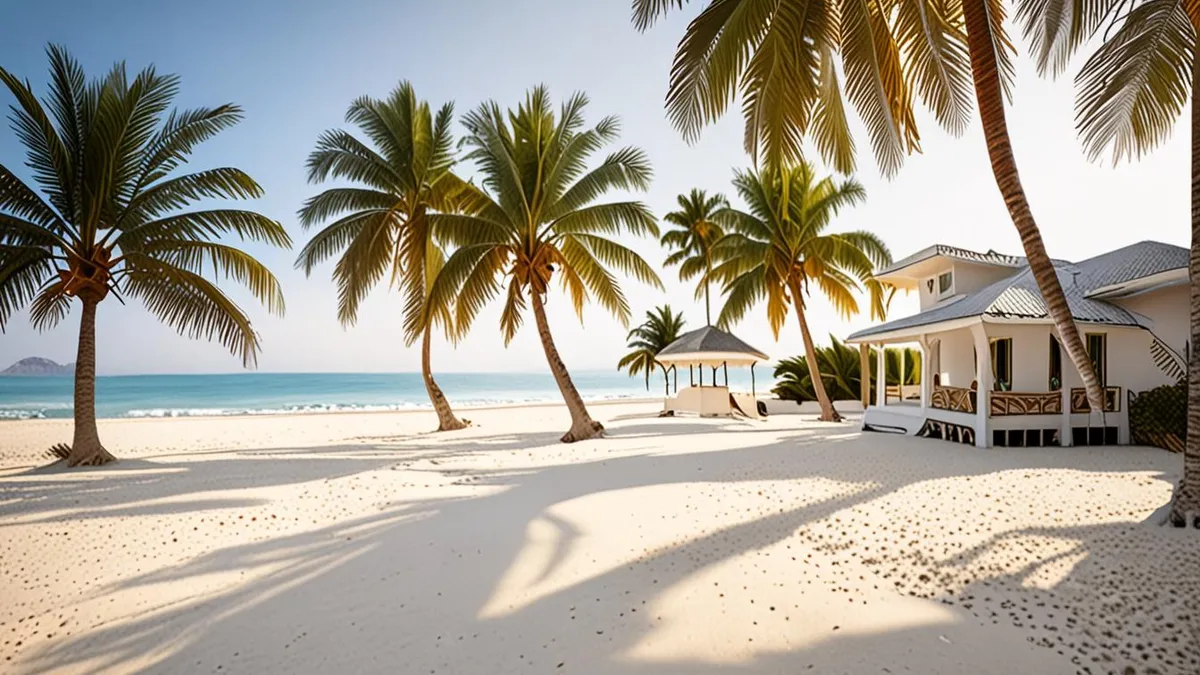
Beach villas start with what most travelers actually picture when they dream of an island: sand a few steps from your terrace. You walk straight off your deck onto the beach, pick a spot of shade under a palm or pergola, and settle in for the afternoon. There is no ladder, no fixed swimming point and no need to time your dips around the tide. If you like a proper beach walk, this is the category that delivers it, since you can stroll along the shoreline in the evening while an overwater guest is, quite literally, at the end of a jetty.
Space is the other big advantage. Beach villas usually offer 20-40% more interior space than entry-level overwater bungalows, and that difference shows up in daily life: a separate sitting area, a bigger bathroom, room for luggage to stay open. Many also come with a private garden, and at mid-range and luxury resorts a private pool is increasingly standard in both categories.
Being on land also means everything else on the island is close. You can walk to breakfast, wander to the pool or spa, and pop back to your villa without waiting for a buggy or boat.
What you typically get with a beach villa:
- Shaded outdoor living: trees and planted gardens keep terraces cooler than open decks, so you can comfortably read or nap outside for hours rather than retreating indoors.
- Outdoor bathrooms: many beach villas feature open-air showers or garden bathrooms, a feature that is harder to engineer on a deck over water.
- Room to spread out for two or more: the extra interior square footage matters most for couples staying a week or travelers sharing with a friend who each want their own corner.
- Grass and garden space: lawns give you somewhere to do yoga, play with kids or set up a picnic beyond the sand itself.
- Easy logistics: no jetty transfers or boat rides to reach dinner, the dive center or the gym, which adds up over a longer stay.
Privacy, Noise and Weather: The Practical Trade-offs
The biggest practical difference between the two categories is foot traffic. Beach villas usually sit along a path that runs parallel to the shore, which means other guests, staff and the occasional beach buggy can pass by your terrace during the day. Overwater bungalows, by contrast, are reached only by their own jetty, so once you close your deck door, nobody walks past at all.
Weather exposure works the other way around. An overwater deck catches whatever the sky delivers, with wind and rain sweeping across it and little shelter apart from a parasol or the bungalow’s interior. Beach villas benefit from trees and vegetation that break the wind, plus a larger indoor living area as a comfortable fallback when the weather turns.
Snorkelling and safety
On resorts with a house-reef lagoon, snorkelling quality is often better from an overwater deck, where direct lagoon access steps drop you straight onto the reef. From a beach villa, you may need a longer swim or a short boat ride to reach similar coral.
For families with small children, though, beach villas are generally the safer and more convenient choice. Open-water deck access with no fence and no shallow entry is a constant supervision challenge, while a sandy shore with gentle shallows lets everyone paddle and play with far less worry.
When the Upgrade Is Worth It
Some trips justify the premium more than others. If you are celebrating a honeymoon, an anniversary or a milestone birthday, the 30-60% extra you pay for an overwater bungalow often buys the single most memorable experience of the entire stay. It is the one upgrade guests tend to talk about years later, long after they have forgotten what the restaurant bill came to.
Destination matters too. In places where the overwater format is the region’s signature, skipping it means missing a big part of what makes the trip special. That is very much the case in the Maldives and French Polynesia, where bungalows on stilts are woven into the whole identity of the destination. If you are still weighing one resort region against another, it helps to compare which resort destination suits your travel style before deciding how far to stretch the budget.
Short trips tilt the math as well. On a stay of 3-5 nights, upgrading your room category for the whole visit costs less than adding extra nights to the trip, and it concentrates the splurge where it counts.
The upgrade makes the most sense if a few of these describe you:
- You are a daily snorkeler who values stepping straight off your deck into the lagoon before breakfast, rather than walking to a shared entry point.
- Your trip is a one-off celebration where the room itself is the point of the holiday, not just a place to sleep between activities.
- You are visiting a destination like the Maldives in calm-season months, when you will genuinely use the deck every day instead of watching it from indoors.
- You have booked 6-11 months ahead and can secure a sunset-facing or pool category at the better rate, rather than paying a last-minute premium for whatever remains.
When to Save and Book the Beach Villa
There are plenty of situations where the beach villa is simply the smarter buy. The clearest one is trip length: on stays of 7 nights or more, the per-night premium compounds into a large total difference. Paying extra every single night for a week can add up to the cost of several extra holiday nights elsewhere, so the longer you stay, the harder the upgrade is to justify.
Season matters just as much. From May to October in the Maldives, lower rates come with more rain, and an overwater deck you cannot sit on because of wind and showers is expensive dead space. A beach villa with trees, shade and a roomy interior gives you somewhere pleasant to be regardless of the weather.
It also comes down to how you actually spend your days. If you plan to be at the spa, on the dive boat or lingering over long restaurant meals, you will barely use the deck you are paying extra for. And if you are comparing resorts, think about how the room rate fits the wider bill, because the choice between all-inclusive and à la carte pricing can swing your total budget more than the room category itself.
A few smart ways to keep costs down:
- Book a split stay: a beach villa for most nights, then an overwater bungalow for the final two, so you end the trip on a high without paying the premium throughout.
- Travel in shoulder season and put the money you save on the room toward diving, spa treatments or a private dinner instead.
- Check whether a private pool is already included in the beach villa category, since at many mid-range and luxury resorts it is increasingly standard, which reduces the appeal of paying extra for deck features.
- Reserve the overwater category only for the resort where it is the signature experience, and choose a beach villa at stops where the reef or beach is the real draw.
The Bottom Line
So which is worth the cost? Overwater bungalows typically run 30-60% more than a comparable beach villa at the same resort, and for that premium you get real privacy, uninterrupted ocean views and steps straight into the lagoon. Beach villas give you more interior space for less money, plus gardens, shade and easy access to restaurants and pools.
The upgrade makes most sense for short, special-occasion trips in calm-season months. Beach villas win for longer stays, families and shoulder-season travel, when the deck time you paid for may be limited by weather. If you can’t decide, a split stay lets you sample both without paying the premium every night. If this helped you weigh the choice, leave a comment or share the article with someone planning the same trip.