You want a comfortable nature stay in Japan, but the planning feels overwhelming. Which regions actually offer real glamping rather than plain campsites? When should you book to avoid sold-out weekends? And what does a typical night actually include — is dinner provided, are there real bathrooms, and do you need to bring anything at all?
This guide walks through glamping in Japan step by step. We explain why Japanese glamping works differently from what you may know in the West, from catered meals to strict check-in windows. Then we compare the best regions, from Mount Fuji lakesides to the Japanese Alps and mild southern islands, and help you pick the right season. You’ll also find a breakdown of stay types, what a night typically costs, what’s included in the price, and a practical checklist for choosing a site and getting there without a car. By the end, you’ll have a clear, realistic plan for your first glamping trip in Japan.
Why Glamping in Japan Is Different From Western Glamping
If you’ve glamped in Europe or North America, expect a few surprises in Japan. The biggest difference is the food. Instead of a self-catering kitchen or a bring-your-own cooler, most Japanese glamping sites build their stay around catered meals. The classic plan is a BBQ dinner grilled at your unit, often with ingredients prepared and portioned for you. Some properties go further and offer multi-course dinners served in or beside your tent, so cooking is entirely off your plate.
Service is another distinction. Japanese hospitality standards carry over to the campsite: staff greet you at arrival, facilities are cleaned meticulously, and the whole site tends to run on a tight schedule. That includes check-in, which is usually a strict window in the late afternoon, often between 15:00 and 16:00. Arrive late and you may need to warn the site in advance, so plan your transport around that window.
Private baths and formal etiquette
Many domes and villas come with their own bath or onsen-style tub, sometimes on an open-air deck with a view. It’s a distinctly Japanese touch that turns the stay into something closer to a ryokan experience than camping.
Etiquette is also more formal than you might expect. Quiet hours are genuinely respected, and many sites are planned as either adults-oriented or family-only, so check the policy before booking. If you’re used to relaxed, self-organized campgrounds, think of Japanese glamping as closer to a small hotel in nature — with rules to match.
Where to Go: The Best Regions for Glamping in Japan
Japan is compact, but glamping regions differ a lot depending on the season and the scenery you want. The good news is that the country offers genuine variety: lakeside domes with mountain views, alpine meadows that stay cool in midsummer, and subtropical islands where winter barely registers. Picking the right region first makes everything else — budgeting, packing, booking lead time — much simpler. Here’s where to start.
- Yamanashi and Shizuoka: the areas around Mount Fuji offer lake-and-mountain views and the widest choice of domes in the country, from budget-friendly units to high-spec villas.
- Nagano and the Japanese Alps: the pick for summer stays, since nights stay cool even in August — a real advantage when lowland Japan is humid.
- Hakone: combines a glamping night with nearby onsen towns, and it’s one of the easiest regions to reach from Tokyo for a short trip.
- Okinawa and Kyushu: the best options for mild winter glamping between December and February, when the rest of the country is cold.
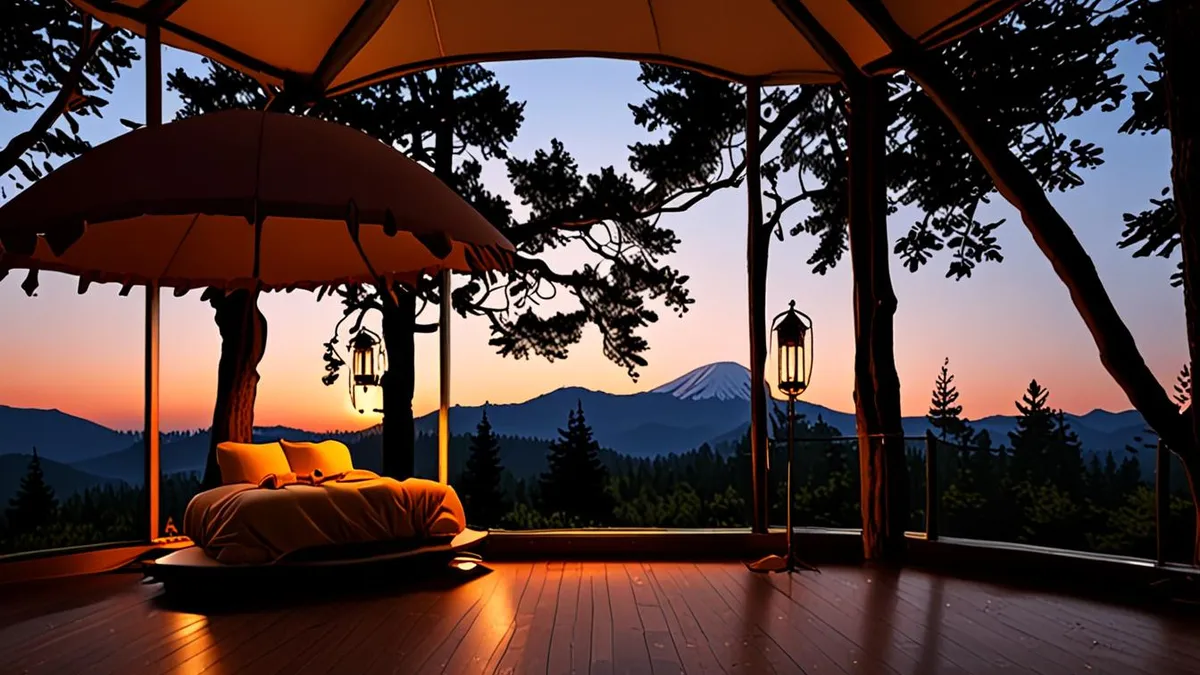
For a first trip, the Mount Fuji area is hard to beat: the sheer concentration of sites means you can compare meal plans, bath setups and price ranges within a single trip, and views of the mountain from a private deck are the image most travelers have in mind. Remember that these popular areas fill quickly in the peak spring and autumn weekends, so plan your dates before you fall in love with a specific dome. Hakone works well if you want to pair your stay with a traditional ryokan night or a day of onsen-hopping, and the short transfer from Tokyo makes a two-night trip feel genuinely restful.
Wherever you go, match the region to the season: mountains for July and August, Okinawa for winter warmth, and the classic scenic areas for spring blossoms and autumn color. If you’re curious how glamping compares in other dramatic landscapes, our guide to glamping in Patagonia covers a very different kind of wilderness stay.
When to Book and Which Season to Choose
Timing makes a bigger difference in Japan than in most glamping destinations, because the country’s beauty peaks are short and well known. April-May, during cherry blossom season, and October-November, during autumn foliage, are the most beautiful times to go — and they book out fastest. If your dates fall on a spring or autumn weekend, especially near Mount Fuji or in Hakone, reserve 3-6 months ahead. Popular domes with private baths can be gone even earlier for holiday periods.
Summer: head for the mountains
July and August are humid in Japan’s lowlands, which can make tent-style stays uncomfortable. The solution is altitude: mountain regions like Nagano and the surrounding Alps keep their nights cool even in peak summer, so you can sleep with fresh air instead of running air conditioning all night. If summer is your only window, prioritize elevation over famous views.
Winter: quiet and budget-friendly
Winter is the quietest and typically cheapest season for glamping in Japan. It works best in two ways: choose a heated dome with proper insulation and heating, or head south to Okinawa, where winters stay mild. You’ll share the site with far fewer guests, and stargazing from a private deck can be excellent on clear nights.
If you’re weighing seasons across destinations, our guide on when to go glamping in Portugal shows how a Mediterranean season calendar compares. Whichever season you choose in Japan, book early for the colorful months and stay flexible for the rest of the year.
Stay Types: Domes, Safari Tents, Villas and Trailer Houses
Geodesic domes dominate the Japanese glamping scene. If you browse any major booking platform, you’ll see far more domes than tents, and for good reason: they handle typhoon-season rain well and usually come with air conditioning and heating, so you’re comfortable in any season. Most sleep two to four guests and include a private deck for outdoor dining.
Safari tents are the pick if you want that classic canvas feel — the rustle of fabric, the smell of the outdoors, a more rugged atmosphere. They’re still fully furnished, but the experience is closer to a luxury tented camp than a hotel room. If that style appeals to you, it’s worth reading a complete packing guide for luxury safari tent stays, since canvas units cool down faster at night and you’ll want layers.
At the top of the range sit villas with private onsen-style baths, often costing ¥40,000-¥60,000 per night for two. These feel closer to a boutique ryokan than a campsite, with full kitchens or catered service and panoramic windows.
- Domes: many newer models have transparent ceiling panels for stargazing from bed, so ask whether your unit has one if that matters to you.
- Safari tents: because canvas transmits sound, these units tend to suit couples and quieter travelers more than light-sleeping families.
- Villas: the onsen-style baths are usually filled from natural hot springs where the site’s location allows it, so check whether the water is genuine onsen or heated tap water.
- Trailer houses: these solid-walled units often include a small kitchenette and separate bedrooms, which makes bedtime routines with young children far easier than in a single-room dome.
What a Night Costs and What’s Included
Glamping in Japan costs more than regular camping, but the price covers far more than a bed. Most stays fall somewhere between ¥20,000 and ¥60,000 for a couple, and where you land within that range depends mainly on two things: the unit you choose and the meal plan attached to it. A standard dome with a self-grill BBQ sits at the budget end, while a villa with a private bath and a full dinner course commands the top of the scale. Weekends and the cherry blossom and foliage seasons push rates higher across the board, so expect premium pricing whenever demand peaks.
What the meal plan includes
The standard plan at most sites includes a BBQ dinner and a simple breakfast — think grilled meat and vegetables at your deck, then bread, eggs or rice in the morning. Premium plans go further, with multi-course meals delivered to your tent or served in a dedicated dining space. If food is a priority for you, compare menus on the booking page rather than assuming every site offers the same thing.
What you don’t need to bring
Bedding, towels and basic toiletries are standard, so packing stays light compared with regular camping. There’s no sleeping bag to rent, no mat to carry, and usually no need for cooking equipment if you’ve booked a meal plan. One detail catches many first-timers: Japanese sites use both per-room and per-person pricing, so check which model applies before you book. A rate that looks cheap for two can double if it’s quoted per person.
How to Choose a Site and Get There
Choosing a glamping site in Japan is less about finding the prettiest dome and more about matching the site’s setup to how you actually travel. Two sites can look identical in photos yet offer completely different experiences once you arrive — one with a catered dinner delivered to your deck, another expecting you to cook for yourself. The five checks below take about ten minutes and will save you from the most common first-timer mistakes.
- Check the meal plan. Confirm whether dinner is a catered BBQ, a delivered multi-course meal, or something you cook yourself — and whether you need to order meals in advance rather than on arrival. Many popular plans sell out their food options early.
- Look at the bathroom setup. Some units have en-suite bathrooms, while others share a central facility a short walk away. If a private bath matters to you, filter for it specifically rather than assuming it’s included.
- Verify air conditioning and heating. Nearly all domes have both, but safari tents and trailer houses vary, and a canvas unit without cooling can be uncomfortable on a humid summer night.
- Confirm transport access. Sites near Mount Fuji and Hakone are reachable from Tokyo in roughly 2-3 hours by train plus taxi or shuttle, but many rural sites sit 30-60 minutes from the nearest station. Ask whether a free or paid shuttle runs and at what times when you book.
- Read the cancellation policy and recent reviews. Weather-dependent trips need flexible terms. In reviews, look specifically for comments on noise levels and whether the site genuinely allows children or pets — some are adults-only by plan, which surprises travelers who assumed otherwise.
Doing these checks before you pay means fewer surprises at check-in, which in Japan typically closes by late afternoon, often in the 15:00-16:00 window. A site that fits your transport, meals and sleeping arrangements will feel effortless from the moment you arrive; one that doesn’t can turn a special night under the stars into a logistics exercise. Ten minutes of research is the difference between the two.
Wrapping Up Your Japan Glamping Plan
Glamping in Japan is less about roughing it and more about a catered nature stay. Picture a BBQ dinner or a multi-course meal delivered to your dome, a private onsen-style soak before bed, spotless facilities and genuinely attentive service. Prices sit at the higher end of a regular hotel budget rather than a campground one, so it helps to think of it as a boutique stay outdoors rather than camping with better views.
The regions cover every season too: lake-and-mountain scenery around Mount Fuji in spring, cool Alpine nights in Nagano at the height of summer, and mild winter escapes in Okinawa. The one thing worth planning around is timing. Cherry blossom weekends and autumn foliage weekends sell out fastest, so book well ahead, especially near Mount Fuji and Hakone. Winter is the quietest and often cheapest window if you pick a heated dome. If this kind of comfortable outdoor stay sounds like your style, leave a comment or share this article with a fellow traveler.