Booking a first African safari usually starts with a question that sounds simple but rarely is: should you stay in a lodge or a tented camp? The safari lodge vs tented camp debate confuses many travelers because the photos online can look almost identical, yet the experience, price and comfort level can differ in ways that matter a lot once you arrive.
The differences come down to more than just walls versus canvas. Size, atmosphere, amenities, wildlife access and even the best time to book all change depending on which stay type you pick. This guide breaks down the core differences, compares comfort and amenities, explains how pricing works, looks at where each option sits in relation to the game, covers when to book for the best rates, and helps you decide which one fits your travel style and budget.
Safari Lodge vs Tented Camp: The Core Differences
The clearest way to understand the safari lodge vs tented camp question is to look at what each one physically is. A safari lodge is a permanent building, usually constructed with solid walls, brick or stone, and often thatch or tile roofing. Because they are built structures, lodges reliably offer air conditioning, swimming pools and full-service dining rooms, and many operate more like a boutique hotel than a wilderness camp.
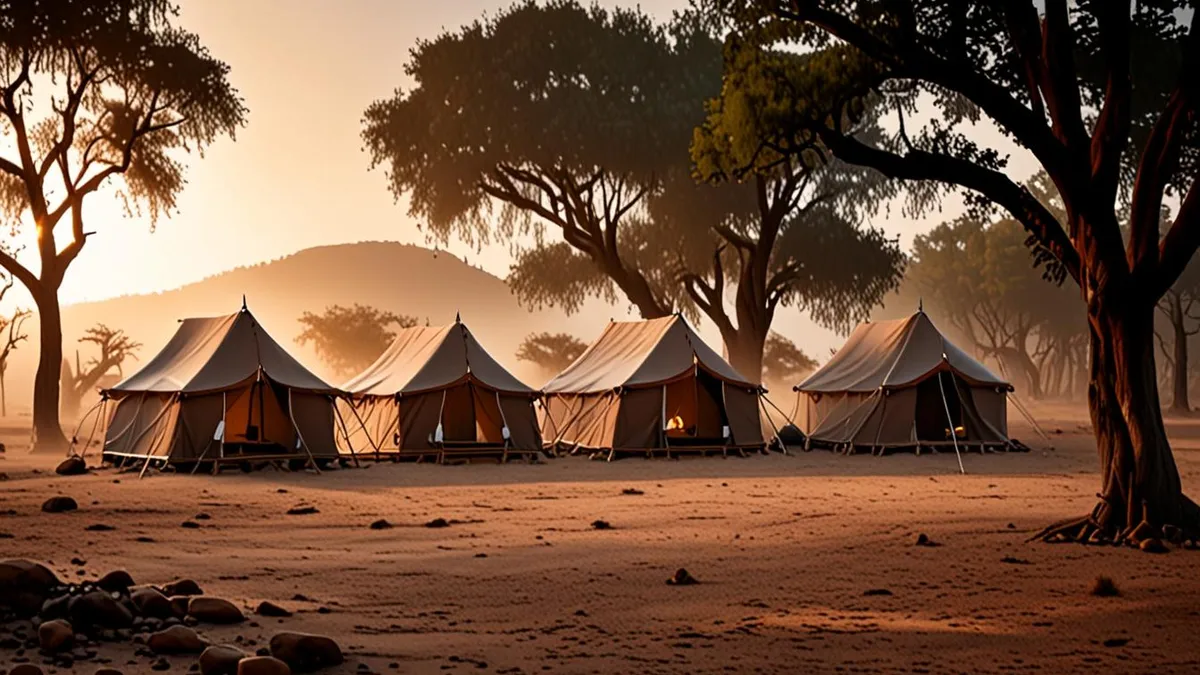
A tented camp flips that formula. Your accommodation is a large canvas tent, usually pitched on a raised wooden deck, often with a proper bed, furniture and an attached bathroom. The comfort is real, but the canvas keeps you connected to the bush in a way solid walls never quite manage. You hear the night, feel the breeze and wake to birdsong rather than air conditioning hum.
Size changes everything
Scale is the other major difference, and it shapes the whole atmosphere of your stay. Tented camps are typically small, often around 6 to 12 tents, which means communal dinners, staff who learn your name by day two and game drives that feel personal. Lodges generally run larger, with 20 or more rooms at the bigger properties, which brings more facilities and more anonymity. Neither is better; they simply suit different travelers, and the rest of this guide will help you work out which suits you.
Comfort and Amenities Compared
Comfort is where the two stay types diverge most clearly. Lodges, being permanent buildings, reliably offer climate control, Wi-Fi, swimming pools and often spa facilities, so you can cool off, stay connected and unwind between game drives without compromise. If you want to understand what that level of comfort actually adds to your bill, our guide to what an African safari lodge really costs breaks the pricing down.
Tented camps have come a long way, and most now include en-suite bathrooms and hot water, so this is not rough camping. What you may give up is air conditioning and constant Wi-Fi, since canvas heats up in the afternoon and remote locations often have limited connectivity.
What canvas walls really mean at night
The biggest practical difference is sound. Canvas is thin, and the bush is loud after dark. Here is what to expect:
- Wildlife calls: lions roaring, hyenas whooping and elephants moving through vegetation can all sound remarkably close, because they often are.
- Weather noise: wind and rain are felt as well as heard, and a nighttime storm can be dramatic in a way a solid-walled room never is.
- Early mornings: birdsong and camp activity start before sunrise, since game drives leave at first light, and canvas does little to muffle it.
Some travelers find all of this thrilling and sleep better for it. Others lie awake at 2 a.m. wishing for double glazing. Knowing which type you are matters more than any amenity list.
How Much Each Option Costs
Price is one of the strongest arguments in the safari lodge vs tented camp decision, and the pattern is consistent across most safari regions. A tented camp typically runs 20-40% cheaper than a comparable permanent lodge in the same area. You are trading solid walls, air conditioning and larger facilities for canvas and intimacy, and the discount reflects that.
Timing matters as much as stay type
Whichever option you choose, the season you travel in moves the price more than most people expect. Green season, which runs roughly November to March, can cut prices by 30-50% at both lodges and tented camps. The trade-off is that rain and thicker vegetation can make game viewing harder, but for budget-conscious travelers the savings are substantial.
At the top end, the gap between stay types widens dramatically. Ultra-luxury lodges can charge several times the rate of a mid-range tented camp in the same region, sometimes for a similar wildlife experience and a shorter drive to the game. That is why it pays to compare specific properties rather than assuming a lodge is simply the expensive option and a tent the budget one. In areas like the Kruger National Park region, both stay types exist across a wide range of budgets, so your money often buys more in a well-chosen tented camp than in a mediocre lodge.
Wildlife Access and Camp Location
Where a camp sits often matters more than how it is built. Smaller tented camps, with their 6-12 tents, are frequently sited inside private concessions. These are tracts of land with limited vehicle access, which means fewer other safari cars around a sighting and, in many cases, the chance to follow wildlife off-road. Operators choose these spots precisely because game concentrations are strong, so you often find animals closer to your tent than you would at a bigger property.
Large lodges, by contrast, tend to sit near park gates or along established routes. That makes logistics easier: shorter transfers, reliable road access and simple day-trip planning. The trade-off is traffic. Shared routes inside national parks can get busy around major sightings, and you may find yourself lined up with several other vehicles at a leopard in a tree. If you are considering a big park destination, it helps to read a guide on how to pick the right lodge in Kruger National Park before committing.
Game drives: what both options usually include
Whether you stay in a tent or a lodge, most packages include twice-daily game drives, one in the early morning and one in the late afternoon when animals are most active. The detail to check before booking is whether those drives are private or shared. Shared drives mean you rotate seats and share a guide with other guests; private drives cost more but let you control the pace and focus on the species you care about most.
When to Book: Seasons and Lead Times
Timing shapes both the price and the experience of a safari, and the two stay types respond to it in similar ways. The dry season, running from June to October, is peak wildlife viewing across most African safari regions. Animals gather at permanent water, vegetation is thin, and sightings are at their best. That popularity has a practical consequence: you need to book 9-12 months ahead to get your pick of camps and rooms. If you have your heart set on a specific small camp or a particular tent facing the waterhole, early booking is even more important, since the most sought-after options fill first.
The green season, from November to March, tells a different story. Rain transforms the landscape, many animals disperse, and game viewing is generally less reliable. But prices often drop 30-50%, migratory birds arrive in huge numbers, and camps are quieter. Because demand is lower, green season trips are typically bookable 3-6 months ahead without much sacrifice. Photographers often favor this window anyway: dramatic skies, rich colors and fewer vehicles at sightings can outweigh the risk of a wet afternoon.
Then there are the shoulder months, which many returning travelers consider the smartest window of all.
- May: the rains have usually ended, the bush is still green and full, and rates sit below high-season levels while camps begin their dry-season routines around water sources.
- November: the first rains often arrive, bringing newborn animals and a burst of birdlife, yet high-season pricing has not fully kicked in, so you can catch good sightings at a discount.
- Booking flexibility in shoulder months: because these weeks are less contested, you can often secure a specific small camp or a preferred tent category even a few months out, something nearly impossible in the June to October peak.
Which One Should You Choose?
The honest answer depends on what you cannot compromise on. If your idea of a good night’s sleep requires air conditioning, a solid door and a swimming pool after a dusty game drive, book a lodge. Permanent lodges deliver guaranteed comfort: climate control, proper insulation from noise, and family-friendly facilities. That makes them the safer choice if you are traveling with young children, where a restless night in a canvas tent can affect the whole next day.
When a tented camp is the better fit
Choose a tented camp if you prioritize intimacy, atmosphere and value. Waking to birdsong through canvas, hearing hippos at night, and sitting around a small campfire with a handful of other guests is a genuinely different experience from a hotel-style lodge. With typically 6-12 tents, service feels personal, and prices usually run below comparable lodges. The trade-off is real, though: canvas walls mean more ambient sound and often no air conditioning, so you need to accept nature at close range.
For first-timers on a mid-range budget, a small tented camp visited in green or shoulder season is often the best balance. You get the atmosphere and intimacy that make a safari memorable, at a lower price point, without sacrificing game drives or comfort entirely. If the tent life turns out not to be for you, a lodge stay is an easy upgrade on your next trip.
Wrapping Up the Lodge vs Tented Camp Decision
So which one suits you? If solid walls, pools and reliable climate control matter most, a lodge is the safer pick. If you want intimacy, atmosphere and lower prices, a tented camp delivers all three. Neither is better overall — they simply offer different versions of the safari experience.
Remember that season and lead time matter as much as stay type. The June to October dry season books 9-12 months out, while green season stays can often be arranged 3-6 months ahead at a discount. Matching your comfort needs and budget to the right stay type is what makes a safari trip work. If this helped you decide, leave a comment or share the article with a fellow traveler.