You love the idea of falling asleep under desert stars, but the thought of a long, dusty transfer to the Sahara makes you hesitate. Maybe you only have a night or two in Marrakech and wonder whether a desert experience is even possible. And even if it is, questions pile up: when should you go, what does a night in a luxury tent actually cost, and which camps deliver on their photos?
That’s exactly what this guide sorts out. Agafay desert glamping puts you in a moonlike stone landscape less than an hour from Marrakech, and it works even on a short city break. Below, we compare the Agafay with the Sahara, break down the best seasons for a comfortable night, explain what camps typically charge, share booking timelines, help you choose between tents, domes and pools, and finish with a practical packing list so your desert night goes smoothly.
Why Choose the Agafay Desert Over the Sahara
The biggest argument for the Agafay is simple: location. The desert sits roughly 40 km southwest of Marrakech, which works out to about a 45-minute drive. That means you can spend the morning in the medina, be sipping mint tea on a camp terrace by late afternoon, and still be back in the city for lunch the next day. No domestic flight, no eight-hour transfer, no rearranging your whole itinerary.
The landscape itself is genuinely striking, just different from what most people picture. Instead of a sea of sand, you get a stone desert of rolling dunes and rocky plateaus, with the snow-dusted Atlas Mountains often visible on the horizon. At sunset, the whole terrain glows amber, and the emptiness feels just as dramatic as any dune field.
The honest trade-off
If your dream image is endless golden dunes rising higher than a house, the Agafay won’t fully deliver. For that, you’d head to Erg Chebbi near Merzouga, where the classic sand-sea vistas live. The Agafay’s dunes are smaller and the ground is rockier. But for a single unforgettable desert night with campfires, camels and stars, without sacrificing days of travel time, it’s a trade most travelers are happy to make.
Best Seasons for Agafay Desert Glamping
Timing makes or breaks a desert night, and in the Agafay the calendar matters more than you might expect. The prime season runs from October to April, when daytime highs sit around 18-25°C and evenings cool to a crisp 5-10°C. Those are perfect conditions: warm enough for lounging by the pool in the afternoon, cold enough that a campfire under the stars feels earned rather than optional.
When to think twice
Summer is the season to avoid. From June to August, temperatures often climb past 38°C, and many camps scale back their service or close entirely. If you’re planning a trip in those months, check with individual camps before assuming anything is open. March deserves a small caveat too: it can bring occasional rain and wind, and while sandstorms are rare, they’re not impossible in spring. If your dates are flexible, it pays to keep an eye on the forecast the week before you go.
One more detail: the moon
Here’s a tip most booking pages never mention. Check the lunar calendar before you reserve. A full moon turns the desert into a silvery, almost surreal landscape, which some travelers love for photos and night walks. But if stargazing is your priority, book around the new moon instead, when the Milky Way genuinely steals the show. The same logic applies to choosing seasons elsewhere, as we explain in our guide to when to go glamping in Portugal and its best regions.
What Glamping in the Agafay Costs
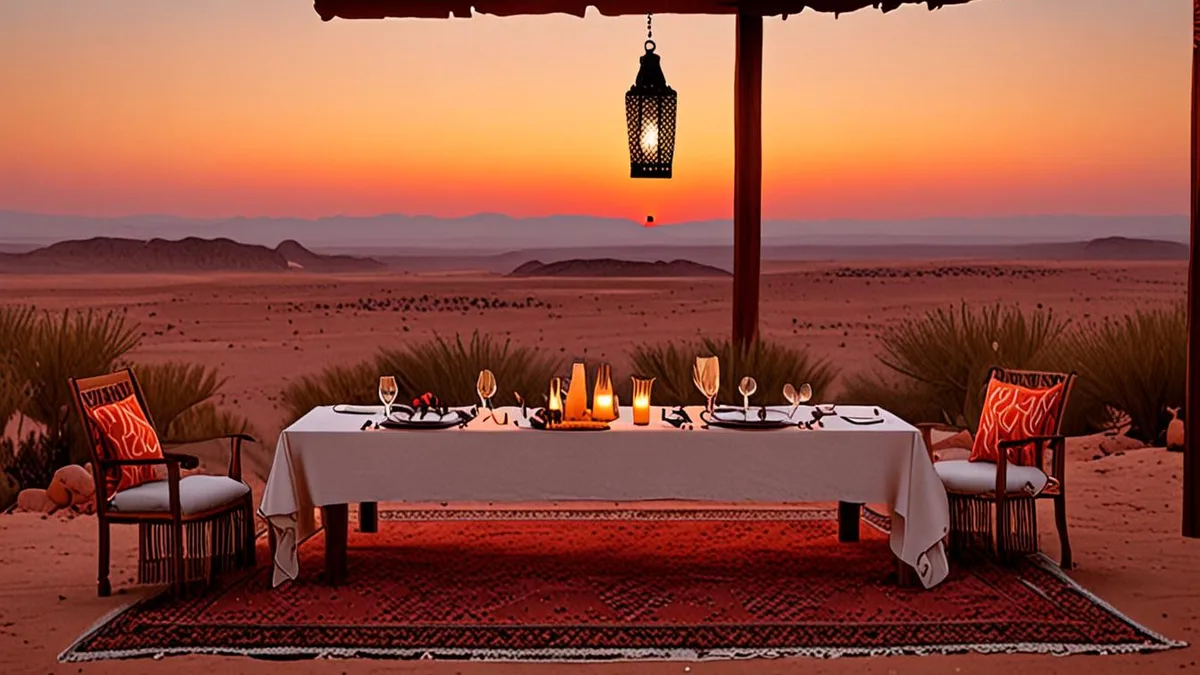
Glamping in the Agafay costs less than you might fear, though prices vary widely by camp style and season. Standard camps typically charge around €80-150 per person per night, and that rate is usually half-board, meaning dinner and breakfast are included. Considering you’re getting a private tent, an evening under the stars and two meals, it’s reasonable value compared with what the same budget buys in many European cities. If you’re weighing the trade-offs between canvas and campsites, our breakdown of glamping versus camping costs and comfort covers what that extra money actually buys.
At the top end, luxury camps with swimming pools and suite-style accommodation can reach €250+ per night in high season. These properties compete on design, service and food, and the difference is noticeable the moment you arrive.
Then there are the extras, which add up faster than most people expect:
- Quad biking: a guided loop across the rocky plateau typically adds €20-50, and it’s the fastest way to cover ground at sunset.
- Camel rides: often the cheapest add-on, sometimes even bundled into the nightly rate, so ask before paying separately.
- Marrakech transfers: most camps are about 45 minutes out, and a round-trip transfer typically falls in the same €20-50 range if it isn’t already included.
Our advice: confirm in writing what’s included before you book, because two camps advertising similar rates can deliver very different final bills.
How to Book and When to Reserve
Glamping in the Agafay has grown popular enough that the best camps fill up quickly, especially around holidays and long weekends. The good news is that booking itself is simple once you know the timing. Most camps offer 1-2 night stays, and a single overnight with dinner and a sunrise wake-up remains the most popular format, so you can often slot a desert night into an existing Marrakech trip without reshuffling your whole itinerary. Follow these steps to lock in your stay without stress.
- Reserve 2-4 weeks ahead for October-April stays. These months are prime season, and camps with strong reviews often have limited weekend availability. Booking a few weeks out gives you a real choice of tent types and dates instead of the leftovers.
- Allow 4-8 weeks for Christmas, New Year and Easter. Holiday dates are the busiest of the year, and some camps require minimum stays. Reserving early also gives you time to compare options properly.
- Confirm whether transfers are included. Most camps sit roughly 45 minutes from Marrakech, and a surprise transfer fee at the end of your stay is an annoying way to finish a trip. Ask in writing what the rate covers.
- Read the cancellation terms carefully. Spring weather in the Agafay is generally kind, though March occasionally sees rain and wind, and sandstorms remain rare but possible. Flexible terms let you shift dates if conditions turn against you.
If this is your first time booking a desert camp, it helps to work through a structured approach rather than picking the first attractive photo you see. A first-timer’s checklist for choosing a glamping site covers the questions most travelers forget to ask before paying a deposit. Once your reservation is confirmed, all that is left is to pack your bags and look forward to dinner under the stars.
Picking the Right Camp: Tents, Pools and Service
Not all Agafay camps are the same, and the differences matter more here than at a regular hotel. You are sleeping in the open desert, roughly 45 minutes from Marrakech, so the quality of your tent, your bed and your dinner directly shapes the experience. Before you book, take the time to compare the three main accommodation styles.
Classic canvas tents are the traditional choice and often the most affordable. Dome tents have become increasingly popular because their curved shape and solid materials offer better insulation for cold nights. Lodge-style suites sit at the top end and usually come with more space, private terraces and sometimes a plunge pool. Between November and February, when nights drop to 5-10°C, insulation and heating stop being luxuries and become essentials.
- Ask specifically about heating. Some camps offer heated tents, others simply pile on extra blankets. If you are sensitive to cold, a heater or a wood stove makes a real difference when the temperature falls after sunset.
- Check recent reviews for food quality. Most stays are half-board, so dinner and breakfast are part of the deal. Tagines and grilled meats vary widely between camps, and a mediocre dinner in the middle of the desert is hard to replace.
- Look for comments on water pressure and hot water. Remote camps rely on tanks and solar heating, and showers can be weak or lukewarm. Recent guest reviews will tell you quickly whether this is a problem.
- Confirm the pool situation if it matters to you. Some camps fill their pools year-round, others only in warmer months. If a poolside afternoon is part of your plan, ask before booking rather than assuming.
Finally, look at photos posted by guests rather than the camp’s own marketing images. They give a far more honest picture of tent condition, spacing between units and the overall atmosphere on the ground.
What to Pack for a Desert Night
Packing for a night in the Agafay is all about one thing: temperature swings. A day that feels pleasantly warm can end with a cold, dark night on rocky ground, and travelers who arrive with only summer clothes often regret it. The trick is to think in layers and to pack for both extremes of the same day. That means planning your bag around the evening hours, not just the afternoon photos.
Daytime in the cooler months is comfortable enough for light clothing, but once the sun drops the desert cools fast. Camps keep lighting deliberately low to protect the stargazing, so moving around after dinner is easier with your own light source. Most stays follow the classic one-night format with dinner and sunrise, so you only need enough for about 24 hours. Here is what deserves space in your bag:
- A warm fleece or lightweight down jacket. Even after a mild afternoon, nights can fall to 5-10°C, and you will want something warm for dinner around the campfire and for stepping out to see the stars.
- Warm socks and a beanie. Feet and heads lose heat quickly, and tent floors stay cool overnight. Thick socks make the difference between a cozy night and a restless one.
- A scarf or buff. Wind can pick up in the desert and carry fine dust, especially in spring. A light scarf protects your face during the drive and doubles as an extra layer in the evening.
- High-SPF sunscreen and sunglasses. There is almost no shade out on the rocky plateaus, and the reflected light is stronger than most visitors expect. Apply sunscreen even on overcast days.
- A headlamp or small torch. Camps are intentionally dark, and pathways between tents and the dining area are unlit. A headlamp keeps your hands free for dinner trays and camera gear.
- Closed shoes. The ground is rocky and uneven, and sandals are a recipe for stubbed toes in the dark. Sturdy sneakers or light hiking shoes are ideal.
Leave the hard suitcase at home if you can. A soft duffel bag is easier to load into a transfer vehicle and to carry across sandy ground to your tent, which is exactly how you will arrive. Pack a spare layer in an outside pocket too, so you can grab it without unpacking everything at the camp.
Wrapping Up Your Agafay Desert Glamping Trip
A night in the Agafay proves you don’t need a long trek to the Sahara for a proper desert experience. Aim for October to April, when days are mild and nights are crisp, and budget between €80 and €250 per night depending on whether you choose a standard half-board camp or a luxury pool camp. Most travelers settle on a single overnight with dinner and sunrise, which fits easily around a Marrakech stay.
For the busiest holiday dates, such as the Christmas, New Year and Easter period, plan on reserving four to eight weeks ahead rather than the usual two to four, and always confirm that transfers from Marrakech are included. Pack layers for the cold nights, and pick a camp with heated tents or plenty of blankets between November and February. Have you been glamping in the Agafay, or are you planning a trip? Share your questions or tips in the comments below.