Booking your first luxury safari tent stay sounds simple until you open an empty suitcase and freeze. The tent comes with real beds, linens and often a small kitchen, so how much do you actually need to bring? Pack too little and you may shiver through the evening; pack too much and you will regret it if your tent sits at the end of a gravel path with no car access.
This guide walks you through exactly what to pack and what to leave at home. We start with what a typical tent already provides, then cover how timing your booking affects your packing list, the clothing layers that handle big day-to-night temperature swings, the toiletries that survive bumpy roads, and the practical gear most first-timers forget. We finish with destination-specific advice and a final checklist so you can zip that suitcase shut with confidence.
What a Luxury Safari Tent Already Provides
The biggest packing mistake first-timers make is treating a luxury safari tent like a basic campsite. It is not. Most tents in this category span 30-50 square meters, which is closer to a small hotel room than a pup tent, and a real bed with proper linens, a duvet and extra blankets is standard rather than a bonus.
At the typical $150-600 per night level, an en-suite bathroom with a hot shower and a flushing toilet comes as standard too. That means no sleeping bag, no camping mat and no travel towel in most cases, which frees up a serious amount of suitcase space for the things that actually matter.
Check the inventory list before you pack
Most operators publish a detailed inventory of what each tent includes, and it usually covers towels, basic kitchenware and often a small fridge. Read that list carefully before buying duplicates. If the tent has a kettle, mugs and a cooler box, leave yours at home.
One genuine limitation to plan around is power. Solar panels or a generator usually mean just one or two outlets per tent, so USB-charged devices are far easier to keep topped up than anything that needs a wall socket. That single detail should shape your electronics choices more than anything else on your list.
Booking and Timing Your Safari Tent Stay
When you book shapes what you pack, so it pays to think about timing first. Peak season in July and August books out fastest, and most operators recommend reserving 6-9 months ahead to get your pick of tents. Shoulder months like May, June and September are more forgiving, with 2-3 months of lead time usually enough.
Know your season before you pack
The European glamping season typically runs from April to October, while East African trips align with the May to October dry window. Booking early or late in that window usually means cooler nights and a higher chance of damp mornings. That single detail affects your packing more than any other: a tent canvas holds the chill overnight, and nights can drop 10-15°C below daytime highs even in summer, so the date on your reservation quietly decides how warm your layers need to be.
Ask about access before choosing your luggage
Two questions will save you real hassle. First, confirm check-in times so you are not arriving after the site office has closed. Second, ask whether your tent is a short walk-in from a car park or reached on foot along a longer trail. If you will be hauling bags across grass or gravel for several minutes, a soft duffel bag beats a rigid suitcase every time, and one bag per person is far easier to manage than two.
A quick email to the operator before you finalize your packing list is the easiest way to get both answers right. Ask them to confirm what the tent already includes at the same time, since daily rates typically range from $150-600 per night and what counts as “luxury” varies between sites. Ten minutes of correspondence now can spare you an overstuffed suitcase later.
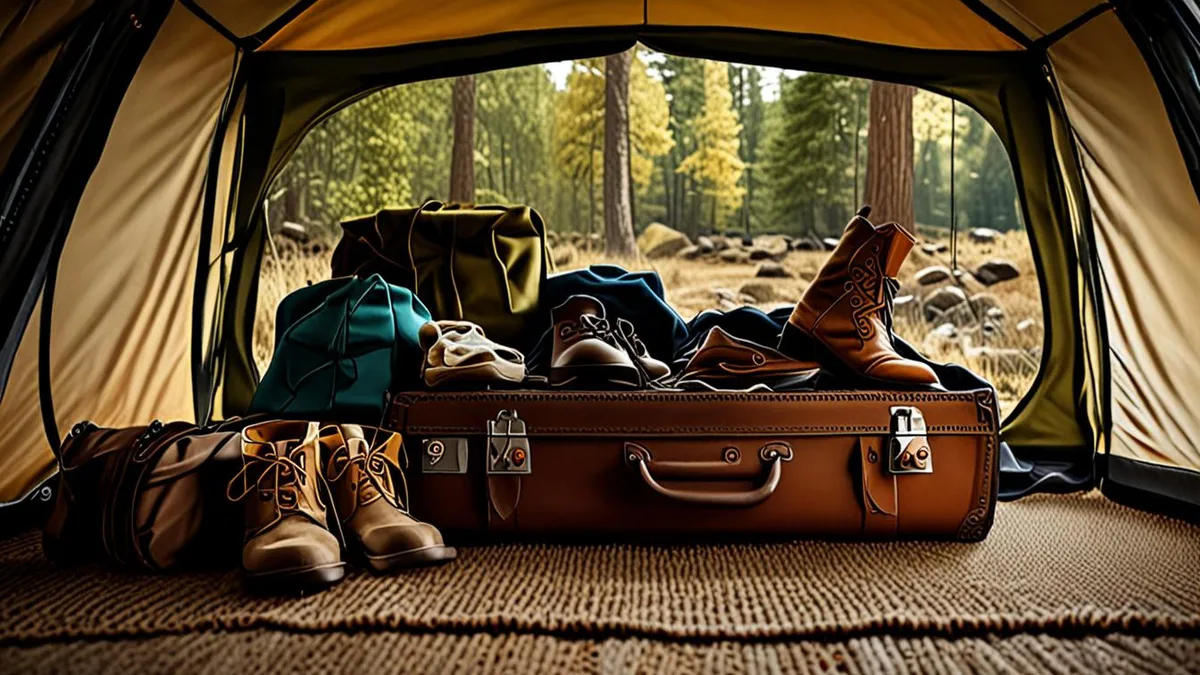
Clothing Layers for a Luxury Safari Tent
Temperature swings are the defining challenge of safari tent packing. Canvas heats up quickly in the afternoon sun but cools down just as fast after dark, and a day that reaches 25°C can easily end with a 10°C evening once the sun drops. That kind of swing catches a lot of first-time glampers off guard, especially those who packed for the daytime forecast alone. The solution is layers you can add and remove throughout the day rather than one heavy coat you either wear or leave behind.
Start with breathable shirts for daytime, then add a fleece and an insulated jacket for the evening hours. Long trousers and long-sleeve shirts come into their own at dusk, when insects are most active, so treat them as evening wear rather than just sun protection. On your feet, sturdy closed shoes handle gravel paths and dewy grass on the way to the en-suite bathroom, while a pair of sandals keeps things comfortable inside the tent. Pack everything in soft duffels rather than hard suitcases, since storage space in canvas accommodation is limited and bags often slide under beds.
- A packable rain shell: Canvas stays cool and condensation forms on the fabric overnight, so damp mornings are common even in dry season. A lightweight shell doubles as a windbreaker for early game drives, when the chill is sharpest.
- Neutral, muted colors: Khaki, olive and earth tones blend into the landscape, show less dust between laundry days, and are often preferred on walking safaris where bright colors can disturb wildlife.
- A warm hat and light gloves: Fingers and ears feel the cold first on those 10°C mornings, and a beanie takes up almost no space in your bag.
Toiletries and Personal Care
When you step out of a hot shower in a canvas tent and reach for your shampoo, you’ll quickly appreciate why seasoned glampers swear by solid toiletries. Bars of shampoo and soap weigh next to nothing, never leak, and shrug off the corrugated gravel tracks that many safari camps sit at the end of. Refillable silicone travel bottles work too, but rigid glass bottles are the first casualties of any bumpy access road, so leave them at home. Solid bars also survive being squashed under layers of clothing, which is exactly what happens to the bottom of a duffel bag on a walk-in campsite.
Think of your toiletry bag as sun-and-insect defense first, comfort second. You’ll spend dawn and dusk outdoors, which is exactly when the sun is low and biting insects are most active, so these two products deserve priority space. Everything else can be trimmed down, because most en-suite bathrooms at this level have small counters with room for little more than a soap dish and a towel rail. A hanging toiletry bag helps here, since it hooks onto a tent pole or rail and keeps everything off the dusty floor.
- High-SPF sunscreen: choose a broad-spectrum formula in a small tube, and pack a separate stick for your face so you can reapply without sandy or dusty hands.
- Insect repellent with DEET or picaridin: bring a pump spray rather than an aerosol, since pump bottles are lighter, cabin-friendly and less likely to discharge in checked luggage.
- Lip balm and moisturiser: canvas tents hold fine dust, and dry air overnight leaves lips and skin cracked, so a fragrance-free balm and a travel moisturiser earn their place.
- Dry shampoo: a small bottle keeps hair fresh between showers, especially on mornings when the tent is cool and you want to get straight onto a game drive.
- Medications in original packaging: keep prescriptions in their labeled boxes to avoid questions at borders, and add a small blister kit with plasters and antiseptic wipes for blisters from new walking shoes.
Practical Gear and Gadgets
Luxury safari tents feel like hotel rooms by day and something closer to a well-equipped cabin after dark. Most camps run on solar panels or a generator, which means lighting is often warm, low and limited to a couple of fixtures, and power sockets are usually restricted to one or two. That sounds restrictive until you realize a little gear planning fixes both problems without adding much weight to your bag. The key is choosing items that pull double duty: a light you can hang or hold, a battery that travels, and storage that actually keeps things dry.
Electronics also face conditions a hotel room never presents. Canvas breathes, so temperature swings overnight can leave condensation on cool surfaces, and fine dust works its way into every zip and pocket over a multi-day stay. Simple pouches and dry bags keep cameras, phones and chargers protected, and they double as organizers so you’re not rummaging through a duffel by headlamp. Before you pack, check your camp’s inventory list so you don’t lug gear they already provide.
- Headlamp with a red-light mode: the red setting preserves your night vision and won’t disturb tent neighbors, while leaving your hands free for zipping tents and finding shoes.
- Small collapsible lantern: hang it from the tent’s central pole or a hook to add soft, even light for reading and card games after the camp’s own lighting dims.
- Power bank of 10,000 mAh or more: with only one or two outlets shared between devices, a full-day charge in your pocket means cameras and phones never compete for a socket.
- Zip pouches or a dry bag: sort cables, adapters and memory cards into separate pouches, and use the dry bag for anything you’d hate to lose to condensation or dust.
- Reusable water bottle: many camps provide filtered water stations, and an insulated bottle keeps water cool through hot afternoons in your tent.
- Compact binoculars: an 8x or 10x pair small enough for one hand turns a distant elephant or an eagle overhead from a smudge into a memory, and doubles for sweeping landscapes.
Packing for Different Climates and Destinations
The safari tent packing list that works in one destination can feel completely wrong in another. The core formula stays the same, but the balance of layers, sun protection and insect defense shifts with the climate, so it pays to match your bag to where you’re actually going.
Tropical and warm-weather sites
In humid destinations, quick-dry fabrics are your best friend. Clothes that dry overnight on a tent rail mean you can pack fewer items, and moisture-wicking shirts beat cotton in sticky conditions. Insect protection also needs to step up: treat clothing with permethrin before you travel, bring a stronger repellent than you’d use at home, and consider loose long sleeves for evenings. If you’re dreaming of dense jungle and slow rivers, our piece on finding rainforest calm in Suriname shows what a tropical tent stay really involves.
Warmer European spots, including parts of Spain, share some of the same demands. Sun protection matters more than insulation there, though canvas tents still cool down at night, so keep one light fleece in the bag regardless.
Cool-climate and desert destinations
Places like Alaska or the French Pyrenees flip the equation. Even in midsummer, nights can bite hard, so thermal base layers, a warm beanie and thick socks belong in your bag alongside your regular clothes. Treat your tent stay there the way you’d treat a mountain trip, with insulation you can add or shed as the temperature moves.
Desert-adjacent sites, such as Arizona’s red rock country, present a different mix. Strong sun and dry air demand serious sunscreen, a wide-brim hat and lip balm, while a windproof layer handles the surprisingly chilly evenings and gusty afternoons. The temperature swing between midday and midnight is the thing to plan around, wherever you go.
Final Packing Checklist for Your Safari Tent Trip
The trick to packing well for a luxury safari tent stay is simple: build your bag around what the tent already supplies. At this price point, beds, linens, duvets and en-suite bathrooms are standard, so your energy goes into layers, toiletries and practical gear rather than duplicates. Check the operator’s inventory list before you pack anything twice.
Match your clothing to the 25°C daytime to 10°C nighttime swing and to your destination’s season, whether that’s a European summer or a cooler mountain site. And if you remember only three things, make it the most-forgotten essentials: a headlamp, a power bank and insect repellent. With those in your bag, you’ll arrive ready for everything the tent doesn’t supply. If this guide helped you pack, leave a comment or share it with a fellow traveler.