Booking a remote lodge from a handful of photos is tricky. You can see the view from the deck, but you can’t tell whether meals are included, whether there’s Wi-Fi worth using, or whether you’ll spend a week wishing for a minibar. A wilderness lodge is a very different product from a resort, and the amenities that matter most are often the ones least visible online.
This guide walks through what these properties actually are, what your room and the shared spaces will look like, how meals work, which activities come standard and which cost extra, and what to expect for connectivity and power. We’ll also break down pricing so you can compare an all-inclusive rate against a room-only one, then wrap up with tips on matching the right lodge model and season to your trip. By the end, you’ll know exactly what you’re paying for before you click book.
What a Wilderness Lodge Actually Is
A wilderness lodge is a small, remote property that typically hosts somewhere in the range of 8-40 guests at a time. Many are accessible only by boat, small plane or a long drive down gravel roads, which is exactly why they can offer the kind of quiet and wildlife access that roadside hotels can’t. The journey itself is part of the experience, so plan for it and confirm transfer details with the lodge before you travel.
Don’t expect resort-style amenities here. The focus is immersion in nature rather than pools, spas and shopping arcades. You’re trading water slides and gift shops for guided hikes, quiet mornings on the water and evenings around a fire. If that sounds like your kind of trip, the trade-offs will feel like upgrades.
All-inclusive versus room-only
Most wilderness lodges follow one of two models. All-inclusive lodges bundle meals and guided activities into one rate, so once you arrive you rarely need your wallet. Room-only lodges charge a lower nightly rate, and you pay separately for meals, activities and sometimes transfers.
Neither model is automatically better. If you want a hands-off stay with everything arranged, all-inclusive usually delivers better value. If you prefer flexibility, or plan to self-cater some meals, a room-only lodge can be the cheaper route. The key is comparing the true total cost, not just the headline nightly rate.
Rooms and Common Areas to Expect
Rooms at a wilderness lodge are simple but comfortable. Expect a private room or standalone cabin with an en-suite bathroom, a proper bed and enough space to unpack. The design usually leans rustic: timber, stone and large windows that put the landscape front and center rather than artwork and flat-screens.
Luxury tiers add meaningful upgrades. At the higher end you might find a wood stove in your cabin, a soaking tub, or panoramic windows framing a lake or mountain view. These extras can genuinely change the experience in colder months, when returning to a warm stove after a day outside feels like a luxury in itself.
The shared spaces matter most
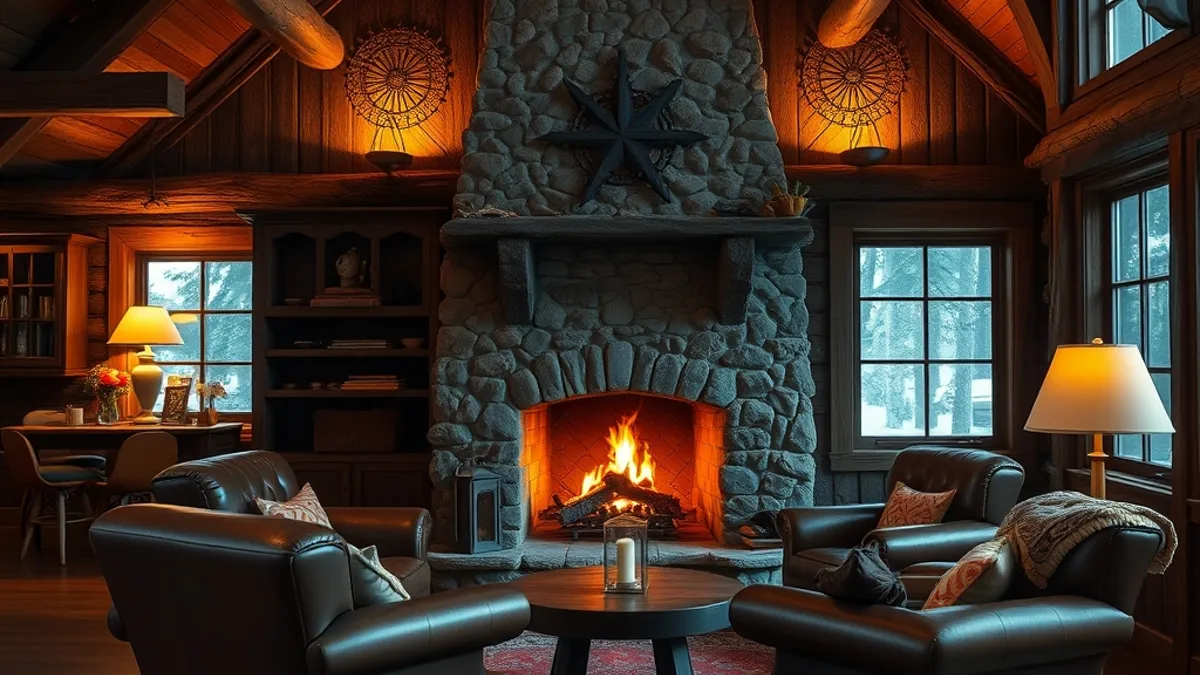
In practice, you’ll spend more waking hours in the common areas than in your room. The heart of most lodges is a fireplace lounge where guests gather before and after dinner, plus a dining hall where meals are served. Many properties also add a sauna, a hot tub or a wide deck with chairs positioned for the view.
These shared spaces are also where the social side of a lodge stay happens. With a small guest count, you’ll quickly get to know fellow travelers over coffee or a post-hike drink, which many people count among the best parts of the trip.
What you won’t find in your room
Set expectations for in-room extras. TVs, minibars and room service are typically absent, because power and staff are constrained in remote settings. Pack a book, a headlamp and a portable charger, and you’ll barely notice what’s missing.
Food and Drink at a Wilderness Lodge
Food is one of the biggest differences between lodge models, so it pays to understand the setup before booking. At an all-inclusive wilderness lodge, three set meals are served daily. Dinner is often family-style, with everyone gathering at long tables, and there are usually fixed seating times rather than round-the-clock dining. If you’re used to eating whenever you like, adjust your expectations and plan hikes around the schedule.
The upside of set meals is quality and variety. Remote kitchens with small guest counts often cook impressively well, and family-style dinners become a natural place to swap stories and trail tips with other guests. Tell the kitchen about any dietary needs when you book, not when you arrive.
Room-only lodges and advance notice
Room-only lodges work differently. They may offer dinner only, and that meal usually requires 24-hour advance notice so the kitchen can plan quantities in a remote location with limited resupply. Breakfast and lunch options vary widely; some properties offer simple options, while others expect you to be self-sufficient. Ask exactly what’s available and when before you arrive, and plan any self-catering around what the lodge can actually provide.
Dietary requirements
Vegetarian, vegan and gluten-free needs are usually accommodated, but the practical reality of remote kitchens means requests should be made at booking rather than on arrival. The same goes for allergies. Give the lodge as much detail as possible well ahead of time, and most kitchens will plan accordingly and feed you well.
Guided Activities and Equipment
One of the biggest perks of a wilderness lodge is that the good stuff is already planned for you. Most properties build their days around guided hikes, wildlife viewing, kayaking and evening campfires, and at all-inclusive lodges these are usually bundled into your rate. You show up, and someone who knows the terrain takes you out.
Specialist outings work differently. Glacier walks, fly fishing and similar trips that need extra guides, permits or gear typically cost $50-150 each when added on. Ask when you book which activities are included and which carry a surcharge, so you can budget the difference. If you’re weighing rates against other remote stays, reading about what a stay at an African safari lodge really costs can help, since the same bundled-versus-add-on logic applies there too.
Here’s what to expect from a typical activity lineup:
- Guided hikes are usually split by difficulty, so ask for the easier option if your group has mixed fitness levels rather than assuming everyone does the same route.
- Wildlife viewing often happens at dawn or dusk when animals are most active, which means early wake-up calls are part of the deal.
- Kayaking and canoeing sessions are typically short, introductory paddles on calm water, not full-day expeditions, unless the lodge advertises otherwise.
- Campfires and evening programs often include naturalist talks or stargazing, which is where you’ll pick up most of your local knowledge.
On the gear side, most lodges lend rubber boots, rain jackets, trekking poles and sometimes waders at no charge. That can save you serious suitcase space, so email ahead and ask for a loaner list before you buy anything. One last thing: schedules bend around weather and daylight, not the other way around. A storm can push a kayak outing to the next morning, so keep your plans loose rather than counting on a fixed timetable.
Connectivity, Power and Practical Amenities
Let’s set expectations honestly: connectivity at a wilderness lodge is usually a downgrade from home, and that’s often part of the appeal. Wi-Fi, when it exists, is frequently satellite-based and slow, and it’s usually limited to lounge areas rather than your room. Video calls and large downloads are often a losing battle, so treat the stay as a partial digital detox and download maps, books and playlists before you arrive.
Cell coverage is a separate question. In many remote locations it’s weak or completely absent, so don’t assume you can fall back on your phone if the Wi-Fi disappoints. This matters most for emergencies, so ask the lodge before you go how they communicate with the outside world. Many keep a satellite phone or radio on hand and have a plan for medical evacuations or weather disruptions. Share that information with family back home so nobody panics when you go quiet for a few days.
A few practical points worth confirming before you pack:
- Power is usually reliable thanks to generators or hydro systems, but some lodges switch off electricity during certain overnight hours, so a headlamp is a smart addition to your bag.
- Outlets may be limited to one or two per room; a small multi-port USB charger lets you top up a camera, phone and headlamp from a single socket.
- Laundry service varies widely — some lodges offer it for a small fee, others not at all, so pack enough layers for the full length of your stay.
- Bring cash or check payment policies for bar tabs, gratuities and add-on activities, since card processing can be unreliable far from town.
None of this is a hardship if you plan for it. Most guests find that a few days with a weak signal is a feature, not a bug — you just want to know the rules before you arrive.
What You Pay For: Rates, Inclusions and Booking
Wilderness lodge pricing comes in two flavors, and knowing which one you’re looking at makes comparisons much easier. All-inclusive stays — where meals, guided activities and often transfers are bundled in — commonly run $300-1,000+ per person per night. Room-only lodges, where you pay separately for meals and outings, often start around $120-250 per night. Neither model is automatically cheaper; the sticker price alone doesn’t tell you much.
Compare what’s actually bundled
The smartest move is to price out what a room-only stay would cost once you add dinners, a couple of guided hikes, kayak rentals and a transfer from the nearest airstrip or road. Those extras can easily double the effective value of a higher nightly rate, which is why a seemingly expensive all-inclusive lodge sometimes works out cheaper than a bargain room plus à la carte everything. Ask each lodge for a sample total for your exact party size and length of stay — that’s the number that matters.
When to book
Popular wilderness lodges are small, often housing fewer guests than a single resort floor, so availability vanishes fast. For peak season, plan on booking 6-12 months ahead. In northern destinations that peak runs June-September, while winter lodges fill up December-March. If your dates are flexible, shoulder months are where the deals live: you’ll typically find lower rates, thinner crowds and still-decent conditions, though it’s worth asking the lodge what you might miss by traveling outside the prime window.
Finally, read the fine print on deposits and cancellation terms. Remote lodges often require larger deposits than ordinary hotels because a single empty room represents a big share of their season. Confirm the payment schedule in writing before you commit, and check whether transfers are included or billed separately so your budget doesn’t get a surprise.
Wrapping Up Your Wilderness Lodge Stay
By now the picture should be clear: a wilderness lodge trades resort frills like pools, spas and shopping for small scale, guided access to nature and warm shared spaces around a fireplace or dining table. What looks like a plain room in a photo is usually the point, not a shortcoming.
The main distinctions to sort out before booking are the lodge model (all-inclusive versus room-only), which activities are bundled versus paid, and how limited the connectivity will be. Match the lodge model and the season to your budget and expectations, and remember that booking early secures the best remote stays. If this guide helped you picture your stay, leave a comment or share the article with a fellow traveler.