Figuring out where to stay in the Serengeti is trickier than it looks. The park covers roughly 30,000 square kilometers, larger than Belgium, and the regions offer very different experiences. Pick the wrong area and you can spend hours bouncing along dirt tracks each day, or arrive a season too late for the wildlife you traveled all this way to see.
This guide breaks the park down by region so you can match your base to your trip. We look at Central Serengeti and the reliable game viewing around Seronera, the northern areas near the Mara River where the Great Migration crossings typically happen between July and September, and the southern and western plains that come alive during calving season from roughly January to March. We also cover when to go, how far ahead to book, what lodges cost, and how to weigh drive times against flight connections. By the end, you should know exactly which corner of the Serengeti fits your safari.
Why the Region You Choose Shapes Your Whole Safari
The Serengeti covers roughly 30,000 square kilometers, larger than Belgium, and that size has real consequences for your itinerary. Distances between regions are measured in hours, not minutes, so a camp in the far north is a very different proposition from one in the central valley. Wildlife, too, is spread unevenly: big cats concentrate in some areas year-round, while the great herds sweep through others on a seasonal cycle. The landscape shifts as well, from open grassland plains to wooded riverine country and rocky kopjes.
Your base decides which Migration moments you can reach
The Great Migration doesn’t stay put, and neither should your thinking about accommodation. If the herds are crossing the Mara River in the north, a camp in the south could put you a full day’s drive away from the action. Choosing a region effectively means choosing which Migration events are realistically within reach on your dates. Some travelers split their stay between two regions to cover more ground, which works well if you have the time and budget.
Costs and access differ more than you might expect
Prices, flight connections and road access vary widely between the central, northern and southern areas. Remote northern camps tend to command a premium and take longer to reach, while the central zone is the easiest to fly into and often has the broadest range of options at different price points. Some southern camps also close or relocate for part of the year. Understanding these differences before you book saves you from surprises on the ground.
Central Serengeti (Seronera): The All-Round Base
Central Serengeti, built around the Seronera Valley, is the park’s most reliable all-round base. Resident wildlife here doesn’t migrate away, so you can expect strong game viewing whatever the month. Lions, leopards and cheetahs are all regularly seen around Seronera, and the mix of open plains, riverine woodland and kopjes supports an unusually varied cast of animals. For many visitors, a single day here delivers more different sightings than anywhere else in the park.
Why first-timers should start here
If it’s your first safari, or you simply want to avoid long internal transfers, the central Serengeti is the natural choice. You’re within reasonable driving distance of several other regions, so day trips are possible without relocating your entire base. That flexibility matters when travel plans shift or when you’d rather spend your time game driving than sitting in a vehicle on a transfer road. There’s also a wide spread of accommodation here, from modest camps to high-end lodges, making it easier to match your budget.
Getting there is straightforward
Seronera airstrip is the central hub of the park, with daily flights from Arusha taking about 1-1.5 hours. Most visitors fly in rather than drive, since the road journey from Arusha to the Seronera area takes roughly 7-8 hours. Flying in puts you in the heart of the park by mid-morning, often with your first game drive starting the same day. If convenience and consistent wildlife matter most to you, this is the region to build your trip around.
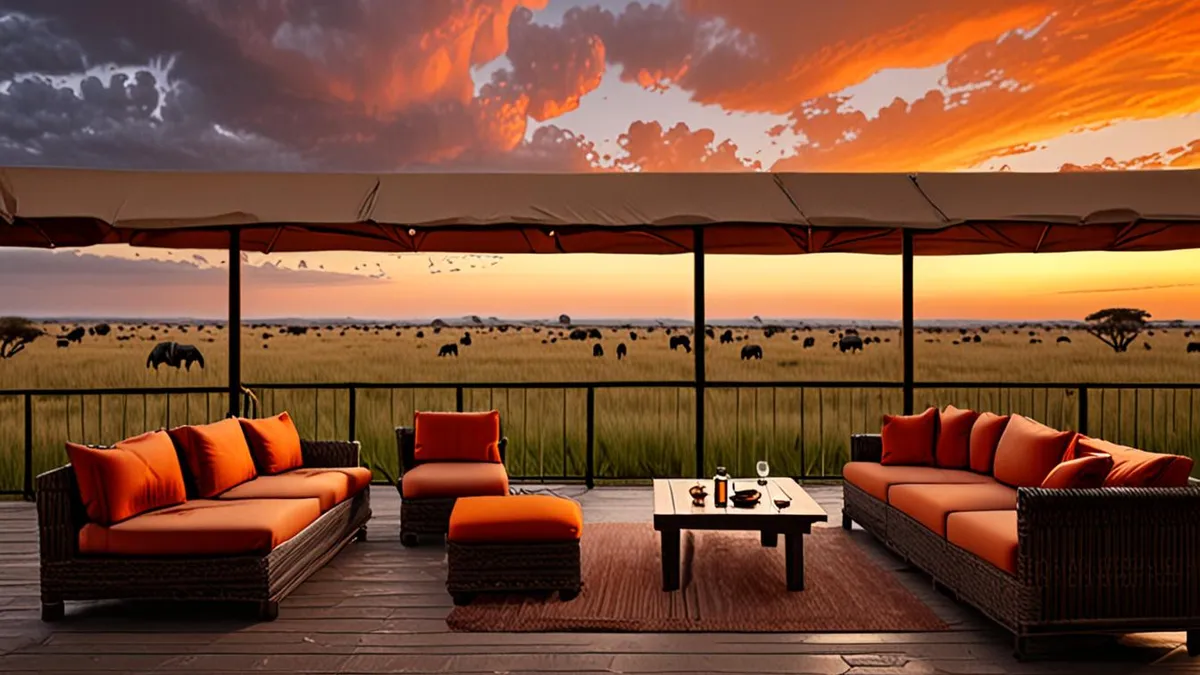
Northern Serengeti: For the Mara River Crossings
If seeing the Great Migration river crossings is at the top of your list, the northern Serengeti is where you want to be. From July to September, enormous herds gather along the Mara River, braving steep banks, strong currents and waiting crocodiles as they move between Tanzania and Kenya. Camps in this region put you close enough to reach the crossing points early in the day, which is when the action tends to happen.
Remote camps and fewer crowds
The north feels noticeably wilder than the central corridor. Camps here are more remote, and while the Mara River crossings draw their share of vehicles in peak months, the surrounding country is quieter and less trafficked than Seronera. You’ll find a mix of seasonal mobile camps that follow the herds and a smaller number of permanent camps and lodges. Many sit along the river or on the plains nearby, with a real sense of isolation that some travelers specifically seek out.
What it costs and how long it takes to get there
All this remoteness comes at a price. Northern camps typically charge more than comparable options in the central Serengeti, and the transfer from Arusha is longer, whether you fly into one of the northern airstrips or combine a flight with a drive. Budget extra travel time on both ends of your stay rather than treating the north as a quick add-on. If river crossings are your priority, though, most travelers find the extra cost and travel hours well worth it.
Southern and Western Serengeti: Calving Season and Green Plains
The southern Serengeti is all about the short-grass plains that stretch toward the Ngorongoro Conservation Area. From roughly January to March, these plains host the calving season, when hundreds of thousands of wildebeest drop their young within a few weeks. Predators follow the herds closely, so game viewing during this window can be dramatic and intense.
The western corridor, which follows the Grumeti River toward Lake Victoria, comes into its own later. It suits the Migration’s May-June passage, when the herds move northwest and gather at the river before pushing on toward the Maasai Mara. Camps along the corridor offer a front-row seat to this stage of the journey, often with fewer vehicles than the central areas.
A note on the rainy months
Keep in mind that some southern camps close or relocate during the long rains, when the black-cotton soils of the plains become difficult to drive on. If you are planning a stay in the far south outside the calving months, check with your operator that your chosen camp will be open and reachable. A mobile camp that moves with the seasons is often the better bet here.
When to Go and How Far Ahead to Book
The dry season, which runs from June to October, is the easiest time for game viewing. Grass is short, animals gather around water sources, and roads are in good condition. It is also the busiest and most expensive period, especially July to September.
The wet season from November to May brings lower rates and a very different atmosphere. The plains turn green, birdlife is at its best, and many camps drop their prices noticeably. Trade-offs include occasional heavy rain, taller grass that makes spotting harder, and, in some areas, camps that close or move.
Booking ahead matters more than you think
Peak-season lodges, particularly the small, high-end camps in the northern and central Serengeti, should be booked 9-12 months ahead. The best camps have only a handful of tents, and July to September dates often sell out long before the year begins. If you have your heart set on a specific camp, book early rather than hoping for a late deal.
Shoulder months can cut nightly rates significantly compared to the July-September peaks. Late May, early June, and parts of November and March often combine decent wildlife viewing with noticeably better prices. Ask operators about shoulder-season rates before settling on dates, as the savings can be substantial.
Choosing Where to Stay in the Serengeti: Stay Types and Budgets
Accommodation in the Serengeti spans an enormous range, from simple public campsites where you bring your own gear to permanent luxury lodges with plunge pools and spa treatments. Typical nightly rates run from about $300 per person for mid-range camps to over $2,000 per person for the top lodges, so your budget will shape your options as much as your preferred region will. It pays to decide early what kind of experience you want, because availability in the best areas disappears quickly.
The biggest structural choice is between mobile and permanent camps. Mobile tented camps pack up and move with the Migration, positioning themselves near the herds at each stage of the year. Permanent lodges stay put, which means they offer more comfort and facilities, such as swimming pools, larger rooms and solid structures, but they can be a longer drive from the action when the herds move on. Neither option is automatically better; it comes down to whether you prioritize proximity to wildlife or extra comfort and amenities.
- Public campsites are the budget option, usually requiring self-sufficiency in gear, food and a qualified guide, and bookings through park authorities.
- Mobile tented camps offer real beds and en-suite bathrooms in canvas, but relocate two or three times a year to follow the herds.
- Permanent tented camps sit in one spot year-round and balance a bush feel with solid infrastructure and reliable amenities.
- Luxury lodges add features like pools, spas, family rooms and sometimes private guides, and they often sit on private concession areas with exclusive game-drive routes.
Matching the Region to Your Trip
The Serengeti is vast, so picking the wrong region can mean long drives and missing the very wildlife you came for. Match your base to your priorities and the park suddenly feels far smaller.
First-timers usually get the most from the central Seronera area, with its year-round big cats and easy flight access. Crossing chasers should target the north between July and September for the Mara River drama, while calving and green-season travelers fit the south between January and March. Get that one decision right, and the rest of your safari tends to fall into place. If this helped you plan your trip, leave a comment or share the article with a fellow traveler.