Scroll through any booking site and you’ll find everything from a cramped studio with a sofa bed to a two-room penthouse labeled a “suite.” That word covers so many layouts that travelers routinely pay a premium without knowing what they’re actually getting. If you’ve ever wondered whether the upgrade is real space or just marketing, you’re not alone.
This guide breaks down the hotel suite vs standard room question with concrete numbers and practical checks. We’ll start with what a standard room includes, then look at what a true suite adds, from separate living areas to second bathrooms. You’ll also see how much more a suite typically costs, when the upgrade makes sense for your trip, how to verify what you’re really booking before you pay, and how suites compare with apartments and homestays. A short summary at the end pulls the key figures together so you can decide quickly.
What a Standard Room Includes
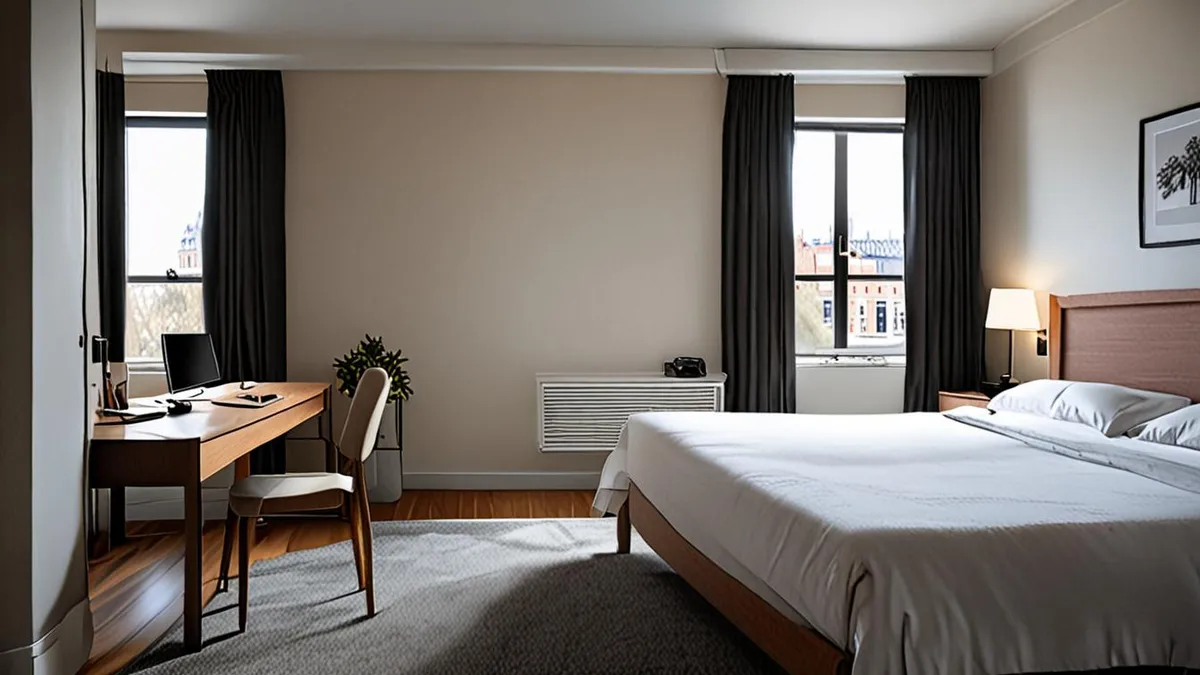
A standard room is exactly what most of us picture when we think “hotel room”: one combined space where everything happens. In a typical mid-range hotel, that space measures roughly 20-30 m² (215-320 sq ft). Your bed, a desk or small work surface, and often a single seating chair all share the same footprint, with the bathroom behind a door off the entry area.
The amenities list is familiar because it’s consistent across brands. You get a TV, a kettle or coffee maker, and in mid-range properties usually a minibar or at least a small fridge. Daily housekeeping comes standard, which remains one of the genuine advantages of any hotel stay over an apartment rental.
Bed configurations and space limits
Bed options are usually limited to one king or queen, or two twins if you’re traveling with a companion or kids. That’s it. There’s rarely room for a lounge area, so if you want to watch TV from somewhere other than the bed, work while a partner sleeps, or host a friend for a chat, the bed becomes your only real option. For a one- or two-night stay, this rarely matters. For longer trips, the lack of a separate sitting space is what pushes many travelers to look at suites in the first place.
What a Hotel Suite Actually Includes
A true suite gives you a separate living room or lounge area in addition to the bedroom, typically measuring 40-50 m² (430-540 sq ft) or more. That separation is the defining feature: a door or wall between where you sleep and where you sit, work, or eat. Everything else is a bonus that varies by property.
Those extras can make a big difference depending on your trip. Common additions include a sofa bed that turns the lounge into sleeping space for kids, a dining table, a kitchenette with a sink and microwave, a second bathroom, or a walk-in wardrobe. Not every suite has all of these, so check the room description rather than assuming. It also helps to understand how suites relate to hotel categories, which is where what hotel star ratings actually mean for travelers comes in handy, since higher-rated properties tend to offer more genuinely separate suite layouts.
Decoding suite terminology
Hotels use the word “suite” loosely, and the label alone won’t tell you the layout. These three terms cover most cases:
- Junior suite: usually one open space with a sleeping corner and a seating area, so you get more square meters but not a separate bedroom.
- One-bedroom suite: the true two-room layout, with a door between the bedroom and the living area, ideal when one person sleeps and another works or watches TV.
- Executive suite: often a one-bedroom layout on a club-level floor, adding lounge access, breakfast, and evening drinks or snacks as part of the deal.
When a listing just says “suite” with none of these qualifiers, look at the square meters and the photos before assuming you’ll get a separate room.
How Much More a Suite Costs
The honest answer is that suites commonly cost 50-150% more than a standard room in the same hotel. That’s a wide range, and where you stay pushes it one way or the other. City-center hotels show the widest gaps, because space is scarce and business travelers pay for suites without blinking. Resort and suburban properties often price suites more gently relative to their standard rooms.
Timing can shrink the gap
Low season is your friend here. In most of Europe, that means November through March, when suite rates can drop by 20-40% as hotels try to fill their largest, hardest-to-sell rooms. A suite that costs double a standard room in July might cost only 20-30% more in January. Getting the timing right matters as much as the property choice, so it pays to understand when to book hotels for better rates before you commit.
It’s also worth running the math per person rather than per room. A suite with a sofa bed that sleeps four often costs less than two standard rooms in the same hotel, especially once you add a second set of taxes or resort fees. Divide the suite rate by four and compare it to the standard room rate per person, and the premium sometimes disappears entirely. For families and small groups, this calculation frequently turns the suite from a splurge into the sensible choice.
When the Suite Upgrade Is Worth It
A one-night stopover rarely justifies the price gap between a standard room and a suite. You check in late, sleep, shower and leave, so the separate living area sits unused. Stretch that stay to four nights or longer, and the math changes: a lounge gives you somewhere to relax, spread out maps, or enjoy a takeaway dinner without sitting on the bed.
Families get the clearest benefit. A suite with a sofa bed typically sleeps three or four people in one booking, which often replaces the cost of a second standard room entirely. Parents also appreciate it after the kids go to bed, since the separate living area means you can talk, read or watch something without whispering in the dark.
Certain trip types simply work better with extra space. A few examples worth considering:
- Work-plus-leisure trips: the living room doubles as an informal workspace, so video calls and laptop hours stay out of the bedroom and your evenings feel like an actual break.
- Romantic getaways: a separate bedroom and a lounge for slow breakfasts or a bottle of wine turn a regular city break into something more memorable — our guide to romantic hotels for European nights covers more ways to set the mood.
- Trips with a friend: one sofa bed suite lets you share space and split the rate, which is often cheaper than two singles.
If your trip matches any of these patterns, the upgrade usually pays for itself in comfort. If it is a quick one-nighter, a good standard room is almost always the smarter spend.
How to Check What You Are Really Booking
Suite labels are loose, and hotels use them generously. Some properties call any room with a sofa a suite, while others reserve the word for genuine two-space layouts with a proper lounge. A few minutes of checking before you book is the difference between a true suite with a separate living room and a large room with a sofa squeezed against the wall. The good news is that the telltale signs are easy to spot once you know what to look for, and none of them require calling the hotel or digging through reviews.
- Read the listed square meters. Anything under 35 m² labeled a suite is usually a large room or a junior suite with one combined space. True suites typically start around 40-50 m², so treat the size figure as your first filter.
- Study the photos for a door or wall. Look for a clear physical separation — a doorway, a partition, a short corridor leading from the sleeping area to the lounge. A sofa in the corner of the same room is a junior suite, whatever the title says.
- Book 2-4 months ahead. That window gives you the widest choice of suite categories and rates, since properties release their full inventory early and the best layouts sell out first.
- Ask about a free upgrade at check-in. Many hotels upgrade guests to suites for free when occupancy is below 60%, so it never hurts to ask politely — the worst outcome is a no.
Do this once and you will spot the difference immediately: honest listings show the size, the layout and the separation up front, while vague ones hide behind the word “suite.” If a listing will not tell you the square meters or show a floor plan, assume it is not the separate-space suite you are paying for. When in doubt, send the hotel a short message asking whether the suite has a genuinely separate lounge — a straight answer tells you almost everything you need to know before you commit.
Suites vs Other Stay Types
A suite competes with more than just standard rooms. On most booking sites you are also choosing between serviced apartments, homestays and private rentals, and each option trades something different. Knowing what you give up — and what you gain — makes the choice much easier.
What a suite gives you that a rental rarely does
The biggest difference is service. A suite comes with daily housekeeping, a front desk that handles late arrivals and problems, and usually breakfast on site. If something breaks at 10 p.m., someone fixes it. Homestays and apartments rarely match that: you get keys, a check-in instruction sheet and yourself.
Where apartments and homestays win
Private rentals often offer more space per euro, especially for longer stays or groups. A full kitchen, a washing machine and a neighborhood feel are genuine advantages. The trade-offs are consistency and service: quality varies from listing to listing, cleaning is usually charged extra or limited to arrival and departure, and there is no one on site if the heating fails.
For short city trips of a few nights, a suite usually makes more sense. Location and service matter most when you are only in town for two or three days, and a kitchen you will barely use is not worth the hassle of self-check-in and no daily tidy-up. Save the apartment option for week-long stays, where the extra space and cooking facilities actually get used.
The Bottom Line on Suites and Standard Rooms
So what are you actually paying for? A standard room is one space of roughly 20-30 m² with a bed, bathroom and desk. A true suite adds a separate living area, usually starting around 40-50 m², which changes how you use the room: you can eat, work, relax and sleep without everything happening in one corner.
That extra space usually comes at a premium of 50-150% over the standard rate in the same hotel, though the gap narrows in low season and can disappear entirely for families, where one suite often replaces two rooms. The main takeaway is simple: before booking, check the listed square meters and the photos for a real wall or door between bedroom and living area, so the label matches what you expect. If this helped you decode a booking page, leave a comment or share the article with a fellow traveler.