Choosing between beachfront vs hillside villas is one of the biggest decisions you’ll make when booking a villa stay, and it shapes every day of your trip. Do you want to wake up, walk a few steps and drop your towel on the sand? Or would you rather sip morning coffee on a terrace high above the water, with the whole coastline spread out below you? Both styles deliver something the other can’t, and travelers often book one only to realize the other suited them better.
This guide breaks the choice down into practical comparisons: what each villa style actually offers day to day, why hillside properties trade beach access for views, how the prices stack up, when to book for peak season, which option fits different travel styles, and how to vet a listing before you commit. By the end, you’ll know exactly which villa matches the trip you’re planning.
What Beachfront Villas Actually Offer
The defining feature of a beachfront villa is direct access to the sand. There’s no car trip, no hunting for parking and no hauling coolers, umbrellas and boogie boards down a road each morning. You can pop back to the villa for lunch, a nap or a forgotten hat without ever getting in a vehicle. For anyone planning to spend most of the day at the beach, this convenience changes the rhythm of the entire vacation.
The sounds and the trade-offs
Beachfront villas also come with the soundtrack most people picture when they imagine a coastal holiday: waves on the shore, day and night. The horizons are wide open, and sunrises over the water are often spectacular. The flip side is privacy. Because these villas sit at ground level facing the beach, walkers, joggers and vendors can pass close by, so terraces and pools may feel more exposed than you’d expect.
Finally, consider what the ocean itself does to a building. Salt air and humidity are hard on railings, shutters, fabrics and electronics, which means beachfront villas need constant upkeep. Owners pass those maintenance costs on, and they show up in higher nightly rates compared with similar properties set back from the water.
Why Hillside Villas Trade Access for Views
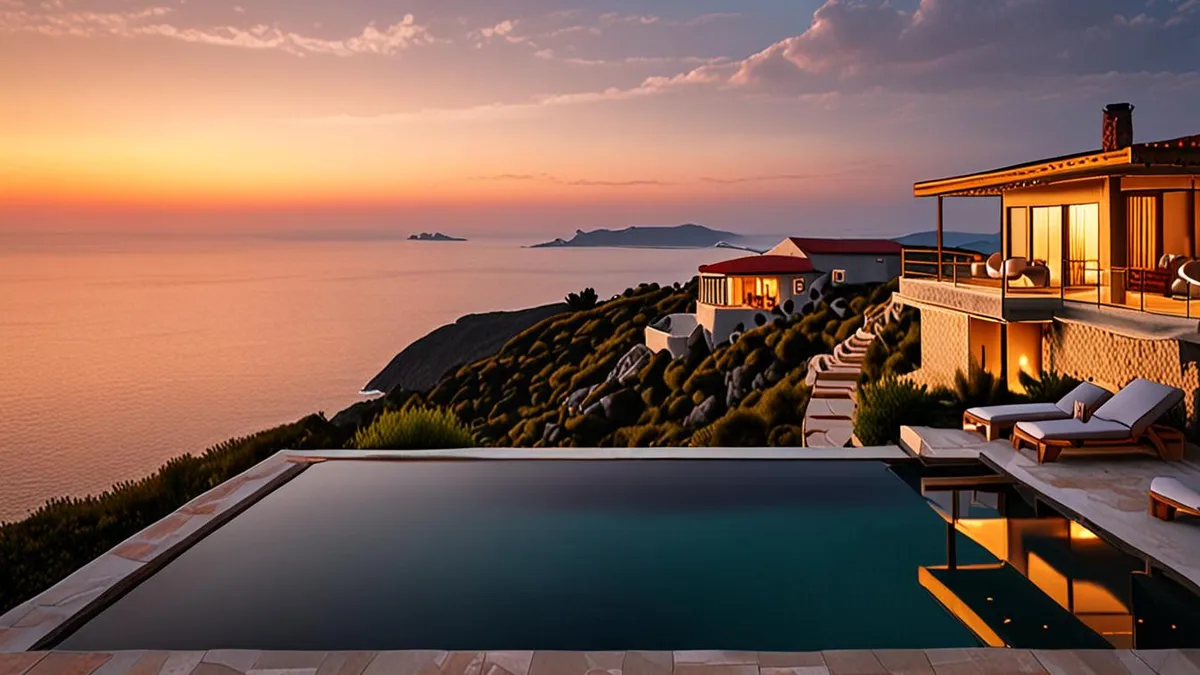
Hillside villas earn their premium in a different currency: the view. Sitting above the coastline, they deliver panoramic sea vistas that a sea-level property simply can’t match. Sunsets stretch across the horizon, and the evening breezes that sweep uphill are noticeably cooler than what you’ll feel down by the shore, which makes terraces genuinely comfortable even in warm months.
Privacy and quiet
Because they’re set back from the coast road and the beach crowds, hillside properties tend to be noticeably quieter and more private. Many are walled or gated, with mature gardens that screen the villa from neighbors. If your idea of a vacation is reading on a shaded terrace without seeing another soul, this is the setting that delivers it.
The trade-off you need to accept
The compromise is access. Expect a drive of roughly 5-20 minutes to reach the nearest beach, along winding access roads that can feel steep and narrow if you’re not used to them. Every beach day involves a car trip, which means planning around parking and carrying your gear back and forth. If you picture spontaneous morning swims, a hillside villa requires a little more logistics. For travelers who value views and seclusion over immediate sand access, though, most find the trade well worth it.
Price Comparison: Beachfront vs Hillside Villas
Price is where the two styles diverge most clearly. In the same destination, beachfront villas typically run 20-40% more than comparable hillside villas. That premium reflects the sand access, but also the higher maintenance costs that come with salt air and humidity. If you’re building a budget, it helps to see how these numbers fit into the full picture of what a villa vacation really costs.
In mid-range destinations, the difference is easy to see in real numbers: expect roughly $250-600 per night for a beachfront villa versus $180-450 for a similar hillside property. Over a week-long stay, that gap can add up to enough to cover rental cars, dinners out or an extra night.
Hillside villas also tend to give you more physical space for your money. Larger pools, expansive terraces and bigger gardens are common at elevation, where land is often cheaper and lots are bigger. That extra outdoor space can offset the cost of driving to beaches, especially if you spend your afternoons by your own pool anyway.
- Transfer costs add up differently: if a hillside villa requires daily drives to the beach, factor in rental car or taxi expenses, which can eat into part of the nightly savings.
- Group stays tip the math: larger hillside properties often sleep more guests for the same nightly rate, so the per-person cost can drop well below a beachfront equivalent.
- Shoulder season narrows the gap: outside peak weeks, beachfront owners discount more aggressively, so the 20-40% premium can shrink at certain times of year.
Booking Windows and Seasonal Availability
Timing matters more for villas than for hotels, and the difference between beachfront and hillside is significant. In peak season, which runs from June through August in Europe and December through January in the tropics, beachfront villas sell out first. Their combination of direct sand access and limited inventory means the best properties are often fully booked well before casual travelers start planning.
As a rule of thumb, book beachfront villas 6-9 months ahead for peak dates. Hillside villas are more forgiving, usually allowing 3-6 months of lead time, because there are simply more of them and demand spreads across a wider area. If you have your heart set on a specific beachfront property, treat the booking window as a hard deadline rather than a suggestion.
What shoulder season changes
Shoulder season, roughly May and late September through October in most villa destinations, narrows the price gap between the two options and improves availability for both. You may find a beachfront villa in May for close to what a hillside villa costs in August, with quieter beaches as a bonus. For a fuller breakdown of how seasons affect rates and when to lock in reservations, see this guide to villa booking windows and seasonal timing.
Which Suits Your Travel Style
The right villa depends less on the view and more on how you actually spend your days. A beachfront villa rewards travelers who want the beach woven into every hour of the trip, while a hillside villa rewards those who value calm, privacy and a reason to linger on the terrace with a drink in hand. Neither option is better in the abstract; each fits a different rhythm of travel, and matching that rhythm matters more than any photo on a listing page.
Families with young children tend to favor beachfront for practical reasons: no car trips to the sand, easy shade breaks back at the villa, and constant beach play without any logistics to manage. Naps and snacks happen ten steps from the water. Couples and remote workers often prefer hillside, where privacy, a workspace with a view and calmer evenings make longer stays comfortable. Groups mixing beach days with nightlife may find a hillside villa near town offers the best balance of both worlds, especially when restaurants and bars are close by.
- Families: look for beachfront villas with fenced pools or shallow, protected water in front, so kids can play while you watch from the terrace without a single car trip.
- Couples: prioritize hillside villas with a covered outdoor workspace or shaded table, since reliable Wi-Fi plus a sea view turns a work morning into a pleasure rather than a compromise.
- Remote workers: check sunset orientation on a hillside property, because a west-facing terrace gives you a natural end-of-day ritual that a sea-level, north-facing villa rarely matches.
- Groups: a hillside villa within a short drive of town means half the group can head to the beach while the rest shops or naps, and everyone can reach bars and restaurants at night without designated drivers.
How to Check a Villa Before You Commit
Villa listings are written to flatter, and the gap between the description and reality can shape your whole trip. A “sea view” might mean a sliver of blue between two rooftops, and a “five-minute walk to the beach” might involve a steep, unpaved track that no one wants to tackle twice a day with beach bags and kids in tow. Before you commit a deposit, spend twenty minutes verifying the details that matter most for your choice of beachfront or hillside. Send the host a short message covering the points below, and keep their replies in writing so you can refer back to them if anything does not match on arrival. Here is a practical checklist.
- Measure the beach distance yourself. Open a map app and trace the actual walking or driving route from the villa to the sand. Some “beachfront” listings turn out to sit across a coastal road from the beach, which changes everything from luggage hauling to toddler safety.
- Confirm what “direct access” means. Ask the host whether you cross sand from the property or whether stairs, a path or a road sit between the terrace and the water, especially if anyone in your group has mobility limits.
- Check hillside road access. Ask whether the access road is paved or dirt, how steep it is, and whether a standard rental car can manage it. Winding hillside roads are normal, but some are genuinely challenging after rain or at night.
- Verify parking arrangements. Hillside villas sometimes have one tight spot or require parking below and walking up, which matters if your group has two cars.
- Ask about pool heating. Many hillside pools are unheated, and in shoulder months an unheated infinity pool can be too cold for daily use. Confirm whether heating is available and whether it costs extra.
- Read reviews for noise clues. Beachfront reviews should mention waves and beach crowds; hillside reviews may reveal wind, insects or a nearby rooster. Match the complaints to your tolerance.
Ten minutes of questions now can prevent a week of disappointment later. Hosts who answer these specifics clearly and quickly are usually a good sign for the whole stay, while vague or evasive answers deserve as much weight as the listing photos. If a host cannot tell you whether the road is paved or whether the pool is heated, that silence is itself an answer, and it is often cheaper to keep looking than to discover the truth after you have paid and arrived.
The Bottom Line on Beachfront vs Hillside Villas
If you’re torn between waking up steps from the sand or looking down at it from a hillside terrace, the comparison comes down to what each style does best. Beachfront villas win on convenience and immediacy: you walk straight from your bedroom to the water, no driving required. Hillside villas win on views, privacy and price, with wider sea vistas and cooler evening breezes as a bonus.
Remember the practical differences too. Beachfront typically costs 20-40% more than a comparable hillside villa in the same area, and it books out earliest in peak season, so you’ll need a longer lead time. In the end, match the choice to your travel style: families with young children lean beachfront, while couples and remote workers lean hillside. If this helped you decide, leave a comment or share the article with a friend planning their next trip.