Few things derail the first evening of a family vacation faster than arriving at your resort room and finding no crib for the baby or no bunk beds for the kids. It happens more often than you might think, because families assume that booking a “family room” automatically secures the bedding their children need. In reality, resort cribs and bunk beds are limited inventory, and a note in a booking comment box rarely reaches the right person at the front desk.
This guide walks you through the whole process, starting with why these beds are never guaranteed and which room types actually come with built-in bunks. We then cover crib age and weight rules, the exact timing for confirming your request in writing, the extra costs and linen details worth asking about, and what to do if the bed still is not there at check-in. Follow these steps and you can sort every sleeping arrangement before you fly.
Why Resort Cribs and Bunk Beds Are Never Guaranteed
Here is the trap most families fall into: a room description says it “sleeps 4” or “sleeps 5,” and everyone assumes that means two double beds, a sofa bed, or something else suitable for children. In practice, that maximum occupancy figure says nothing about the actual bed configuration. You could be booking a room with one king bed and a fold-out sofa, expecting bunks that were never part of the room to begin with.
Even when a resort does have cribs and bunk beds, they are usually finite inventory rather than something bundled with every family booking. A large resort might have a few dozen cribs to share among hundreds of arriving guests, and rooms with built-in bunks are typically just a handful of room types within the property. Once they are allocated, they are gone.
The booking site problem
Most third-party booking sites treat special requests as optional notes that may or may not be forwarded to the property. Even when they are passed along, they usually arrive as a wish, not a commitment, and many resorts explicitly state that requests cannot be guaranteed. That is why the fix is not a better note in a comment box. It is a direct, written confirmation with the resort itself, which we cover in detail later in this article.
Know the Room Types That Actually Include Bunk Beds
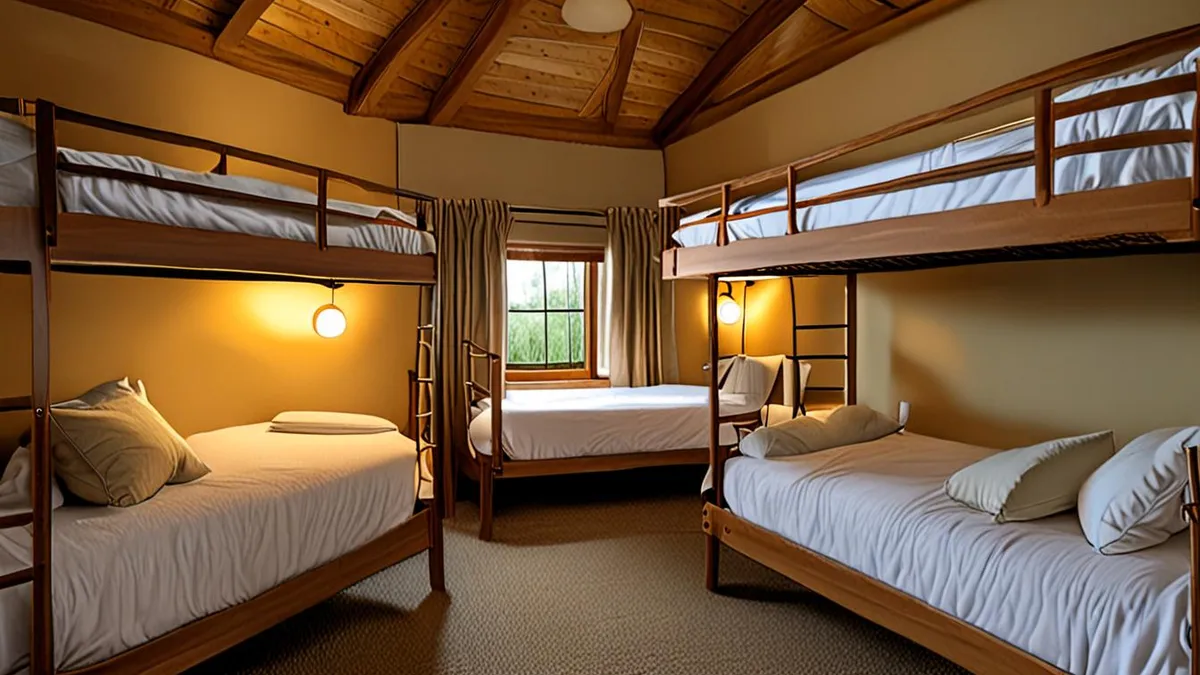
If bunks are a must-have, start by looking at the right categories of rooms. Family rooms and kids suites are the two types most likely to have built-in bunk beds, often in a separate nook or alcove so parents get some privacy after bedtime. Standard rooms rarely include them, no matter how many people the room technically sleeps.
Bunk beds typically suit children aged about 6 to 12 years. Top bunks carry weight limits, and resorts generally do not allow younger children or adults up top, so check the room details or ask directly if your kids are at either end of that range. Many family rooms are configured to sleep 2 adults plus 2 to 3 children, but the exact split of beds varies a lot, so verify precisely what you are getting.
- Bunk dimensions and ladder access: Some kids suites use compact bunks with short guard rails and steep ladders, which confident climbers handle fine but hesitant sleepers may not.
- Location of the bunks in the room: In some layouts the bunks sit near the entry door or the bathroom rather than beside the parents’ bed, which matters for nighttime wake-ups with younger children.
- Connecting rooms as the fallback: When built-in bunks are unavailable or your kids are older than the typical bunk range, adjoining rooms with a door between them are the usual workaround, giving teens their own beds and parents their own space.
Whichever route you take, ask the resort to state the bed configuration for the specific room category you are booking, in writing, rather than relying on a generic photo on a booking page.
Crib Rules: Age, Weight and Quantity Limits
Cribs seem simple until you read the fine print. Most resort cribs are designed for infants up to roughly 24 months or 15 kg, whichever comes first. If your toddler is big for their age or close to that threshold, a crib may not be an option at all, and the resort will point you toward a cot or rollaway instead.
Quantity is the other common surprise. Crib counts per room are usually limited to one, and only occasionally two. Families with twins or two babies close in age should flag this immediately, because a room that sleeps four is not the same as a room that can physically hold two cribs alongside the existing beds.
- Cot width for older toddlers: Cots for children beyond the crib stage are often narrower than a crib, around 60-70 cm wide, so ask for exact dimensions if your child is tall and tends to roll to the edge.
- Crib style varies by property: Some resorts use full-size wooden cribs, others use compact travel-style bassinets, and the difference affects both comfort and how long your child will realistically fit.
- Floor space in the room: A crib takes up real floor area, and in smaller standard rooms a confirmed crib can mean a very tight squeeze around the existing beds, so ask how the room is laid out.
Getting these details in writing also protects you later, because “we assumed you knew” is a much harder conversation to win than pointing to an email that promised a crib in a room that fits one.
When and How to Confirm Your Request in Writing
A crib or bunk bed request is only as good as the paper trail behind it. Verbal promises at booking time are easy to lose, so your goal is to get the resort itself to confirm the arrangement in writing. Phone notes, chat messages and app notifications all tend to vanish into the system, while an email reply sits in your inbox ready to be shown at check-in. Here is a simple timeline that works well for most families.
- Email the resort directly after booking. As soon as your reservation is confirmed, send a short email to the resort (not just the booking platform) stating your reservation number, your children’s ages, and exactly what you need: one crib, or a room with a bunk bed. Ask them to reply confirming the request is noted and, ideally, guaranteed.
- Send your request 4 to 8 weeks before arrival. This window gives the resort time to allocate inventory and gives you time to adjust plans if they cannot. If you are traveling during school holidays or other peak periods, ask even earlier, since family rooms with bunks are among the first room types to sell out. Timing matters even more in seasonal destinations — for example, check the Maldives weather and price seasons before locking in dates, then request your beds well ahead of the busiest weeks.
- Reconfirm 48 to 72 hours before check-in. A quick email or phone call a few days before you fly reminds the front desk that your crib or bunk is expected. This is also the moment to attach or reference your earlier written confirmation so nothing is left to memory.
Keep every reply the resort sends you, and save the emails offline so you can pull them up at the front desk without relying on hotel Wi-Fi. A screenshot on your phone is often the fastest way to resolve a mix-up.
One last habit worth building: name your email files clearly, such as “beach resort crib confirmation,” so you can find them in seconds when you are standing at a busy front desk with tired kids in tow. If the resort’s reply is vague, send a follow-up asking for a plain yes or no. A clear written answer in advance is far more useful than an apology at check-in.
Extra Costs and Linen Details to Ask About
Even when the right bed is confirmed, a few practical details can catch families off guard. Some are about money, others about what actually arrives in the room with that bed. The bed itself is only half the story: what sits on it, around it, and next to it matters just as much for a good first night. Ask these questions when you confirm your booking, so there are no surprises on arrival.
- Rollaway bed fees. If your children are too old for a crib and no bunk room is available, a rollaway bed is the usual solution. Many resorts charge for these, often roughly $20-50 per night, and some require you to request them in advance because floor space limits how many each room can take. Ask whether the fee is charged per bed per night and whether it appears on your booking confirmation or only at the front desk.
- Crib linen and bedding. Not every resort supplies sheets, a mattress cover, or a blanket for cribs as standard. Some expect parents to bring their own fitted sheet. Ask specifically what is provided, whether it is changed during your stay, and whether there is a charge for a linen set.
- Guard rails and night lights in bunk rooms. A top bunk without a guard rail is a real concern for younger or restless sleepers. Ask whether the bunks have rails fitted on both sides, whether there is a sturdy ladder, and whether the room has a night light or dim lamp your child can reach from the top bunk.
- Mattress and size details. If your child is tall for their age, ask for the actual dimensions of the bunk or cot mattress. A bed that technically “sleeps three children” can be uncomfortable if the bunks are shorter than a standard single.
Getting these answers in the same email thread as your bed confirmation means you have everything documented in one place. If a fee, a missing guard rail, or a linen charge later becomes a point of disagreement at the front desk, a written reply from the resort is far easier to reference than a vague phone call. It also gives the reservations team a clear record of what they promised, which makes any room change or refund request much smoother to handle.
Backup Plans if the Beds Are Not There at Check-In
Even with written confirmation in hand, front desk systems occasionally lose special requests, and you may arrive after a long flight to find a standard room with no crib and no bunks waiting for your kids. Don’t panic at the counter — this happens more often than resorts admit, and a calm, structured approach usually gets the problem solved within the first hour. Before you travel, save the confirmation email offline on your phone as well as printing a copy, so a patchy lobby wifi connection can’t leave you arguing from memory. Arriving earlier in the day also helps, since more rooms are still unassigned and staff have time to fix things before the evening rush.
- Show your written confirmation and ask for a room change first. Present the email on your phone or printed out, and politely ask to be moved to a room that matches what was confirmed — the right bed configuration, not just any family room. A room change is often the quickest fix, especially if other family rooms are still free that night. Stay friendly; the desk agent did not create the problem and responds better to courtesy than pressure.
- Ask about adjoining rooms or a rollaway as an interim fix. If no bunk room is available immediately, ask whether a connecting room can be opened up so older children have their own beds, or whether a rollaway can be brought in for the first night. Expect that a rollaway may carry a nightly charge, so ask about the cost before agreeing. This keeps everyone sleeping reasonably well while the resort works on a proper solution for the following day.
- Escalate politely to a duty manager if the request cannot be met. If the front desk cannot resolve it and your written confirmation is clear, ask to speak with the duty manager. Restate the facts calmly: the confirmation, the date it was sent, and exactly what was promised. Managers can typically authorize room moves, waive rollaway fees, or offer another form of compensation such as breakfast or a late checkout.
The key is to treat the confirmation as your anchor and stay solution-focused rather than frustrated. Most resorts genuinely want families to have a good first night, and a documented request gives them every reason to make it right.
Sleeping Arrangements Sorted Before You Fly
Arriving at a resort to find no crib or bunk beds in your room is a frustrating way to start a vacation, and it happens more often than it should. The good news is that it is largely avoidable. Cribs and bunks are limited inventory rather than automatic with every family booking, so get your request confirmed in writing early — ideally 4 to 8 weeks before arrival — and follow up once more in the final two to three days before check-in, either by email or a quick phone call.
Just as important is matching the room type to your children’s ages, since bunks typically suit kids about 6 to 12 years old. Booking sites rarely pass special requests along reliably, so contacting the resort directly makes a real difference. It also helps to know the likely extra charges, such as fees for rollaway beds if you end up needing one for an older child.
Finally, walk in with a backup plan so a missing bed never derails your first night. A polite word with the front desk, backed by your written confirmation, usually sorts things out quickly. If these tips helped you sort out your family’s sleeping arrangements, leave a comment or share this article with another traveling family.