You’ve been dreaming about a lodge trip in 2026, but every search seems to end the same way: nightly rates that push you toward a bare-bones room, or worse, a budget motel an hour from the trailhead. The good news is that rising prices don’t have to mean downgraded comfort. Cheap lodge stays are still very achievable if you know where the rate gaps are and how to position your booking.
This guide walks through the levers that actually move the price: picking shoulder-season dates, timing your reservation, choosing the right room category, and thinking carefully about meal plans. We’ll also compare lodge types, from ski lodges to wilderness retreats, so you only pay for comfort you’ll genuinely use. Use two or three of these tactics together and you can often keep the fireplace lounge, the dining hall and the view, without stretching your budget.
Why Cheap Lodge Stays in 2026 Are Still Possible
Lodge prices have climbed steadily in recent years, and it’s easy to assume a comfortable stay is now out of reach. But here’s what’s changed in your favor: the gap between peak and shoulder-season rates has widened, not narrowed. Lodges price aggressively around their busiest weeks, then discount sharply to fill rooms the rest of the year. Those widened gaps are your savings windows, and they’re larger in 2026 than they were a few seasons ago.
Destination matters, but it’s not the whole story. Room type often drives cost just as much. A standard lodge room shares the same common spaces, dining hall and views as a private cabin, yet it can run $50-150 less per night. Over a week, that difference can pay for your meals or your rental car.
Why flexible dates matter more in 2026
Demand in 2026 is expected to spike around school holidays and major events, which means those exact weeks will carry premium pricing. If your calendar allows even a few days of movement, you can sidestep the spikes entirely. Flexible dates are the single biggest lever you have, and everything else in this article builds on that foundation.
Choosing Cheaper Seasons and Shoulder Weeks
Shoulder seasons are the sweet spot for lodge travelers: rates typically run 20-40% below peak pricing, while most amenities, restaurants and activities stay open. You trade a bit of guaranteed weather for a lot of quiet trails and shorter dining-room waits. For many lodges, the facilities don’t close at all; they just cost less to enjoy.
When to aim your calendar
January-March and October-November are reliably cheap windows at many mountain and park lodges. In ski country, early-season weeks in those ranges often mean groomed slopes at a fraction of holiday pricing. In park destinations, the crowds thin out and wildlife viewing can actually improve without the peak-season congestion.
Fall is a particularly strong play in Canada, where lower lodge rates combine with prime hiking conditions and spectacular foliage. A fall lodge trip in Canada gives you crisp mornings, colorful trails and shoulder-season pricing all in one booking window.
Safari planners have a parallel decision to make in Tanzania. Dry-season months carry premiums for good reason, but green-season discounts can be substantial, with nightly lodge rates spanning roughly $200-1,000+ per person depending on the month. Compare the two honestly: if you don’t need the peak dry season for a specific wildlife event, the green season often delivers excellent value.
Booking Timing and Rate Tactics
Timing your booking matters almost as much as timing your trip. National park lodges typically open reservations 9-12 months ahead, and the best rooms and rates go to early bookers. If you wait until a few weeks out, you’re choosing from whatever categories nobody else wanted, which often means the smallest rooms or the least appealing views. Booking early locks in the room type you actually want, at the season’s opening rates, before they sell out. It also gives you time to plan around the rest of your trip without pressure. For a deeper look at the calendar mechanics, see this guide on how far ahead to book national park lodges.
The day of the week you arrive matters too. Midweek nights, Sunday through Thursday, are often 15-30% cheaper than weekend nights at the same lodge. A Sunday-to-Friday stay can cost noticeably less than a Friday-to-Sunday one, even though it’s longer. If your schedule allows any flexibility, shifting your arrival by even one night can change the total meaningfully, especially on a stay of several nights where the midweek discount compounds across multiple dates.
- Set a rate alert after booking. If the lodge or a booking platform drops the price for your dates, rebook at the lower rate rather than accepting the original price.
- Look for early-bird promotions in the off-months. Lodges trying to fill next season’s calendar often release discounted advance-purchase rates before demand builds.
- Ask about cancellation-based deals. Some lodges offer reduced rates on rooms that other guests cancelled, especially within a few weeks of arrival when they’d rather fill the room than leave it empty.
- Call the lodge directly for unlisted offers. Front desks sometimes have flexible-rate inventory or package perks that never appear on third-party sites.
Room Types That Trim the Bill
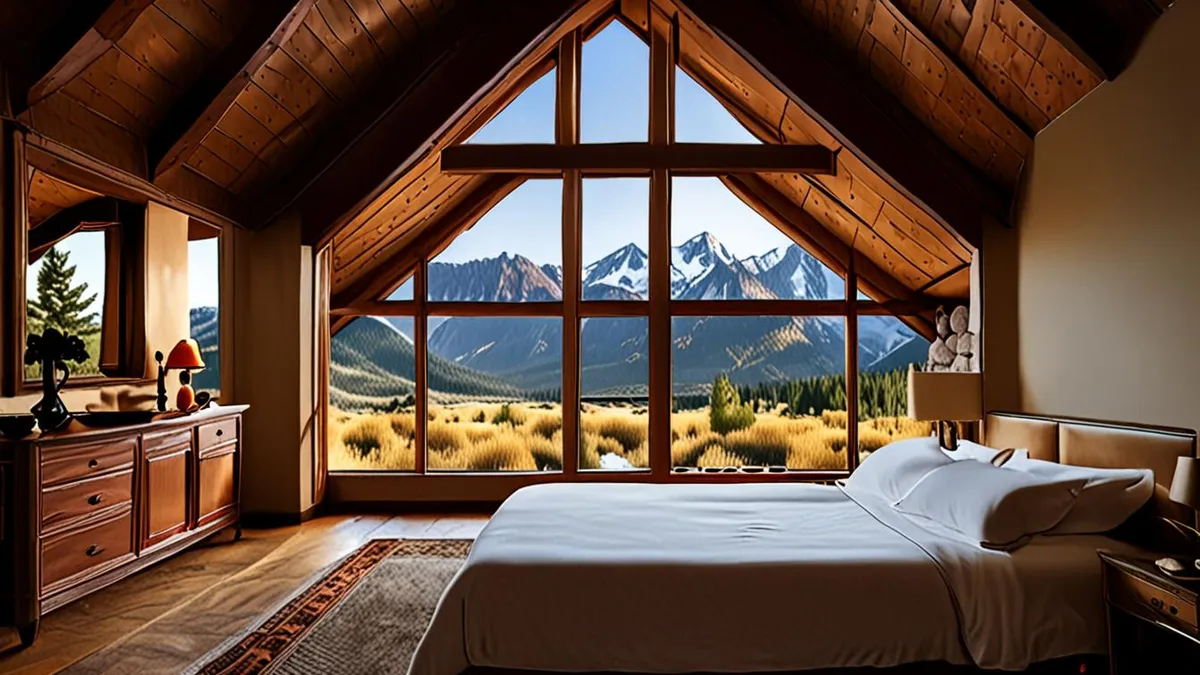
When travelers picture a lodge, they often imagine a private log cabin with a crackling fire and a balcony over the valley. That image is exactly what pushes the nightly rate up. A standard lodge room gives you the same building, the same dining hall, the same fireplace lounge and the same mountain views, usually for $50-150 less per night than a private cabin. You sleep in a smaller space, but you spend your waking hours in the shared areas anyway.
Think about how you actually use a lodge. Most guests roll in after a day of hiking or skiing, eat dinner, sit by the fire for an hour or two, and go to bed. The bedroom only needs to fit a comfortable bed and your bags. If that describes your trip, paying for 600 square feet of private living space is money spent on rooms you will barely enter.
Trade Square Footage for Location
Smaller rooms and shared-lodge formats also let you stretch the same budget toward a better spot. A compact room inside a lodge right on the lakefront or at the trailhead often costs the same as a spacious cabin a shuttle ride away. If location drives your experience more than square footage does, the smaller room wins every time. This trade-off is worth weighing carefully before you book, and our guide to lodge rooms versus private cabins breaks down the differences in detail.
Define What Comfort Means to You
Before comparing rates, make a short list of what “comfort” actually means on this trip. For some travelers it is a suite with a private fireplace. For others it is a roaring fire in the common lounge, a hearty included breakfast, and a deep soak in a shared hot tub after a long day outside. Big shared spaces, good food and a warm atmosphere often matter far more than bedroom size, and those features exist in standard rooms too.
One practical tip: read recent guest reviews and look specifically at comments about the common areas and the beds. If past guests rave about the lounge and say the standard rooms are quiet and comfortable, you have found a lodge where the cheaper room type costs you almost nothing in experience. If reviews mention thin walls or cramped quarters, the savings may not be worth it, and a cabin upgrade deserves a second look.
Food and Board: Where Hidden Costs Hide
Meals are where lodge budgets quietly balloon. Full board can add roughly $60-150 per person per day compared with self-catering, so a week-long stay for two can carry hundreds of dollars in food costs on top of the nightly rate. The catch is that the answer differs by lodge, and booking the wrong plan either way costs real money.
If a lodge sits near a town with grocery stores, a room-only rate plus self-catering is usually the lean choice. You can prepare simple breakfasts and pack lunches for day trips, then treat yourself to one dinner out. Remote lodges are different: with no shops nearby, a meal plan may actually be the smarter buy, since individual off-menu meals at isolated properties tend to be pricey.
One more trap when comparing lodges: always check whether breakfast is included. A lodge at $180 per night with a full hot breakfast can beat a $160 lodge where breakfast runs extra, so compare total daily cost, not the headline rate.
- Ask about half-board options. Some lodges let you take dinner only, skipping the lunch component you would rarely eat while out exploring all day.
- Check lunch pricing separately. Packed lunches ordered from the lodge are usually cheaper than the sit-down lunch included in some full-board plans, so request a picnic option if available.
- Confirm kitchen access. A room-only rate only saves money if you actually have a kitchenette, shared guest kitchen, or nearby restaurants, so verify this before booking rather than assuming.
- Look at children’s meal pricing. Family meal plans sometimes charge kids a reduced rate or let younger children eat free, which can swing the math significantly on a family stay.
Matching the Lodge Type to a Lean Budget
Not all lodges price the same way, and matching the lodge type to your budget is where lean travelers win. Ski lodge weeks commonly range from about $1,500 to $4,000 per person depending on season and room type, and that spread is mostly about location. Staying even a short walk or shuttle ride off the immediate slopes lowers that number fast, and many travelers find the fifteen-minute walk a fair trade for hundreds in savings.
Pay Only for Comfort You Will Use
Wilderness lodges vary widely in what they include, from basic rooms with shared facilities to luxury properties with spas and private guides. The trick is to audit the amenity list before booking. If you plan to be out on the water or the trail from dawn to dusk, skip paying for the spa, the butler service, or the premium suite. Choose the mid-level room at a well-located lodge and you keep the experience without the markup.
Season matters just as much as lodge type. In destinations like Tanzania, the month you travel can shift nightly lodge rates by hundreds of dollars, with safari lodges ranging roughly $200 to $1,000+ per person per night depending on season. Budget by season rather than by lodge brand: the same property can fit a lean budget in one month and blow it in another. Check current rates for your travel window before committing, since pricing shifts year to year.
The Bottom Line for 2026
A cheap lodge stay in 2026 doesn’t mean settling for a bare-bones room or a roadside motel. It comes down to pulling three levers: choosing shoulder-season dates, booking earlier, and picking the right combination of room type and board. Shoulder seasons typically save 20-40% versus peak rates, midweek nights often run 15-30% cheaper, and a standard room instead of a private cabin can trim $50-150 per night. Stack those savings and the numbers stop being small.
You don’t need all three levers, either. Pick two that fit your schedule and style, and most readers can keep full lodge comfort — the common lounges, the dining hall, the location — inside their original budget. The rates rose, but the gaps widened, and that’s where smart travelers win. If this helped you plan your 2026 lodge trip, leave a comment or share the article with a fellow traveler.