Booking a resort stay with children often comes with a frustrating question mark: the website mentions a kids club, but it’s unclear what ages it accepts, what the children actually do all day, and whether it’s included in the price or billed on top. Some parents arrive expecting free childcare from morning to evening, only to find half-day sessions, hourly fees for younger kids, or a teen lounge their eight-year-old can’t use.
This guide walks you through everything worth knowing about a kids club at resorts before you book. We’ll cover which age groups most clubs accept, the typical activities for juniors, older kids and teens, how staffing and safety usually work, what you can expect to pay at all-inclusive versus a la carte properties, and practical tips for registration and booking. We’ll also help you judge whether a resort’s kids club is strong enough to influence where you stay, and pull the key points together at the end.
What Ages Do Resort Kids Clubs Accept?
Most resort kids clubs accept children from about 4 to 12 years old, and nearly all of them split that range into two groups. Younger children, usually 4 to 7, are often called juniors, while the 8 to 12 crowd gets its own program with more independence and bigger-kid activities. The split matters because a five-year-old and an eleven-year-old rarely want the same afternoon.
What about toddlers and teens?
Children under 4 are usually excluded from standard sessions. Some clubs take toddlers from 1-3 years only with a parent present or through a paid babysitting service, which is typically charged by the hour on top of your room rate. If you’re traveling with a baby or toddler, ask about this before booking rather than assuming the club will take them.
Teens usually get a separate lounge or activity program for ages 12-17. Expect gaming consoles, sports and social evenings rather than the crafts and treasure hunts aimed at younger kids. If your child is 12, check which group they fall into, since some resorts let them choose and others are strict about the cutoff.
Finally, always confirm the exact minimum age with the resort itself. While 4 is the common starting point, some luxury properties run clubs from age 3, and a few accept children as young as 1 with supervision. A quick email before you book can save a very disappointed arrival day.
Typical Kids Club Activities by Age Group
The daily schedule at a kids club depends heavily on age, and good resorts design completely different programs for each group. Younger children need close supervision and short activity blocks, while older kids want challenge and independence. Here’s what you can typically expect on a resort timetable.
For ages 4 to 7, mornings usually revolve around supervised crafts, treasure hunts, face painting, pool games and story time. Sessions are kept short and varied because attention spans run out quickly, and staff usually stay with the same small group all day so children feel secure.
Kids aged 8 to 12 get more active options: sports tournaments, cooking classes, science workshops, kayaking and video game hours. This group often leaves the club for excursions around the resort grounds, and many clubs let them sign themselves in and out with parental permission.
- Themed days: many clubs run pirate days, animal days or local culture days where crafts and games all follow one theme, which keeps repeat visitors entertained across a two-week stay.
- Water-based activities: pool games and kayaking sessions are usually weather and supervision dependent, so ask whether they run daily or only when conditions allow.
- Talent shows and performances: older groups often spend a few afternoons rehearsing a show or dance routine, performed for parents on the last evening.
- Teen-only spaces: hangout lounges with Wi-Fi and consoles give 12 to 17 year olds a place to socialize without younger children around, alongside beach volleyball, DJ nights and organized excursions.
Keep in mind that evening programs such as mini discos and movie nights often run separately from daytime sessions. They may start after dinner, be open to a wider age range, or occasionally carry a small extra charge, so check the schedule at check-in.
How Kids Club Staffing and Safety Works
Staffing is where kids clubs separate the well-run from the careless, and it’s worth asking direct questions before you book. A good starting point is the staff-to-child ratio. Look for around 1:5 for under-4s and 1:10 to 1:15 for older children. If a resort can’t tell you its ratios, or the answer sounds vague, treat that as a warning sign rather than a formality.
Training and procedures
Reputable clubs employ first-aid trained staff and follow clear sign-in and sign-out procedures, so only a registered parent or guardian can collect a child. You should also expect to fill out allergy or medical forms at registration. Clubs that take these forms seriously will actually use them, for example by checking labels at snack time, so mention any allergy in detail and confirm how it’s handled during sessions.
Language matters more than many parents realize. A child who can’t communicate with staff will struggle to enjoy the day or report a problem, so ask whether staff speak your language, even at a basic level. Also find out whether sessions run indoors, outdoors or are weather-dependent, since an outdoor-only program can collapse in a week of rain.
When comparing resorts, certification references to international childcare standards are a good quality signal. Certified clubs often follow international childcare standards with first-aid trained staff, documented procedures and regular staff training. It doesn’t guarantee a perfect experience, but it shows the club is measured against something beyond its own marketing, and it usually correlates with the organized, well-supervised sessions parents hope for.
What Kids Clubs Cost at Different Resort Types
The cost of a kids club depends heavily on the resort type you book. At all-inclusive resorts, supervised kids club sessions are usually bundled into the nightly rate, so your children can join crafts, games and pool activities without an extra charge. The main exceptions are private babysitting and one-on-one care for younger children, which almost always cost extra. If you are still weighing up which model suits your family, our comparison of all-inclusive and a la carte resorts breaks down how the two pricing structures differ.
At a la carte and city resorts, kids clubs are treated as a paid service. Rates commonly fall in the range of $15-40 per hour or $50-120 per full day per child, so a family with two kids using the club daily should budget for it as a real line item, not an afterthought.
Session structure matters too. Half-day and full-day sessions typically run 9am-12:30pm and 9am-4:30pm, and lunch is sometimes billed separately from the session fee, so ask before you book.
- Multi-day packages, such as a week-long pass, often bring the per-day cost down compared with booking single days one at a time.
- Sibling discounts are common at larger resorts, where the second and third child pay a reduced rate for the same session.
- Specialty add-ons like off-site excursions, private cooking classes or one-on-one sports coaching are usually priced separately from standard club sessions.
- Gratuity policies vary: some resorts add a service charge to kids club bills automatically, so check whether tipping is expected on top of the quoted rate.
Booking and Registration Tips for Kids Clubs
A great kids club can be fully booked days before you arrive, especially during school holidays. Many clubs require registration 24-48 hours in advance, and the most popular ones fill up fast in high season when group sizes are capped for safety. A little preparation before your trip saves you from disappointed children on day one and helps you avoid surprise fees at checkout.
- Register your children 24-48 hours in advance rather than waiting until you arrive. Early registration secures a spot in the age-appropriate group and gives staff time to review any paperwork you submit.
- Confirm opening hours before you book the resort itself. Some clubs close one day a week for staff training or run reduced schedules off-season, which can matter if you planned your days around the club.
- Bring proof of age such as a passport or birth certificate, and vaccination records where requested. Clubs often ask for these at registration rather than at booking, and missing documents can delay your child’s first session.
- Declare allergies and medical needs in writing when you register. Note the snack policy too, since some clubs provide food and others ask parents to pack their own.
- Ask exactly what the session fee covers. Lunch, sunscreen reapplication and pool supervision are sometimes included and sometimes charged as extras, so get the details in writing.
Do this checklist the week before departure rather than at the front desk. Registration desks at larger resorts can have long queues in the morning, and completing paperwork ahead of time means your kids can start on the first activity instead of waiting in line while their new friends head off to the pool.
How to Choose a Resort Based on Its Kids Club
Not all kids clubs are created equal, and the difference between a great one and a mediocre one can shape your whole vacation. The smartest approach is to judge the club as its own feature, separate from the pools, restaurants and rooms you are also comparing.
Match Club Hours to Your Plans
Start with the schedule. A club open 9am-9pm gives you breakfast, dinner and evening downtime without the kids, while a half-day-only program forces you to plan every afternoon yourself. If you want a couple’s dinner or a spa treatment, evening sessions are the detail that makes them possible. Also check whether the club runs seven days a week or closes occasionally.
Look at the Wider Family Setup
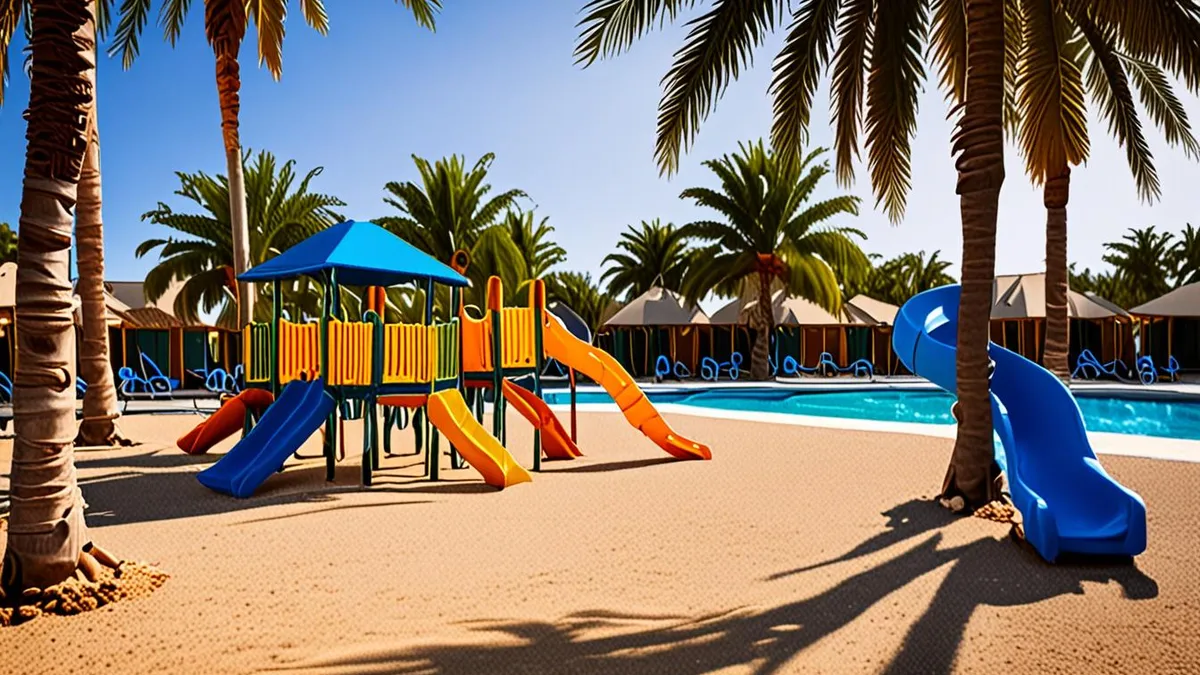
Resorts that invest in dedicated kids pools, waterslides and teen zones usually run stronger clubs than adults-focused properties, where the club can feel like an afterthought in a corner of the lobby. Family-oriented resorts tend to hire experienced childcare staff and build the program around their facilities rather than squeezing it in.
Recent guest reviews are your best source of truth. Skip the overall star ratings and search reviews specifically for mentions of the kids club staff, cleanliness and how engaged the children seemed. A resort can look beautiful in photos while its club is understaffed or poorly run.
Finally, think about destination. Beach resorts with calm lagoons pair especially well with outdoor kids programming, since sheltered water lets clubs safely run kayaking, snorkeling lessons and beach games that indoor pools cannot match.
Wrapping Up Your Kids Club Decision
So, what does a resort kids club actually cover? In most cases, it is a supervised program for children aged about 4 to 12, with separate teen programs for the 12-17 crowd and paid babysitting options for younger children. That answers the age question: if your child falls outside that band, expect extra costs or a parent to stay close.
On cost, the spread is wide. All-inclusive resorts often fold the club into your nightly rate, while a la carte and city properties usually bill it separately, with hourly rates that can add up to a meaningful daily total per child. Before you book, check the staff-to-child ratios, the registration window of 24-48 hours, and the session hours, since half-day and full-day schedules vary and clubs can fill up fast in high season. A little homework now saves a lot of surprises at check-in. If this helped you plan, share the article or drop a comment below.