A month away sounds simple until you have to decide whether a long-stay hotel or a short-term rental actually fits your budget and routine. The two options look similar on paper, but they behave very differently once you multiply a nightly rate by thirty. Discounts, deposits, housekeeping schedules and even where you eat dinner all change depending on which one you pick.
This guide breaks the decision into the questions that matter. First, cost: how a month changes the math on both sides. Then space and comfort for 30 days, from room sizes to kitchen setups. We also compare service, including housekeeping, laundry and front desk support, and flexibility, covering extensions, early departures and deposits. Finally, we map out when a long-stay hotel is the better pick, when a short-term rental wins for a month, and the bottom line for choosing between them. By the end, you should know exactly which option matches your dates, your group and your cooking habits.
Cost: How a Month Changes the Math
Sticker prices mean very little when you are staying somewhere for a month. What matters is the effective monthly rate, and both long-stay hotels and short-term rentals offer meaningful cuts once you commit to serious dates.
How the discounts stack up
Long-stay hotels typically cut 30-50% off their nightly rates once you commit to a month. A room that looks overpriced for a two-night stay can become surprisingly reasonable when booked as a 30-night block, because the hotel values the guaranteed occupancy.
Short-term rentals follow the same logic with smaller savings. Most hosts discount 20-40% for bookings of 28 nights or more, since a month-long guest means fewer turnovers and less messaging. The discount varies widely by platform and host, so it pays to message directly and ask for a monthly rate before booking.
Look at the total, not the headline
Whichever option you choose, compare the total cost rather than the advertised rate. Rentals sometimes charge utilities and Wi-Fi separately, which can quietly erode that monthly discount. Hotels usually bundle these in, but check whether parking, resort fees or breakfast are extra.
Meals deserve a line in your budget too. A hotel room without kitchen access pushes you toward eating out daily, and restaurant bills add up fast over thirty days. If a rental’s full kitchen lets you cook most of your meals, the savings can offset a meaningful chunk of the price difference. Run the numbers for your own eating habits before deciding.
Space and Comfort for 30 Days
Thirty days is long enough that your surroundings start to affect your mood, your sleep and your work. Space is where the two options diverge most clearly.
How much room you actually get
Long-stay hotel rooms usually run 20-30 square meters. That is enough for one or two people with light packing, especially if you live out of a suitcase and spend your days out of the room. The layout is efficient but compact: a bed, a desk or small table, and a bathroom, all in one space.
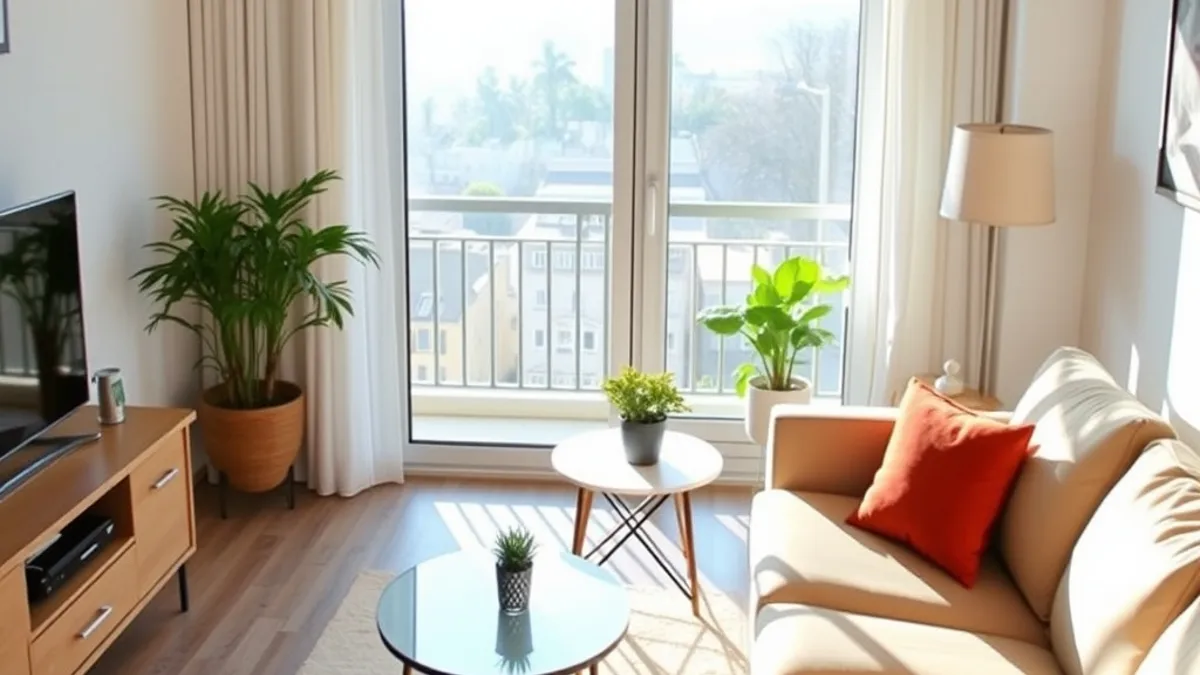
One-bedroom rentals average 40-60 square meters, roughly double the footprint. You get a separate bedroom, a full kitchen and a living area, which changes how a month feels. You can cook dinner while someone watches TV, host a friend for coffee, or simply close the bedroom door in the evening.
Working and cooking for a month
If you are a remote worker, this difference matters. Rentals suit people who need a dedicated desk and room to spread out with monitors, notebooks and a proper chair. Working from a hotel bed or a small desk for weeks gets old quickly.
On the cooking side, be realistic about hotel kitchenettes. They handle simple meals such as pasta, salads and microwave reheats, but not serious cooking. If you plan to roast, bake or batch-cook, a rental’s full kitchen is the better tool. If you mostly eat out anyway, the hotel’s compact setup costs you little.
Service: Housekeeping, Laundry and Front Desk
Service is the quiet advantage of hotels, and after two weeks on the road you will notice it. Long-stay hotels include weekly housekeeping as standard, with daily service often available for a fee if you want fresh towels more often. Someone else handles the sheets, the vacuuming and the bathroom reset, which is easy to underestimate until you have done it yourself.
The front desk is the other underappreciated perk. Staff handle deliveries when you order online, point you toward the right neighborhood for dinner, and deal with problems on the spot, whether that is a broken lock or a noisy neighbor. In a rental, you message a host and wait for a reply. If you are weighing service levels, it helps to understand what different ratings and property types actually promise, as explained in what hotel star ratings mean for your stay.
Rentals mean self-service. You clean as you go, coordinate any cleaner yourself, and manage your own laundry at a local laundromat or in the unit’s machine. Some travelers prefer the independence; others find it wears thin by week three.
- Hotel gyms are usually included in your rate, so you can keep a workout routine going without hunting for a day pass at a local fitness club.
- On-site guest laundry machines let you run a wash while you answer emails, instead of hauling clothes across an unfamiliar neighborhood to a laundromat.
- Front desk staff can hold luggage before check-in and after checkout, which is genuinely useful when your flight and your checkout time do not line up.
- Hotels often have 24-hour staffing, so a midnight arrival or a burst pipe at 2 a.m. gets handled immediately rather than waiting for a host to wake up.
Flexibility: Extending, Leaving Early and Deposits
Flexibility is where long-stay hotels quietly win most months. Plans change, work runs long, or you simply fall in love with a city. Most long-stay hotels allow month-to-month extensions with just a few days’ notice, so adding another week or a whole month is a quick conversation at the front desk rather than a new booking.
Short-term rentals work differently. You lock yourself into fixed dates, and if you need to leave early, refunds are usually limited or nonexistent. The platform’s cancellation policy applies, and a month-long booking often sits in the strictest tier. If your departure date depends on a project ending on time, that rigidity can get expensive.
How deposits work
Rentals commonly require a deposit of roughly one week’s rent, held before arrival and refunded after checkout. That money sits out of your budget for the entire stay, and getting it back can take days or weeks depending on the host and platform. Damage disputes, however small, add friction you do not want at the end of a trip.
Hotels settle everything at checkout. There is no deposit to chase, no inspection walkthrough, no waiting for a refund to clear. You pay your bill, grab your bag and leave. For a month away, that simplicity has real value, especially if your return date is not set in stone.
When a Long-Stay Hotel Is the Better Pick
If your dates might shift, book the hotel. Maybe your assignment ends a week early, or you decide you need ten more days to finish what you came for. Long-stay hotels let you extend by a week or two with minimal notice, while a rental would force you to renegotiate with a host or hunt for a new place mid-trip.
Solo travelers and couples often get the most from a hotel month. A typical long-stay room runs 20-30 square meters, which is plenty when you pack light and spend your days out. What you gain instead is weekly housekeeping, fresh towels and someone at the front desk who can handle a locked-out situation, a package delivery or a restaurant recommendation on the spot.
First time in the city?
On a first visit, you are still learning which neighborhood suits you. A hotel puts services within reach while you explore, and you can always switch to a rental next month once you know the area. Location helps too: hotels cluster near transit hubs and business districts, so your commute is typically shorter than from a residential rental on the outskirts. If convenience beats square footage on your list, the hotel month is the safer bet.
When a Short-Term Rental Wins for a Month
If you cook most of your meals, a rental earns its keep fast. A full kitchen with a real oven, a proper fridge and counter space makes a month of home cooking realistic, and a separate living room gives you somewhere to relax that is not your bed. Hotel kitchenettes handle pasta and breakfast, but not the kind of cooking that saves serious money over 30 days.
Families and groups of two or more should lean rental as well. These apartments typically offer double the floor space of a standard long-stay hotel room, and many include a second bedroom, so everyone gets privacy instead of sharing one hotel room. Separate bedrooms alone can make or break a month with kids, and the extra room to spread out matters just as much for remote workers who need a real desk.
Living like a local
Rentals also put you in residential neighborhoods rather than hotel zones. You shop at the local market, learn your corner café and settle into a routine that feels like life, not tourism. For a month of genuine immersion, that matters.
Accept the trade-offs before you book: fixed dates, a deposit of roughly one week’s rent refunded after checkout, and no daily support staff. You coordinate cleaners, manage laundry and solve problems yourself. If that independence sounds fine and space is your priority, the rental wins your month.
The Bottom Line for Your Month Away
Deciding where to actually live for a month comes down to trade-offs. Long-stay hotels trade space for service, flexibility and discounts that typically run 30-50% off nightly rates. Short-term rentals trade support staff for space, a full kitchen and discounts of 20-40% on longer bookings.
So match the stay type to your reality: how firm your dates are, how many people are traveling and how much you plan to cook. Get those three answers right and the right option usually picks itself. If this helped you plan your own month away, leave a comment or share the article with a fellow traveler.