Resort websites love the word “wellness.” You’ll see it splashed across photos of infinity pools and yoga decks, but the fine print rarely explains what resort wellness amenities actually include, which ones are free, and which will quietly add to your bill at checkout. That vagueness makes it hard to compare two properties or budget for a trip.
This guide breaks it down. We start with what resorts typically cover, then look closer at gyms, fitness classes, and spa treatments, including what they cost and how to save. We also cover the hidden fees that catch travelers off guard, and how to match amenities to the kind of trip you’re planning, whether that’s a couples’ retreat, an active training week, or a family holiday. By the end, you’ll know exactly which questions to ask before you book.
What Resort Wellness Amenities Actually Cover
Most resorts build their wellness offering around a core set of facilities: a fitness center, at least one swimming pool, and a sauna or steam room. Larger properties often add a dedicated spa building, sometimes with its own relaxation lounges, treatment rooms, and changing areas separate from the main pool complex. These four basics are what you should expect as a minimum at any property marketing itself as a wellness destination.
Beyond the basics, extras vary widely. Some resorts add yoga pavilions with ocean or mountain views, tennis and padel courts, hydrotherapy circuits with plunge pools and jets, or quiet meditation spaces tucked away from the pool crowd. These touches often signal how seriously a property takes wellness, but they’re not universal, so check the facilities list rather than assuming.
Included vs paid: where the line usually falls
Here’s the part resort websites often leave fuzzy. Gyms and pools are usually free for guests, and sauna access is often included too, especially if it sits in the main pool area. Spa treatments such as massages and facials, along with personal training, almost always cost extra. Group classes fall in between: some are bundled into your rate, while others carry a per-session charge. The safest move is to treat only the gym, pool, and basic heat facilities as “probably included” and confirm everything else before booking.
Resort Gyms: Equipment, Hours and Access
A typical resort gym covers the essentials rather than anything elaborate. Expect a row of cardio machines, usually treadmills, stationary bikes, and ellipticals, plus a small free-weight area with dumbbells and maybe one bench or squat rack. Machine selection tends to be limited: a cable station, a leg press, and little else. If you follow a structured strength program, this can feel restrictive, so it’s worth knowing before you commit to a property.
Hours and access
Most resort gyms open from roughly 6:00 to 22:00, which covers early-morning workouts and post-dinner sessions for most travelers. Some large resorts go further and offer 24-hour access, sometimes with a key code or room-card entry outside staffed hours. If training at a specific time matters to you, confirm the hours directly with the resort rather than relying on third-party listings, which are often out of date.
Questions to ask before booking
Three questions separate a gym you’ll actually use from one that frustrates you. First, ask how many cardio machines and weight stations there are, because a “fully equipped gym” at a 400-room resort might mean six treadmills shared with everyone else. Second, check whether towels and water are provided in the gym itself, since some properties expect you to bring your own from the room. Third, ask about age restrictions, as some gyms limit access to adults or require teens to be supervised. A short email before booking answers all three and takes five minutes.
Fitness Classes and Scheduled Activities
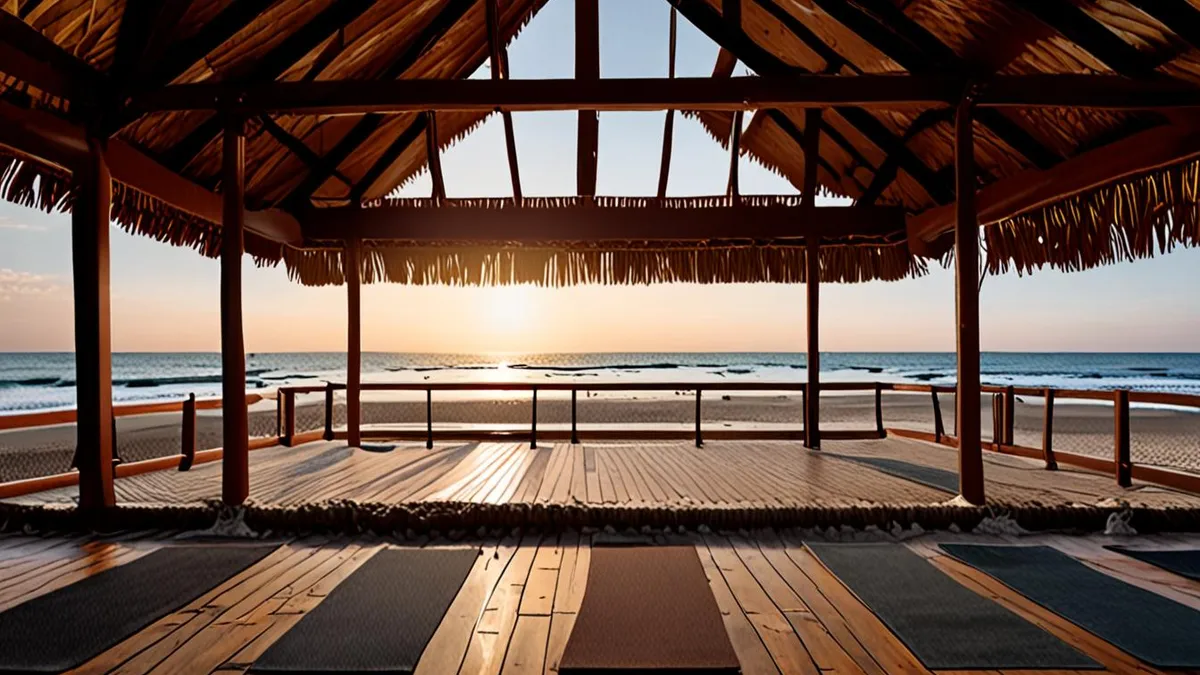
Group fitness classes are one of the best-value parts of a resort wellness program, and most properties with a real schedule offer yoga, pilates, aqua aerobics, and stretching sessions. A typical resort runs 2-4 scheduled sessions per day, usually anchored around sunrise yoga and a late-morning or late-afternoon slot when the heat eases off. The variety suits mixed groups: one partner can do sunrise yoga while the other lifts in the gym, and you still meet up for breakfast.
The tricky part is figuring out what’s free. Beach yoga may be included in your rate, especially at all-inclusive properties, while small-group or specialist sessions, think reformer pilates or guided meditation workshops, often carry a separate charge. The class schedule posted in your room or the resort app usually marks which sessions cost extra, but ask at the activities desk on arrival day to be sure.
Sign-up logistics matter more than most travelers expect. Classes fill fast in high season, so the practical approach is to reserve 1-2 weeks ahead if the resort allows it, or sign up on arrival day before the schedule fills.
- Ask about class caps. Small-group sessions often limit numbers to keep instruction quality high, which is exactly why they fill first and why a waitlist is worth joining.
- Check cancellation rules. Some resorts charge a no-show fee for paid classes booked and missed, so confirm how late you can cancel without penalty.
- Look for weather backups. Outdoor sessions like beach yoga may move indoors or get cancelled in wind or rain, so ask where the backup location is.
- Confirm equipment is provided. Mats are usually supplied, but specialist sessions like pilates may require you to bring or buy grip socks.
Spas, Treatments and What They Cost
Most resort spas follow a similar menu, so it helps to know the staples before you book. Massages come in the widest range, from Swedish and deep tissue to hot stone and couples treatments. Facials and body scrubs round out the core offering, often with local ingredients like sea salt, coconut or volcanic clay depending on the destination.
Beyond the treatment rooms, many spa buildings include hydrotherapy areas you can use without booking anything. Think sauna, steam room, cold plunge pool and sometimes a jacuzzi or heated relaxation lounge. Some larger resorts build a full circuit around these, with a suggested order of hot, cold and rest stages. Access may be free for guests, included with a treatment, or charged separately, so check the policy before assuming it is part of your stay.
What treatments typically cost
Prices vary widely by destination and resort level, but a reasonable starting point is roughly $80-250 per hour for treatments. A 60-minute massage at a mid-range beach resort often sits toward the lower half of that range, while signature rituals that combine several treatments can reach the top. Personal training, if you want a session in the gym, usually runs $60-150 per hour depending on the trainer’s experience and the resort’s positioning.
Ways to spend less
The easiest saving is a package. Multi-treatment bundles and couples packages are common and usually cost less than booking each session individually. Some spas also run quieter, discounted slots at off-peak hours, so ask about happy-hour pricing when you arrive rather than waiting until you want to book.
Another simple approach: use the sauna, steam room and pools without paying for a treatment at all. If your goal is relaxation rather than a specific therapy, the hydrotherapy areas alone can deliver much of the experience at a fraction of the cost.
Hidden Fees and How to Check What’s Included
Here is the detail that catches travelers off guard: a resort can advertise a free gym, free classes and a stunning spa, then add a mandatory resort or wellness fee to your nightly rate anyway. These fees commonly run $20-50 per night and often cover amenities you would reasonably expect to be included. They may not appear in the headline rate you saw when searching, only surfacing at checkout or in the fine print.
The good news is that this is easy to verify before you commit. A few minutes of checking can save you an unpleasant surprise on your final bill, especially on longer stays where a nightly fee adds up quickly.
- Check the resort’s amenities page for a line about mandatory fees, which is where many properties disclose them in small text.
- Review the rate breakdown at checkout, where resort fees, taxes and service charges are usually itemized separately from the room rate.
- Email the resort directly before booking and ask specifically whether a wellness or resort fee applies and what it covers.
- Ask whether the fee covers group classes and spa access, since coverage differs significantly between property types.
Property type matters here too. All-inclusive resorts tend to bundle classes, spa access areas and activities into one upfront price, which makes comparing costs much simpler. A la carte resorts, by contrast, charge per service, so the gym may be free but every class, treatment and training session appears on your folio. Neither model is automatically cheaper; it depends on how much you will actually use. If you plan three spa treatments and daily yoga, a bundled rate often wins. If you only want the pool and an occasional massage, paying per service can work out better.
Matching Wellness Amenities to Your Trip
The right wellness amenities depend less on the resort’s star rating and more on what you actually want from your trip. Two travelers can stay at the same property and have completely different experiences: one books three treatments and never finds the gym, the other does sunrise yoga every morning and skips the spa entirely. Matching the amenities to your travel style starts with an honest look at how you plan to spend your days.
Couples and relaxation-focused trips
If the trip is about unwinding together, prioritize spa depth over everything else. Look for resorts with a wide treatment menu, couples treatment rooms and a proper hydrotherapy area rather than a single sauna tucked behind reception. Adult-only pool zones and quiet sauna areas matter too, since a spa afternoon loses its appeal next to a splash-filled family pool. Before booking, check whether treatments need to be reserved far in advance, because popular couples slots fill quickly in high season.
Active travelers
Fitness-focused travelers should dig into the details before committing. Ask for the current class schedule and confirm how many sessions run per day, since some resorts advertise yoga but only offer it a few times a week. Check whether tennis or padel courts need to be reserved and whether equipment is available to borrow. For gym users, ask about the equipment count and whether there is enough free-weight space for your routine. A resort with a beautiful but tiny gym can be frustrating if training is central to your trip.
Family trips
Parents face a scheduling puzzle: you want the 9:00 yoga class and an afternoon massage, but the kids need supervising. That is where kids’ club overlap becomes the most valuable amenity of all. Look for resorts where the kids’ club hours line up with the class schedule and spa opening times, so you can book treatments and sessions knowing your children are occupied. Some properties even offer family wellness activities, such as parent-child swim sessions, which let everyone join in rather than trading off.
The Bottom Line on Resort Wellness
Resort websites love to advertise “full wellness facilities” without telling you what that actually means. The reality splits into two groups: the basics, like the fitness center, pool and sauna, which are usually included in your rate, and the extras, like spa treatments, personal training and some small-group classes, which almost always cost extra. Personal training typically runs $60-150 per hour, and treatments $80-250, so the difference matters.
The fix is simple: check the gym’s hours, the class schedule and the fee breakdown before you book, and watch for resort or wellness fees that can add $20-50 per night even when amenities are advertised as free. Then match the mix to your trip, whether it leans relaxation, fitness or family time. If this helped you sort included from extra, leave a comment or share the article with a travel partner.