Many travelers assume a better room always costs more, yet front desks upgrade guests for free every day when the conditions are right. A free hotel room upgrade is less about luck and more about understanding how hotels actually fill their rooms, and then positioning yourself as the guest they want to move up.
In this guide, you’ll learn why hotels hand out better rooms at no charge, which dates and check-in times give you the best odds, and why booking direct plus joining a loyalty program makes such a difference. We’ll also cover exactly how to ask at the front desk, the small booking details that quietly raise your chances, and the situations where an upgrade simply isn’t worth it. None of it requires special status or insider connections, just a bit of planning and the right approach.
Why Hotels Give Free Room Upgrades
Here’s the simple economics behind every free upgrade: an empty suite earns a hotel nothing that night. Once the housekeeping is done and the room sits ready, the cost of letting it go unsold is real, while filling it with an existing guest costs the hotel almost nothing. That’s why a front desk will often hand you a higher-category room rather than let it sit idle until the next booking.
An upgrade is cheaper than a discount
Compare the numbers from the hotel’s side. A one-night stay in a suite can retail 50-150% above a standard room rate, but the marginal cost of actually giving someone that room is tiny: the same cleaning, the same utilities, the same staff. This makes upgrades one of the cheapest loyalty tools a hotel has. Rewarding a guest with a better room feels generous, costs the property very little, and builds goodwill that a comparable rate discount never could.
Upgrades as an operational fix
There’s a third reason you might get moved up without asking: the front desk uses upgrades to solve problems. If your assigned room has a maintenance issue, a noisy air conditioner, or a double-booked guest ahead of you, the easiest solution is often to relocate you to a better room and apologize with a smile. You don’t control these situations, but knowing they exist explains why upgrades seem to happen “randomly” to some guests. Your job is to make sure that when the desk has a choice, you’re the easy pick.
Timing Your Stay and Your Ask
Timing is the single biggest factor most travelers ignore. Hotels can only upgrade you if a better room is actually empty, so your odds swing dramatically with the calendar and the clock. Get both right, and you may not even need to ask.
Pick the right season
Off-peak seasons, roughly November to March in most of Europe, offer the highest upgrade odds. Occupancy dips, suites and corner rooms sit open, and front desk agents have far more flexibility to be generous. In peak summer or during major local events, that same hotel may have nothing to give you at any price. If your travel dates are flexible, shifting your trip a few weeks can matter more than anything you say at the desk. For a deeper look at how dates affect what you pay, see our guide on when to book hotels for better rates.
Pick the right hour
Asking at check-in between 3 pm and 5 pm works best, before the evening arrival rush. At that point the front desk still knows exactly which rooms are open and unassigned, so they can answer your question accurately instead of defaulting to a polite no. By 7 pm, the lobby is crowded, the agent is rushed, and the easy decisions have already been made.
Length of stay matters too. Shorter stays of one or two nights are easier to upgrade because the room frees up quickly for other bookings. A hotel can comfortably put you in a suite for Tuesday and Wednesday; committing the same room to you for a full week is a much harder call.
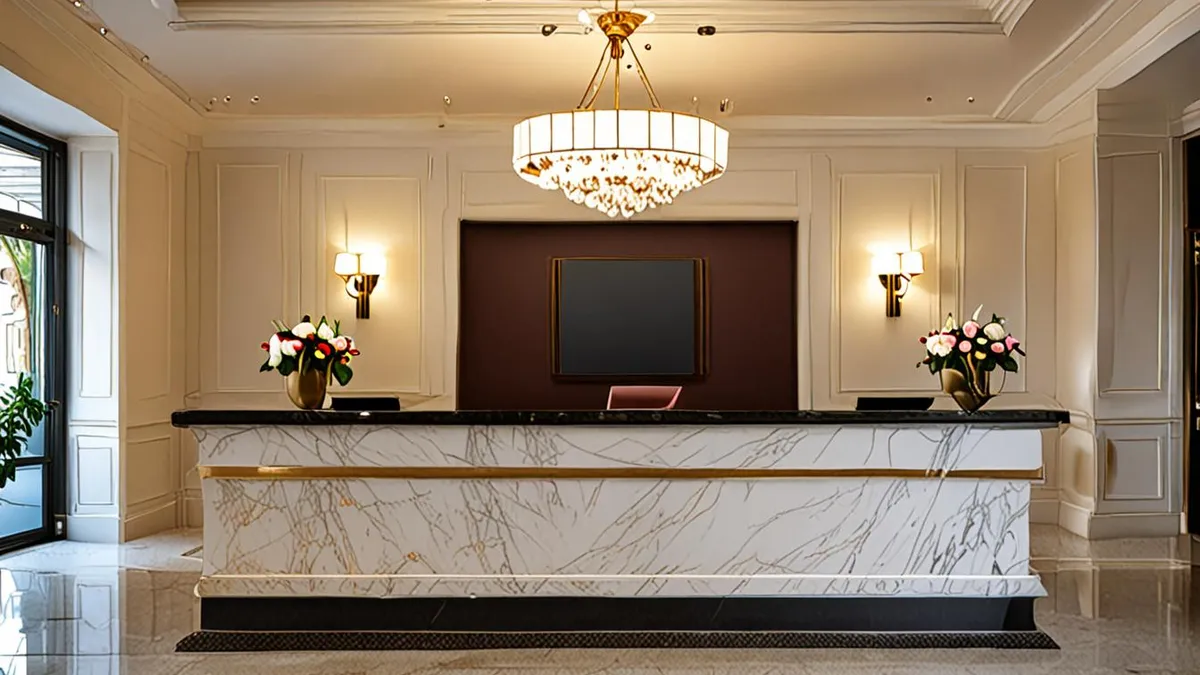
Book Direct and Join the Loyalty Program
Who you are in the hotel’s system matters as much as when you arrive. Front desk agents see hundreds of reservations, and the ones that stand out are direct bookings attached to a loyalty account. Guests in that category get moved up far more often than anonymous OTA reservations, and setting it all up takes about ten minutes before you travel. Here’s how to do it in order.
- Book directly with the hotel. Use the hotel’s own website or call the property rather than a third-party site. Booking directly with the hotel beats third-party sites for upgrade requests, because direct guests are the ones the hotel most wants to reward and protect its relationship with. An OTA reservation can also make things harder on the agent, who may have limited ability to change your room type or rate without extra steps.
- Join the free loyalty tier before arrival. Nearly every major chain lets you enroll online at no cost, and the entry level usually comes with real perks. Sign up a few days ahead so your membership is linked to the reservation, not added awkwardly at the desk. Loyalty program members receive complimentary upgrades noticeably more often than walk-in guests, and even basic status puts you ahead of anonymous bookings in the queue.
- Mention your membership politely at check-in. A simple line like “I’m a member, I know you look after your regulars” works well. Ask, don’t demand. Agents have real discretion over which rooms they assign, and treating your status as an entitlement is the fastest way to watch them use that discretion for someone else.
None of these steps costs you anything, and together they change how the front desk sees you before you ever reach the counter. You go from a random reservation number to a direct, recognizable guest with a history the hotel can build on. That is exactly the profile hotels prefer to reward, and it stacks with good timing and a friendly ask to give you the strongest possible shot at a better room.
How to Ask at the Front Desk
Most upgrade conversations last under a minute, and the way you frame the question matters more than anything else you say. Front desk agents handle dozens of check-ins a day, juggling arrivals, phone calls and requests all at once. They remember the guests who were easy and pleasant to deal with, and that memory can quietly work in your favor. A polite ask costs you nothing and, at the right moment, often works.
- Start with a simple, friendly question. Something like “Are any complimentary upgrades available tonight?” gives the agent an easy way to say yes. It frames the upgrade as a possibility the hotel controls, not a demand you are making, and it invites a conversation rather than a refusal.
- Mention a genuine special occasion. Honeymoons and birthdays come up in a large share of successful free upgrades, and front desks genuinely enjoy making those trips memorable. Only bring it up if it is true; agents hear invented anniversaries every week and can usually tell the difference.
- If the answer is no, ask what is possible. You might find out whether a small paid difference could move you up a category, or whether a better room might open up later in your stay or on a future visit. Agents will often volunteer these options if you stay calm and curious.
- Stay gracious either way. A warm “no problem, thanks for checking” leaves a good impression, and agents sometimes remember pleasant guests when a room opens up the next day.
Remember that the person at the desk usually has no personal stake in your room and limited authority to bend the rules. Your goal is simply to make saying yes as easy and pleasant as possible. Smile, keep it brief, and never argue if the answer is no. If it works, enjoy the better room; if it does not, you have lost nothing except a few seconds of your day.
Small Details That Raise Your Odds
Once you have the timing and the ask down, a handful of small details can quietly tip the odds in your favor. None of them require extra money, and most take just a few minutes when you book. The common thread is simple: make yourself the kind of guest a front desk can move around easily, without disrupting anyone else’s stay. Guests who understand this tend to hear “yes” far more often than those who simply show up and hope for the best.
- Pick midweek nights. Hotels most often run 60-80% occupancy on weekdays, which means Tuesday and Wednesday nights frequently leave suites sitting empty. Weekend stays, especially Saturday, draw leisure travelers and event crowds that fill the top categories first. If your schedule allows any flexibility, shifting a trip by a day or two can be the easiest upgrade lever you have.
- Use the booking remarks field. When you reserve directly with the hotel, a short note like “celebrating our anniversary” or “first visit to the city” gives the front desk a legitimate reason to remember you. Keep it to one clean sentence; a paragraph of requests has the opposite effect. Special occasions come up in a large share of successful free upgrades, so if you have one, say so plainly.
- Be a low-risk guest. One room, a flexible arrival time and no complicated requirements make you an easy candidate to move up. A guest who needs a specific floor, connecting rooms and an early check-in is far harder to relocate than a couple with a single simple booking. Flexibility signals to the front desk that moving you carries no risk of complaints later.
These details work because they reduce friction for the hotel. An upgrade is an operational decision as much as a courtesy, and the easier you are to move, the more likely someone will move you. Think of it from the desk agent’s perspective: they are juggling arrivals, requests and room assignments all at once, and the guest who makes their job simpler is the one who gets remembered when a suite opens up unexpectedly.
When an Upgrade Is Not Worth It
An upgrade is not automatically a win. Before you accept one, or pay a difference for one, it helps to think about what you actually get and what you might give up. A better room in the wrong circumstances can be worth less than the room you already booked.
Room Versus Location
A higher floor or a wider view may matter less than where the hotel sits in the city. If you booked a property for its walkable neighborhood, a suite with a highway outlook adds little to your trip. Weigh the room against the location you chose, and ask yourself whether you will actually spend enough waking hours in it to notice the difference.
When the Math Stops Working
Paid differences deserve the same scrutiny. Suites typically carry a steep premium over standard rooms, so if the fee quoted at the desk comes close to the full price gap between the two categories, the smarter move may be to book the higher category outright on your next visit, ideally at an advance-purchase rate. You will often pay less overall and get to pick your exact room type in advance, instead of accepting whatever the front desk has left at the end of the day.
It also pays to compare what the upgrade fee buys you. Some paid upgrades include lounge access, breakfast or late checkout, which can make the difference worthwhile. Others simply move you into a bigger room with no added benefits, which may not justify the cost at all. Ask exactly what is included before you decide.
Finally, remember that an upgrade sometimes means moving away from a room type you specifically chose. A quiet courtyard room, for example, can be worth more to a light sleeper than a street-facing suite on a top floor. If the original room was a deliberate choice, it is perfectly reasonable to keep it and let the upgrade pass.
The Upgrade Mindset in Short
So, can you really get a better hotel room without paying more? Yes, and it is rarely luck. Free upgrades come from timing, booking directly with the hotel, loyalty status and a polite ask. Your best window of opportunity combines off-peak months, roughly November to March in much of Europe, midweek nights, and arriving early in the afternoon while the front desk still has a clear picture of what is vacant.
Ask graciously, accept a no gracefully, and treat every upgrade as a bonus rather than an expectation. Do that, and you will find front desks say yes more often than you might think. If this helped you score a better room, share your own story in the comments or pass the article along to a fellow traveler.