Glamping in Portugal sounds like a dream: waking up in a safari tent above Atlantic waves or in a dome under dark Alentejo skies. But many travelers hit the same snag. They don’t know which months bring the best weather, or which regions offer the best value at that time of year. Pick the wrong week and you could be sweltering inland, shivering on a closed site, or paying peak prices for a stay that costs far less in May.
This guide breaks it down season by season. We’ll look at why timing matters so much in Portugal, then cover spring wildflowers, summer beach days, autumn’s warm water and quiet coast, and winter alternatives like Madeira. We’ll also compare the best regions for glamping and wrap up with a simple planning framework. By the end, you’ll know exactly when to book and where to pitch your tent.
Why Timing Matters for Glamping in Portugal
Portugal looks small on the map, but its climate is anything but uniform. The Atlantic coast stays breezy and mild much of the year, while the Alentejo interior bakes under some of the hottest conditions in the country. The far south enjoys its own gentle microclimate, which is why the Algarve draws visitors long after other European beach destinations have gone quiet. A tent that feels perfect in one region can be a poor choice in another during the very same month.
Prices move with the calendar
Budget matters just as much as weather. Glamping in Portugal typically costs €90-250 per night, and the same tent or cabin can swing 20-40% between peak and shoulder months. July and August see the largest crowds on the Algarve, and operators price accordingly. Travel in April-May or September-October and you often get the identical unit, the same views, and noticeably lower rates.
Not every site stays open year-round
There’s a third factor travelers often overlook: availability. Some sites close entirely in winter, so the season you pick also decides where you can go. If your heart is set on a specific region, check whether your chosen site operates then, or shift your dates to match. The good news is that Portugal offers a workable glamping window in every season; you just need to match the right region to the right months.
Spring: April and May for Wildflowers and Mild Days
Spring is arguably the sweet spot for glamping in Portugal. In April and May, daytime temperatures sit comfortably between 18-26°C, which makes hiking and coastal walks pleasant without the summer heat sapping your energy. You can spend the morning on a trail and the afternoon on a terrace with a glass of wine, all without hunting for shade every hour.
The landscape at its best
This is also when the countryside looks its greenest. After the winter rains, the Alentejo plains turn into rolling carpets of wildflowers, and the Serra da Estrela foothills are lush and fresh. Photographers and hikers tend to agree that these weeks offer the most photogenic scenery of the year, before the summer sun dries everything to gold.
Easier booking and better rates
Practicalities matter too. Shoulder-season rates apply in spring, so you’ll often pay noticeably less than in July or August for the same tent or cabin. Because demand is moderate, booking 1-2 months ahead is usually enough to secure a good unit, even on popular sites. If you want flexibility, spring delivers it: you can often change plans at short notice without losing your deposit. For a first glamping trip in Portugal, April and May are hard to beat.
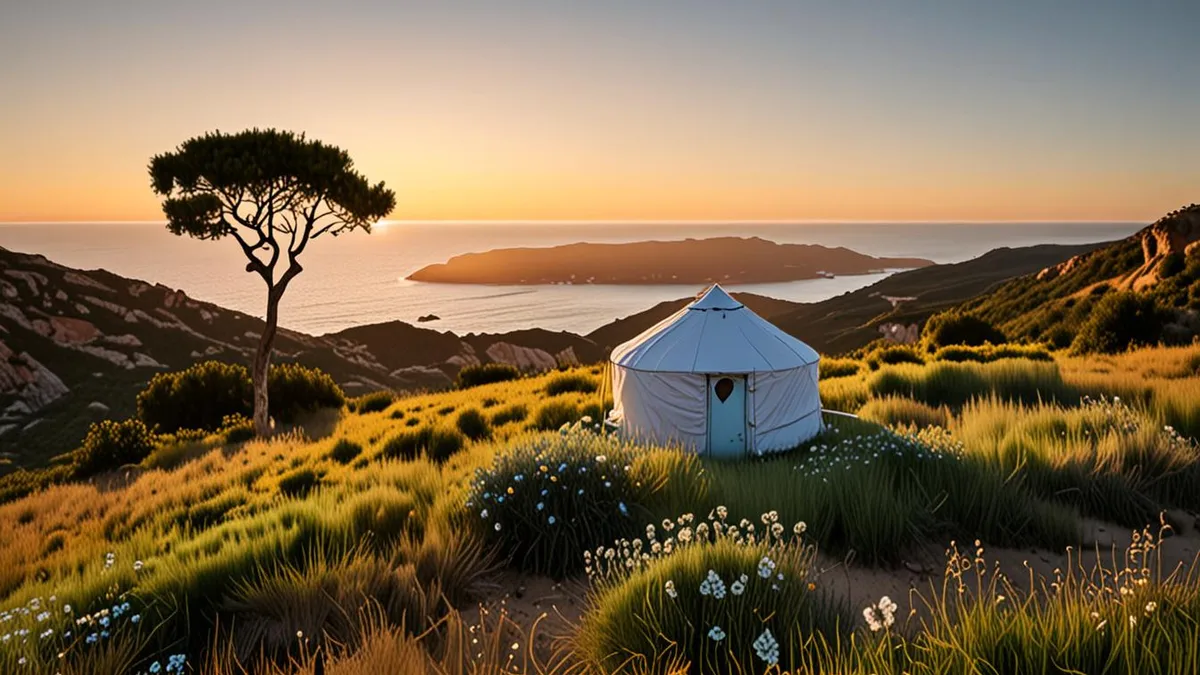
Summer: Long Beach Days and How to Handle the Heat
Summer is peak season, and it delivers exactly what most people picture: long beach days, warm evenings, and a lively social scene. From June to August, the Algarve sees daytime temperatures of 28-35°C, and the beach towns along the coast are at their most energetic. If your ideal glamping trip involves surfing in the morning and live music in a beach bar at night, this is your window.
Where to escape the worst heat
The heat is manageable on the coast, where the Atlantic breeze keeps things comfortable. Inland is a different story: the Alentejo and Douro Valley can exceed 35°C in high summer, so favour coastal or shaded sites if you’re traveling in July and August. Sites with trees, pools or easy beach access make a real difference at midday. If you’re drawn to surf-focused stays, a setup like the one described in this Dreamsea Surf Camp review shows how glamping and beach life combine well, and similar coastal concepts exist along Portugal’s shore.
Book early or miss out
The trade-off for summer perfection is demand. The Algarve is at its busiest during the height of the school holidays, and the best units, the ones with the biggest decks, the best views, the most privacy, sell out first. Book 3-6 months ahead for peak season, especially if you’re traveling with a group or want a specific site. Late bookers usually face slim pickings and full asking prices. Inland regions stay quieter in summer, but the heat makes them a tougher sell; save them for the shoulder months instead.
Autumn: September and October for Warm Water and Quiet Coast
September is arguably the best-kept secret of the Portuguese glamping calendar, and the reason is simple: the ocean. After months of summer sun, sea temperatures reach their yearly peak in September, so swimming actually feels better than it did in June. If your ideal glamping stay involves daily surf sessions or long swims, this is the month to book.
Why the coast quiets down
The second big shift happens on land. Once schools restart, the summer crowds thin out noticeably, and this is especially obvious on the Algarve and around Ericeira, where July and August bring the heaviest foot traffic. Beaches that felt packed in August regain breathing room, and popular surf breaks become far less competitive. You still get the beach-town cafés and evening atmosphere, just without the queues.
Prices follow the crowds. As September moves into October, rates for the same tent or cabin fall back to shoulder-season levels, which can mean meaningful savings compared to peak summer. Meanwhile the days stay genuinely warm at 22-26°C, warm enough for board shorts and sundowners on the deck rather than sweaters.
Practical tip: aim for the first half of September if swimming is your priority, and late September or October if quiet and value matter more. Booking one to two months ahead is usually enough at this time of year, though surf-focused sites near Ericeira can fill earlier around popular swells and school holidays.
Winter and Mild-Climate Alternatives
Winter in Portugal is milder than almost anywhere else in western Europe, but it reshapes the glamping map. From November to March, the Algarve and Madeira stay pleasantly mild at 15-18°C, which is perfect for hiking and slow coastal walks. The catch is availability: many mainland sites close entirely for the colder months, so traveling in winter narrows your choice of destination considerably. Always confirm opening dates with a site before planning a cold-season trip.
Islands for year-round glamping
If winter glamping is the goal, look to the Atlantic islands. Madeira offers subtropical conditions year-round, with levada walks, banana plantations and ocean views that never really go off-season. The Azores work on the same principle, trading reliable sunshine for dramatic crater lakes and thermal springs. Both island groups reward travelers who accept changeable weather as part of the deal, and they stay far quieter than the mainland coast.
One thing to take seriously is rain. Winter is Portugal’s wettest period, particularly north of Lisbon, so pack a proper rain jacket, quick-drying layers and waterproof footwear rather than relying on summer gear. A tent with solid coverage and a covered deck makes rainy days far more enjoyable.
If the mainland winter doesn’t appeal, remember that glamping doesn’t stop at Portugal’s borders. For a taste of what a well-run mountain site looks like in the off-season, this Huttopia Font-Romeu review shows how a French Pyrenean resort handles cooler months, which is useful inspiration when comparing winter options.
Best Regions for Glamping in Portugal
Portugal is small enough that you can combine several glamping regions in one trip, but each has a distinct character and a distinct best season. The same cabin that feels magical in May can feel punishing in an August heatwave, so it pays to match the region to the month. Distances are manageable too: most mainland areas sit within a few hours’ drive of each other, which makes a two-center itinerary realistic even on a one-week trip. Here is how the four mainland areas compare, and when each one shines.
- Algarve: the classic choice, with cliff-top sites overlooking sea caves and sandy coves. It delivers the liveliest beach-town energy in summer, but the best value comes outside July and August, when rates drop and the coastline calms down.
- Douro Valley: glamping here means waking up among terraced vineyards above the river. The sweet spots are May-June, when the landscape is lush, and September, when the harvest brings activity to the vineyards and a festive atmosphere to the villages.
- Alentejo: a world of rolling plains, cork oak groves and some of the darkest skies in Europe for stargazing. The hot, dry interior is at its best in spring and autumn, when wildflowers or golden grasses make the open landscapes feel vast rather than harsh. It also stays noticeably quieter than the coast in midsummer.
- Sintra-Cascais: a compact mix of misty forest, palaces and Atlantic coastline within roughly 40 km of Lisbon. It suits short trips and city-plus-nature itineraries, and it is easy to reach without a long drive from the airport.
A simple rule of thumb: head to the coast for summer, and choose inland regions or the islands for the shoulder months. If you are torn between two areas, let the season decide, since weather differences between the Atlantic coast and the interior are sharper than most first-time visitors expect. Check drive times and site availability before you commit, as a region that looks close on the map can involve slow rural roads.
Wrapping Up Your Portugal Glamping Plan
So, when should you go glamping in Portugal? For most travelers, spring and autumn are the sweet spot: April-May and September-October bring mild temperatures of 18-26°C, shoulder-season prices, and easier booking, with 1-2 months’ notice usually enough. Summer suits beach-focused trips, especially on the Algarve, but plan on booking 3-6 months ahead and expect peak rates.
Region matters as much as season. The coast shines in summer, while the Alentejo plains and Douro Valley reward spring and autumn visitors, and Madeira keeps things mild when mainland sites close in winter. Match the region to the months, and Portugal delivers year-round. If you have a favorite season or a tip of your own, leave a comment or share this article.